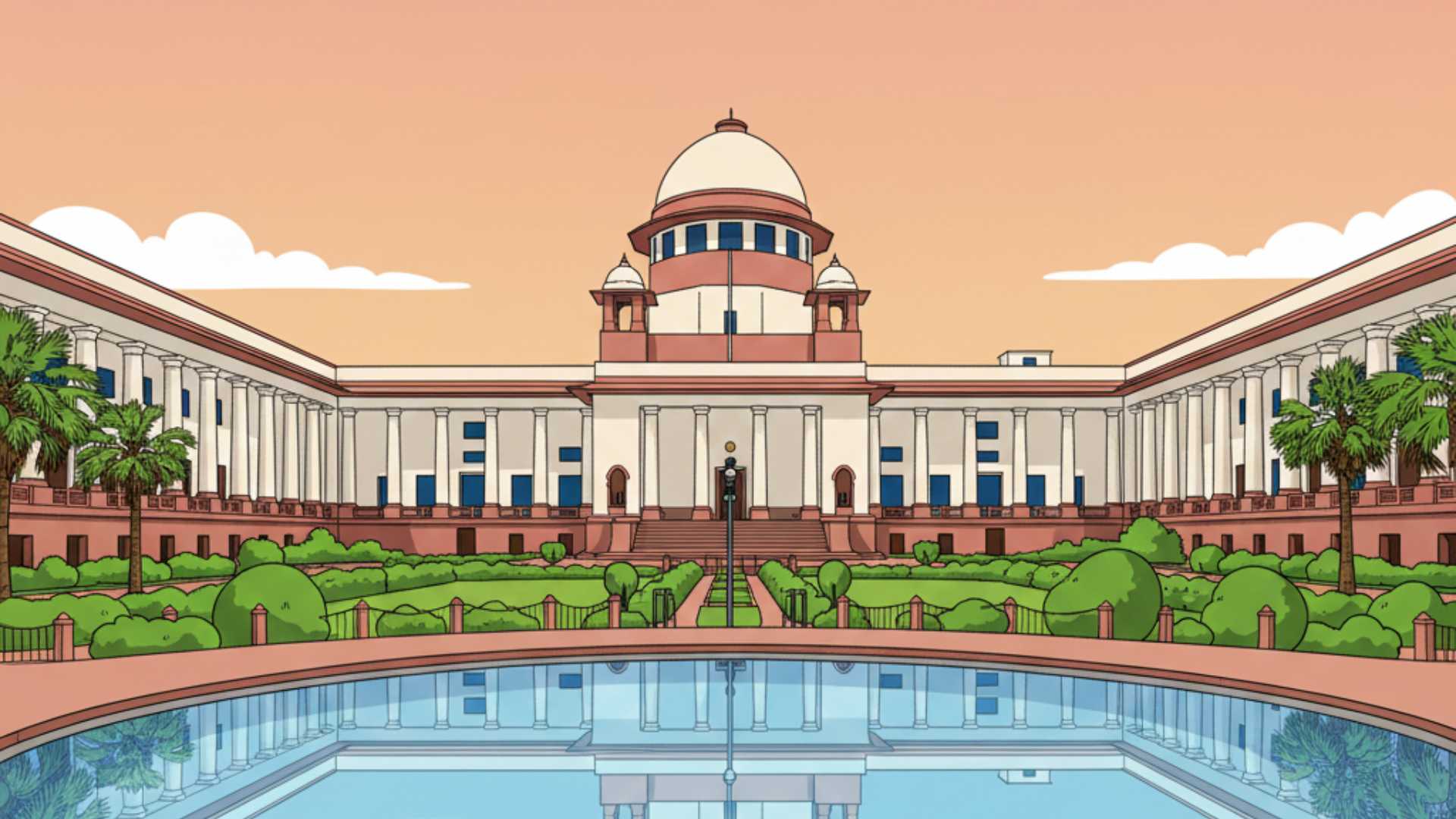
1. Context: Supreme Court’s Concern over Divisive Public Speech
The Supreme Court (February 17, 2026) expressed concern over public statements made by Chief Ministers, senior bureaucrats and police officers that allegedly stigmatise entire communities and legitimise discriminatory governance. The Court observed that such speech erodes public confidence in the State’s commitment to equal citizenship.
The Bench, led by the Chief Justice of India Surya Kant, emphasised that political parties must adhere to constitutional morality, mutual respect and democratic maturity in a more than 75-year-old democracy. The Court underscored that holders of high public office are not ordinary speakers; their words carry institutional authority.
Justice B.V. Nagarathna stressed the need to restrain communally divisive speeches “from all sides”, while Justice Joymalya Bagchi highlighted that democratic entities are expected to uphold constitutional ethos and values. The Court indicated willingness to frame guidelines but cautioned against entering partisan political terrain.
“Political leaders must ultimately foster fraternity in the country.” — Justice B.V. Nagarathna “This is a more than 75-year-old mature democracy; we do not expect people to behave like this.” — CJI Surya Kant
The issue reflects tension between democratic free speech and constitutional accountability of office-holders. If unchecked, such speech may normalise exclusionary governance and weaken public trust in constitutional institutions.
2. Core Constitutional Issue: Constitutional Morality and Public Office
The petition argues that public functionaries who indulge in derogatory or exclusionary speech undermine constitutional morality. Their statements, even if not amounting to hate speech under criminal law, may influence administrative conduct and law enforcement attitudes.
The Constitution envisions fraternity (Preamble) as essential for unity and dignity of the individual. Articles 14 (Equality before law) and 15 (Non-discrimination) establish equal citizenship as a foundational norm. When high officials make statements that stigmatise communities, it risks creating a perception of state-endorsed discrimination.
The Court questioned whether political party constitutions contain mechanisms to regulate the conduct and speech of their leaders. This shifts part of the accountability framework from purely judicial intervention to intra-party discipline and democratic norms.
The governance logic is clear: constitutional morality requires public power to be exercised with restraint and neutrality. If holders of state authority blur the line between political rhetoric and institutional endorsement, it weakens rule of law and equal protection guarantees.
3. Free Speech vs. Responsibility of Constitutional Functionaries
The case highlights the delicate balance between Article 19(1)(a) (freedom of speech and expression) and the responsibilities attached to public office. Justice Nagarathna observed that speech originates from thought, raising the question of limits to judicial control.
Senior advocate Kapil Sibal argued that while thoughts cannot be controlled, the “consequences of thought” expressed through speech can be regulated through structured guidelines—without imposing prior restraint or censorship. This distinction attempts to reconcile freedom of expression with institutional responsibility.
The petition notes a “vacuum” in structured guidance clarifying how constitutional morality applies to the public speech of constitutional functionaries. In the absence of such a framework, allegedly discriminatory speech has become increasingly “normalised”.
The constitutional challenge lies in preventing misuse of authority without chilling legitimate political discourse. If courts overreach, it risks judicial overregulation; if they abstain, discriminatory rhetoric may gradually institutionalise bias within governance systems.
4. Democratic Ethos and Institutional Trust
The judiciary’s concern stems from the broader impact of divisive speech on governance outcomes. Statements by Chief Ministers, bureaucrats or police officers can influence administrative behaviour, shape law enforcement priorities, and affect citizen access to justice.
Unlike private individuals, constitutional functionaries act with the “imprimatur of the State.” Their speech can produce chilling effects on vulnerable communities even in the absence of direct incitement or explicit hate speech.
The Court’s remark that it does not want to enter the “political thicket” indicates judicial caution. It emphasised that any intervention must be “contemplative and constitutional”, not populist or partisan.
Institutional credibility depends on perceived neutrality. If state representatives appear to favour or stigmatise particular groups, governance legitimacy suffers, potentially fuelling social fragmentation and undermining developmental objectives.
5. Broader Governance Implications
Impacts on Governance:
- Erosion of equal citizenship guarantees
- Weakening of administrative neutrality
- Potential bias in policing and bureaucratic decision-making
- Reduced trust of vulnerable communities in state institutions
- Normalisation of discriminatory discourse in public life
Constitutional Dimensions:
- Preamble: Justice, Equality, Fraternity
- Article 14: Equality before law
- Article 15: Prohibition of discrimination
- Article 19(2): Reasonable restrictions on speech
This issue intersects with:
- GS2: Constitutional morality, separation of powers, federal politics
- GS1: Social harmony and communal relations
- Essay: Ethics in public life, role of leadership in democracy
Divisive rhetoric, when institutionalised, affects not just civil liberties but also developmental governance, as social cohesion is a precondition for economic and social progress.
6. Possible Way Forward (Within Constitutional Framework)
Judicial Measures:
- Framing limited guidelines on public speech of constitutional functionaries
- Clarifying the application of constitutional morality in official discourse
- Avoiding prior censorship while regulating consequences
Political and Institutional Measures:
- Strengthening internal party disciplinary mechanisms
- Codes of conduct for ministers and senior officials
- Sensitisation of bureaucrats and police regarding constitutional values
Normative Reinforcement:
- Emphasising fraternity as a constitutional duty
- Promoting ethical leadership standards in public life
The Court allowed time for modification of the petition, signalling a cautious but potentially transformative judicial intervention.
Balanced reform can reinforce constitutional ethos without encroaching upon democratic debate. If handled prudently, it may strengthen institutional integrity while preserving free speech.
Conclusion
The Supreme Court’s observations foreground a critical constitutional question: how should a mature democracy regulate the speech of those who wield state authority? The answer lies not in suppressing political expression, but in aligning public discourse with constitutional morality and equal citizenship.
Sustaining fraternity and institutional neutrality is essential for long-term democratic stability, social cohesion, and inclusive development.