Vande Mataram, Constitutional Morality and Freedom of Conscience
1. Context: MHA Order and the Constitutional Question
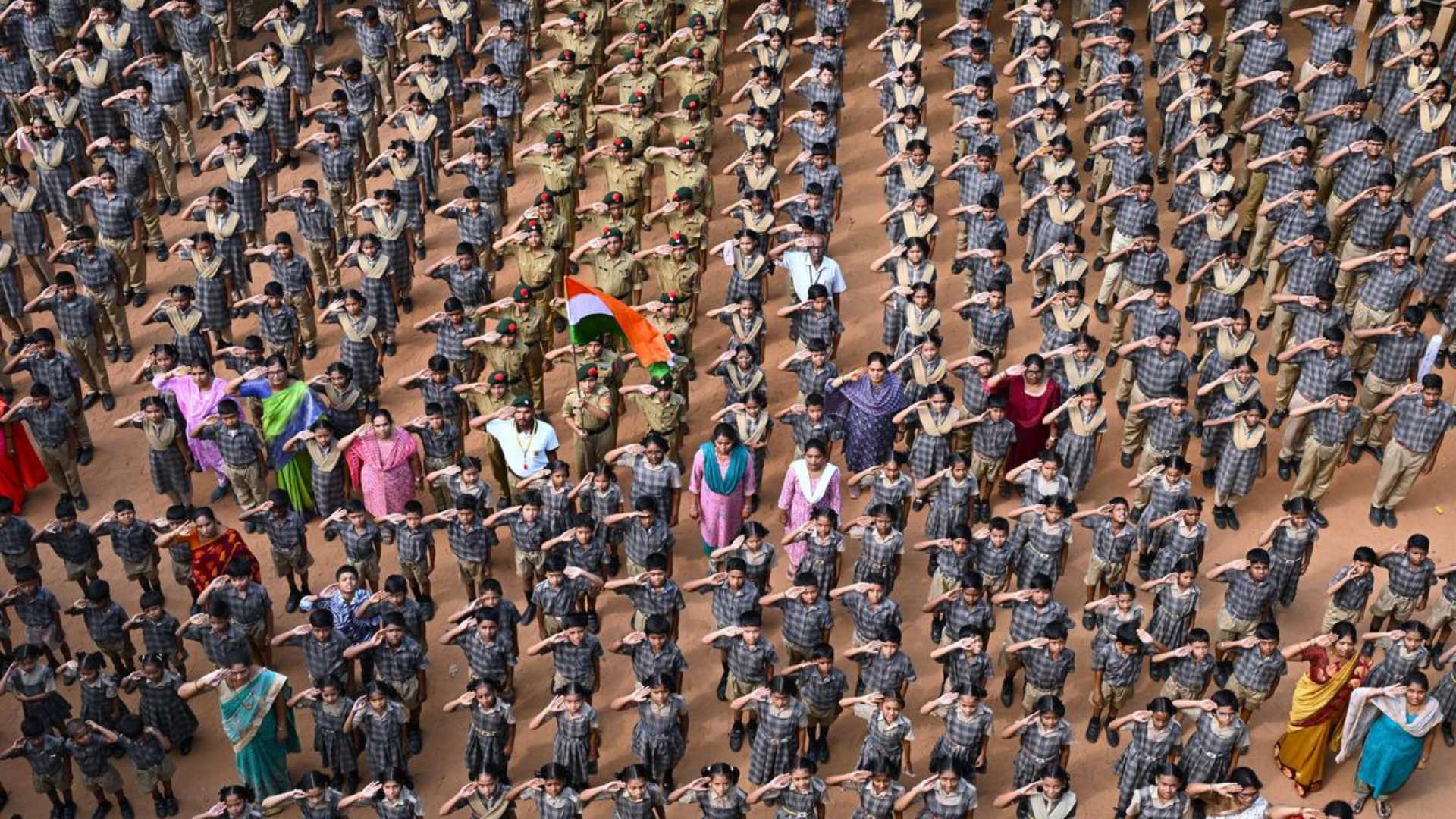
On January 28, 2026, the Union Ministry of Home Affairs (MHA) directed that all six stanzas of Vande Mataram be played at official functions, with everyone present required to stand at attention. The order extends to civil ceremonies, presidential events and school assemblies.
The move raises constitutional questions regarding secularism, freedom of conscience, and the limits of executive authority. While Vande Mataram holds historical significance in India’s freedom movement, its later stanzas contain explicit invocations of Hindu deities such as Durga, Lakshmi and Saraswati.
The debate is therefore not about respect for national symbols, but about whether participation in a song containing religious imagery can be made compulsory in a secular constitutional republic.
When executive action intersects with religious symbolism in a plural society, constitutional safeguards—especially those protecting conscience and equality—become central to governance legitimacy.
2. The 1937 Settlement: Political Prudence and Inclusivity
In October 1937, the Congress Working Committee unanimously resolved that only the first two stanzas of Vande Mataram would be used at national gatherings. The resolution acknowledged objections to later stanzas and concluded that the first two were “in no sense objectionable.”
This decision was supported by key leaders including Dr. Rajendra Prasad, Sardar Vallabhbhai Patel and Mahatma Gandhi. Even Rabindranath Tagore supported limiting its official use to the first two stanzas.
The settlement reflected an early recognition that religious imagery in later verses could create discomfort in a multi-faith society. It was an exercise in political accommodation rather than capitulation.
The 1937 decision illustrates how inclusive nationalism was consciously crafted to avoid religious exclusion, thereby strengthening unity during the freedom struggle.
3. Constituent Assembly Decisions and Constitutional Position
On January 24, 1950, President Rajendra Prasad announced that Jana Gana Mana would be the National Anthem and that Vande Mataram would be “honoured equally.” However, only the two-stanza version was accepted in official capacity.
Importantly, the Constitution does not mention the National Song. Article 51A(a) (inserted by the 42nd Constitutional Amendment Act, 1976) lists the duty to respect the National Flag and the National Anthem — not the National Song.
The Prevention of Insults to National Honour Act, 1971 protects the Flag, the Constitution and the Anthem. It does not extend legal penalties to Vande Mataram.
Constitutional Position:
- Article 51A(a): Respect for Flag and Anthem
- No constitutional reference to National Song
- No statutory penalty for non-participation in Vande Mataram
The differentiated treatment between Anthem and Song indicates deliberate constitutional design rather than oversight.
4. Bijoe Emmanuel (1986): Freedom of Conscience and Silent Respect
In Bijoe Emmanuel v. State of Kerala (1986), three Jehovah’s Witness children were expelled for refusing to sing the National Anthem, though they stood respectfully.
The Supreme Court held that expulsion violated their rights under Articles 19(1)(a) (freedom of speech and expression) and 25 (freedom of religion). Justice O. Chinnappa Reddy observed:
“Proper respect is shown to the National Anthem by standing up when it is sung. It will not be right to say that disrespect is shown by not joining in the singing.” — Justice O. Chinnappa Reddy, Bijoe Emmanuel (1986)
The Court protected the right to remain silent as part of free expression and conscience.
Justice Reddy also cited Justice Robert H. Jackson of the U.S. Supreme Court:
“If there is any fixed star in our constitutional constellation, it is that no official, high or petty, can prescribe what shall be orthodox in politics, nationalism, religion, or other matters of opinion.” — Justice Robert H. Jackson, West Virginia v. Barnette (1943)
If participation cannot be compelled even for the National Anthem—which enjoys constitutional and statutory recognition—compulsion regarding the National Song raises stronger constitutional scrutiny.
5. Secularism and Article 25: Limits of State Authority
Article 25 guarantees freedom of conscience and the right freely to profess, practise and propagate religion. The inclusion of verses invoking specific deities in official ceremonies may raise concerns regarding religious neutrality.
India’s model of secularism is based on principled distance rather than strict separation. The State may engage with religion, but cannot privilege one faith or compel participation in religious observance.
The constitutional framework aims to accommodate diversity while preserving equal citizenship.
Compulsory participation in religiously specific content risks blurring the line between cultural symbolism and religious endorsement.
6. Executive Authority vs Legislative Process
The MHA directive was issued through executive order, not through parliamentary legislation or constitutional amendment.
National symbols and fundamental duties are matters of constitutional and statutory importance. Altering their scope through executive instructions raises institutional concerns regarding separation of powers and constitutional procedure.
Executive action must operate within the framework established by the Constitution and judicial precedent.
Governance legitimacy depends not only on objectives but also on adherence to constitutional procedure and limits.
7. Balancing National Unity and Individual Liberty
Vande Mataram played a historic role in India’s freedom struggle, especially its first two stanzas celebrating the natural beauty of the motherland.
However, constitutional patriotism differs from cultural nationalism. The Constitution protects both collective identity and individual conscience.
The central issue is whether patriotism can be equated with compulsory uniform participation. Constitutional jurisprudence suggests that respect can coexist with dissent or silence.
In a constitutional democracy, unity is strengthened by protecting dissenting conscience rather than suppressing it.
8. Way Forward: Upholding Constitutional Morality
Policy Considerations:
- Adherence to the two-stanza convention for official functions
- Respect for Supreme Court jurisprudence in Bijoe Emmanuel
- Ensuring voluntary participation in culturally sensitive expressions
- Clear distinction between national symbols with statutory backing and other patriotic expressions
- Reinforcing secular constitutional values in administrative practice
Constitutional morality requires sensitivity to diversity and fidelity to judicial precedent.
Conclusion
The debate surrounding compulsory recitation of all six stanzas of Vande Mataram engages core constitutional principles: secularism, freedom of conscience, separation of powers and respect for judicial precedent.
India’s constitutional order seeks to balance national unity with individual liberty. Sustaining this balance requires adherence to constitutional text, historical compromise and judicial guidance. Long-term democratic stability depends on protecting both collective symbols and personal conscience within the framework of equal citizenship.