1. Judicial Context: Debate on Classifying Racial Slur as Hate Crime
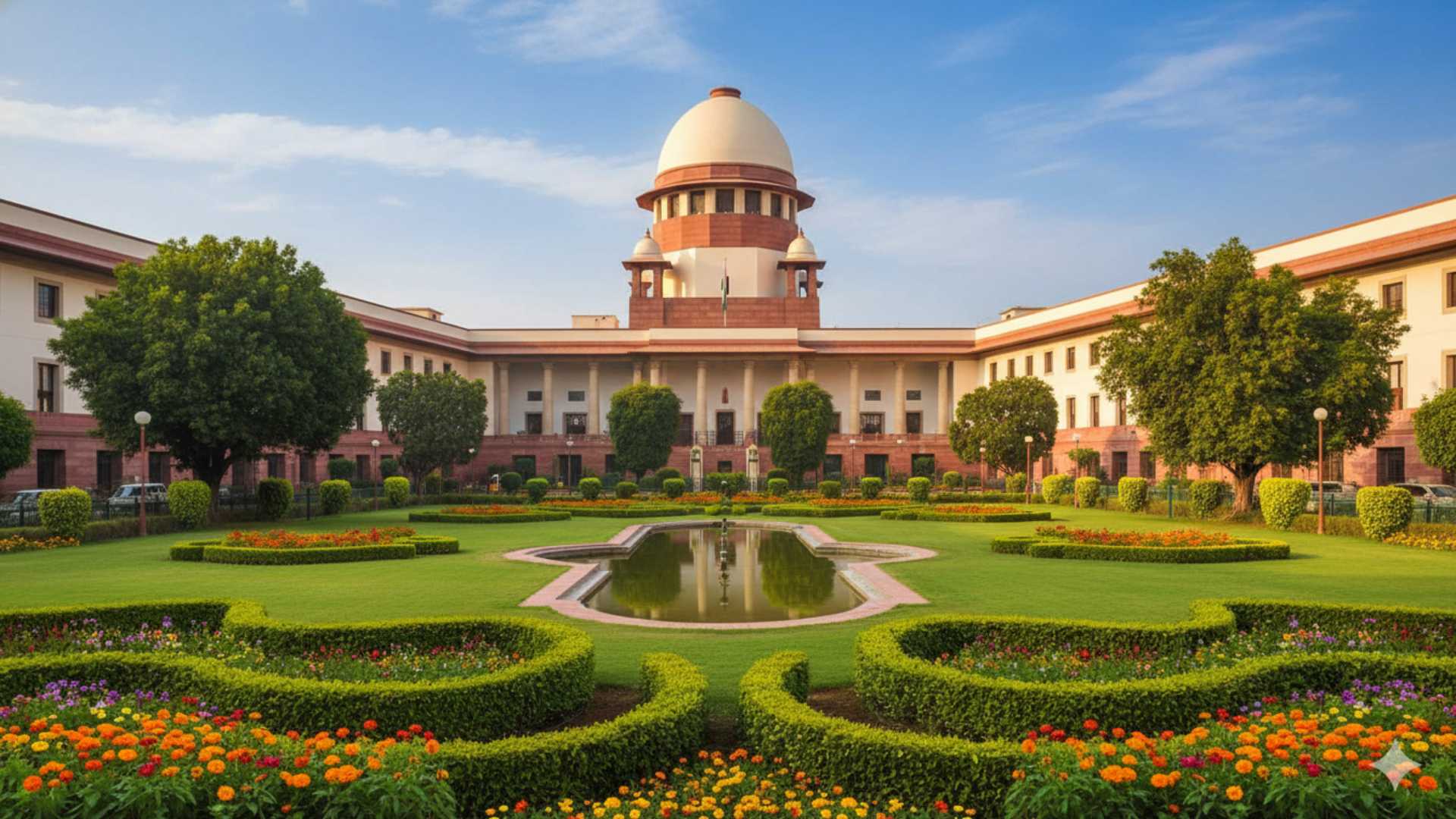
The Supreme Court, while hearing a petition seeking recognition of “racial slur” as a separate category of hate crime, expressed reservations about categorising crimes on the basis of race or regional identity. The Bench, led by the Chief Justice of India, cautioned that such classification may lead to social polarisation.
The Court emphasised that crime, irrespective of the identity of victim or perpetrator, must be dealt with firmly. It underlined that post 75 years of Independence, India’s strength lies in treating its diverse citizens equally rather than segmenting society along identity lines.
The matter was referred to the Attorney General for consideration by an appropriate authority, indicating judicial restraint and preference for legislative or executive deliberation on the issue.
The core governance dilemma is whether identity-based classification enhances justice or deepens social fragmentation. Ignoring this balance risks either normalising discrimination or institutionalising identity divisions.
2. The Triggering Incident and Pattern of Racial Violence
The petition arose after the fatal assault on Anjel Chakma, a 24-year-old MBA student from Tripura, in Uttarakhand. He was attacked after resisting racial heckling and died on December 27, never regaining consciousness.
The petition highlighted Chakma’s poignant words:
“We are Indians. What certificate should we show to prove that?”
The petitioner argued that the incident was not isolated but part of a pattern of racial violence against citizens from the North-Eastern States, citing earlier instances such as the death of Nido Taniam (2014) and recurring assaults on students and workers in metropolitan cities.
The Union government has acknowledged such incidents in parliamentary replies, yet there is no dedicated legislative or institutional framework specifically addressing racially motivated violence.
The broader governance concern is whether the absence of a specialised framework leads to under-recognition of systemic discrimination, thereby weakening constitutional guarantees of fraternity and equality.
3. Legal Framework: Gaps in Addressing Hate Crime
The petition contended that the newly enacted criminal laws, including the Bharatiya Nyaya Sanhita (BNS), inadequately address hate crime and racial discrimination as distinct offences. At present, racially motivated crimes are treated as ordinary offences without recognition of bias-based aggravation.
This raises concerns about the “initial criminal justice response system,” which may fail to capture the motive of racial hatred during registration, investigation, and prosecution. The absence of categorisation affects data collection, policy formulation, and deterrence mechanisms.
The Court, however, expressed caution that classifying crimes based on victim identity may create divisions and undermine the principle of equal treatment before law under Article 14 of the Constitution.
The institutional question is whether equality requires identical treatment of all crimes or differentiated treatment where structural discrimination exists. Ignoring motive may dilute justice, while over-classification may risk social segmentation.
4. Constitutional and Governance Dimensions
The issue engages multiple constitutional principles:
- Article 14 – Equality before law and equal protection of laws
- Article 15 – Prohibition of discrimination on grounds of religion, race, caste, sex, or place of birth
- Article 21 – Protection of life and personal liberty
- Preamble value of Fraternity
The Court’s emphasis on unity reflects concern for social cohesion in a diverse society. However, the petitioner’s argument reflects the constitutional commitment to protect vulnerable groups from targeted discrimination.
This debate mirrors global discussions on hate crime legislation, where enhanced penalties or separate recognition are introduced to address bias-motivated violence.
From a governance lens, the State must reconcile two constitutional goals: preserving unity through equal treatment and ensuring substantive justice for historically targeted communities. Failure on either front affects social trust in institutions.
5. Key Issues Emerging
Challenges:
- Lack of explicit recognition of racial motivation in criminal statutes
- Inadequate data capture on hate crimes
- Weak deterrence due to treatment as “ordinary crime”
- Risk of social polarisation if identity-based classification is perceived as preferential
Institutional Dilemma:
- Whether judicial intervention or legislative reform is the appropriate route
- Balancing formal equality with substantive equality
6. Implications for Policy and Society
If racially motivated crimes are not distinctly acknowledged, victims may experience institutional invisibility, leading to alienation and erosion of national integration.
Conversely, over-segmentation of criminal law based on identity may reinforce identity politics and social fragmentation.
The issue has cross-dimensional relevance:
- GS1: Social diversity and regional integration
- GS2: Judiciary, criminal justice reforms, constitutional values
- GS3: Internal security and social stability
- Essay: Fraternity, Unity in Diversity, Justice and Equality
Effective governance requires calibrated reform that strengthens deterrence and recognition of bias without institutionalising identity divisions. Ignoring this may weaken both social cohesion and faith in rule of law.
7. Way Forward
- Legislative review of hate crime provisions under BNS and related laws
- Clear guidelines for recognising bias motivation during investigation
- Sensitisation of police and prosecutorial agencies
- Improved data collection on racially motivated offences
- Public awareness reinforcing constitutional fraternity
Any reform must carefully align with constitutional principles of equality and unity while addressing the lived realities of discrimination.
Conclusion
The Supreme Court’s observations highlight a fundamental constitutional tension between identity-based recognition and universal equality before law. The path forward lies not in polarisation but in designing institutional responses that uphold justice, strengthen fraternity, and reinforce national integration in a diverse democracy.