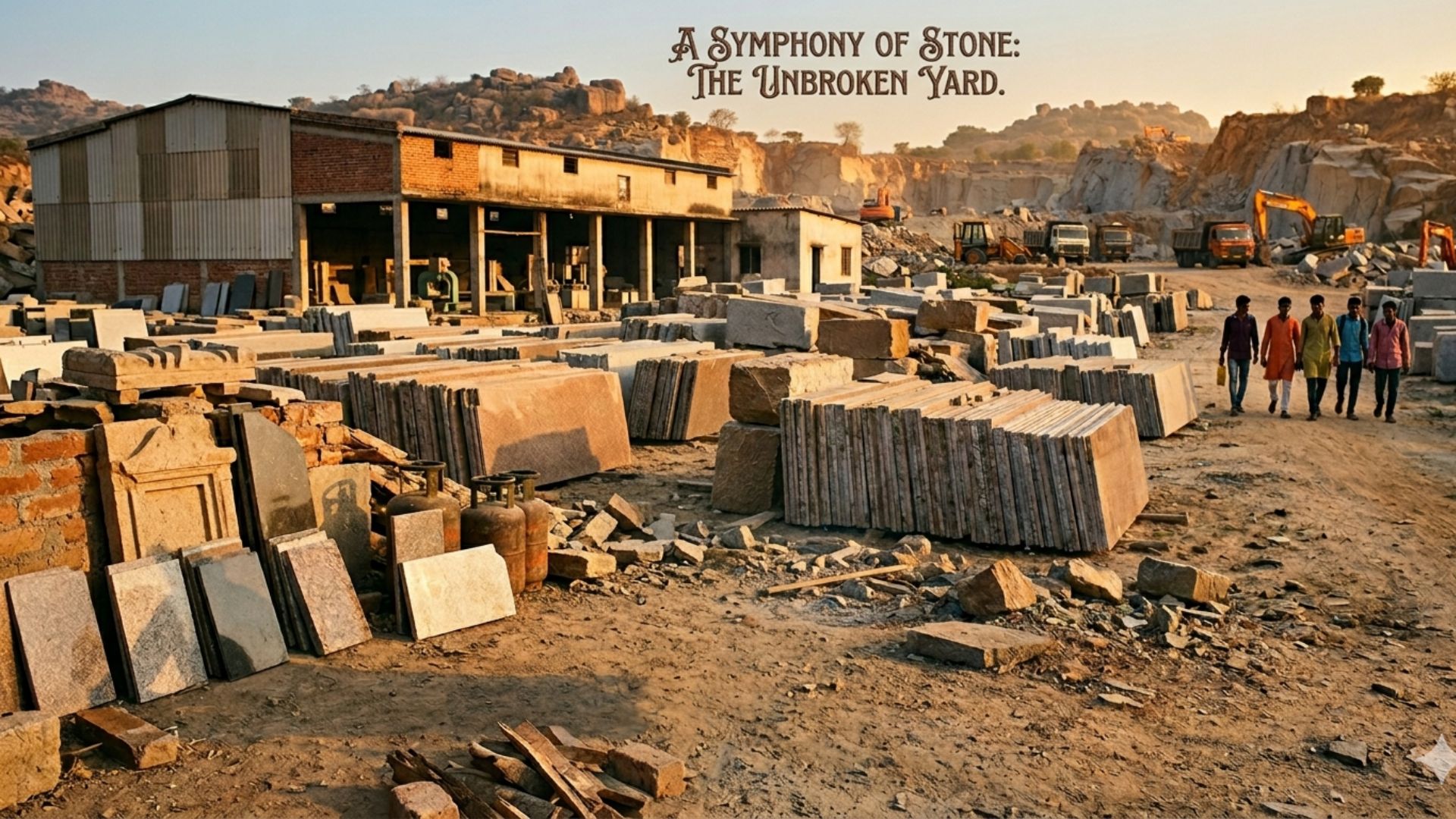

“The increase in transport charges due to fuel price hikes is taking a toll on our business.” — J. Praneeth Rao, Karimnagar District Granite Industries Association
The ongoing conflict in West Asia has exposed the vulnerability of Telangana's export-oriented granite industry. Rising fuel prices, disrupted shipping routes, declining global demand, and structural bottlenecks have combined to create one of the most serious crises faced by the sector since the COVID-19 pandemic.
Why Telangana's Granite Industry Matters
Telangana is among India's leading granite-producing States.
Major Granite Clusters
| District | Key Varieties |
|---|---|
| Karimnagar | Tan Brown, Coffee Brown, Maple Red, Red Rose, Blue Brown |
| Khammam | Jet Black, Black Granite |
| Warangal | Premium Black Granite |
Key Export Destinations
- China
- UAE and Middle East
- Japan
- Taiwan
- USA
- Europe
The industry supports:
250+ Quarries
590+ Processing Units
30,000–40,000 Families
Thousands of Migrant Workers
How the West Asia Conflict Triggered the Crisis
The crisis illustrates how geopolitical shocks affect local economies.
West Asia Conflict
        ↓
Higher Crude Oil Prices
        ↓
Rising Diesel Costs
        ↓
Higher Freight Charges
        ↓
Supply Chain Disruptions
        ↓
Reduced Exports & Production
Direct Impacts
- Rising transportation costs.
- Increased shipping charges.
- Cargo delays.
- Higher prices of imported machinery and drilling tools.
- Reduced international demand.
Karimnagar: The "City of Granites" Under Pressure
Karimnagar's famous Tan Brown granite was once in high demand globally, particularly during the Beijing Olympics construction boom.
Current Situation
| Indicator | Status |
|---|---|
| Fully Functional Licensed Quarries | ~25% |
| Export Dependence | Very High |
| Major Market | China |
The district exported about 56,730 cubic metres of granite during April-May 2026, but industry stakeholders report weakening demand and growing inventories of unsold slabs.
Export Vulnerability
Raw Granite Blocks → China

Polished Slabs → Middle East
This concentration makes the industry highly vulnerable to external disruptions.
Khammam's Black Granite Industry: An Industry in Retreat
Khammam's black granite sector once generated nearly:
Annual Turnover: ~₹1,000 Crore
Employment: ~1 Lakh People
Present Status
| Category | Number |
|---|---|
| Total Slab Units | ~470 |
| Shut Down Units | ~170 |
| Single Shift Units | ~200 |
| Fully Functional Units | ~100 |
Industry estimates suggest around 3,000 workers have already lost jobs.
Structural Challenges Beyond Geopolitics
The slowdown cannot be attributed solely to global conflicts.
Quarry Lease Policy Concerns
Industry representatives argue that:
- Earlier prospecting-based leases encouraged exploration.
- Open auction systems have increased entry barriers.
- Fewer entrepreneurs are willing to invest in exploration.
Government authorities maintain that lease allotments must follow regulatory and environmental safeguards.
Raw Material Shortages
A major concern is declining quarry activity.
| Indicator | Status |
|---|---|
| Earlier Active Quarries in Khammam | 200+ |
| Present Active Quarries | Less than 100 |
The China Factor
The sector has struggled since exports to China weakened after the pandemic.
According to industry associations:
- Nearly 70% of quarries in the erstwhile Karimnagar district have shut down.
- Demand from China remains subdued.
This highlights the risks of excessive dependence on a single export market.
Employment and Social Impact
The crisis has deeply affected migrant workers from:
- Odisha
- West Bengal
- Bihar
- Jharkhand
- Uttar Pradesh
- Rajasthan
Everyday Consequences
Reduced Factory Operations
          ↓
Lower Incomes
          ↓
Migration Back Home
          ↓
Social and Economic Distress
Workers report:
- Falling remittances.
- Job insecurity.
- Return to traditional firewood stoves due to rising LPG costs.
Cost Pressures and Tax Concerns
Industry participants face multiple financial burdens.
Rising Logistics Costs
| Category | Earlier | Current |
|---|---|---|
| Road Transport | ₹2,800–2,900/tonne | ₹3,300–3,600/tonne |
Other Challenges
- Rising electricity charges.
- Bank loan repayments.
- Costlier imported cutting tools.
- Higher diesel prices.
Industry bodies also argue that:
Granite GST = 18%

Tiles GST = 5%
creating a competitive disadvantage.
Circular Economy: Turning Waste into Wealth
One promising avenue for revival lies in granite waste utilisation.
Potential Products
- Manufactured sand.
- Premium tiles.
- Artefacts.
- Sanitaryware.
- Bath fittings.
- Construction materials.
Some enterprises in Khammam have already demonstrated commercial success using discarded granite blocks and slurry.
Regulatory Challenges
Despite slowing demand, authorities recently uncovered:
- Fake firms.
- Fabricated e-Way bills.
- Alleged tax evasion networks linked to black granite transportation.
The episode highlights the need for stronger compliance and monitoring mechanisms.
Government Response
Measures undertaken include:
- No increase in royalty and seigniorage charges.
- Release of pending subsidies.
- Restoration of older measurement methods.
Industry stakeholders additionally seek:
- Liberalised lease policies.
- Better rail connectivity to Kakinada Port.
- Promotion of Tan Brown granite in public infrastructure projects.
Way Forward
- Diversify export destinations beyond China and West Asia.
- Improve rail-port logistics and freight infrastructure.
- Encourage granite waste-based industries.
- Rationalise taxation and leasing policies.
- Promote domestic procurement of locally produced granite.
- Invest in technology, value addition, and market diversification.
Conclusion
The crisis in Telangana's granite industry demonstrates how regional economies are increasingly influenced by global geopolitical developments. While rising fuel costs, supply-chain disruptions, and weak export demand have triggered the current downturn, structural issues such as quarry policies, market concentration, and raw material shortages have amplified its impact. Building resilience through diversification, value addition, and policy support will be crucial for safeguarding livelihoods and ensuring the long-term sustainability of this strategically important industry.
Attribution
Original content sources and authors


Syllabus classification
How this article maps to GS papers
Main syllabus
GS1GeographyAlso covers
Quick Q&A
What is the significance of granite-based resource geography in Telangana’s industrial economy and export ecosystem?
Why is export dependence making Telangana’s granite industry highly vulnerable to global geopolitical and market fluctuations?
How do supply chain disruptions and rising fuel costs impact resource-based industries like granite mining and processing?
What is the critical analysis of quarry lease allocation policies such as open auctions on the sustainability of granite mining ecosystems?
How does the Karimnagar–Khammam granite belt illustrate the challenges of resource-dependent industrial clusters in India?
How can value addition, waste utilization, and policy interventions revive India’s granite-based resource industries?
Practice questions
1 question for mains preparation