India's Energy Security and Critical Minerals Diplomacy: Expanding Partnerships in a Changing Global Order

India is increasingly strengthening international partnerships to secure energy supplies, diversify strategic resources, and build resilient supply chains. Recent engagements with Venezuela and the United Kingdom highlight India's efforts to enhance energy security and critical mineral access while deepening cooperation within the Global South and beyond.
India–Venezuela Relations: A Renewed Strategic Partnership
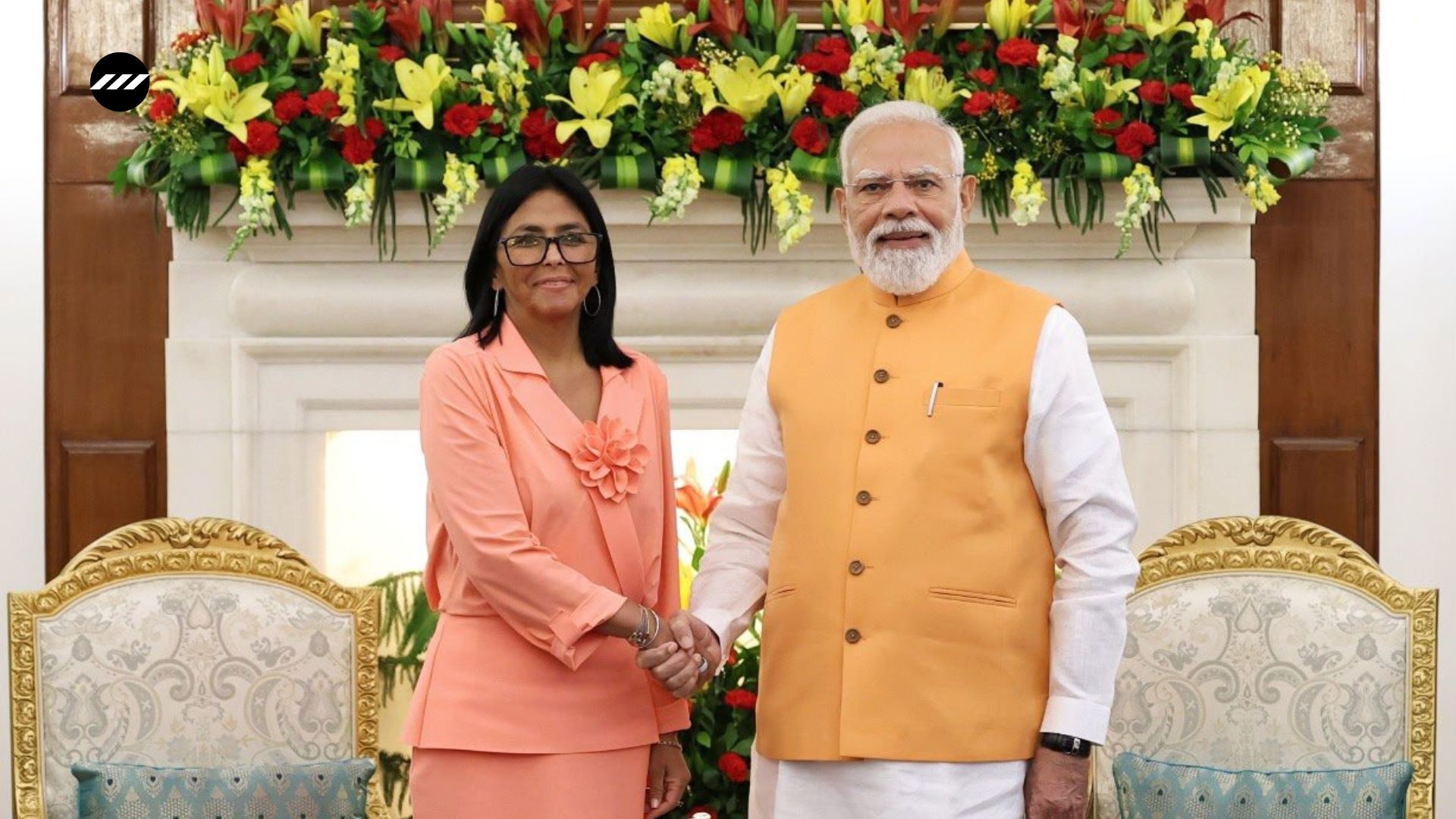
During the visit of Delcy Rodriguez, Acting President of Venezuela, Prime Minister Narendra Modi described India-Venezuela cooperation as being of "immense importance for the Global South."
The visit comes amid political and economic changes in Venezuela and reflects a renewed emphasis on bilateral cooperation.
Areas of Cooperation
| Sector | Focus Area |
|---|---|
| Energy | Oil and energy security |
| Critical Minerals | Resource cooperation |
| Technology | Technology sharing |
| Agriculture | Food and agricultural cooperation |
| Health | Healthcare collaboration |
| People-to-People Ties | Cultural and societal exchanges |
"As a valued partner in Latin America, our close cooperation with Venezuela holds immense importance for the Global South." — Prime Minister Narendra Modi
Why Venezuela Matters to India
Venezuela possesses some of the world's largest proven oil reserves.
At a time of uncertainty in global energy markets, Venezuela has become increasingly important for India's energy strategy.
Emerging Energy Partnership
According to Union Petroleum Minister Hardeep Singh Puri:
- Venezuela emerged among India's largest crude oil suppliers during April-May 2026.
- An Indian technical team will soon visit Venezuela.
- Indian companies already have investments in Venezuela.
Venezuela
     ↓
Large Oil Reserves
     ↓
India's Growing Energy Demand
     ↓
Strategic Energy Partnership
Officials described the relationship as one of "perfect complementarity" between a major producer and a large consumer.
Energy Security in a Turbulent Global Environment
India's efforts to diversify energy sources are influenced by ongoing geopolitical uncertainties.
Key concerns include:
- Volatility in global oil markets.
- Disruptions linked to the U.S.-Israel-Iran conflict.
- Strategic vulnerabilities around the Strait of Hormuz.
- Rising energy demand from India's growing economy.
In this context, expanding energy partnerships helps reduce supply risks.
The Global South Dimension
The visit also highlighted broader geopolitical objectives.
Both countries emphasized:
- South-South cooperation.
- Greater economic collaboration.
- Multipolar global governance.
- Mutually beneficial development partnerships.
The Venezuelan side described India as a "trusted partner" and highlighted the role of energy security as a fundamental pillar of bilateral relations.
Critical Minerals: The New Strategic Resource
Alongside energy security, India is also focusing on securing access to critical minerals.
Critical minerals are essential for:
- Electric vehicles
- Renewable energy systems
- Batteries
- Electronics
- Defence technologies
- Clean energy transitions
Critical Minerals
        ↓
Batteries + Solar Panels + EVs
        ↓
Energy Transition
        ↓
Strategic Importance
As global competition for these minerals intensifies, resilient supply chains have become a strategic priority.
India–U.K. Critical Minerals Partnership
India and the United Kingdom formally launched the Critical Minerals Global Supply Chain Observatory (GSCO).
The initiative was first announced during U.K. Prime Minister Keir Starmer's visit to India in 2025.
Institutional Partners
| India | United Kingdom |
|---|---|
| TEXMiN | University of Cambridge |
| IIT (ISM) Dhanbad | Research and Analytics Support |
The observatory will function as a data-driven platform to:
- Monitor global supply chains.
- Analyse mineral availability.
- Assess supply vulnerabilities.
- Support investment decisions.
Why the Observatory Matters
The platform aims to improve:
- Supply chain resilience.
- Strategic planning.
- Information sharing.
- Resource security.
"This is a major step towards strengthening critical mineral supply chains and supporting clean energy transitions." — G. Kishan Reddy
The U.K. also highlighted that improved information-sharing would benefit both countries and strengthen broader strategic cooperation.
Strategic Significance for India
Together, the Venezuela and U.K. engagements reflect two complementary pillars of India's resource diplomacy.
| Strategic Need | Partner |
|---|---|
| Energy Security | Venezuela |
| Critical Mineral Security | United Kingdom |
| Clean Energy Transition | Both |
| Supply Chain Resilience | Both |
Energy Security
       +
Critical Mineral Security
       ↓
Economic Growth
       +
Clean Energy Transition
       ↓
Strategic Autonomy
These partnerships support India's efforts to reduce vulnerabilities in an increasingly uncertain global environment.
Way Forward
- Diversify sources of crude oil imports.
- Expand overseas investments in energy assets.
- Strengthen critical mineral acquisition and processing capabilities.
- Deepen international partnerships for resource security.
- Promote strategic reserves for energy and minerals.
- Enhance domestic exploration and mining capacity.
- Build resilient and transparent global supply chains.
- Support technology-sharing and research collaboration.
Conclusion
India's engagements with Venezuela and the United Kingdom demonstrate a broader strategy aimed at securing both traditional and emerging strategic resources. While Venezuela contributes to India's energy security through oil supplies, the U.K. partnership strengthens access to critical minerals required for future technologies and clean energy transitions. Together, these initiatives reinforce India's quest for strategic autonomy, resilient supply chains, and a stronger role within the evolving global economic order.
Attribution
Original content sources and authors

Syllabus classification
How this article maps to GS papers
Main syllabus
GS1GeographyAlso covers
Quick Q&A
What is the significance of India's expanding partnership with Venezuela in the context of energy security and the Global South?
Why is energy security emerging as a major pillar of India's foreign policy and international partnerships?
How does the Critical Minerals Global Supply Chain Observatory strengthen India-United Kingdom cooperation and clean energy transitions?
What are the reasons behind the growing global competition for critical minerals and strategic resources?
What is a critical analysis of India's strategy of pursuing South-South cooperation and diversified energy partnerships?
What lessons can be drawn from India's recent engagements with Venezuela and the United Kingdom regarding resource diplomacy?
Practice questions
1 question for mains preparation