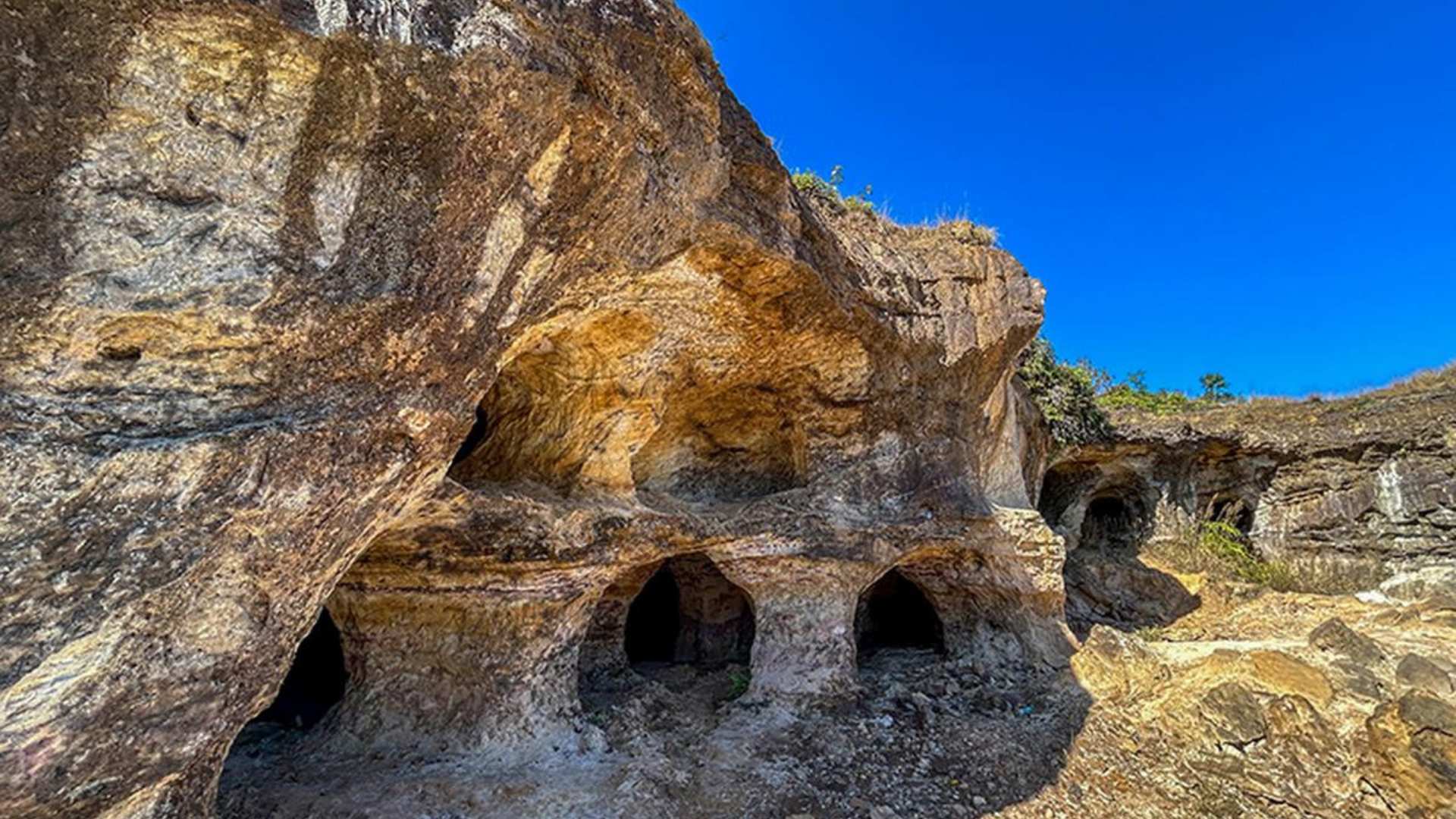
The Crisis of Rat-Hole Mining in Meghalaya

Addressing the socio-environmental impacts of illegal coal mining in Meghalaya and exploring effective governance solutions.
4 mins read
Meghalaya blast shows court bans fail without effective governance
Not Started

1. Illegal Rat-hole Mining in Meghalaya: Context and Persistence

The February 5 explosion in an illegal rat-hole mine in Meghalaya, killing at least 18 workers, underscores the persistence of unsafe and unlawful mining practices despite judicial intervention. The incident highlights the limits of court-led supervision when administrative governance remains weak.

Illegal coal mining has existed across India, but Meghalaya presents a distinct context shaped by small, privately or community-owned landholdings, thin coal seams, and informal extraction methods. Rat-hole mining, involving narrow vertical or horizontal tunnels without structural support, has become the dominant illegal practice.

Although the National Green Tribunal (NGT) ordered a ban on rat-hole mining in 2014, enforcement has remained ineffective. High local economic dependence on coal, fragmented ownership, and contractor-based operations diffuse accountability and enable continued violations.

If these structural conditions are ignored, accidents and fatalities are likely to recur, eroding trust in institutions and normalising illegality as an economic strategy.

Judicial bans without administrative capacity and political will cannot dismantle entrenched informal economies; when governance gaps persist, illegality adapts rather than disappears.


2. Governance Failures and the Illegal Coal Ecosystem

Illegal mining in Meghalaya is sustained by a complex ecosystem that launders illegally extracted coal into legitimate markets. Once coal enters transport and trading chains, it becomes difficult to distinguish from auctioned or legacy coal.

Weak local enforcement, underreporting of accidents, and the absence of formal labour records conceal the true scale of harm. While deaths occasionally draw attention, injuries, environmental damage, and the use of child labour largely remain invisible.

Supply chains involving intermediaries and transporters further dilute responsibility. This fragmentation allows illegal operations to persist with low expected costs and limited deterrence.

Failure to address these governance gaps risks perpetuating a cycle where human lives, environmental integrity, and the rule of law are subordinated to informal profit networks.

When illegal activities are embedded within supply chains and local livelihoods, enforcement failures transform isolated violations into systemic governance breakdowns.


3. Enforcement Challenges and Social Costs

The continuation of rat-hole mining reflects not only enforcement deficits but also social and economic compulsions. Coal income supports local livelihoods, making outright bans politically and socially fragile.

Administrative tolerance, patronage networks, and infrequent inspections further weaken deterrence. Contractors and intermediaries face limited consequences, while workers remain trapped in an informal labour market with no safety nets.

Environmental and social externalities — polluted water, acid mine drainage, unstable terrain, and degraded roads — impose long-term costs on communities that are rarely internalised by operators.

Ignoring these challenges risks pushing illegal mining further underground, increasing hazards while reducing visibility and accountability.

Enforcement that raises penalties without addressing livelihoods and administrative incentives often displaces, rather than resolves, illegal practices.


4. Strengthening Detection and Accountability Mechanisms

Meghalaya already operates under the Mines and Minerals (Development and Regulation) Act (MMDR Act), which provides a legal framework to curb illegal mining, transport, and storage. However, implementation gaps weaken its effectiveness.

Raising the expected cost of illegality requires lowering detection costs and targeting intermediaries rather than only mine operators. Technology-enabled monitoring can reduce discretion and improve real-time enforcement.

Policy measures / Reforms:

  • Mandatory GPS tracking for all coal carriers.
  • Invalidating consignments that deviate from approved routes.
  • Integrating satellite and drone surveillance with district control rooms.
  • Seizure of vehicles, licence cancellation, prosecution, and blacklisting from auctions for intermediaries.

Without credible detection and penalties along the supply chain, illegal extraction will continue to find pathways into formal markets.

Targeting logistics and intermediaries increases systemic deterrence, as it disrupts the economic viability of illegal mining rather than only its extraction point.


5. Livelihood Substitution and Labour Market Reforms

Bans on illegal mining are unlikely to succeed without viable income alternatives. The persistence of rat-hole mining reflects the absence of diversified employment opportunities in coal-dependent regions.

The State must actively displace illegal mining as a livelihood by investing in alternative sectors and absorbing labour through public works.

Policy measures / Reforms:

  • Credit and market linkages for horticulture, construction, small manufacturing, and tourism.
  • Refitting public infrastructure projects to absorb former mining labour.
  • Allowing workers to testify against illegal operators in exchange for amnesty.
  • Aggressive prosecution of contractors and rotation of officials in hotspot districts.
  • Independent audits of mining and transport permits.

If labour remains informal and disposable, illegal operations will continue to recruit workers despite repeated accidents.

Addressing the labour supply side converts enforcement from a punitive exercise into a transition strategy, reducing both risk and resistance.

Conclusion

The Meghalaya mine blast illustrates that treating rat-hole mining solely as an enforcement problem is insufficient. Sustainable resolution requires integrating technology-driven monitoring, supply-chain accountability, livelihood diversification, and administrative reform. Without such a multidimensional governance approach, illegal mining will persist as a hidden economy, exacting recurring human and environmental costs.

Quick Q&A

Everything you need to know

Concept and practice: Rat-hole mining refers to a primitive and hazardous method of coal extraction where narrow tunnels are dug manually, often just large enough for a person to crawl through. These tunnels lack scientific planning, engineered supports, ventilation systems, or safety protocols. As a result, they are extremely prone to collapse, flooding, and toxic gas exposure. The National Green Tribunal (NGT) banned rat-hole mining in 2014, recognising its severe environmental and human costs, yet the practice continues illegally.

Regional specificity of Meghalaya: Rat-hole mining is especially prevalent in Meghalaya due to a unique combination of factors. Land ownership in the State is largely private or community-based under Sixth Schedule protections, limiting direct state control. Coal seams in the region are thin and dispersed, making mechanised mining economically unviable and encouraging manual extraction. Weak enforcement capacity, fragmented contract systems, and high local dependence on coal income further entrench the practice.

Structural vulnerability: The Meghalaya coal belt has also developed supply chains that allow illegally mined coal to be laundered into legal markets through intermediaries. Once coal enters depots or transport networks, it becomes difficult to distinguish illegal coal from legacy or auctioned coal. This structural opacity sustains rat-hole mining despite judicial bans, highlighting that the issue is not merely illegal activity but an entrenched political economy problem.

Limits of judicial intervention: The failure of the NGT’s 2014 ban illustrates that court supervision cannot substitute for effective governance. Judicial orders rely on executive capacity for implementation, which has remained weak in Meghalaya. Enforcement agencies face local political pressure, capacity constraints, and administrative tolerance toward illegal mining operators and contractors.

Economic dependence and social complicity: A significant reason for continued illegal mining is the high dependence of local communities on coal for livelihood. Fragmented ownership and subcontracting diffuse accountability, while patronage networks protect operators. Workers are often kept off formal records, accidents are underreported, and child labour persists, making enforcement socially and politically costly for the state.

Governance deficit: Judicial bans address legality but not underlying incentives. Without alternative livelihoods, financial inclusion, or market linkages for other sectors, bans push mining further underground. This demonstrates that legal prohibitions, in isolation, often displace rather than eliminate illegal economic activities, reinforcing the article’s argument that governance failures — not legal gaps — are at the heart of the problem.

Raising the cost of illegality: Technology can significantly increase the expected cost of illegal mining and transportation. Mandatory GPS tracking for all coal carriers would allow authorities to monitor routes in real time and invalidate consignments that deviate from approved paths. Such measures reduce the anonymity that currently allows illegal coal to blend into legal supply chains.

Integrated surveillance systems: The use of satellite imagery and drone patrols, integrated with district-level control rooms, can improve detection of illegal mining sites and transport corridors. These tools reduce reliance on manual inspections, which are vulnerable to corruption, capacity constraints, and local intimidation. Similar satellite-based monitoring has been used in forest conservation and sand mining regulation with measurable success.

Institutional integration: Technology must be embedded within institutional processes. Data generated from GPS and surveillance should feed into enforcement actions such as seizure, licence cancellation, blacklisting of intermediaries, and prosecution. Without administrative follow-through, technology risks becoming symbolic rather than transformative.

Limits of coercive enforcement: Treating rat-hole mining solely as a law-and-order problem risks driving the practice further underground. Heightened enforcement without livelihood alternatives increases the vulnerability of workers, encourages more secretive operations, and deepens reliance on informal labour markets. The February 5 mine explosion underscores how such underground practices magnify human costs.

Political economy perspective: Illegal mining persists because it is embedded in local economies and patronage networks. Enforcement alone does not dismantle demand, labour supply, or intermediary incentives. In fact, selective enforcement can strengthen rent-seeking by officials and contractors, making the system more opaque rather than transparent.

Balanced approach: A more effective strategy combines enforcement with structural reforms: alternative livelihoods, labour protection, administrative accountability, and community monitoring. Experiences from other extractive regions show that sustainable outcomes require addressing economic incentives alongside legal deterrence. Thus, the article rightly cautions against an enforcement-only lens.

Displacing illegal mining as an income source: Meghalaya must actively create alternative livelihoods to reduce dependence on illegal coal. Credit access and market linkages for horticulture, small manufacturing, construction, and tourism can provide viable substitutes. Public works programmes can be refitted to absorb mining labour, ensuring income continuity during transition.

Supply-side disruption and labour protection: The state should dismantle incentives for illegal mining by targeting intermediaries through seizure, blacklisting, and prosecution. Allowing workers to testify in exchange for amnesty can expose contractor networks while protecting vulnerable labourers. This approach has parallels in organised crime investigations, where witness protection is crucial for systemic disruption.

Administrative and social accountability: Rotating officials in hotspot districts, independent audits of permits, and community-based monitoring — incentivised by sharing penalties with local bodies — can reduce administrative tolerance. Together, these measures illustrate a comprehensive policy mix that recognises rat-hole mining as a governance, livelihood, and political economy challenge rather than a mere enforcement failure.

Attribution

Original content sources and authors

Sign in to track your reading progress

Comments (0)

Please sign in to comment

No comments yet. Be the first to comment!