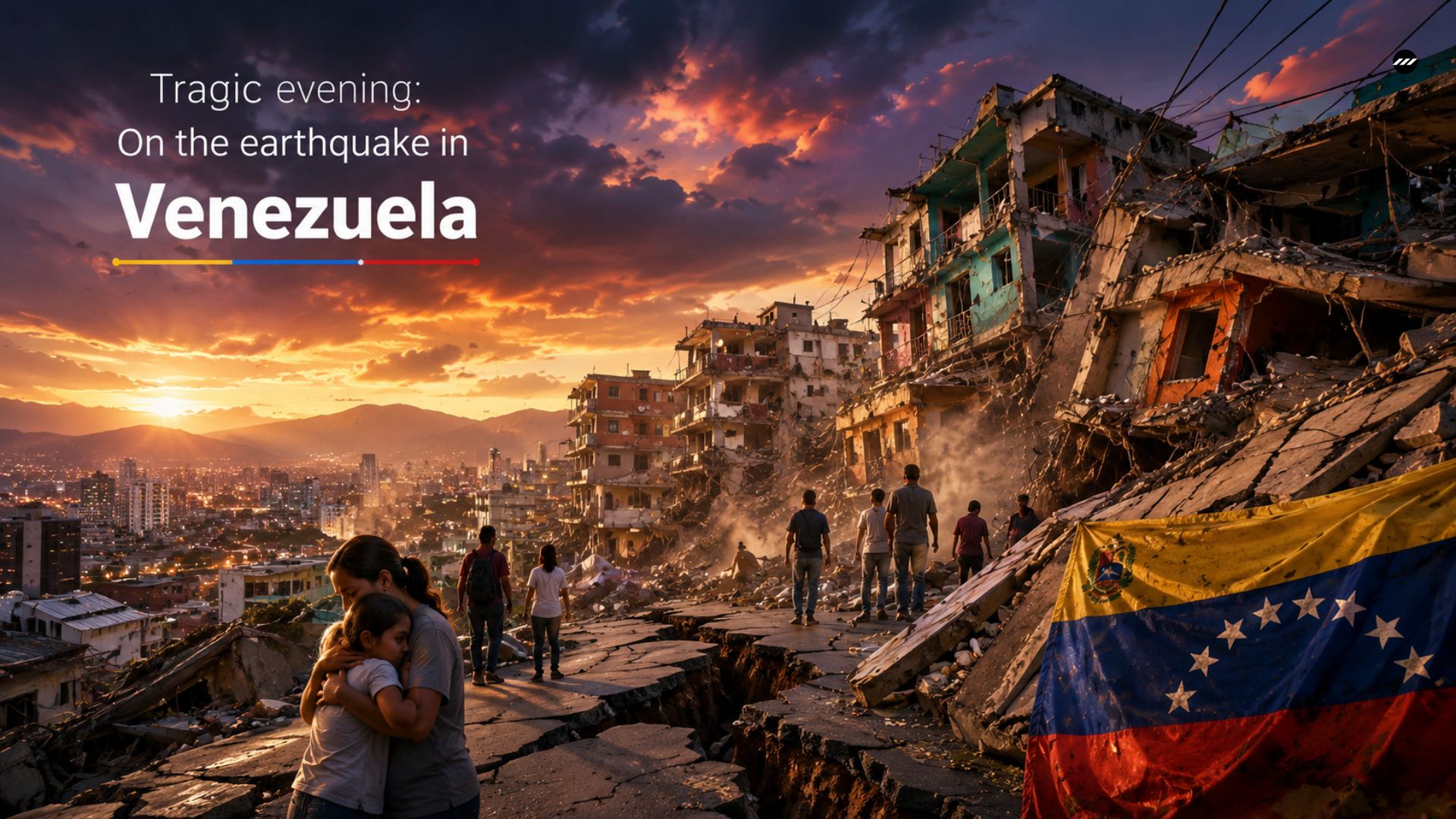
Venezuela Earthquake: Lessons for India's Seismic Preparedness
 Dhinesh Balasubramanian
The recent twin earthquakes of magnitudes 7.1 and 7.5 that struck Venezuela have highlighted how rare but powerful seismic events can cause catastrophic human and economic losses. While India has extended humanitarian assistance, the disaster also offers important lessons for strengthening India's own earthquake preparedness, particularly in the Himalayan region.
What happened in Venezuela?
Two major earthquakes struck within seconds of each other, causing widespread destruction.
| Indicator | Status |
|---|---|
| Earthquake magnitudes | 7.1 and 7.5 |
| Nature of event | Twin earthquakes (Earthquake Doublet) |
| Reported deaths | 920 |
| Injured | 3,360 |
| Worst affected State | La Guaira |
| Buildings collapsed | Over 100 |
The US Geological Survey (USGS) has estimated that the final death toll could exceed 10,000.
Why was the earthquake unusual?
Unlike countries located along the Pacific Ring of Fire, Venezuela lies on the boundary between the South American Plate and the Caribbean Plate.
Here:
- The plates mainly slide past each other rather than collide.
- Stress accumulates slowly over long periods.
- Energy may be released suddenly through major earthquakes.
Strain can accumulate quietly for generations before being released in a single destructive event.
What is an earthquake doublet?
Seismologists have identified the event as an earthquake doublet, involving two major earthquakes occurring within a short interval due to a complex rupture interaction.
Similar examples include:
- Northern Venezuela (2025)
- Türkiye–Syria earthquakes (2023)
A key reason for the devastation was the shallow depth of the earthquakes.
| Characteristic | Significance |
|---|---|
| Depth | Less than 30 km |
| Effect | Seismic energy reaches the surface with greater intensity, causing severe structural damage |
Why is this relevant for India?
The editorial argues that the disaster serves as a warning for India, particularly the Himalayan region.
India has already offered humanitarian assistance through:
- Search and rescue teams
- Medical supplies
- Disaster relief logistics
However, the more enduring lesson lies in strengthening domestic seismic resilience.
Concerns regarding India's seismic preparedness
A significant concern relates to the revision of India's seismic hazard assessment.
According to the article:
-
The Bureau of Indian Standards (BIS) withdrew a decade-long scientific study.
-
The revised assessment reportedly:
- Nearly doubled design forces in the highest seismic zones.
- Proposed a sixth seismic zone, replacing the existing five-zone classification.
-
The revision was reportedly shelved after concerns that it could affect ongoing infrastructure projects, including metro systems.
Comparison of seismic design standards
| Country | Approximate Design Ground Acceleration |
|---|---|
| India (Zone V) | 0.36g |
| Nepal & Pakistan | ~0.75g |
| United States & Japan | 1g or more |
This comparison suggests that India's design standards may require periodic review based on evolving scientific evidence.
India's seismic vulnerability
The article highlights the scale of India's earthquake risk.
- Nearly 79% of Indians live in areas facing moderate to severe seismic risk.
- Around 95% of earthquake deaths occur in one- to three-storey residential buildings, many of which fall outside effective enforcement of building codes.
Earthquake
      ↓
Building Performance
      ↓
Lives Saved or Lost

Prediction is uncertain
Construction quality is controllable
The emphasis therefore shifts from predicting earthquakes to reducing vulnerability.
Key lessons from Venezuela
The disaster demonstrates that:
- Rare seismic zones can still experience devastating earthquakes.
- Shallow earthquakes cause disproportionately high destruction.
- Scientific risk assessments should inform infrastructure planning.
- Building resilience is more effective than relying on prediction.
- Disaster preparedness requires continuous investment before disasters occur.
"The earth follows its rhythm; the only choice is whether or not to be ready."
Way Forward
- Periodically revise India's seismic hazard maps based on the latest scientific evidence.
- Strengthen enforcement of earthquake-resistant building codes, especially in high-risk regions.
- Retrofit vulnerable public infrastructure and residential buildings.
- Improve urban planning and disaster preparedness in Himalayan States.
- Expand public awareness, earthquake drills and community resilience programmes.
- Integrate scientific assessments into infrastructure planning without compromising safety.
Conclusion
The Venezuela earthquake underscores that seismic disasters are governed by geological processes beyond human control, but their consequences are largely determined by preparedness. For India, especially its earthquake-prone Himalayan region, resilient infrastructure, updated hazard assessments and strict implementation of seismic safety standards remain the most effective safeguards against future disasters.
Attribution
Original content sources and authors

Syllabus classification
How this article maps to GS papers
Main syllabus
GS1GeographyQuick Q&A
What is a seismic doublet earthquake, and why does understanding this phenomenon matter for disaster risk reduction and earthquake preparedness in countries like India?
Why should India reconsider its seismic hazard assessment and earthquake-resistant building standards in light of recent global earthquake disasters and evolving scientific evidence?
How do tectonic plate interactions influence earthquake occurrence, and what distinguishes strike-slip boundaries from convergent plate boundaries in terms of seismic hazards?
Critically analyse the challenges involved in balancing infrastructure development, scientific recommendations, and public safety while framing earthquake resilience policies in India.
What lessons can India learn from the recent Venezuela earthquake and other major international earthquake disasters to strengthen its disaster preparedness and resilience framework?
Practice questions
1 question for mains preparation