1. Context: Discovery of Indian Inscriptions in the Valley of the Kings
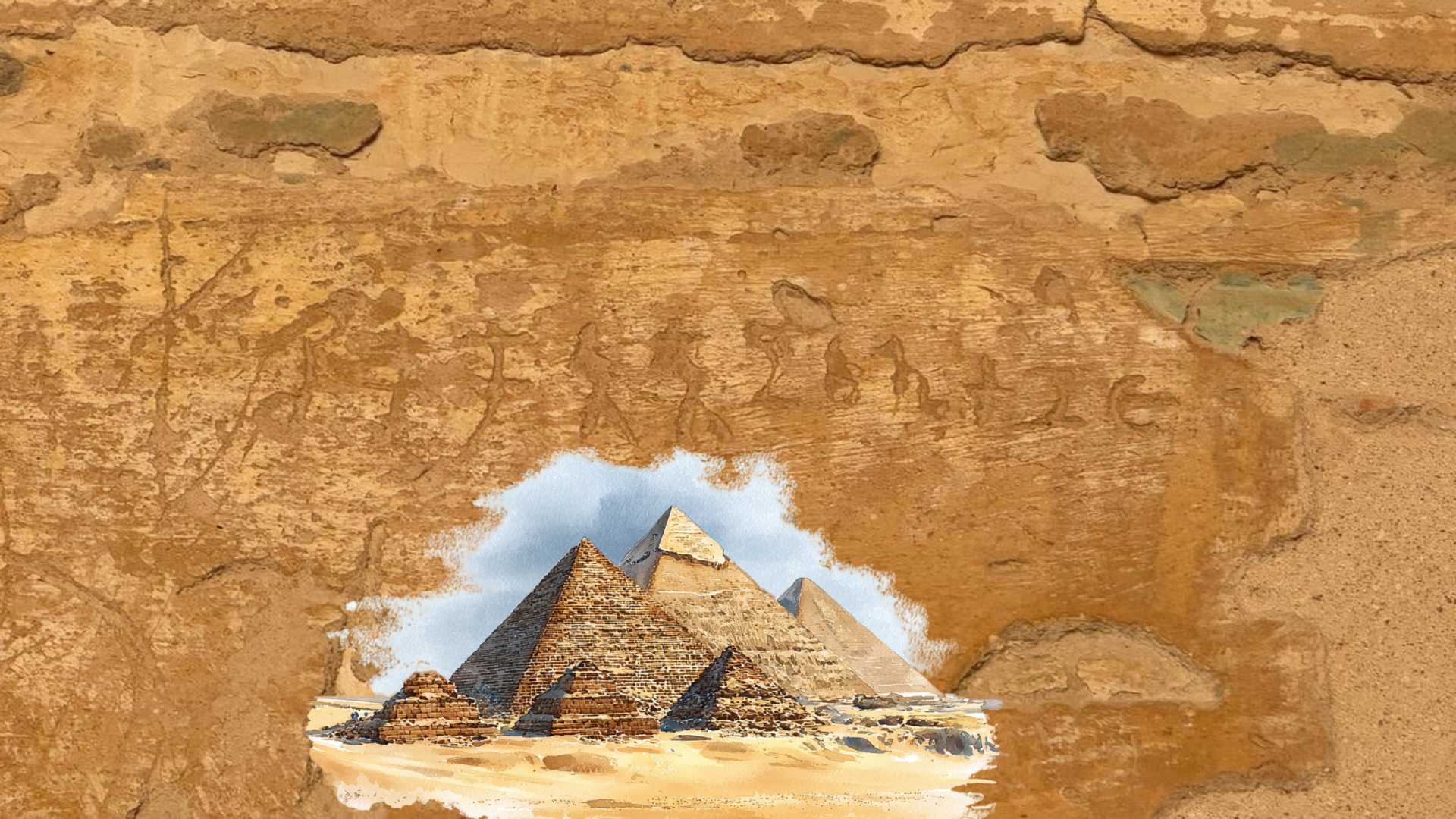
Recent fieldwork in 2024–25 by Charlotte Schmid (EFEO, Paris) and Ingo Strauch (University of Lausanne) identified ~30 inscriptions in Tamil Brahmi, Prakrit and Sanskrit inside tombs of the Theban Necropolis in Egypt. These belong to 1st–3rd century CE, signalling sustained presence of visitors from the Indian subcontinent in pharaonic spaces. The inscriptions were carved deliberately within interior walls and corridors, mirroring the established Mediterranean custom of leaving graffiti to mark presence or pilgrimage.
This discovery builds upon the earlier documentation of 2,000+ Greek graffiti by French scholar Jules Baillet (1926). Indian graffiti appear within this broader multilingual milieu, showing that Indians were neither isolated travellers nor accidental visitors. Their participation in the local graffiti tradition indicates familiarity with, and acceptance into, contemporary transregional travel and trade norms.
The majority of the individuals identified came from south India, particularly ancient Tamilagam, while others came from western and north-western India. This suggests a diverse network of merchants, sailors and possibly religious pilgrims, who integrated Nile Valley travel into existing maritime circuits linking the Red Sea, Arabian Sea and peninsular India.
This matters because it provides direct epigraphic evidence for long-distance mobility and commerce, strengthening our understanding of Indo-Roman engagement. If ignored, reconstructions of early historic trade would rely solely on literary and numismatic data, limiting reliability.
2. Tamil Brahmi Inscriptions and Their Linguistic-Social Significance
Several Tamil Brahmi inscriptions record personal names such as Cikai Koṟṟaṉ, Kopāṉ, Cātaṉ, and Kiraṉ. The name Cikai Koṟṟaṉ appears eight times across five tombs, including at a height of ~4 metres, implying effort and repeat visits. The name combines a Sanskrit-derived prefix (śikhā, “tuft/crown”) with a distinctly Tamil second element (koṟṟam, “victory/slaying”), a root associated with Chera martial tradition and the goddess Koṟṟavai.
These linguistic elements anchor the individuals to southern India while also revealing cultural overlap across linguistic zones. The recurrence of names matching Sangam-era references, including parallels to the Chera king Piṭṭāṅkoṟṟaṉ, aligns the inscriptions with 2nd–3rd century CE, coinciding with a peak period of Indo-Roman trade. The appearance of names like Kopāṉ in both Egypt and Tamil Nadu (Ammankovilpatti) enriches the corpus of Tamil Brahmi scripts found beyond the subcontinent.
Understanding the linguistic signatures helps trace mobility networks and socio-cultural identities of travellers. Ignoring this risks flattening India’s early historic diversity and obscuring Tamilagam’s role in transoceanic exchanges.
3. Evidence of Trade Networks Between Tamilagam and the Roman World
These inscriptions complement earlier finds from Berenike, a Red Sea port with established Indo-Roman links, where Tamil names such as Koṟṟapumāṉ have been found since 1995. The new evidence shifts attention inland towards the Nile Valley, suggesting that Indian merchants did not limit themselves to coastal trade but travelled via established caravan or river routes deeper into Egypt.
The inscriptions support long-known patterns of trade documented in Sangam literature, Greco-Roman texts (Pliny, Periplus of the Erythraean Sea), and archaeological finds such as Roman amphorae, rouletted ware, and gold coins in peninsular India. Tamilagam’s ports on the Malabar Coast—notably Muziris—served as nodal points for Indo-Mediterranean commerce dominated by spices, beads, textiles, and luxury goods.
K. Rajan of the Tamil Nadu State Department of Archaeology notes that scholarship has traditionally concentrated on Berenike and Red Sea routes. The new epigraphic material encourages revision of trade-route reconstructions to include deeper Egyptian hinterlands, expanding our understanding of the reach of Tamil merchants.
If this broader spatial perspective is overlooked, Indian Ocean trade studies risk being limited to port-level interactions, missing the complexity of inland exchange networks.
Implications:
- Strengthens evidence for Indo-Roman commercial interdependence (1st–3rd CE)
- Shows mobility of Indian merchants deep into Egypt
- Supports literary-historical data from Sangam corpus
- Expands archaeological geography beyond Berenike to the Nile Valley
4. Cultural Interactions and Practices Reflected in Graffiti
The inscriptions appear in environments filled with Greek and other graffiti, suggesting that Indian visitors adopted a common Mediterranean practice of inscribing names at culturally significant sites. This indicates cross-cultural familiarity and possibly an intention to signal status, presence, or participation in a shared merchant-pilgrimage culture.
These interactions reflect soft modes of cultural diplomacy, where identity markers (names, scripts, linguistic forms) travelled alongside goods. The inscriptions also show that Tamil Brahmi, Prakrit and Sanskrit were part of a multilingual early historic commercial world, capable of being carried across distant geographies by traders and travellers.
Such practices challenge simplistic binaries of “trade vs. culture,” highlighting how commerce often facilitated exchanges of language, script, and personal identity markers. Consequently, they enrich our understanding of cosmopolitanism in the early Roman Empire and its Indian Ocean connections.
If ignored, cultural dimensions of trade risk being overshadowed by purely economic narratives, reducing the historical richness of Indo-Mediterranean linkages.
5. Scholarly Significance and Future Directions
This discovery underscores gaps in earlier archaeological surveys, showing how multilingual graffiti can remain unnoticed for decades until studied by experts in South Asian scripts. The work of Schmid and Strauch demonstrates the importance of interdisciplinary research combining epigraphy, linguistics, archaeology, and Indo-Mediterranean history.
It also invites renewed exploration of other Nile Valley and Egyptian sites that may contain unrecognised Indian inscriptions. Such studies could recalibrate understandings of migration, cultural encounters, and maritime economies during the early centuries CE.
For Indian archaeology, this offers valuable external corroboration for Sangam-era polities, port systems, and overseas mobility—elements critical to reconstructing India’s early historic globalisation phase.
Ignoring the scholarly potential of these finds could slow progress in integrating Indian Ocean studies with Mediterranean archaeology, leading to fragmented regional histories.
Conclusion
The identification of Tamil Brahmi, Prakrit and Sanskrit inscriptions in Egypt’s Valley of the Kings provides rare, direct epigraphic evidence of long-distance mobility between ancient Tamilagam, wider India, and the Roman world. It strengthens reconstructions of Indo-Roman trade, expands the geographical imagination of Indian Ocean commerce, and highlights the cultural footprints of early historic travellers. Going forward, interdisciplinary and transregional research will be essential to fully map India’s ancient global interactions.