The Long Way Home: Bringing India’s Stolen Gods Back
Context
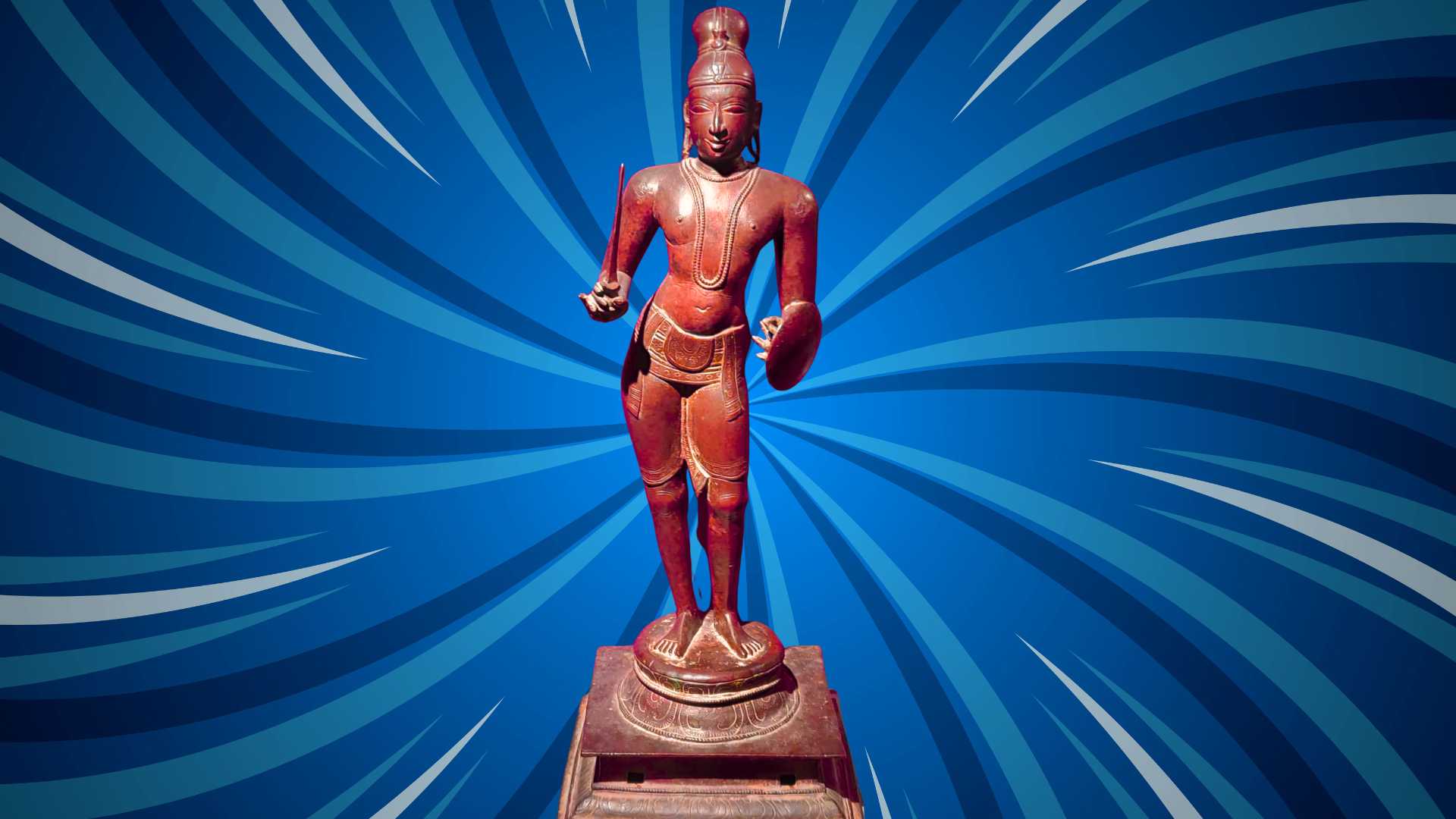
- The Ashmolean Museum (University of Oxford, UK) returned a 16th-century bronze statue of Saint Thirumangai Alvar to the Government of India in March 2026.
- The idol originally belonged to the Soundararaja Perumal Temple (Sundaraperumal Koil), Tamil Nadu.
- The return followed provenance research and cooperation between Indian authorities and the museum.
- The statue will be restored to its original role as an object of worship.
Key Terms
Cultural Repatriation
- Definition: The process of returning cultural artifacts, artworks, or heritage objects to their country or community of origin.
- Usually occurs when objects were illegally exported, stolen, or acquired under questionable circumstances.
- Increasingly practiced by museums, universities, and governments worldwide.
Provenance
- Definition: The documented history of ownership and origin of an artifact.
- Establishing provenance helps determine whether an object was legally acquired.
Idol Theft
- Refers to the illegal removal or smuggling of sacred idols from temples.
- Particularly significant in South India, where Chola bronze idols are globally valued.
About Thirumangai Alvar
- Thirumangai Alvar was one of the 12 Alvars (Vaishnavite poet-saints) of Tamil Nadu.
- Lived around the 8th–9th century CE.
- Known for composing devotional hymns in praise of Lord Vishnu.
- His works form part of the Divya Prabandham, a sacred Tamil Vaishnavite text.
About the Returned Bronze
- Period: 16th century.
- Material: Bronze.
- Temple: Soundararaja Perumal Temple, Tamil Nadu.
- Religious significance: Used in temple worship and processions.
Example
- In South Indian temples, bronze idols are often used during festivals and processions, unlike stone idols that remain inside sanctums.
How the Idol Was Identified
Discovery
-
In 2019, a French scholar alerted the Ashmolean Museum.
-
A 1957 photograph of the idol was found in archives of:
- Institut Français de Pondichéry (IFP)
- École française d’Extrême-Orient (EFEO)
Matching Evidence
-
The India Pride Project matched:
- The Ashmolean idol
- With the 1957 temple photograph
Police Complaint
-
In February 2020, the temple executive officer filed a police report stating:
- The original bronze had been replaced with a modern replica.
Timeline of Events
-
1957
- Photograph of the idol taken in the temple.
-
1967
- Ashmolean Museum acquired the statue from private collector J.R. Belmont via Sotheby’s.
- No record of how the collector obtained it.
-
2019
- Scholar identifies the idol in the museum using archival photographs.
-
Dec 2019
- Ashmolean contacts Indian High Commission in London about possible return.
-
Feb 2020
- Temple authorities file police report regarding replacement of original idol.
-
Mar 2020
- India formally claims the artifact.
-
Mar 2026
- Statue officially returned to India.
Role of the India Pride Project
-
India Pride Project (IPP) is a volunteer-based heritage activism group.
-
Focuses on identifying stolen Indian artifacts in international collections.
-
Uses:
- Archival photographs
- Museum catalogues
- Historical records
Example
- IPP has helped recover several Chola bronzes and temple idols from museums in the US, UK, and Australia.
Ethical Museum Practices
Modern museums increasingly follow ethical collection policies, including:
- Investigating the provenance of artifacts
- Cooperating with source countries
- Returning items linked to theft or colonial acquisition
Quote
-
Ashmolean Director Xa Sturgis said:
- “The Ashmolean is pleased to see this important object returned to India… The Museum is committed to ethical collections practices.”
Importance of the Repatriation
Cultural Significance
- Reunites the idol with its temple and devotees.
- Restores religious and cultural continuity.
Heritage Protection
- Strengthens global cooperation against cultural trafficking.
Moral Responsibility
- Demonstrates museum accountability.
Quote
-
Indian High Commission:
- “This is not merely restoration of an object of art, but the reunification of an icon of faith with its intended shrine.”
Idol Theft in India (Key Facts)
- Tamil Nadu has witnessed hundreds of idol theft cases since the 1950s.
- Many stolen idols ended up in international museums and private collections.
- The Tamil Nadu Idol Wing CID investigates such crimes.
Example recoveries
- Nataraja bronze idols
- Chola bronze statues
- Temple sculptures from Tamil Nadu and Karnataka
Relevant International Conventions
UNESCO Convention 1970
- Prevents illicit import, export, and transfer of ownership of cultural property.
- Encourages repatriation of stolen artifacts.
UNIDROIT Convention 1995
- Strengthens legal mechanisms for returning stolen cultural objects.
India’s Efforts to Recover Stolen Heritage
-
India has intensified diplomatic efforts for artifact repatriation.
-
Major countries returning artifacts include:
- USA
- Australia
- UK
- Germany
Statistics
- Over 600+ antiquities have been repatriated to India since 2014.
Conclusion
-
The return of the Thirumangai Alvar bronze reflects:
- Growing global awareness of cultural justice
- Effective heritage activism and diplomacy
- The importance of provenance research in museums.
-
It represents not just the return of an artifact but the restoration of cultural identity and faith.
Attribution
Original content sources and authors
Syllabus classification
How this article maps to GS papers
Main syllabus
GS1Indian CultureQuick Q&A
What is the significance of the repatriation of the Saint Thirumangai Alvar bronze statue from the Ashmolean Museum to India?
The importance of this repatriation lies in the recognition that many artefacts housed in Western museums were acquired under ambiguous or questionable circumstances. Although the Ashmolean Museum purchased the statue in 1967 in good faith, later research revealed that a photograph of the same idol existed in temple archives from 1957. This indicated that the statue had been removed from its original temple environment and eventually entered private collections before reaching the museum. The discovery triggered a collaborative process involving scholars, the Indian government, and cultural activists.
The broader significance extends beyond the return of a single artefact. It represents a shift toward ethical museum practices and greater accountability in the global art world. The Ashmolean’s willingness to engage with Indian authorities demonstrates the evolving norms around provenance research and restitution. Furthermore, the return of such artefacts reinforces cultural identity and religious continuity. In India, temple idols are not merely works of art but sacred objects of worship, and their absence disrupts both cultural memory and ritual practice.
Thus, the repatriation symbolizes:
- The restoration of cultural heritage to its rightful context
- The growing global consensus on ethical museum practices
- The strengthening of diplomatic and cultural cooperation between nations
- The recognition of the spiritual significance of sacred artefacts
Why is provenance research important in addressing the issue of stolen or illegally exported cultural artefacts?
This research is particularly significant because the global art market has historically been susceptible to illicit trade in antiquities. Many artefacts were removed from temples, archaeological sites, or cultural institutions during colonial rule or through organized smuggling networks. Without proper documentation, museums may unknowingly acquire such objects. Provenance research helps uncover these hidden histories and ensures that cultural institutions maintain ethical standards in their collections.
The importance of provenance research can be understood through several key aspects:
- Legal accountability: It provides evidence needed for governments to make formal claims for the return of stolen artefacts.
- Ethical museum practices: Museums increasingly prioritize transparency and responsible stewardship of cultural heritage.
- Protection of cultural identity: Identifying original ownership helps communities reclaim objects central to their history and traditions.
- Deterrence of illegal trafficking: Thorough provenance checks discourage the sale of looted antiquities in international markets.
Globally, several high-profile cases highlight the value of provenance research. For instance, the return of the Nataraja idol from Australia in 2014 and various artefacts repatriated from the United States were possible because investigators traced their origins through archival evidence and photographic records. In the Thirumangai Alvar case, the collaboration between scholars, the India Pride Project, and government agencies illustrates how research and international cooperation can successfully restore cultural heritage.
How do international cooperation and diplomacy contribute to the repatriation of cultural artefacts to their countries of origin?
In the case of the Thirumangai Alvar bronze statue, the process of repatriation involved coordinated efforts between the Ashmolean Museum, the Indian High Commission in London, Indian authorities, and independent scholars. After evidence of the statue’s provenance emerged in 2019, the museum proactively contacted the Indian High Commission and expressed willingness to discuss the return of the artefact. This cooperative approach prevented a prolonged legal dispute and demonstrated the effectiveness of diplomatic engagement in resolving cultural heritage issues.
Several international mechanisms support such cooperation:
- UNESCO Convention of 1970: A global framework aimed at preventing illicit trafficking of cultural property.
- Bilateral agreements: Countries often sign agreements to facilitate the return of stolen artefacts.
- Law enforcement collaboration: Agencies such as Interpol and specialized police units track stolen cultural objects.
- Cultural diplomacy: Diplomatic missions and cultural institutions play a role in negotiating repatriation.
India has increasingly used these mechanisms to recover stolen heritage objects. Over the past decade, hundreds of artefacts have been returned from countries including the United States, Australia, and the United Kingdom. These efforts reflect a growing international recognition that cultural heritage belongs not only to museums but also to the communities that created and preserved it.
Ultimately, the success of such initiatives depends on mutual trust, transparency, and shared commitment to preserving humanity’s cultural heritage. The Thirumangai Alvar case demonstrates that diplomatic cooperation can lead to constructive outcomes that respect both legal norms and cultural values.
Can the Thirumangai Alvar bronze repatriation be seen as an example of the role of civil society and research groups in protecting cultural heritage?
Members of the India Pride Project matched the statue housed in the Ashmolean Museum with archival photographs from 1957 preserved in the Institut Français de Pondichéry and the École française d’Extrême-Orient. This comparison provided strong visual evidence linking the statue to the Soundararaja Perumal Temple in Tamil Nadu. The findings were subsequently shared with the Tamil Nadu Idol Wing CID and the Indian High Commission in London, initiating the official process of repatriation.
This example illustrates how civil society can complement state institutions in heritage protection:
- Research and documentation: Volunteers often analyze archival records, photographs, and museum catalogues.
- Awareness generation: Social media and public campaigns help bring attention to stolen artefacts.
- Collaboration with authorities: Activists frequently work alongside police units and cultural ministries.
- Monitoring international markets: Civil society groups track artefacts appearing in auctions or museum collections.
Several similar recoveries have occurred due to such initiatives. For instance, the return of the Chola-era Nataraja idol from Australia was partly facilitated by evidence gathered by independent researchers and activists. These cases show that the protection of cultural heritage requires a combination of governmental action, academic research, and civic engagement.
Therefore, the Thirumangai Alvar repatriation demonstrates that citizen-led initiatives can play a transformative role in safeguarding cultural heritage. By combining archival research with international collaboration, civil society can help restore artefacts to their rightful cultural and spiritual contexts.
Critically analyse the ethical responsibilities of museums in holding and displaying artefacts originating from other countries.
From one perspective, museums argue that they act as global custodians of cultural heritage. By preserving artefacts in controlled environments and displaying them to international audiences, they contribute to education and cross-cultural understanding. Some also claim that returning objects could risk damage or loss if the receiving institutions lack adequate preservation infrastructure. This argument is often referred to as the “universal museum” perspective.
However, critics highlight that many artefacts were obtained through colonial exploitation, looting, or illegal trafficking. Retaining such objects can perpetuate historical injustices and deny communities access to their cultural heritage. The case of the Thirumangai Alvar bronze demonstrates how ethical considerations can guide institutional decisions. Even though the Ashmolean Museum acquired the statue legally in 1967, it chose to return the object once credible evidence of its origin and removal emerged.
A balanced ethical approach for museums may involve:
- Conducting rigorous provenance research for all artefacts
- Maintaining transparency about the origins of collections
- Engaging with source communities and governments
- Supporting repatriation where evidence of illicit removal exists
In recent years, several museums—including the British Museum, the Metropolitan Museum of Art, and institutions in Germany and France—have begun reviewing their collections in response to growing global pressure. These developments indicate a shift toward ethical stewardship rather than mere ownership.
Therefore, the ethical responsibility of museums today extends beyond preservation; it includes acknowledging historical contexts, respecting cultural rights, and working collaboratively to ensure that heritage objects are treated with dignity and fairness.
If you were a policymaker in India, what measures would you adopt to prevent the theft and illegal export of temple idols and cultural artefacts in the future?
If tasked with addressing this issue as a policymaker, a comprehensive strategy would be required combining legal, technological, and community-based approaches. First, the government should strengthen the documentation and digitization of temple artefacts. Creating a nationwide digital database with photographs, descriptions, and identification numbers would make it easier to track stolen objects and prove ownership in international disputes.
Key policy measures could include:
- Enhanced security at heritage sites: Installing surveillance systems and alarms in vulnerable temples.
- Specialized law enforcement units: Expanding the capabilities of agencies such as the Tamil Nadu Idol Wing CID.
- International cooperation: Working with Interpol and UNESCO to track and recover stolen artefacts.
- Strict regulation of antiquities trade: Ensuring that dealers and auction houses verify the provenance of artefacts.
- Community participation: Encouraging local communities to monitor and protect temple heritage.
India has already made progress in this direction through initiatives such as the Antiquities and Art Treasures Act, 1972 and increasing collaboration with foreign governments to recover stolen artefacts. However, enforcement gaps and limited awareness remain significant challenges.
A long-term solution requires not only stronger laws but also a cultural shift that recognizes heritage protection as a collective responsibility. By integrating technology, legal reforms, and community engagement, India can better safeguard its invaluable cultural legacy and prevent future losses similar to the Thirumangai Alvar bronze case.
Practice questions
1 question for mains preparation