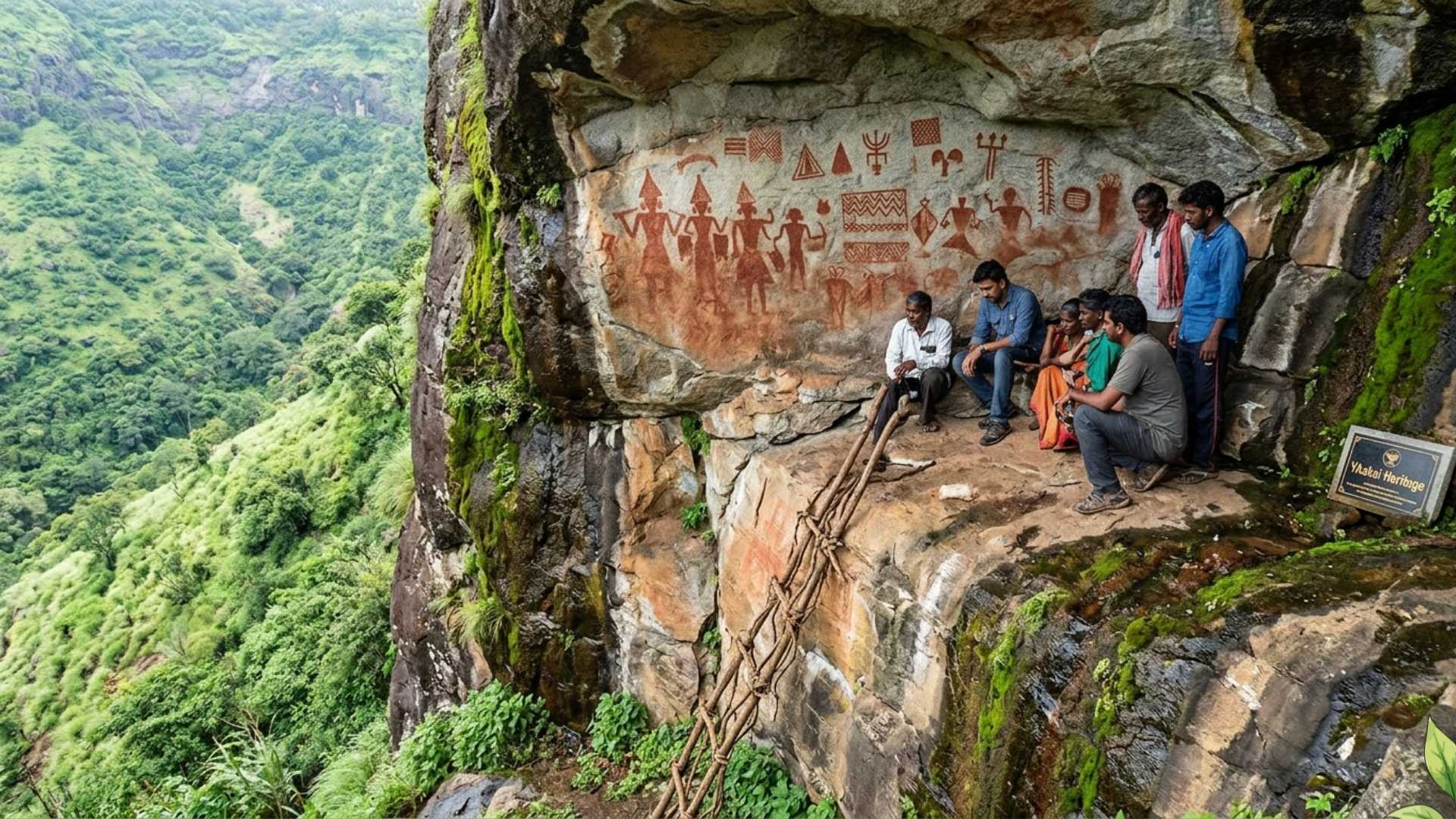
Prehistoric Rock Art in Nilgiris: Oor Pare Site Discovery

Introduction
-
India hosts one of the world’s richest rock art traditions, with over 700 documented sites, prominently including Bhimbetka Rock Shelters.
-
The recent rediscovery of a prehistoric rock painting site at Oor Pare in the Nilgiris highlights the continuity of tribal heritage and prehistoric cultural expression in South India.
“The past is not dead; it is living in us, and will be alive in the future.” — Jawaharlal Nehru
Key Data Snapshot
| Indicator | Details |
|---|---|
| Location | Kotagiri, Nilgiris (Tamil Nadu) |
| Discovering Body | Yaakai Heritage Trust |
| Altitude | ~1100 m above sea level |
| No. of Figures | ~30 identifiable figures |
| Medium | Red ochre (monochrome) |
| Cultural Link | Irula & Kurumba tribes |
1. Background & Context
Rock art forms an important component of prehistoric archaeology, offering insights into:
- Early human life
- Cultural practices
- Belief systems
The Nilgiris region:
- Already hosts sites like Eluthuparai and Tholikkiparai
- Represents a less explored but significant rock art zone in South India
The rediscovery of Oor Pare:
- Expands the geographical spread of prehistoric art
- Reinforces the role of indigenous knowledge in heritage identification
2. Key Features of Oor Pare Rock Art
A. Physical Characteristics
-
Located in a rock shelter at high altitude
-
Difficult access:
- Steep climb (~450 m)
- Seasonal accessibility (mainly summer)
-
Used by tribal communities as:
- Resting shelters
- Part of traditional activities like honey collection
B. Artistic Features
| Feature | Description |
|---|---|
| Colour | Red ochre (natural pigment) |
| Style Types | Fine lines, thick strokes, geometric compositions |
| Composition | Monochrome |
C. Depicted Figures
- Anthropomorphic (human-like) figures
- Elongated limbs and ladder-like structures
- Conical headdresses
- Geometric ritual symbols (dot-filled patterns)
3. Cultural & Anthropological Significance
A. Reflection of Belief Systems
-
Presence of ritual symbols suggests:
- Supernatural beliefs
- Ritualistic practices
-
Indicates early forms of:
- Symbolic communication
- Spiritual expression
B. Continuity with Tribal Traditions
-
Site is sacred to:
- Irula tribe
- Kurumba tribe
This reflects:
- Cultural continuity between prehistoric and present communities
- Importance of oral traditions in preserving heritage knowledge
C. Multi-layered Chronology
-
Evidence of:
- Repainting
- Superimposition
Implication:
- Site was used across multiple cultural phases
- Similar to layered paintings found in Bhimbetka Rock Shelters
4. Comparison with Major Rock Art Traditions
| Aspect | Nilgiris (Oor Pare) | Central India (Bhimbetka) |
|---|---|---|
| Accessibility | Difficult terrain | Relatively accessible |
| Style | Monochrome, geometric | Multicolour, diverse |
| Cultural Link | Tribal continuity | Hunter-gatherer to historic phases |
| Chronology | Multi-layered | Multi-period (Palaeolithic to historic) |
5. Challenges & Threats
A. Natural Degradation
- Water seepage
- Moss growth
- Insect damage
B. Accessibility Issues
-
Difficult terrain limits:
- Documentation
- Conservation efforts
C. Lack of Protection
-
Absence of:
- Formal heritage status
- Monitoring mechanisms
6. Governance & Conservation Issues
-
Need for:
- Archaeological Survey of India (ASI) intervention
- Scientific preservation methods
-
Integration of:
- Local tribal knowledge
- Modern conservation techniques
7. Way Forward
-
Grant protected heritage status
-
Use:
- Digital documentation (3D scanning)
- Climate-controlled conservation methods
-
Promote:
- Community participation in preservation
-
Develop:
- Sustainable eco-cultural tourism (with safeguards)
Conclusion
The rediscovery of Oor Pare is not merely an archaeological finding but a reminder of India’s deep cultural continuity and indigenous heritage systems. Protecting such sites is essential for preserving prehistoric knowledge, tribal identity, and civilisational memory, while balancing conservation with sustainable access.
Attribution
Original content sources and authors


Syllabus classification
How this article maps to GS papers
Main syllabus
GS1Indian CultureQuick Q&A
What is the significance of the rediscovery of the prehistoric rock painting site at Oor Pare in the Nilgiris?
Cultural and Anthropological Value: The site is particularly significant because it is sacred to Irula and Kurumba indigenous communities, indicating continuity between prehistoric traditions and present-day tribal beliefs. Such connections highlight the role of indigenous knowledge systems in preserving cultural heritage. The use of red ochre pigment and varied artistic styles (fine lines, thick strokes, composite forms) also reflects evolving artistic techniques across time.
Academic and Heritage Importance: The discovery adds to the cluster of rock art sites like Vellarikombai, Eluthuparai, and Tholikkiparai, strengthening the Nilgiris as a major prehistoric cultural zone. It provides opportunities for interdisciplinary research in archaeology, anthropology, and art history. Moreover, it underscores the need for heritage conservation and documentation, especially in ecologically sensitive and hard-to-access regions.
Why are prehistoric rock paintings important for understanding early human societies and their belief systems?
Insights into Belief Systems: The presence of ritual symbols, geometric patterns, and supernatural imagery suggests that prehistoric communities engaged in religious or ceremonial practices. For instance, ladder-like body structures and dot-filled rectangular designs may represent symbolic or ritualistic meanings. Similar patterns have been observed in other Indian rock art sites like Bhimbetka (Madhya Pradesh), which is a UNESCO World Heritage Site.
Evolution of Human Cognition: These paintings also reflect the development of abstract thinking and creativity in early humans. The use of pigments like red ochre and the layering of paintings over time indicate technological advancement and continuity of cultural traditions. Thus, rock art is not merely decorative but a vital source for reconstructing the cognitive and cultural evolution of humanity.
How do archaeologists and researchers interpret and date prehistoric rock art sites like Oor Pare?
Dating Techniques: Direct dating of rock art is challenging, but researchers use indirect methods such as superimposition analysis, where overlapping paintings indicate chronological layers. The presence of multiple layers at Oor Pare suggests that the site was used over different cultural periods. Scientific techniques like radiocarbon dating of organic materials and pigment analysis may also be employed where possible.
Role of Indigenous Knowledge: Ethnographic studies involving local tribal communities like the Irula and Kurumba provide valuable insights into the possible meanings and uses of the site. For example, the continued use of the shelter for honey collection and ritual practices helps researchers understand its functional and symbolic significance. Thus, interpretation is a multidisciplinary process combining science, anthropology, and local traditions.
What factors have contributed to the preservation as well as deterioration of rock art sites like Oor Pare?
Causes of Deterioration: Despite these advantages, several natural factors contribute to the degradation of the site.
- Water seepage: Monsoon rains cause water to flow over the rock surface, eroding the paintings.
- Moss and lichen growth: These biological agents gradually obscure and damage the artwork.
- Insect activity: Insects can contribute to chemical and physical deterioration.
Human Impact and Challenges: Although currently limited, increased attention may lead to tourism-related damage if not managed properly. Similar issues have been observed at sites like Bhimbetka, where human activities have affected preservation. Therefore, balancing accessibility with conservation is a critical challenge for heritage management.
Critically analyze the challenges and strategies involved in conserving prehistoric rock art sites in India.
Policy and Institutional Gaps: While agencies like the Archaeological Survey of India (ASI) are responsible for heritage conservation, many rock art sites remain undocumented or unprotected. There is also a lack of integration between conservation policies and local community involvement. For example, sites like Oor Pare, which are sacred to tribal communities, require a community-based conservation approach.
Strategies for संरक्षण: Effective conservation requires a multi-pronged strategy:
- Scientific preservation techniques such as chemical treatments and controlled environments
- Community participation involving indigenous groups in protection efforts
- Digital documentation using 3D scanning and GIS mapping
- Awareness and sustainable tourism to balance access and preservation
As a district administrator in the Nilgiris, how would you design a policy framework to protect and promote the Oor Pare rock art site?
Community-Centric Approach: Given the site’s cultural significance to the Irula and Kurumba communities, their active involvement is crucial. Policies should incorporate community stewardship programs, where local tribes act as custodians and guides. This not only ensures protection but also provides livelihood opportunities through eco-cultural tourism.
Promotion and Sustainable Development: To promote the site responsibly, the administration can develop controlled tourism infrastructure, such as guided trails and informational centers. Digital initiatives like virtual tours and documentation can increase awareness without causing physical damage. Drawing lessons from sites like Bhimbetka, a balance between conservation, education, and sustainable tourism can ensure long-term preservation and public engagement.
Practice questions
1 question for mains preparation