Return of Leiden Copper Plates: A Call for Repatriation Efforts

A Watershed Moment in Repatriation
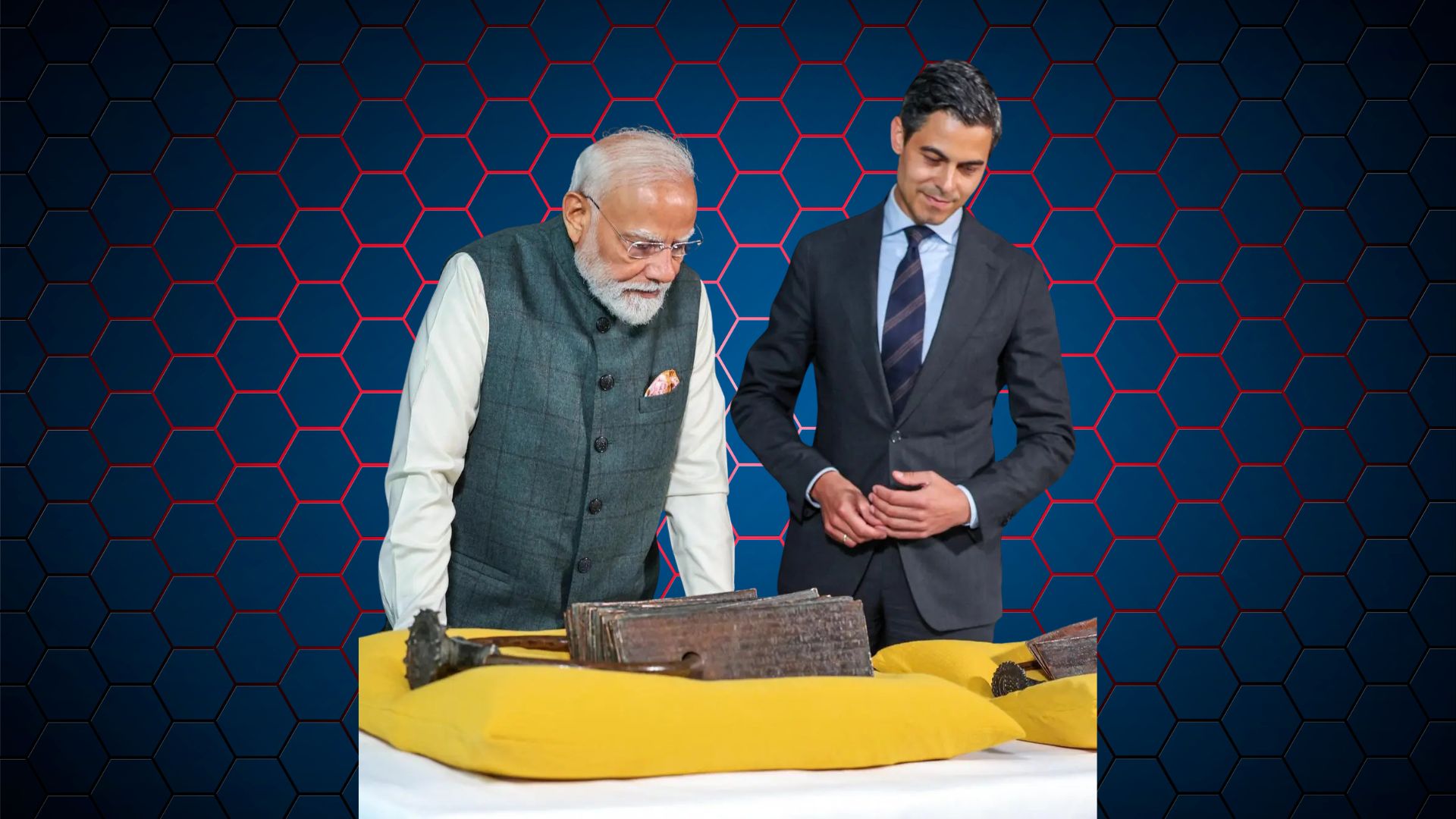
On May 16, 2025, at a ceremony in The Hague attended by Prime Minister Narendra Modi and Dutch Prime Minister Rob Jetten, the Anaimangalam copper plates — held by Leiden University for nearly two centuries — were formally returned to India. Historians and archaeologists have described this as a watershed event in the history of repatriating India's cultural heritage, which spans bronzes, stone sculptures, and carved temple pilasters.
"This is the first time that the Chola-period copper plates are being brought back to India." — V. Vedachalam, archaeologist
What the Plates Record
The Leiden copper plates are not a single document but a layered, multi-generational charter spanning three Chola rulers across nearly a century.
Timeline of the Leiden Plates:

Raja Raja Chola I (985–1014 CE)
  └─ Gifted land at Anaimangalam to a Buddhist vihara
  └─ Vihara built by Sri Mara Vijayotunga Varman of Java
     in honour of his father Sri Chudamani Varman
     → Called: Chulamanivarma Vihara

Rajendra Chola I (1014–1044 CE)
  └─ Implemented his father's oral commitment in writing
  └─ 21 large plates: 5 in Sanskrit + 16 in Tamil
  └─ Also called it: Raja Raja Cholan Perumpalli

Kulottunga Chola I (1070–1120 CE)
  └─ Persuaded by two Javanese emissaries to reaffirm grants
  └─ Added 4,500 kalam of paddy + land
     (on top of Raja Raja's original 8,943 kalam)
  └─ 3 small plates in Tamil record these additional grants
The vihara's tower itself, tragically, was demolished in 1867 by Jesuit priests with the permission of the colonial Madras government — making the plates the sole surviving testament to its existence.
Why These Plates Matter
1. Religious pluralism in medieval South India
Perhaps the most striking historical revelation is that a staunchly Saivite king, Raja Raja Chola I, patronised the construction of a Buddhist vihara. As the late archaeologist R. Nagaswamy noted:
"The plates are an interesting example of how a Saivite king helped in building a Buddha vihara."
This reflects the syncretic character of Chola statecraft — where religious identity did not preclude institutional support for other faiths.
2. Evidence of transoceanic diplomacy
The vihara was funded by a Javanese king; Javanese emissaries later appealed to Kulottunga Chola I for continued grants. The plates are therefore a rare primary source documenting Chola maritime trade networks and diplomatic relations with Southeast Asia.
3. Linguistic and epigraphic significance
- Written in both Sanskrit and Tamil, reflecting the bilingual administrative culture of the Cholas
- Former Tamil Nadu Archaeology Minister Thangam Thenarasu called them "enduring records of Tamil history, culture, and the grandeur of the Chola era"
4. The Royal Insignia
The plates were bound by a ring carrying the Chola royal emblem:
- Tiger — emblem of the Cholas
- Two fish — emblem of the defeated Pandyas
- Bow — emblem of the defeated Cheras
- Additionally: two chamaras, a royal parasol, lamps, and a swastika
The inclusion of conquered dynasties' symbols was a deliberate assertion of Chola imperial supremacy.
The Repatriation Question
The return of the Leiden plates has reignited calls for broader repatriation. Vedachalam specifically cited the Velvikkudi copper plates — issued by Pandya ruler Parantaka Nedunchadaiyan (765–815 CE) — currently held by the British Museum in London, as the next candidate for return to Tamil Nadu.
Way Forward
- India must institutionalise bilateral repatriation agreements with museum-holding nations beyond case-by-case diplomatic negotiations
- A centralised national registry of artefacts known to be held abroad — with provenance documentation — would strengthen legal and diplomatic claims
- UNESCO's 1970 Convention on illicit trafficking of cultural property, which India has ratified, must be actively invoked in future claims
- Returned artefacts require world-class conservation infrastructure domestically so that repatriation does not simply shift the risk of deterioration
Conclusion
The Leiden plates' return is more than a diplomatic gesture — it is a reaffirmation that cultural memory belongs to the communities that produced it. The plates document a Saivite king building a Buddhist monastery, a Javanese dynasty's gratitude expressed across oceans, and three generations of Chola rulers honouring a single promise. That such a record survived nearly two centuries in a Dutch university library, rather than the land it describes, is both a loss and — with its return — a partial restoration.
Attribution
Original content sources and authors

Syllabus classification
How this article maps to GS papers
Main syllabus
GS1Indian CultureQuick Q&A
What is the historical significance of the Anaimangalam (Leiden) copper plates in understanding medieval South Indian history?
The plates document grants of land and paddy to the Chulamanivarma Vihara, built by the Javanese ruler Sri Mara Vijayotunga Varman. This reveals the Chola empire’s overseas diplomatic and commercial interactions with Southeast Asia. It demonstrates that the Bay of Bengal was not merely a trade route but a cultural and political sphere of interaction. The inscriptions, written in both Sanskrit and Tamil, also show how multilingual governance functioned in the imperial administration.
Historically, they are significant because:
- They record royal land grants and agrarian administration.
- They highlight Chola maritime diplomacy with Java and Southeast Asia.
- They reflect coexistence of multiple faiths under Chola rule.
- They provide evidence of royal symbols and political conquest.
Thus, the plates are not merely inscriptions but a key source for reconstructing medieval political, economic, and cultural history.
Why is the repatriation of cultural artefacts like the Leiden copper plates important for India’s heritage diplomacy?
Heritage diplomacy has become a significant tool in India’s foreign policy. The return of artefacts during Prime Minister Modi’s visit to the Netherlands demonstrates how cultural cooperation can strengthen bilateral relations. It also reflects a growing international recognition that colonially displaced heritage should be returned to source nations.
Its importance lies in:
- Reclaiming historical narratives through original records.
- Strengthening national identity and local pride.
- Promoting ethical museum practices globally.
- Enhancing India’s soft power diplomacy.
Examples include the return of Chola bronzes from the United States and idols from Australia. The Leiden plates add to this broader movement of cultural justice and heritage restoration.
How do the Leiden copper plates illustrate the nature of Chola administration and governance?
This demonstrates continuity of governance and institutional memory. The detailed references to paddy grants, land boundaries, and beneficiaries indicate an advanced agrarian economy. The use of official copper charters ensured legal permanence and served as evidence in disputes. The inscriptions also show collaboration between monarchy and religious institutions.
Administrative features reflected are:
- Systematic record-keeping through copper charters.
- Long-term continuity across rulers.
- Integration of local and international beneficiaries.
- Structured agrarian revenue management.
Thus, the plates are evidence that Chola governance combined centralized authority with documented legal administration, comparable to advanced medieval empires elsewhere.
Critically analyze what the Leiden copper plates reveal about religious pluralism in medieval India.
The Cholas understood religion not only as personal devotion but also as an instrument of diplomacy and trade. Supporting a Buddhist institution associated with Southeast Asia likely strengthened commercial relations with maritime kingdoms. It indicates that rulers accommodated diverse faiths when linked to broader state interests.
Positive implications:
- Shows coexistence between Saivism and Buddhism.
- Highlights religious patronage beyond personal faith.
- Strengthened international relations.
- Religious patronage may also have been politically motivated.
- Pluralism often served strategic trade interests.
The case demonstrates that medieval Indian polity often balanced cultural tolerance with pragmatic diplomacy.
What does the Anaimangalam copper plates case reveal about India’s historical maritime connections with Southeast Asia?
The Cholas maintained strong naval power and commercial dominance. Ports such as Nagapattinam connected India with Java, Srivijaya, and other Southeast Asian states. These links facilitated exchange of goods, religion, architecture, and political ideas. The Leiden plates show how these connections were institutionalized through formal state documents.
Broader examples include:
- Chola naval expeditions to Srivijaya.
- Spread of Tamil merchant guilds in Southeast Asia.
- Temple architecture influences in Indonesia and Cambodia.
The plates thus provide concrete proof that India’s maritime history was deeply integrated into Asian networks long before European colonial expansion.
As an administrator in charge of cultural heritage, how would you leverage the return of artefacts like the Leiden plates for public awareness and education?
The second step would be outreach. Educational programs in schools, universities, and local communities should explain their significance for Tamil history, maritime trade, and religious pluralism. Public lectures, exhibitions, and virtual archives can expand access. Tourism circuits around Nagapattinam and Chola heritage sites could also be developed.
Administrative strategy:
- Conservation and secure exhibition.
- Academic research collaboration.
- Community awareness campaigns.
- Integration into heritage tourism.
Such artefacts should not remain confined to archives but become instruments of cultural literacy and heritage diplomacy.
Practice questions
2 questions for mains preparation