US Returns 657 Stolen Artefacts Valued at $14 Million to India

"This is the result of over a decade-and-a-half of deciphering and dismantling the Indian art smuggling market, which stole our Gods and supplied them to the West." — S. Vijay Kumar, Co-founder, India Pride Project
The U.S. return of 657 antiquities valued at ~$14 million to India (2024–2026) represents the largest restitution effort in recent bilateral history — exposing a structured, decades-long criminal network that systematically looted India's temple heritage for Western art markets.
| Parameter | Detail |
|---|---|
| Total artefacts returned | 657 |
| Total valuation | ~USD 14 million |
| Phase 1 (Nov 2024) | 612 artefacts |
| Phase 2 (Jul 2025) | 26 artefacts |
| Phase 3 (Apr 2026) | 19 artefacts |
| Primary trafficking network | Subash Kapoor & Nancy Wiener |
| Artefacts yet to be returned | 1,000+ (estimated) |
| Key investigating agency | U.S. Homeland Security Investigations (HSI) |
Background & Context
India's cultural heritage looting follows a structural pattern: temple towns → local middlemen → international dealers → Western auction houses → private collections. The Subash Kapoor network operated for nearly 50 years, supplying stolen Indian sculptures to top-tier galleries and auction houses including Christie's. The scale suggests systemic complicity — not isolated theft.
Key trafficking networks dismantled:
- Subash Kapoor — alleged trafficker; smuggled artefacts through New York galleries
- Nancy Wiener — convicted trafficker; created false provenance documents to legitimise stolen pieces at auction
- Ranjeet "Shantoo" Kanwar — Kapoor's indicted co-conspirator; looted temple sculptures directly
- Vaman Ghiya — convicted trafficker; supplied looted pieces to international dealers
Notable Returned Artefacts
Bronze Avalokiteshvara — Sirpur, Chhattisgarh (~USD 2 million)
Origin: Lakshmana Temple hoard, discovered 1939
Museum record: Mahant Ghasidas Memorial Museum, Raipur (by 1952)
Stolen: From museum; smuggled to U.S. by 1982
Seized: From private New York collection, 2025
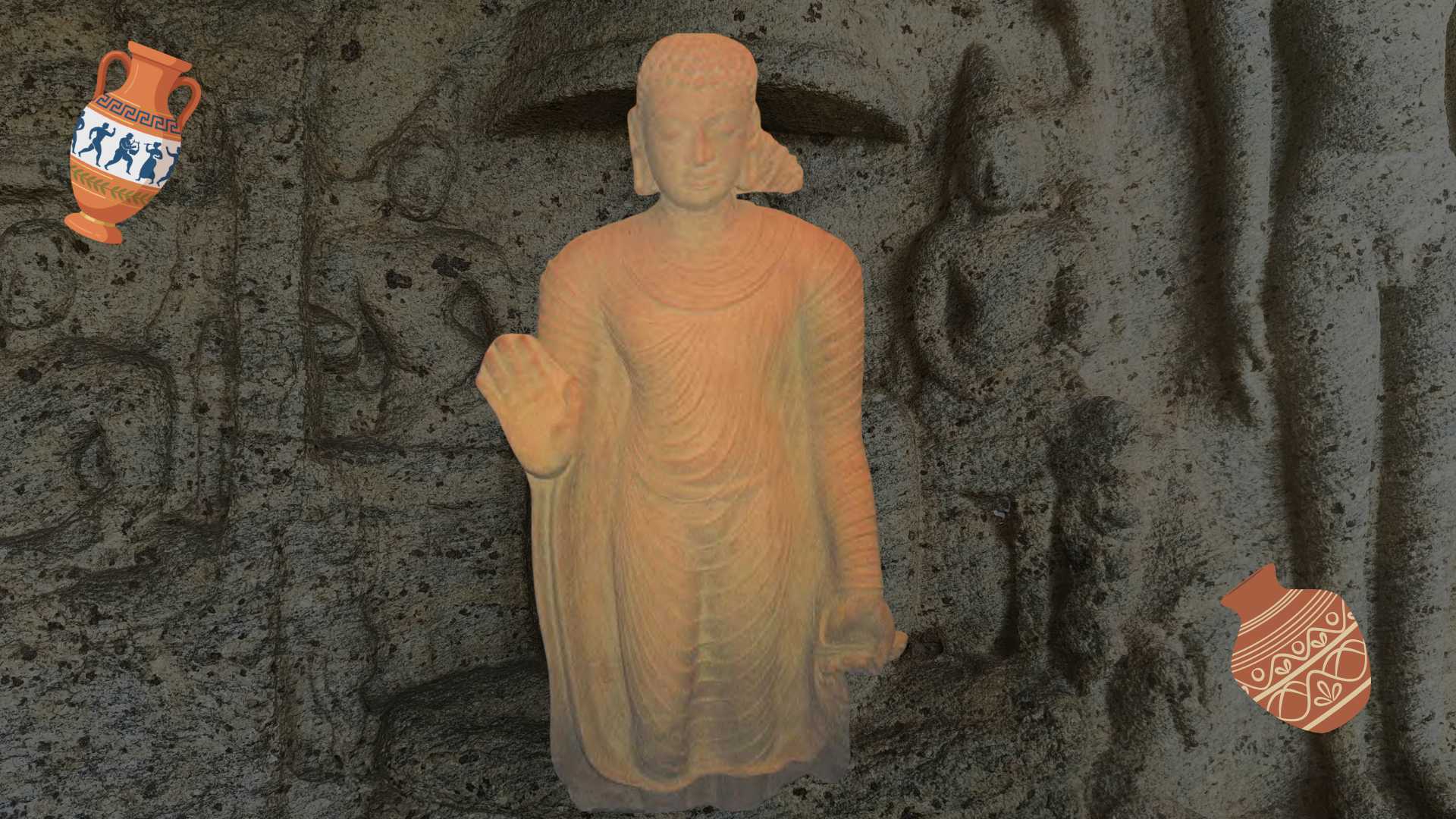
Red Sandstone Buddha in Abhaya Mudra — North India (~USD 7.5 million)
Smuggled by Subash Kapoor directly into New York
Damage to feet and halo — occurred at point of looting
Seized from Kapoor's storage unit by Antiquities Trafficking Unit
Sandstone Dancing Ganesha — Madhya Pradesh Temple
Looted: 2000, by Kanwar (Kapoor co-conspirator)
Sold to: Doris Wiener (New York gallery)
False provenance: Created by Nancy Wiener after mother's death
Auctioned: Christie's New York, 2012 — purchased by private collector
Surrendered: To Manhattan DA, 2026
Legal & Policy Framework
| Instrument | Relevance |
|---|---|
| UNESCO Convention 1970 | Prohibits illicit import/export/transfer of cultural property |
| UNIDROIT Convention 1995 | Return of stolen/illegally exported cultural objects |
| Indian Antiquities & Art Treasures Act, 1972 | Regulates antiquities trade; mandates registration |
| U.S.-India Cultural Property Agreement | Bilateral framework for restitution cooperation |
| Manhattan DA Antiquities Trafficking Unit | Primary U.S. investigative body for restitution |
India's Restitution Diplomacy: Broader Pattern
The U.S. returns are part of a larger diplomatic push India has accelerated since 2014:
- 610 antiquities retrieved from 6 countries (2020–24) per government data
- Returns secured from USA, UK, Australia, Canada, Singapore, and others
- India Pride Project — civil society network that traces, documents, and advocates for stolen artefacts — has been critical to identifying provenance
Critical Analysis
Provenance fraud as systemic enabler: Nancy Wiener's false documentation at Christie's illustrates how Western auction houses provided institutional legitimacy to looted objects — raising questions about due diligence obligations of major art market players.
Demand-side responsibility: Western private collectors and museums created the market incentive for looting. Restitution addresses the symptom; demand-side regulation in art markets addresses the cause.
Domestic protection gaps: Artefacts like the Avalokiteshvara were stolen from registered museums — pointing to inadequate security infrastructure at India's smaller district museums and temple trusts.
1,000+ artefacts remaining: The Kapoor and Wiener dossiers span 50 years — full restitution will require sustained bilateral legal cooperation across multiple jurisdictions and decades.
Conclusion
The restitution of 657 artefacts is a diplomatic and civilisational victory — but it is also a symptom audit of a deeper failure: India's inability to protect its own cultural heritage at source. Going forward, India needs a two-track approach — aggressive international restitution diplomacy alongside serious domestic investment in museum security, digital cataloguing of temple assets, and enforcement of the Antiquities & Art Treasures Act. Recovering stolen Gods is necessary; ensuring they are never stolen again is the harder, more important work.
Attribution
Original content sources and authors


Syllabus classification
How this article maps to GS papers
Main syllabus
GS1Indian CultureQuick Q&A
What is the significance of the recent return of antiquities to India by the United States?
This development has multiple dimensions:
- Cultural restoration: Artefacts like the Avalokiteshvara bronze and the dancing Ganesha hold deep religious and artistic significance, and their return strengthens cultural continuity.
- Legal and diplomatic success: It reflects effective cooperation between Indian authorities and U.S. agencies like Homeland Security Investigations (HSI).
- Deterrence: It sends a strong message to international smuggling networks that illicit trade will be pursued and penalized.
For example, the Buddha statue smuggled and later seized in New York demonstrates how stolen heritage can travel across continents before being recovered.
Overall, this event underscores the importance of international collaboration, legal frameworks, and sustained advocacy in addressing cultural crimes. It also enhances India's global standing as a nation committed to reclaiming and preserving its heritage.
Why is the issue of antiquities trafficking a serious concern for countries like India?
The issue is critical due to several reasons:
- Cultural erosion: Artefacts are often deeply tied to local traditions and religious practices; their removal disrupts cultural ecosystems.
- Economic loss: Illicit trade deprives countries of potential tourism revenue and scholarly research opportunities.
- Criminal networks: Trafficking is often linked with organized crime, money laundering, and forgery, as seen in the operations of Subash Kapoor and Nancy Wiener.
For instance, the looting of the Ganesha statue from a temple in Madhya Pradesh not only deprived the community of a sacred object but also led to its commodification in international art markets.
Thus, antiquities trafficking is not merely a legal issue but a multidimensional challenge involving culture, economy, and security. Addressing it requires robust domestic laws, international cooperation, and public awareness.
How do international cooperation and legal mechanisms facilitate the recovery of stolen antiquities?
Key mechanisms involved include:
- Bilateral agreements: Agreements between countries facilitate the return of stolen cultural property.
- International conventions: Frameworks like the UNESCO 1970 Convention prohibit illicit import and export of cultural property.
- Specialized units: Units such as the Antiquities Trafficking Unit in New York focus exclusively on tracking and recovering stolen artefacts.
For example, the Avalokiteshvara sculpture was traced through museum records and seized from a private collection, demonstrating the importance of documentation and provenance research.
However, challenges such as proving ownership, legal delays, and lack of documentation often hinder the process. Therefore, strengthening legal frameworks, digital databases, and international partnerships is essential for more effective recovery efforts.
What are the underlying reasons for the persistence of antiquities smuggling networks?
Key reasons include:
- High demand in international markets: Wealthy collectors and museums in developed countries create a lucrative market for rare artefacts.
- Inadequate security: Many temples and archaeological sites in India lack proper surveillance and protection.
- Forgery and false provenance: Traffickers like Nancy Wiener created fake ownership histories to legitimize stolen artefacts.
For instance, the Ganesha statue was looted, passed through multiple intermediaries, and sold via a reputed auction house, highlighting the sophistication of these networks.
Additionally, lack of awareness among local communities and insufficient documentation of artefacts further exacerbate the problem. Addressing these issues requires strengthening local governance, enhancing surveillance, and promoting ethical practices in the global art market.
Critically analyse the effectiveness of global efforts to combat illicit trafficking of cultural property.
Positive aspects include:
- Enhanced cooperation: Countries are increasingly collaborating through bilateral agreements and international conventions.
- Specialized enforcement: Units like the Antiquities Trafficking Unit have improved detection and recovery rates.
- Public awareness: Activists and organizations like India Pride have played a key role in identifying stolen artefacts.
However, several limitations persist:
- Slow legal processes: Repatriation often takes years or decades.
- Limited scope: Thousands of artefacts remain untraced or unrecovered.
- Market opacity: Private collectors and auction houses sometimes lack transparency.
For example, despite the recovery of 657 artefacts, over 1,000 items linked to trafficking networks are still pending return.
Thus, while progress is evident, a more holistic and proactive approach involving stricter regulations, better documentation, and ethical accountability in the art market is necessary to effectively curb this global issue.
Examine the case of Subash Kapoor’s trafficking network and its implications for heritage governance in India.
Key features of the case include:
- Organized operations: The network involved local looters, intermediaries, and international dealers.
- Use of false documentation: Artefacts were given fake provenance to pass through legal scrutiny.
- Global reach: Items were smuggled to countries like the U.S. and sold to private collectors and institutions.
For example, the Buddha statue and Ganesha sculpture mentioned in the article were trafficked through Kapoor’s network before being recovered.
Implications for India include:
- Need for stronger site protection and inventory management
- Importance of international collaboration in tracking stolen artefacts
- Role of civil society in identifying and advocating for repatriation
This case highlights systemic gaps but also demonstrates that sustained efforts can yield results. Strengthening institutional capacity, legal enforcement, and global partnerships is essential to prevent such incidents in the future.
Practice questions
2 questions for mains preparation