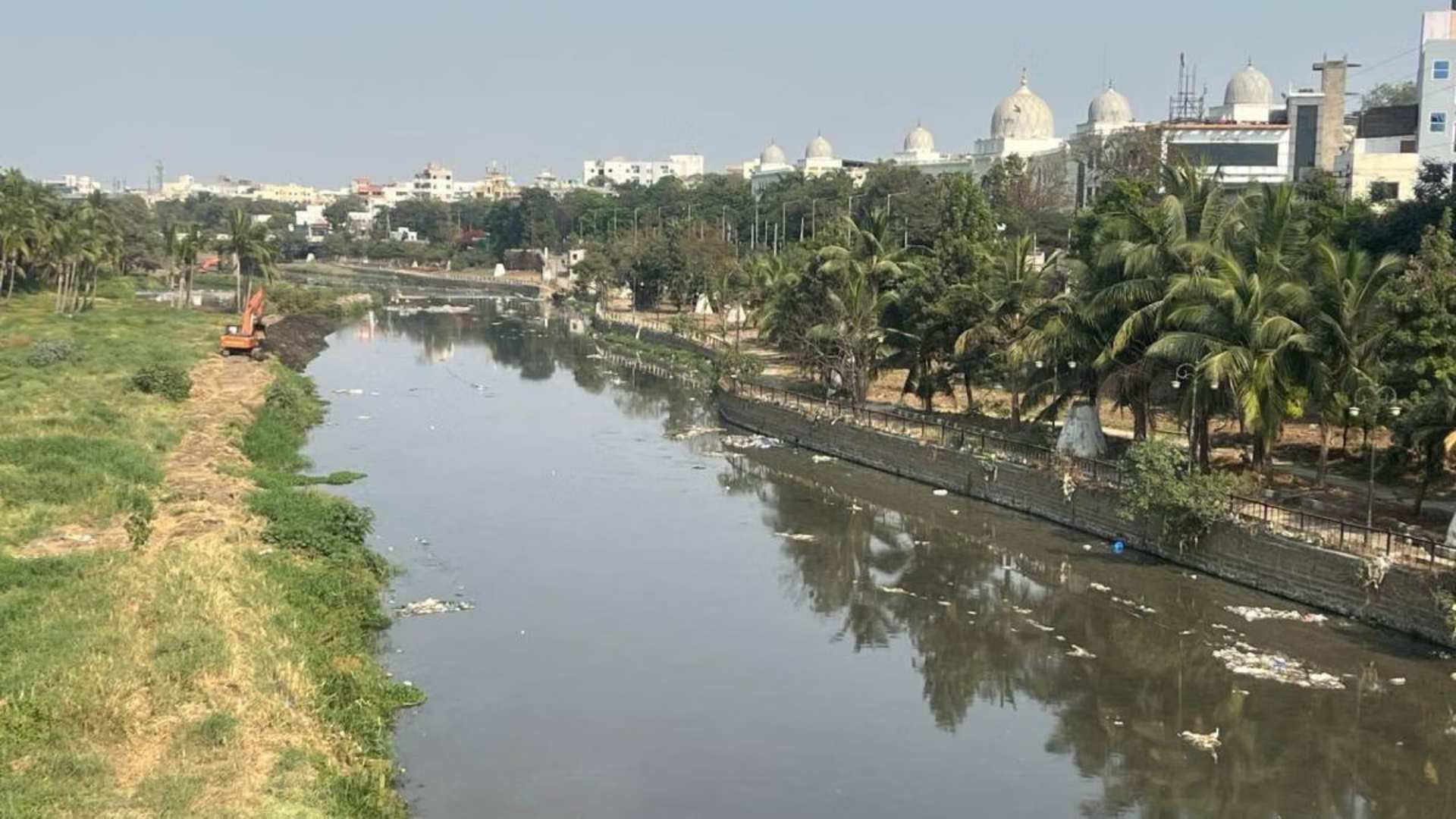
Musi Riverfront Project: Development vs Displacement

Telangana’s plan to revive the Musi River with year-round water flow and urban infrastructure faces opposition from residents fearing eviction.
S
Surya
6 mins read
Musi River development sparks displacement and protest

Musi Riverfront Development Project (Hyderabad)

The Musi River, which flows through Hyderabad in Telangana, has become a major focus of urban development planning. The State government aims to transform the river into a clean, perennial water body with recreational and commercial spaces along its banks. However, the project has also generated significant debate due to concerns about displacement of residents, environmental impact, and transparency in planning.


The Musi River: Geographic and Historical Background

The Musi River is about 260 kilometres long. It originates in the Ananthagiri hills of Vikarabad district in Telangana. The river is formed by the confluence of two smaller streams called Musa and Esi.

After originating in the hills, the river flows through Hyderabad for approximately 55 kilometres before continuing eastward.

Today, much of the river within Hyderabad resembles an open sewage channel for most of the year, except during the monsoon when rainfall increases water flow. The heavy inflow of untreated sewage and urban waste has severely degraded the river’s ecological condition.


Historical Efforts to Control Floods

The Musi River has historically been associated with severe flooding. The most destructive flood occurred in 1908, which caused widespread devastation in Hyderabad.

Following this disaster, the ruler of the Hyderabad princely state, Mir Osman Ali Khan, ordered the construction of two major reservoirs:

  • Osman Sagar
  • Himayat Sagar

These reservoirs were designed to control flooding and regulate the river’s water flow. They continue to function as important flood-control structures for the city.


Previous Attempts to Develop the River

Several governments have attempted to transform the Musi River into an urban waterfront.

Examples include:

  • Telugu Desam Party (1997–98): Proposed riverfront development plans.
  • Bharat Rashtra Samithi government (2017): Revived proposals for river rejuvenation.
  • Current Congress government: Planning a large-scale riverfront development project.

These repeated initiatives indicate the long-standing ambition to convert the river into a major urban asset for Hyderabad.


Objectives of the Current Project

The Telangana government aims to transform the Musi River into a perennial river with continuous water flow throughout the year.

The development plan includes:

  • Leisure and recreational spaces
  • Commercial zones and shopping areas
  • Heritage and cultural structures along the riverbanks

Such projects are often inspired by riverfront developments in cities around the world, where rivers become centres of tourism, culture and urban activity.


Ensuring Year-Round Water Flow

Currently, the Musi River flows strongly only during the monsoon season. For most of the year, the river carries sewage rather than fresh water.

To maintain year-long flow, the government plans to divert water from the Godavari River.

The proposal involves:

  • Channeling 2.5 thousand million cubic feet (tmcft) of water
  • Transporting it from Mallanna Sagar Reservoir, located about 72 km from Hyderabad
  • Filling the Osman Sagar and Himayat Sagar reservoirs
  • Releasing water gradually into the Musi River

This staggered release is intended to maintain continuous flow in the river throughout the year.


Sewage Treatment Measures

A major reason for the river’s pollution is the large amount of untreated sewage entering the river from Hyderabad city.

To address this issue, the government plans to expand sewage treatment infrastructure.

Currently:

  • 31 Sewage Treatment Plants (STPs) already exist.

The project proposes:

  • 39 additional STPs to treat sewage before it enters the river.

Improving sewage treatment is crucial because river rejuvenation cannot succeed without reducing pollution at the source.


Development of the Riverfront

The development project covers both banks of the river along its 55 km stretch within Hyderabad.

However, the Detailed Project Report (DPR) for the project has not yet received final approval.

Despite this, certain features of the proposed development have been discussed, including the creation of cultural and public spaces along the river.

One of the major proposals is the creation of “Gandhi Sarovar”, a large cultural precinct located at the confluence of the Musa and Esi rivers.

The plan also includes building what is described as the world’s tallest statue of Mahatma Gandhi at this location.


Progress of the Project

In October 2024, the Telangana government formed a consortium of five companies to prepare the Detailed Project Report.

Around the same time, authorities began evicting residents living in slums along the riverbed, which triggered significant protests.

Following the backlash, the government decided to begin development in relatively less densely populated stretches along the Musa and Esi rivers, covering around 21 kilometres.

The Asian Development Bank (ADB) has given in-principle approval for funding the first phase of the project, although final approval is still pending.


Opposition to the Project

Opposition to the Musi Riverfront Development project has primarily emerged due to concerns about displacement and lack of consultation with local communities.

Residents living along the riverbanks argue that they are being treated as obstacles to development rather than as stakeholders in the river’s restoration.

In response to evictions, several groups have formed a coalition known as the “Musi Jan Andolan.”

This coalition includes:

  • Residents of affected communities
  • Civil society organisations
  • Activists and urban planners

Their main criticism is that the government is moving forward without publicly releasing the Detailed Project Report, which raises concerns about transparency.


Land Acquisition Controversies

The project recently triggered another round of controversy when the government issued three land acquisition notifications.

These notifications included properties belonging to residents of a gated community located near the river’s confluence. The land was identified for acquisition to facilitate the Gandhi Sarovar project.

This development broadened the opposition to the project, as concerns about land acquisition began affecting both informal settlements and formal residential communities.


Key Issues in the Debate

The Musi Riverfront Development project highlights several important issues in urban planning and environmental governance.

Key concerns include:

  • Balancing urban development with social justice
  • Ensuring rehabilitation and resettlement of displaced communities
  • Maintaining transparency in large infrastructure projects
  • Addressing river pollution and ecological restoration

Large-scale riverfront projects often bring economic and aesthetic benefits to cities, but they also raise questions about equity, environmental sustainability, and participatory planning.


Conclusion

The Musi Riverfront Development project represents an ambitious effort to transform Hyderabad’s polluted river into a vibrant urban waterfront with cultural, recreational and economic value.

However, the project has also sparked significant debate about displacement, land acquisition and environmental priorities. The success of the initiative will depend not only on engineering and urban design but also on how effectively it addresses community concerns, ecological restoration and transparent governance.

Quick Q&A

Everything you need to know

The Musi Riverfront Development Project is an ambitious urban rejuvenation initiative undertaken by the Telangana government to restore and transform the Musi River that flows through Hyderabad. The river currently functions largely as an open sewage channel for most of the year due to heavy pollution and untreated waste entering from the city. The project aims to restore the ecological health of the river while simultaneously developing the surrounding areas into urban recreational and cultural spaces.

The project envisions development along the river’s 55-kilometre stretch within Hyderabad. Major components include the creation of leisure zones, commercial areas, cultural precincts, and heritage structures along the riverbanks. Additionally, the government plans to ensure a perennial flow in the river by channeling water from the Godavari basin through the Mallanna Sagar reservoir. The release of this water into the Osman Sagar and Himayat Sagar reservoirs will allow regulated flow into the Musi River throughout the year.

Another key component is the expansion of sewage treatment capacity. The government plans to construct 39 new sewage treatment plants (STPs) in addition to the existing 31 facilities to treat wastewater before it enters the river. If implemented effectively, the project could transform the polluted river into a clean urban waterway, similar to riverfront development projects seen in cities such as Ahmedabad along the Sabarmati River.

The rejuvenation of the Musi River is important because the river has historically been central to Hyderabad’s ecological and urban landscape. Originating in the Ananthagiri hills, the river flows across the city before joining the Krishna River basin. Over time, rapid urbanization, industrialization, and population growth have severely polluted the river, turning it into a channel carrying untreated sewage and industrial waste.

Restoring the Musi River has significant environmental benefits. Cleaning the river and improving sewage treatment can reduce water pollution, restore aquatic ecosystems, and improve groundwater quality in surrounding areas. Additionally, maintaining a perennial flow could help stabilize urban microclimates, reduce urban heat island effects, and improve biodiversity along the riverbanks.

From an urban planning perspective, riverfront development can enhance the quality of life in cities by creating public spaces, green corridors, and recreational infrastructure. Successful examples include the Sabarmati Riverfront in Ahmedabad and the Cheonggyecheon stream restoration in Seoul. Such projects can stimulate economic activity through tourism and commercial development while improving environmental conditions if implemented with proper safeguards.

One of the central challenges in the Musi River rejuvenation effort is maintaining a year-round water flow in a river that typically remains dry except during the monsoon season. To address this issue, the Telangana government plans to divert approximately 2.5 thousand million cubic feet (tmcft) of water from the Godavari River basin through the Mallanna Sagar reservoir, located around 72 km from Hyderabad.

This water will be routed into the Osman Sagar and Himayat Sagar reservoirs, which historically served as flood control systems following the devastating 1908 Musi floods. Controlled release from these reservoirs would ensure a continuous flow in the Musi River through Hyderabad. Maintaining water flow is expected to improve the river’s ecological health and support urban beautification efforts along the riverbanks.

Alongside water diversion, the project proposes a large-scale expansion of sewage treatment infrastructure. With 39 additional sewage treatment plants planned, the city aims to treat wastewater before it enters the river. Such integrated water management—combining treated water inflows and pollution control—is essential to prevent the river from reverting to a polluted drain.

The Musi Riverfront Development Project has faced opposition primarily due to concerns regarding forced evictions and displacement of communities living along the riverbanks. Many residents of informal settlements have lived in these areas for decades, often lacking secure land titles but relying on the location for livelihood and access to the city. Evictions carried out in 2024 without comprehensive rehabilitation plans triggered protests from affected communities.

Civil society groups argue that the project treats riverbank residents as obstacles rather than stakeholders in the rejuvenation process. Activists under the banner of the Musi Jan Andolan have criticised the government for moving ahead with evictions and land acquisition before releasing the detailed project report (DPR) in the public domain. They argue that transparent planning and community participation are essential for sustainable urban redevelopment.

The controversy intensified when land acquisition notices affected not only slum dwellers but also residents of a gated community near the proposed Gandhi Sarovar cultural precinct. These developments highlight the broader challenge of balancing urban infrastructure development with social justice and the protection of housing rights in rapidly expanding cities.

Riverfront development projects can offer significant benefits for urban revitalization and environmental restoration. When implemented effectively, such initiatives can transform degraded urban rivers into vibrant public spaces. Projects like the Sabarmati Riverfront in Ahmedabad demonstrate how riverbank redevelopment can create recreational areas, improve flood management, and stimulate tourism and economic activity.

However, these projects often face criticism for prioritizing real estate development and urban aesthetics over ecological restoration and social equity. In many cases, riverfront projects involve large-scale displacement of marginalized communities living near the riverbanks. Without adequate rehabilitation policies, such development may deepen urban inequality. Environmentalists also warn that excessive concretization of riverbanks can disrupt natural river ecosystems and reduce floodplain capacity.

Therefore, the success of riverfront development depends on adopting an integrated approach that balances environmental sustainability, social inclusion, and economic development. Transparent planning, stakeholder participation, ecological restoration measures, and fair rehabilitation of displaced populations are essential to ensure that such projects contribute to sustainable urban development rather than merely cosmetic transformation.

The Musi River project illustrates many of the complex challenges associated with urban river restoration in India. Rapid urbanization has led to the degradation of many rivers across Indian cities, including the Yamuna in Delhi, the Mithi River in Mumbai, and the Cooum in Chennai. These rivers often function as drainage channels carrying untreated sewage and industrial effluents, making restoration efforts technically and administratively challenging.

One major challenge is the need for coordinated urban infrastructure planning. Effective river restoration requires significant investment in sewage treatment plants, waste management systems, and urban drainage infrastructure. Without addressing these upstream sources of pollution, riverfront beautification alone cannot achieve meaningful ecological improvement.

Another challenge involves social and governance issues. Urban riverbanks are often densely populated by informal settlements due to land scarcity and housing shortages. Restoration projects therefore require sensitive approaches that balance environmental goals with the rights and livelihoods of local communities. The Musi River case highlights how lack of transparency, inadequate rehabilitation policies, and limited public consultation can lead to social conflict, underscoring the importance of inclusive governance in urban environmental projects.

Attribution

Original content sources and authors

Sign in to track your reading progress

Comments (0)

Please sign in to comment

No comments yet. Be the first to comment!