
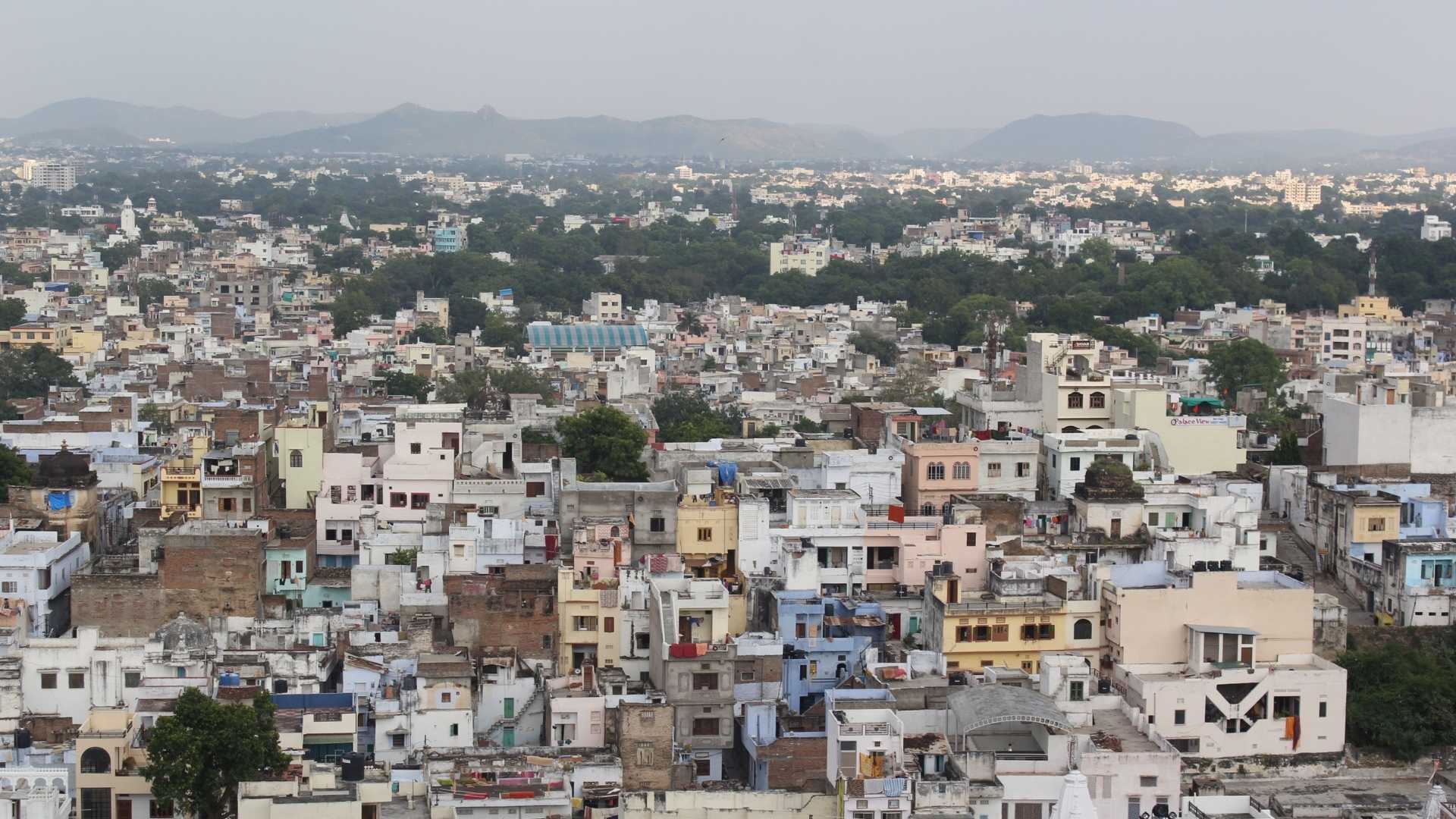
1. Context: India’s Urban Narrative Beyond Megacities
India’s urban future is often framed through the expansion of megacities such as Delhi, Mumbai, Bengaluru and Hyderabad. These cities have historically acted as the primary sites of industrial production, infrastructure investment and labour absorption.
However, this narrative obscures a quieter structural shift. Of India’s nearly 9,000 census and statutory towns, only about 500 qualify as large cities, while the overwhelming majority are small towns with populations below 1,00,000.
This pattern indicates that urbanisation in India is not limited to metros but is increasingly dispersed. Ignoring this shift risks misdiagnosing the real spatial dynamics of economic growth and labour movement.
Urban policy that remains metro-centric may fail to address where most urbanisation is actually occurring, leading to governance and planning blind spots.
2. Metropolisation and the Crisis of Over-Accumulation
From the 1970s to the 1990s, India’s growth was organised through metropolisation, with large cities acting as “spatial fixes” for capitalism by absorbing surplus labour and capital. These cities concentrated consumption, infrastructure and state investment.
Over time, metros have encountered classic over-accumulation problems. Land prices have detached from productive use, infrastructure systems are overstretched, and living costs have become prohibitive for working populations.
This has reduced the capacity of metros to continue functioning as efficient sites of accumulation, pushing both capital and labour to seek alternatives elsewhere.
When metros can no longer absorb surplus efficiently, capital relocates spatially rather than resolving underlying structural contradictions.
3. Emergence of Small Towns as New Urban Nodes
Small towns have emerged as the new sites absorbing economic activities displaced from saturated metros. Across regions, towns such as Sattenapalle, Dhamtari, Barabanki, Hassan, Bongaigaon and Una now function as logistics nodes, agro-processing hubs, warehouse towns and service centres.
These towns absorb migrant workers pushed out of metros and rural youth facing declining agrarian opportunities. They are not peripheral to urbanisation but are deeply embedded within it.
Their growth reflects a structural response to capitalist stress rather than a planned decentralisation strategy.
Small towns act as secondary spatial fixes, redistributing accumulation without fundamentally altering the growth model.
4. Conditions Shaping Small Town Urbanisation
Urbanisation in small towns occurs under specific conditions that make them attractive for capital relocation. Cheaper land, pliable labour, weaker regulation and limited political scrutiny lower operational costs.
However, these same conditions create vulnerabilities. Weak regulation often translates into informal labour markets, inadequate urban services and limited social protection.
If these structural conditions persist, small towns risk replicating the same urban crises seen in metros, albeit at a smaller scale.
Cost advantages without regulatory capacity can convert opportunity into long-term governance stress.
5. Labour Absorption and Migration Dynamics
Small towns play a dual role in India’s labour landscape. They absorb surplus rural labour with shrinking agrarian livelihoods and displaced urban workers unable to afford metropolitan living.
This migration is not driven by high-quality job creation but by survival-oriented employment in construction, logistics, services and informal sectors.
Without improvements in job quality and social infrastructure, this pattern may stabilise underemployment rather than deliver inclusive growth.
Labour absorption without productive upgrading risks institutionalising precarity instead of mobility.
6. Development Outcomes: Growth Without Emancipation
The proliferation of small towns does not inherently signal inclusive or emancipatory development. While economic activity expands, it often does so without adequate planning, welfare provisioning or institutional depth.
Urbanisation here is a consequence of capitalist adjustment, not a deliberate strategy for balanced regional development. This challenges the assumption that dispersing urban growth automatically reduces inequality.
Failure to address these limits may entrench uneven development across both metropolitan and non-metropolitan spaces.
Urban form alone does not determine development outcomes; governance quality does.
7. Governance and Regulatory Implications
Small towns typically operate under weaker municipal capacity and limited fiscal resources. Planning, land-use regulation and service delivery often lag behind the pace of economic change.
As urbanisation disperses, governance systems designed for large cities struggle to adapt. This creates regulatory vacuums that capital can exploit but residents ultimately bear.
Strengthening urban governance at the small-town level is therefore central to managing India’s next phase of urban transition.
Dispersed urbanisation without institutional strengthening leads to fragmented and uneven governance.
Conclusion
India’s small towns are not alternatives to urbanisation but integral components of it, shaped by metropolitan saturation and capitalist stress. Recognising this shift is essential for designing urban policies that move beyond megacities and address governance, labour and planning challenges at the scale where urban India is actually growing.