1.Urban India in the Vision of Budget 2026
The Union Budget 2026 reiterates the familiar national narrative of capital investment, growth momentum, and the long-term goal of Viksit Bharat. Cities are rhetorically positioned as engines of growth, productivity hubs, and centres of future opportunity.
However, a closer fiscal reading reveals a disconnect between stated intent and budgetary arithmetic. Urban development, instead of being prioritised as growth-critical infrastructure, faces a contraction in central support.
This divergence matters for governance because urban India already bears the burden of migration, employment generation, climate stress, and service delivery. When fiscal signals contradict policy narratives, implementation credibility weakens.
Ignoring this gap risks undercutting the very urban foundations required for sustained national development.
The logic is that rhetoric without fiscal backing dilutes policy outcomes; if ignored, cities become growth bottlenecks rather than growth engines.
2. Contraction in Central Urban Development Outlay
The most significant headline change is the reduction in overall central allocations for urban development. The total outlay has declined from ₹96,777 crore to ₹85,522 crore in 2026–27.
This represents a nominal cut of ₹11,255 crore, amounting to a 11.6% reduction. When inflation is accounted for, the real decline in spending power is even steeper.
Such contraction occurs at a time when urban systems face mounting pressures from infrastructure fatigue, rising informality, and climate-induced risks. Reduced fiscal support constrains cities’ ability to respond effectively.
Key Fiscal Data:
- Previous outlay: ₹96,777 crore
- 2026–27 outlay: ₹85,522 crore
- Nominal reduction: ₹11,255 crore
- Percentage decline: ~11.6%
The logic reflects fiscal deprioritisation of cities; if sustained, it weakens urban resilience and long-term productivity.
3. Metro Rail Dominance in Urban Spending
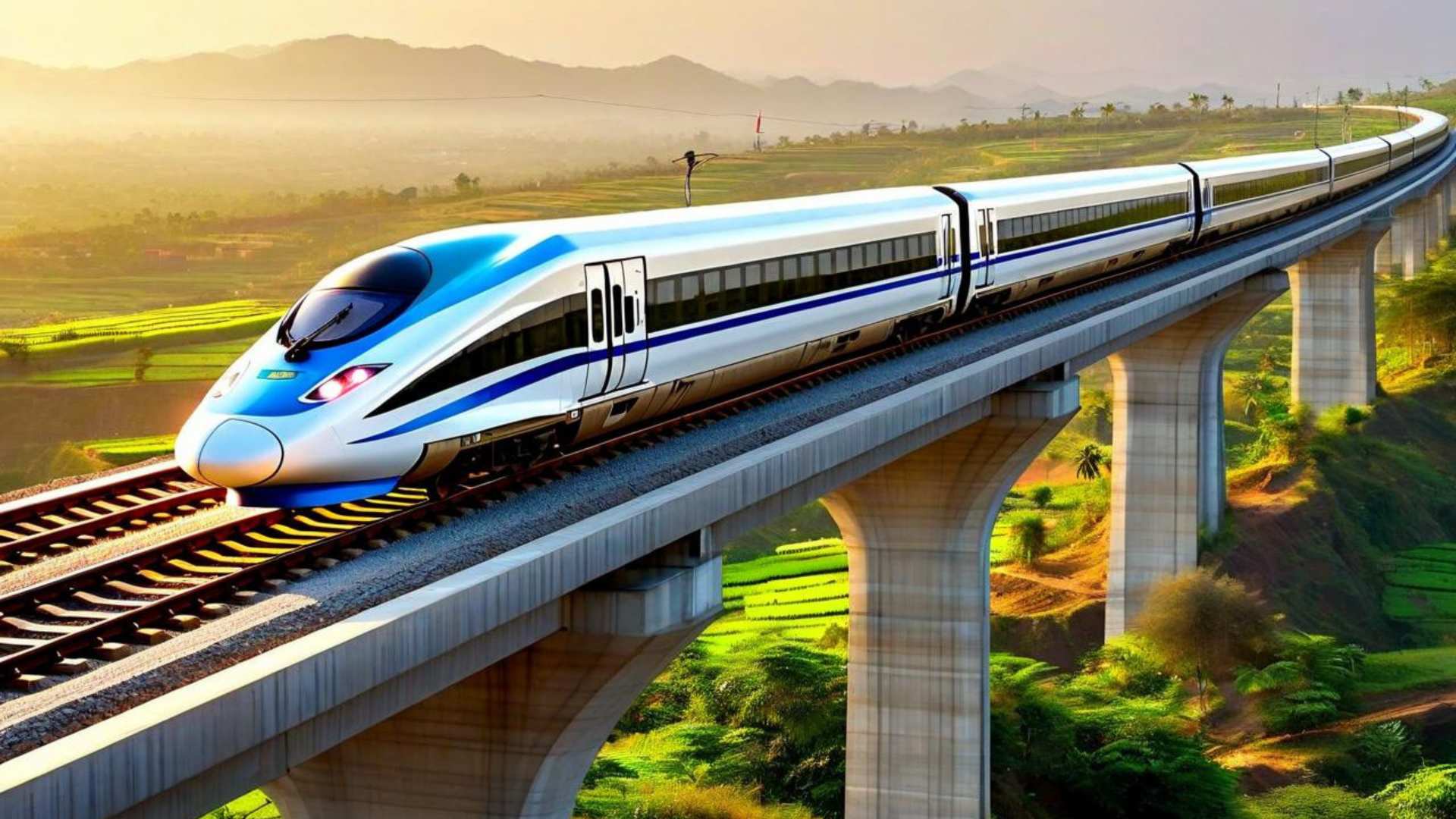
Within a shrinking urban budget, expenditure remains heavily skewed towards metro rail projects. Allocation for metro and mass rapid transit has declined from ₹31,239.28 crore to ₹28,740 crore, an ~8% cut.
Despite this reduction, metro projects still absorb about 33.6% of total central urban spending. Thus, one-third of urban allocations remain concentrated in a single transport mode.
Metro systems are capital-intensive, spatially limited, and primarily serve dense corridors in large cities. While important, they do not address the mobility needs of the urban majority who rely on buses, walking, cycling, and informal transport.
Transport Allocation Snapshot:
- Metro/MRT allocation: ₹28,740 crore
- Share of total urban outlay: ~33.6%
The logic shows a visibility-driven investment bias; ignoring modal diversity limits inclusiveness and cost-effective mobility.
4. Urban Mobility as a Social versus Engineering Challenge
Budgetary emphasis equates public transport largely with rail-based solutions. This treats urban mobility primarily as an engineering challenge rather than a social and distributive one.
Most urban trips in India are short-distance, income-sensitive, and dependent on affordable modes. Bus systems, non-motorised transport, suburban rail, and last-mile connectivity serve a far wider population base.
The absence of rebalancing towards these modes implies missed opportunities for higher social returns at lower fiscal cost. Urban mobility policy thus remains misaligned with everyday urban realities.
The logic is that socially grounded transport yields broader benefits; neglecting it entrenches exclusion and inefficiency.
5. Retreat of Flagship Urban Housing Support
The Pradhan Mantri Awas Yojana (Urban) has seen its allocation reduced from ₹19,794 crore to ₹18,625 crore, a cut of ₹1,169 crore or nearly 5.9%.
This reduction comes despite persistent urban housing shortages, worsening affordability, and expansion of informal settlements. Housing support directly affects access to basic services and urban inclusion.
Cuts in housing expenditure prolong informality and strain urban service delivery systems.
Housing Allocation Change:
- Previous: ₹19,794 crore
- Current: ₹18,625 crore
- Reduction: ~5.9%
The logic links housing investment with urban inclusion; ignoring it deepens informality and inequality.
6. Sharp Reduction in Urban Sanitation Funding
The Swachh Bharat Mission (Urban) has faced the steepest cut. Its allocation has been halved from ₹5,000 crore to ₹2,500 crore, a 50% reduction.
Urban sanitation requires continuous investment in waste processing, sewage treatment, faecal sludge management, and worker safety. It is not a one-time infrastructure achievement.
Such a sharp rollback signals deprioritisation of public health and environmental sustainability in cities, with long-term consequences for liveability.
Sanitation Allocation:
- Earlier: ₹5,000 crore
- 2026–27: ₹2,500 crore
- Reduction: 50%
The logic is sustained sanitation spending safeguards health; neglect raises systemic public health risks.
7. Decline in Urban Water and Infrastructure Support (AMRUT)
The Atal Mission for Rejuvenation and Urban Transformation (AMRUT) allocation has declined from ₹10,000 crore to ₹8,000 crore, a 20% cut.
This reduction is significant amid rising urban water stress, groundwater depletion, ageing pipelines, and climate variability. AMRUT was designed as the backbone for universal water and sewerage access.
Weakening this programme undermines the foundations of urban sustainability and climate resilience.
AMRUT Allocation Change:
- Previous: ₹10,000 crore
- Current: ₹8,000 crore
- Reduction: 20%
The logic connects water security with urban sustainability; ignoring it amplifies climate vulnerability.
8. Structural Weakness of Urban Local Bodies
The contraction in central schemes is not offset by greater fiscal devolution or strengthened municipal financing frameworks. Urban local bodies remain fiscally weak and dependent on tied transfers.
Limited autonomy restricts their capacity for long-term planning, infrastructure investment, and service delivery. This perpetuates centralisation in urban governance.
In the absence of institutional reform, reduced central spending directly translates into weaker urban outcomes.
The logic is fiscal empowerment enables effective urban governance; ignoring it sustains structural fragility.
9. Implications for Viksit Bharat and National Growth
Urban India generates the bulk of national GDP, absorbs labour, and anchors innovation ecosystems. Historically, no country has achieved high-income status without strong, well-funded, inclusive cities.
Budget 2026 reflects a contradiction: cities are celebrated rhetorically but constrained fiscally. Emphasis remains on selective, capital-heavy projects rather than everyday urban systems.
This approach risks turning cities into cost centres rather than engines of national renewal, undermining the Viksit Bharat vision.
The logic is urban strength underpins national development; neglecting it weakens long-term growth prospects.
Conclusion
The Union Budget 2026 signals a measurable retreat in central support for urban development, with an 11.6% overall cut, sharp reductions in sanitation, water, and housing, and continued metro-centric allocation. For India’s development trajectory to remain credible, urban budgets must expand, diversify, and decentralise. Sustained underfunding risks deferring urban challenges and weakening the foundations of future growth.