
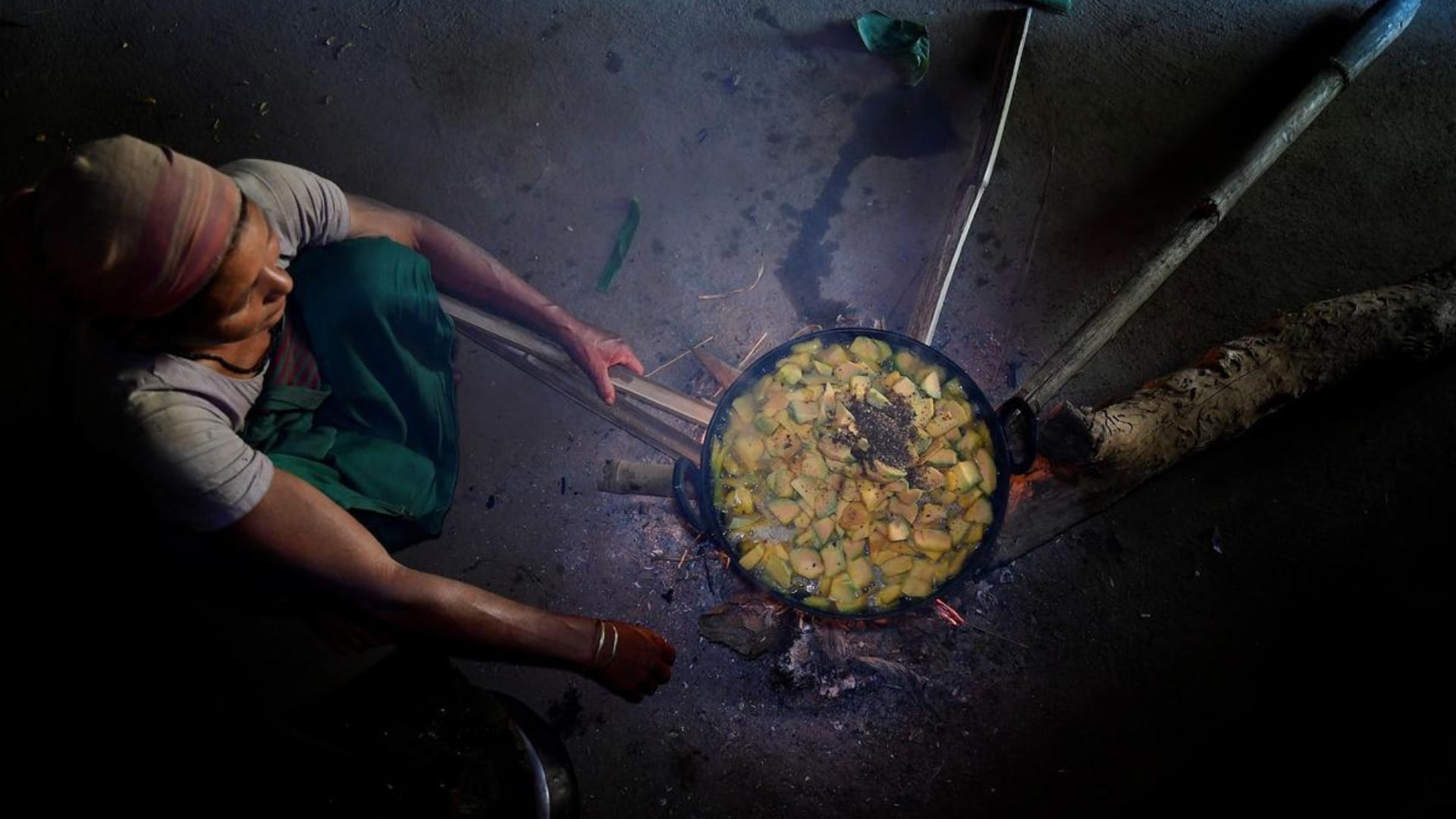
The Invisible Backbone Recognising Women’s Unpaid Labour

From domestic chores to emotional care, women’s contributions sustain households and economies, yet remain largely uncounted and undervalued globally
Praveen Dhanush kodiPraveen Dhanush kodi
4 mins read
Unseen and undervalued: Women’s unpaid domestic, care, and emotional labour sustains families and economies yet remains largely unrecognised in law and policy
Not Started

1. Context: Historical and Contemporary Perspective

Women’s labour, both domestic and agricultural, has historically been undervalued and rendered invisible. Mary Collier, in her 1739 poem The Woman’s Labour, highlighted how women participated actively in harvest work yet remained socially unrecognised:

“When Harvest comes, into the Field we go, And help to reap the Wheat as well as you... But in the Work we freely bear a Part, And what we can, perform with all our Heart.” — Mary Collier

In contemporary society, this invisibility persists. According to a 2023 UN report, globally women spend 2.8 more hours than men on unpaid care and domestic work daily. This work—encompassing child care, elder care, household maintenance, and emotional labour—is essential for the smooth functioning of families and societies but remains largely uncounted and unrewarded.

Understanding the historical continuity of undervaluing women’s work helps in designing inclusive economic and social policies. Ignoring this labour risks perpetuating gendered inequalities and underestimating contributions to national development.


2. Nature and Scope of Women’s Uncounted Labour

Women’s unpaid work extends beyond physical tasks to emotional and mental labour required to sustain relationships, manage household dynamics, and support wellbeing. Shirin Rai notes that such labour:

“…is constantly told that their everyday labour — both paid and unpaid… do not count in/as production… we fail to recognise this labour in our everyday lives.”

This invisibility has structural implications: care work is excluded from national budgets, policy frameworks, and economic metrics like GDP, despite being critical to social reproduction.

Recognising the full spectrum of women’s labour is necessary for equitable governance and economic planning. Failure to do so results in continued gender-biased allocation of resources and limits women’s economic participation.


3. Structural and Ideological Forces Behind Undervaluation

Feminist scholars argue that economic and policy priorities have historically marginalised care work:

  • Male breadwinner model prioritises men’s employment
  • GDP growth focus undervalues social infrastructure
  • Investment preference for physical over care-related infrastructure

Antonella Picchio highlights that the biological framing of reproduction obscures the social construction of gendered labour, reinforcing women’s subordination.

This structural undervaluation ensures that women’s labour remains peripheral in policy debates, perpetuating inequality in both private and public spheres.


4. Global Legislative Efforts and Comparative Examples

Some countries have taken legislative steps to recognise unpaid care work:

  • Bolivia: Article 338 recognises household work as economic activity; housewives entitled to social security.
  • Trinidad and Tobago: Counting Unremunerated Work Act (1996) requires statistical valuation of unpaid work by gender.
  • Argentina: Domestic worker contracts allow women to accrue pension credits for unpaid care work.

However, mental and emotional labour remains largely unrecognized globally.

Such legal recognitions demonstrate how policy can revalue unpaid labour, though gaps persist in encompassing the full spectrum of women’s contributions.


5. Situation in India and Judicial Recognition

In India, there is no comprehensive legal framework to recognise unpaid domestic or emotional labour. The Madras High Court in Kannaian Naidu vs Kamsala Ammal (2023) acknowledged that:

“…a wife who performed household duties and cared for the family contributed, albeit indirectly, to the acquisition of family assets and is entitled to an equal share in property.”

This marks a judicial recognition of domestic labour’s economic value, though structural change is needed to ensure equitable sharing of care responsibilities between genders.

Judicial interventions provide case-specific relief but cannot substitute for systemic policy reforms to integrate unpaid work into economic and social planning.


6. Implications for Governance and Development

Impacts:

  • Economic: Women’s exclusion from labour metrics underestimates GDP contributions.
  • Social: Gendered division of labour limits women’s workforce participation and empowerment.
  • Policy: Lack of recognition reduces investment in childcare, elder care, and mental health services.

Systemic undervaluation of unpaid labour undermines gender equality, economic efficiency, and inclusive development.

Incorporating women’s unpaid work into policy and economic metrics strengthens social welfare systems, promotes gender equity, and enhances national productivity.


7. Way Forward

Policy measures:

  • Integrate unpaid care work into national statistics and GDP calculations.

  • Design social security and pension schemes for domestic and care work.

  • Promote public investment in childcare, elder care, and mental health services.

  • Societal transformation:

    • Encourage men’s active participation in domestic and care work.
    • Recognise emotional labour as a vital component of household and societal functioning.
  • Legal reforms:

    • Enact legislation recognising both domestic and emotional labour.
    • Align property, inheritance, and pension laws with contributions to household economy.

Revaluing women’s labour ensures equitable development, strengthens family resilience, and aligns governance frameworks with the realities of societal functioning.


8. Conclusion

Recognition of women’s unpaid and emotional labour is essential for equitable economic growth, social justice, and gender-inclusive policy design. Integrating these contributions into legislation, statistics, and social infrastructure strengthens governance and promotes sustainable development.

Quick Q&A

Everything you need to know

Women’s unpaid labour refers to work that women perform without direct financial remuneration, including household chores, caregiving for children and the elderly, and emotional support within families. This form of labour, although critical, is largely invisible in traditional economic metrics like GDP, because it does not involve formal market transactions.

Its significance lies in the fact that such labour underpins the functioning of both households and economies. For instance, by managing domestic responsibilities, women free men and others to participate in formal employment, indirectly contributing to wealth creation. Globally, women spend on average 2.8 times more hours on unpaid care and domestic work than men, highlighting the scale and economic importance of this invisible contribution. Recognising this labour is essential for equitable policymaking and sustainable social development.

The undervaluation of women’s labour is rooted in structural and ideological forces. Historically, economic and policy priorities have privileged the male breadwinner model, focusing on market-based production while relegating caregiving and domestic work as secondary. Feminist scholars like Isabella Bakker and Nancy Fraser argue that this division perpetuates gender hierarchies and maintains women’s labour as non-productive in societal and economic discourse.

Additionally, social norms and the gendered division of labour conceal the economic value of care work. Antonella Picchio notes that separating production from social reproduction has created new power imbalances, positioning women in subordinate roles. As a result, emotional labour—supporting relationships, household management, and mental wellbeing—remains largely uncounted, despite being critical to the sustainability of families and societies.

Several countries have enacted legal and policy measures to formally recognise unpaid care work. Bolivia, through Article 338 of its Constitution, acknowledges household work as an economic activity that generates social welfare and wealth, entitling housewives to social security. Trinidad and Tobago passed the Counting Unremunerated Work Act, 1996, mandating statistical authorities to measure unpaid work, disaggregated by gender, and assign monetary value. Argentina introduced employment contracts for domestic workers, enabling women to receive pension credits for unpaid care work, such as raising children.

These measures provide models for integrating unpaid labour into economic metrics and social protections, but they are often partial. Most fail to recognise emotional and mental labour, which remains unquantified despite its importance for household and societal functioning.

Failure to recognise unpaid and emotional labour has multifaceted consequences. Economically, it leads to the systemic undervaluation of care work, restricting women’s access to formal employment, social security, and financial independence. For example, women constrained by domestic duties may not participate fully in the labour market, affecting household income and broader economic productivity.

Socially, the burden of care remains disproportionately feminised, reinforcing gender inequalities and limiting the agency of women from marginalised socio-economic backgrounds. Legally, the lack of recognition denies women equitable access to property, pensions, or labour protections, as highlighted in India before the Madras High Court ruling in Kannaian Naidu and Others vs Kamsala Ammal and Others (2023), where the court acknowledged household labour as contributing to family assets. Without policy recognition, these inequalities perpetuate, and women’s contribution to sustaining economies and communities remains invisible.

Economic priorities such as the relentless focus on GDP growth, infrastructure investment, and market productivity often marginalise care-related work. Policymakers tend to treat these as secondary concerns, leading to the diversion of public resources from essential services like childcare, elder care, and mental health support—areas where women predominantly contribute.

Policy frameworks that do not account for unpaid and emotional labour fail to address gendered power imbalances. While some countries have initiated reforms, most efforts are scattered and partial. In India, for instance, no comprehensive law recognises or compensates unpaid domestic work. Thus, the invisibility of women’s labour persists not because the work lacks value, but because policy frameworks are structurally biased toward male-dominated, market-focused production, leaving care work unrecognised both socially and economically.

One illustrative case is Bolivia, where recognising household work as economic activity allows housewives access to social security benefits, formally valuing their contribution to society. Similarly, in Argentina, pension credits for domestic work enable women who raise children or care for families to accumulate social security benefits, creating long-term financial security.

In the judicial domain, India’s Madras High Court in Kannaian Naidu and Others vs Kamsala Ammal and Others (2023) ruled that household labour contributes indirectly to the acquisition of family assets, entitling the wife to an equal share in property. Such examples highlight how legal recognition can correct historic inequities, validate women’s contributions, and integrate unpaid labour into economic and social frameworks.

Designing a policy to recognise emotional and domestic labour would require a multifaceted approach. First, the policy should include a legal definition of unpaid care work and emotional labour, encompassing household management, caregiving, and mental support, with mechanisms to assign measurable economic value. Second, it should provide social security benefits such as pension credits, health insurance, and access to government schemes, similar to models in Bolivia and Argentina.

Third, the policy should aim at gender-transformative social change, incentivising men’s participation in household work and caregiving to reduce the disproportionate burden on women. Fourth, it should mandate data collection and monitoring by statistical authorities to quantify unpaid labour, informing budgetary allocations and public services for childcare, elder care, and mental health support. Together, these elements would formally recognise, value, and redistribute care responsibilities, addressing both economic and social dimensions of gender equality.

Attribution

Original content sources and authors

Sign in to track your reading progress

Comments (0)

Please sign in to comment

No comments yet. Be the first to comment!