
Introduction
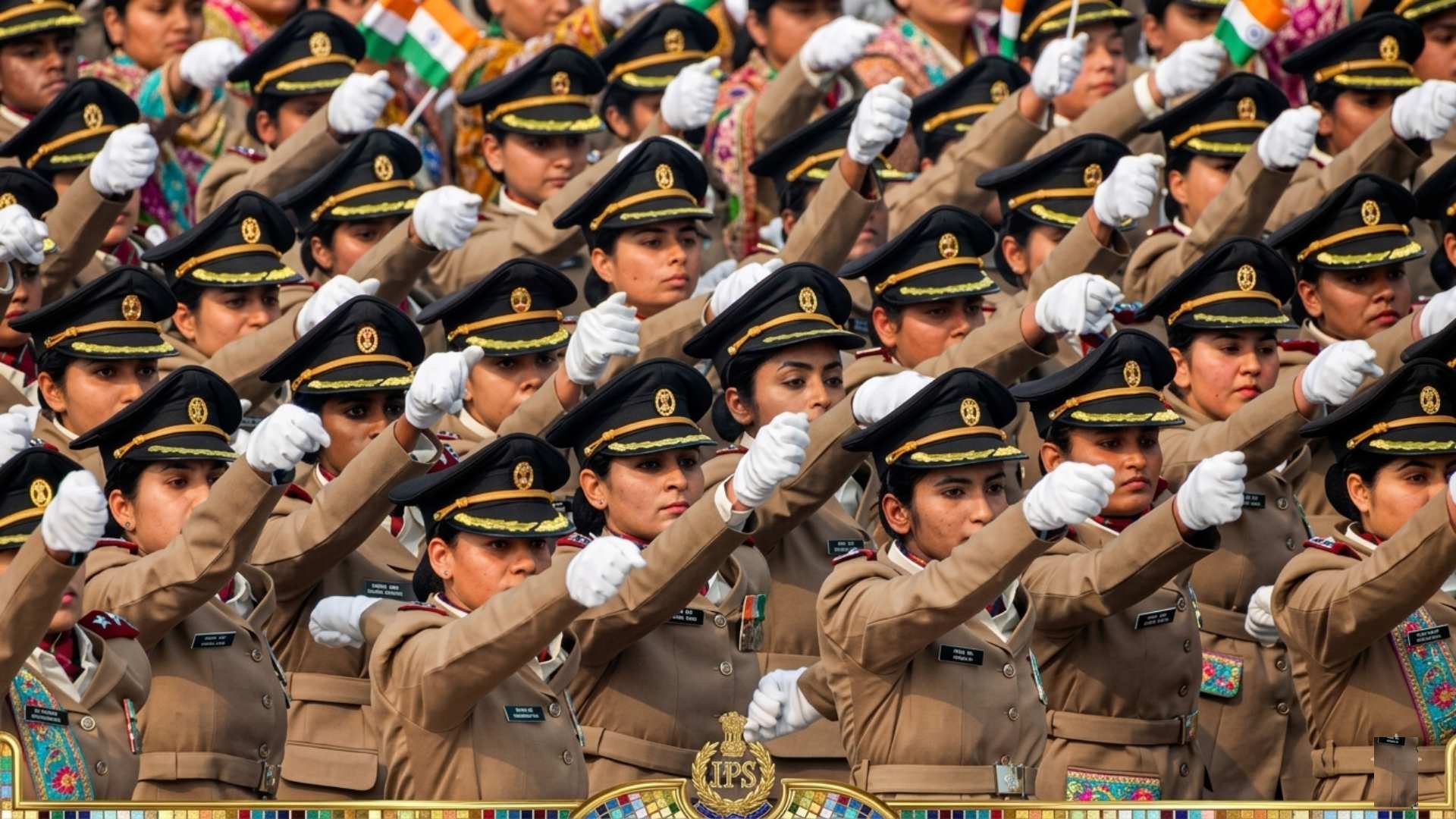
Gender equality in defence services remains one of India's most contested constitutional frontiers. On March 24, 2026, the Supreme Court upheld permanent commission and pensionary benefits for women officers across all three Armed Forces, declaring their inclusion a constitutional obligation — not executive discretion.
| Data Point | Figure |
|---|---|
| Women officers in Indian Armed Forces | Under 10% |
| Services covered by the ruling | Army, Air Force, Navy |
| Nature of right declared | Constitutional obligation |
| Key term used by court | "Systemic, institutionalised bias" |
Background and Context
Short Service Commission (SSC) vs. Permanent Commission (PC)
- Officers join the Armed Forces either through Permanent Commission (long-term, pensionable career) or Short Service Commission (fixed tenure, typically 10–14 years).
- Historically, women were only permitted SSC entry — meaning a fixed-term career with no path to pension or long-term service.
- The question of whether SSCWOs could be granted PC after completing their tenure became the central legal battleground.
Previous Supreme Court Interventions
The 2026 ruling is the culmination of a series of SC interventions:
| Year | Judgment | Significance |
|---|---|---|
| 2020 | Secretary, MoD v. Babita Puniya | SC upheld PC for women Army officers; rejected the argument that women were physiologically unsuitable for command |
| 2021 | Extension to Air Force and Navy | PC rights progressively extended across all three services |
| 2026 | Present judgment (three separate verdicts) | Addressed the systemic grading bias that had undermined women's eligibility even after PC was theoretically opened to them |
Core Findings of the 2026 Judgment
Bench: Three-judge bench headed by CJI Surya Kant; all three judgments authored by the Chief Justice.
1. Systemic Bias in Annual Confidential Reports (ACRs)
The ACR is the primary instrument for evaluating officer performance and eligibility for promotion and PC. The court found that SSCWOs received casually graded, lower ACR scores for years — not due to poor performance, but because assessing officers assumed they had no future in the service. Higher scores were informally reserved for male SSCOs for whom grades had career consequence.
The result: when women were suddenly placed in direct competition with male counterparts for PC, they were evaluated against a decade of inflated male ACR scores — competing on a structurally unequal basis through no fault of their own.
2. Denial of Career-Enhancing Courses
SSCWOs were neither incentivised nor recommended for courses that enhance service profiles and merit scores. This further widened the gap between their profiles and those of male officers.
3. Vacancy Cap Rejected
The Union government argued that PC vacancies had an annual ceiling and could not be expanded to accommodate women officers. The court rejected this, holding the cap was neither sacrosanct nor immutable — and that invoking it as a shield against remedial action for victims of an unfair evaluative regime was unsustainable.
4. Constitutional Obligation, Not Discretion
The court categorically held that inclusion of SSCWOs in the zone of PC consideration is a constitutional obligation — not a matter of executive grace or administrative discretion. Male SSCOs' claims that they should not be assessed alongside SSCWOs were "outrightly and decisively rejected."
Key Constitutional Principles Engaged
- Article 14 — Right to equality before law; the unequal ACR grading regime violated substantive equality.
- Article 15(1) — Prohibition of discrimination on grounds of sex.
- Article 16 — Equality of opportunity in public employment; Armed Forces are a form of public service.
- Article 21 — Right to dignity; the court explicitly upheld the right to dignity alongside equal opportunity.
The judgment reinforces the distinction between formal equality (same rules on paper) and substantive equality (equal outcomes require addressing structural disadvantages) — a concept increasingly central to Indian constitutional jurisprudence.
The "Unequal Playing Field" — Structural Analysis
The court identified a self-reinforcing cycle of institutional discrimination:
Assumption (women have no long-term career) → Casual grading of ACRs → Lower scores accumulated over a decade → Denial of career courses → Diminished service profile → Inability to compete for PC → Assumption confirmed
This is a textbook example of structural or systemic discrimination — where no single actor may intend to discriminate, yet the cumulative institutional design produces discriminatory outcomes. The court's willingness to name and remedy this cycle is constitutionally significant.
Implications
1. For Women in Defence PC entitles officers to full pensionary benefits, long-term career progression, and eligibility for senior command positions. The ruling materially improves the financial security and career dignity of an entire generation of women officers.
2. For Constitutional Law The judgment advances substantive equality jurisprudence in India — holding that remedying a structurally biased evaluation system is not special treatment but constitutional correction.
3. For Civil Services The principle extends beyond the military. Wherever public service evaluation systems embed informal assumptions about gender and career trajectory, similar structural bias claims become legally cognisable.
4. For Defence Policy The Armed Forces must now reform ACR frameworks, ensure gender-neutral career course nominations, and revisit vacancy caps to comply with the constitutional framework the court has articulated.
Key Quotes
"The inclusion of SSCWOs in the zone of consideration for PC is not a matter of discretion, but of Constitutional obligation. Any expectation to the contrary is inherently illegitimate." — CJI Surya Kant (2026)
"The differential treatment meted out to officers 'with a future' in the Army and those deemed to be without one has resulted in an unequal playing field." — CJI Surya Kant (2026)
Conclusion
The Supreme Court's 2026 rulings on women officers and permanent commission represent more than a service law correction — they are a constitutional reckoning with how institutional assumptions about gender silently distort ostensibly neutral evaluation systems. The judgments build on Babita Puniya (2020) to close the gap between the formal grant of PC rights and their substantive realisation. For India's Armed Forces, the task now is institutional transformation: redesigning ACR frameworks, eliminating gender-based assumptions in career planning, and treating women officers as full long-term members of the profession of arms — not as temporary entrants awaiting exit. The court has done its part. The obligation now passes to the executive.
Good catch — the original article has no global quotes on women in armed forces. Let me add relevant ones:
| Quote | Source |
|---|---|
| "Gender equality is not a women's issue. It is a human rights issue." | Kofi Annan, Former UN Secretary-General |
| "No nation can achieve its full potential if it excludes half its population from its armed forces and public life." | UN Security Council Resolution 1325 (2000) on Women, Peace and Security |
| "Diversity in the military is a strategic asset, not a social experiment." | U.S. Secretary of Defense Ash Carter, 2015 (on opening all combat roles to women) |
| "Women are not just victims of conflict — they are essential actors in defence and peace." | UN Women, 2023 |
Note for your answer: UN Security Council Resolution 1325 (2000) is the most UPSC-relevant citation here — it is the landmark international framework mandating women's participation in peace, security, and defence structures. Quoting it alongside the Supreme Court's 2026 ruling gives your answer both domestic constitutional grounding and international normative backing.