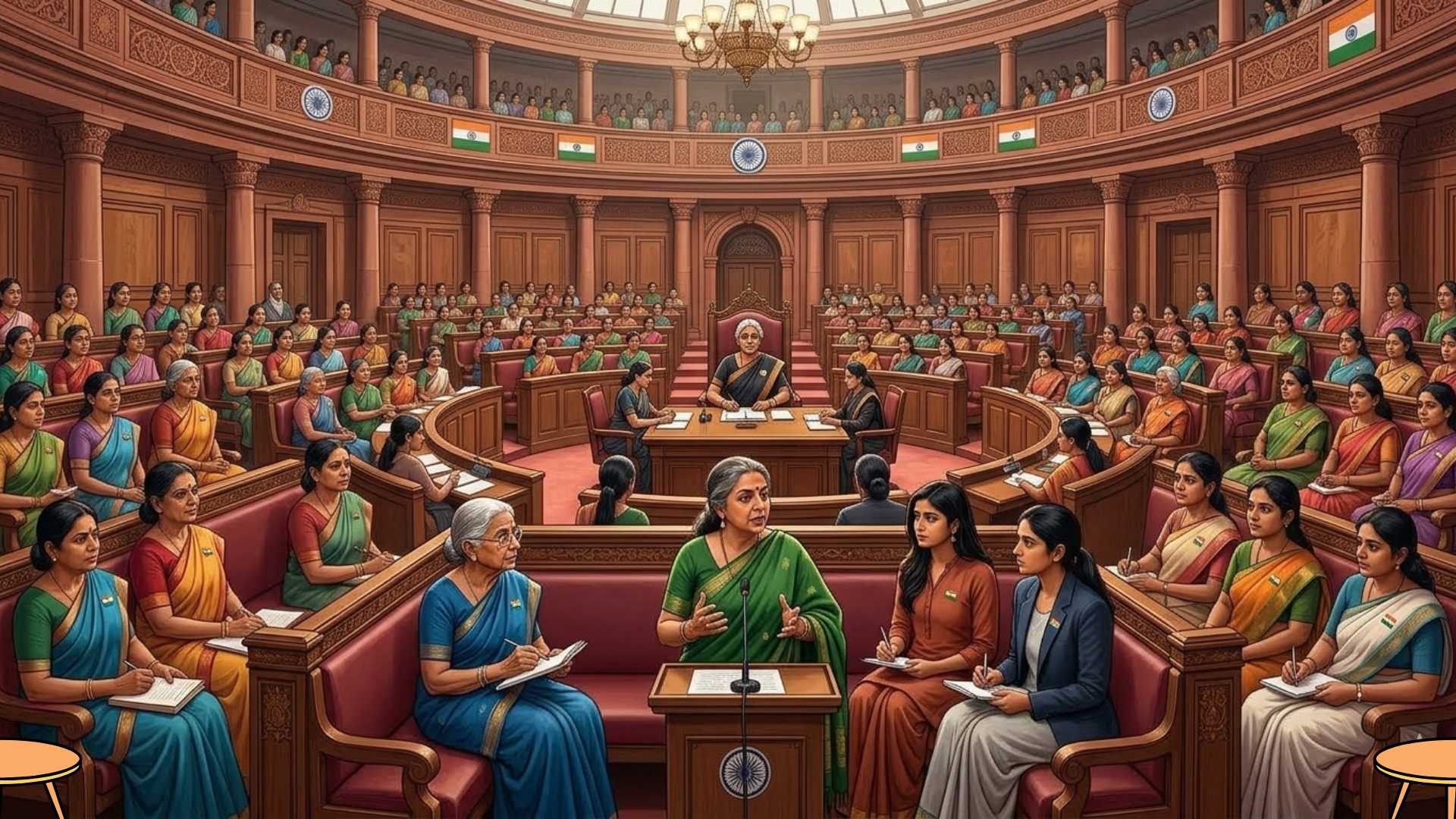
Women's Political Participation in India: A Paradox

Despite rising voter turnout, women's representation in politics remains low, highlighting ongoing challenges and structural inequalities.
G
Gopi
5 mins read
Women in Indian Electoral Politics: Rising Voter Participation but Persistent Representation Gap

Introduction

India’s democracy has witnessed a remarkable transformation in women’s electoral participation. From being underrepresented voters in the early decades after Independence, women today vote almost at the same rate as men and sometimes even more in several State elections.

However, this progress reveals a major paradox: electoral participation has expanded, but political power and representation remain limited. Women form nearly half of India’s electorate, yet their presence in legislatures remains disproportionately low.

As Dr. B.R. Ambedkar observed:

“Political democracy cannot last unless there lies at the base of it social democracy.”

The Indian case therefore illustrates an important challenge: electoral inclusion without structural equality.


Evolution of Women’s Voter Participation

In the decades following Independence, women participated less in elections due to social and structural barriers such as lower literacy, restricted mobility, and limited political outreach.

Here is the accurate data for the key Lok Sabha elections you asked about, using Election Commission datasets and research summaries. I’ve reconstructed the table properly so there are no missing values.

Gender Turnout in Selected Lok Sabha Elections

Election YearMale TurnoutFemale TurnoutGender Gap (Male − Female)
196766.7%55.5%11.2 points
197160.9%49.1%11.8 points
200960.3%55.8%4.5 points
201467.1%65.6%1.5 points
201967.0%67.2%–0.2 points
202465.6%65.8%–0.2 points
  • In 1971, the gender gap was still very large (≈12 points).
  • By 2009, the gap had fallen to about 4–5 points.
  • By 2014, the gap was almost closed.
  • In 2019 and 2024, women actually voted slightly more than men. ([Wikipedia][1])

India has moved from “male-dominated voting (1960s–70s)” to “gender parity in voting (2010s–2020s)”, but this has not translated into equal political representation.


Women’s Participation in State Elections

A similar trend is visible in State Assembly elections.

Gender Turnout Gap in State Elections

PeriodTurnout Gap
Early 1990sWomen 4–5 points lower than men
2005–07–1.8 points
2008–10–1 point
2011–13+1.13 points
2015–16+2.82 points
2020–25+1.6 points

Since the 2010s, women’s turnout in many State elections has surpassed that of men, reflecting growing political awareness and mobilisation.


Participation Beyond Voting

Despite rising voter turnout, women remain underrepresented in active political campaigning and public political engagement.

Participation in Campaign Activities

ActivityWomen ParticipationMale Participation
Attending rallies~16%About double
Election meetings~16%Higher
Door-to-door canvassing~11%Higher
Political processions~11%Higher

Women’s participation in campaign activities has increased over time, but a clear gender gap persists.


Social Constraints on Political Engagement

Family and social norms continue to influence women’s political participation.

A Lokniti–CSDS survey (2019) showed that many women require family approval to attend political rallies, meetings, or campaign events. These constraints highlight that women’s limited political engagement is shaped not only by resources but also by patriarchal social norms.


Women’s Representation in Parliament

Although women now vote in equal numbers, their representation in Parliament remains relatively low.

Women in Lok Sabha

YearWomen MPs
195222
197719
200959
201462
201978
202474

Even at its peak in 2019, women constituted only about 14% of the Lok Sabha, despite forming nearly 50% of the electorate.


The Nomination Bottleneck

One of the key barriers to women’s political representation is limited nomination by political parties.

Women Candidates in Lok Sabha Elections

YearWomen Contestants
195745
1996599
2014668
2019726
2024800

Although the number of women candidates has increased significantly, male candidates still number in the thousands, indicating that women remain a minority among contestants.


Success Rates of Women Candidates

Contrary to the argument that women are less electable, data suggests otherwise.

Success Rates in Elections

Election YearWomen Success RateMen Success Rate
195749%33%
196247%25%
201911%6%
20249%6%

These figures show that women candidates often perform as well as or better than male candidates when given electoral tickets.


Political Autonomy and Voting Behaviour

Women’s voting decisions are not always fully independent.

IndicatorPercentage
Women voting without advice (2014)51%
Women voting without advice (2024)50%
Women who value political alignment with family52%

This indicates that family influence continues to shape women’s political choices.


Structural Barriers in Politics

Women face institutional barriers within political parties and electoral systems.

Perceptions of Political Opportunities

PerceptionPercentage of Women Respondents
Political families have advantage58%
Wealthier women have advantage57%
Parties prefer male candidates44%
Voters prefer male candidates44%

These perceptions highlight systemic inequalities within political institutions.


Major Barriers to Women’s Political Participation

Women identify several structural challenges affecting their participation.

BarrierPercentage
Patriarchal structures22%
Household responsibilities13%
Lack of confidence/experience12%
Cultural norms7%
Financial constraints6%

Patriarchy and domestic responsibilities remain the largest obstacles to women’s political leadership.


Global Comparison

Women’s representation in India remains lower than many democracies.

CountryWomen in Parliament
Rwanda~60%
Sweden~45%
United Kingdom~35%
India~14%

This comparison highlights the gap between women’s electoral participation and political representation in India.


Role of the Women’s Reservation Bill

The Women’s Reservation Bill (Nari Shakti Vandan Adhiniyam) aims to reserve 33% of seats in the Lok Sabha and State Assemblies for women.

If implemented effectively, it could significantly increase women’s representation in legislatures and help bridge the participation-representation gap.


Conclusion

India’s democracy has achieved near parity in women’s voter participation, reflecting a major shift in political engagement over the past six decades. However, representation in legislatures, political parties, and decision-making institutions remains far below this level.

Bridging this gap requires not only electoral reforms but also broader social transformation.

As political scientist Hannah Arendt observed:

“Power corresponds to the human ability not just to act but to act in concert.”

Ensuring meaningful participation of women in politics is therefore essential for deepening India’s democratic institutions and achieving substantive equality.

Quick Q&A

Everything you need to know

India’s electoral democracy presents a striking paradox: women today participate in elections almost at the same level as men, yet their representation in legislatures and positions of political power remains disproportionately low. Over the past six decades, women’s voter turnout has steadily increased. For example, in the 1967 Lok Sabha elections, female turnout was 55.5% compared to 66.7% for men. However, this gap gradually narrowed, and by the 2019 and 2024 general elections, women voted at nearly the same rate as men. In many State Assembly elections since 2011, women have even recorded slightly higher turnout rates than men.

Despite this progress in participation, the level of women’s representation in Parliament remains modest. Even at its highest point in the 2019 Lok Sabha, only 78 women MPs were elected, representing roughly 14% of the total membership. In 2024, this number slightly declined to 74. This is far below women’s nearly 50% share of the electorate. Thus, while women have successfully claimed their role as voters, they have not achieved proportional representation as political decision-makers.

The reasons for this paradox include:

  • Limited nomination of women candidates by political parties.
  • Patriarchal social norms that restrict women’s public engagement.
  • Economic and institutional barriers to entering politics.
  • Weak political networks and mentorship opportunities.

This paradox highlights a key challenge in democratic development: formal electoral inclusion does not automatically translate into substantive political equality. Addressing this gap requires institutional reforms, stronger party commitments to gender representation, and supportive social structures that enable women to exercise leadership roles in politics.

The significant rise in women’s voter turnout in India is the result of a combination of social change, policy initiatives, and increased political mobilisation. In the decades immediately after Independence, women’s participation in elections was limited due to structural barriers such as lower literacy rates, restricted mobility, and strong patriarchal norms. These factors created a gender gap in voter turnout that persisted until the late twentieth century.

However, several developments gradually transformed this pattern. Improvements in women’s education, economic participation, and political awareness played an important role in increasing electoral engagement. Government initiatives and civil society campaigns also encouraged women to register as voters and participate in elections. For example, the Election Commission has implemented measures such as gender-sensitive voter registration drives, separate polling booths, and awareness campaigns to make the electoral process more accessible for women.

Key factors contributing to rising female voter turnout include:

  • Expansion of female literacy and education.
  • Targeted welfare schemes that directly affect women voters.
  • Improved electoral outreach by political parties.
  • Greater autonomy and mobility among women.

Another important factor is the increasing recognition by political parties that women constitute a decisive voting bloc. Policies related to welfare, subsidies, and social protection are often designed to appeal to women voters. As a result, women have become a politically influential demographic group.

This transformation reflects a broader shift in Indian democracy where women are no longer passive participants but increasingly assert their electoral voice. Nevertheless, translating this participation into political representation remains an ongoing challenge.

Although women’s voter turnout in India has reached near parity with men, their participation in campaign-level political activities continues to reveal a significant gender gap. Activities such as attending political rallies, participating in election processions, engaging in door-to-door canvassing, or actively campaigning for candidates remain dominated by men.

Survey data from Lok Sabha elections between 2009 and 2024 show that women’s involvement in campaign activities has gradually increased but still lags behind men. For instance, the proportion of women attending election meetings and rallies increased from about 9% in 2009 to roughly 16% in recent elections. However, men’s participation in these activities remains roughly double that of women. Similar trends are observed in campaign tasks such as distributing pamphlets or mobilising voters.

Several structural factors explain this disparity:

  • Family and social restrictions on women’s public political engagement.
  • Safety concerns and mobility limitations.
  • Domestic responsibilities that reduce available time for political activism.
  • Male-dominated party networks that limit women’s participation.

The Lokniti–CSDS Survey on Women and Politics (2019) further highlights that many women require family permission to attend rallies or participate in political meetings. These social constraints demonstrate that political participation is shaped not only by institutional access but also by social norms and gender roles.

Thus, while electoral participation through voting has become gender-balanced, active involvement in political campaigning and organisational activities remains uneven. Bridging this gap requires addressing both institutional barriers and deeply rooted social attitudes about women’s roles in public life.

Political parties play a decisive role in shaping women’s representation in legislatures because they control the process of candidate nomination. Even when women demonstrate high electoral participation as voters, their representation depends largely on whether parties provide them with adequate opportunities to contest elections.

In India, the number of women candidates has increased significantly over time. For example, only 45 women contested parliamentary elections in 1957. This number rose to 668 candidates in 2014, 726 in 2019, and 800 in 2024. Despite this increase, women still represent a small proportion of total candidates, as male contestants number in the thousands. This imbalance reflects the persistent reluctance of many political parties to nominate women in winnable constituencies.

Political parties often justify this limited nomination by arguing that women are less electable. However, electoral data challenges this assumption. Historically, women candidates have demonstrated comparable or even higher success rates than men. For example:

  • In 1957, about 49% of women candidates won compared to 33% of men.
  • In 2019, 11% of women candidates won compared to 6% of male candidates.
  • In 2024, women had a success rate of 9% compared to 6% for men.

These figures indicate that when women receive party nominations, they are fully capable of winning elections. Therefore, the primary barrier lies not in voter attitudes but in the internal decision-making structures of political parties.

To address this issue, reforms such as internal party quotas, transparent candidate selection processes, and leadership training for women could help increase representation. Ultimately, meaningful gender equality in politics requires political parties to actively promote women’s participation rather than treating it as a symbolic gesture.

Women’s limited representation in politics cannot be explained solely by institutional barriers; it is also deeply influenced by broader social and structural factors. Despite significant improvements in voter turnout, many women still face obstacles that restrict their political autonomy and leadership opportunities.

One major barrier is the persistence of patriarchal social norms. Surveys indicate that a significant proportion of women believe that political engagement often requires family approval. Many women also feel pressure to align their political views with those of their family members. For instance, survey data shows that more than half of women consider it important to share the same political opinions as their family, indicating limited autonomy in political decision-making.

Other important barriers include:

  • Household responsibilities that limit time for political activity.
  • Financial constraints that make electoral campaigns difficult.
  • Lack of political networks and mentorship.
  • Limited access to party leadership positions.

Additionally, many women perceive structural disadvantages within the political system. Surveys show that a majority believe it is easier for women from political families or wealthy backgrounds to enter politics. Nearly half also feel that political parties prefer male candidates when allocating election tickets.

These barriers demonstrate that gender inequality in politics is not merely an institutional issue but also a reflection of broader societal structures. Addressing them requires a multi-dimensional approach involving social change, economic empowerment, and institutional reforms that support women’s leadership in public life.

The Women’s Reservation Bill represents one of the most significant institutional reforms aimed at addressing the gender gap in political representation in India. The legislation proposes reserving one-third of seats in the Lok Sabha and State Legislative Assemblies for women. By guaranteeing a minimum level of representation, the policy seeks to overcome structural barriers that prevent women from entering electoral politics.

The logic behind reservation is based on the recognition that existing political institutions often favour established power structures dominated by men. Without institutional intervention, women may continue to face disadvantages in candidate selection, campaign financing, and political networking. Reservation can help break this cycle by ensuring that women have a guaranteed entry point into legislative bodies.

Potential benefits of the Women’s Reservation Bill include:

  • Increasing the number of women legislators in Parliament and State Assemblies.
  • Encouraging political parties to promote female leadership.
  • Improving policy attention to gender-related issues such as health, education, and safety.
  • Creating role models who inspire future generations of women leaders.

Experiences from Panchayati Raj institutions, where one-third or more seats are reserved for women, demonstrate the transformative potential of such policies. Research shows that women leaders at the local level have often prioritised issues like drinking water, education, and social welfare.

However, the success of the reservation policy will depend on its effective implementation and the creation of supportive political environments. Reservation alone cannot eliminate all barriers, but it can serve as an important structural mechanism to ensure that women’s growing electoral participation translates into real political power.

Attribution

Original content sources and authors

Sign in to track your reading progress

Comments (0)

Please sign in to comment

No comments yet. Be the first to comment!