1. DAY NRLM as an Instrument of Rural Transformation
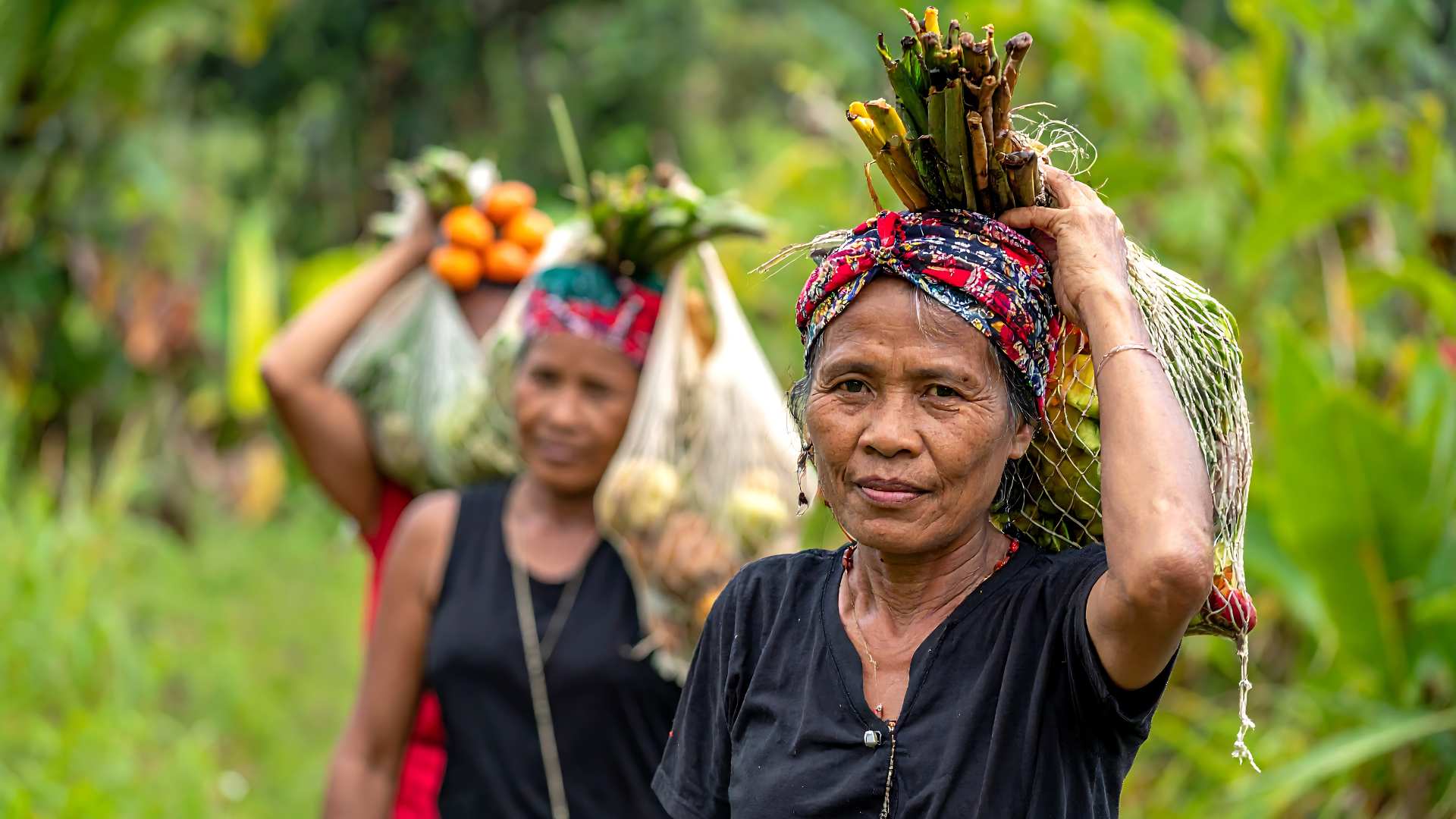
The Deendayal Antyodaya Yojana–National Rural Livelihoods Mission (DAY NRLM) has emerged as a foundational programme for rural livelihoods and women’s empowerment in India. Implemented by the Ministry of Rural Development, it has focused on institution-building among the rural poor rather than short-term welfare transfers.
By mobilising rural households into Self-Help Groups (SHGs) and federating them into higher-level institutions, the programme has created a large-scale community-led architecture for credit access, livelihoods, and social empowerment. This institutional approach has reduced dependence on informal credit and strengthened collective bargaining power.
The scale and financial discipline achieved under DAY NRLM underline its governance relevance. Low default rates despite large credit mobilisation demonstrate the viability of community-based financial models when supported by structured institutions.
If such large community platforms are not continuously strengthened, there is a risk of stagnation, elite capture, or reversal of gains in rural livelihoods and women’s agency.
DAY NRLM shows that sustainable poverty reduction requires institution-building rather than fragmented schemes; neglecting this can weaken long-term rural resilience.
Statistics:
- Households mobilised: ~10 crore
- SHGs formed: 91 lakh
- Village Organisations (VOs): 5.35 lakh
- Cluster Level Federations (CLFs): 33,558
- Bank credit mobilised: ₹11 lakh crore
- NPAs: ~1.7%
- Lakhpati Didis: Over 2 crore
2. Women’s Economic and Political Empowerment Outcomes
DAY NRLM has gone beyond income generation to enable social and political empowerment of rural women. SHG participation has enhanced women’s decision-making power within households and communities, contributing to improved governance outcomes at the grassroots level.
The growing focus of States on Direct Benefit Transfer (DBT) schemes targeted at women reflects recognition of women as autonomous economic agents. Schemes such as Ladli Laxmi Yojana, Maiya Samman Yojana, and Ladki Bahin Yojana indicate this shift.
Recent large-scale transfers, such as ₹10,000 to over 1 crore women in Bihar under the Mukhyamantri Mahila Rozgar Yojana, complement NRLM by strengthening women’s liquidity and livelihood choices.
If empowerment initiatives remain fragmented and not integrated with livelihood ecosystems, gains may remain consumption-oriented rather than productivity-enhancing.
Economic empowerment linked with institutional participation enhances women’s agency; ignoring this linkage risks reducing DBTs to short-term relief.
Examples of State initiatives:
- Madhya Pradesh: Ladli Laxmi Yojana
- Jharkhand: Maiya Samman Yojana
- Maharashtra: Ladki Bahin Yojana
- Bihar: Mukhyamantri Mahila Rozgar Yojana
3. Centrality of Cluster Level Federations (CLFs)
Cluster Level Federations are the lynchpin of the SHG ecosystem under DAY NRLM. As formally registered bodies at the sub-block level, they anchor financial management, livelihood promotion, and institutional coordination.
However, concerns have emerged that many CLFs have become overly dependent on government functionaries, limiting their autonomy and ability to take independent decisions. This undermines the original vision of community-owned institutions.
Successful models such as Kudumbashree in Kerala and Jeevika in Bihar demonstrate that strong, autonomous CLFs can drive sustainable livelihoods and social transformation when genuinely community-led.
If CLFs remain administratively controlled rather than community-driven, institutional sustainability and local ownership may erode over time.
Autonomous community institutions are essential for decentralised governance; excessive bureaucratic control weakens collective agency.
Comparative examples:
- Kerala: Kudumbashree
- Bihar: Jeevika
4. Financial Governance and Accountability of Community Institutions
Large sums of public funds have been channelled to community institutions as capitalisation support, creating both opportunity and risk. Idle funds with weak oversight can lead to misuse, inefficiency, or loss of public trust.
Approximately ₹56.69 lakh crore has been provided as capitalisation support to community institutions, in addition to funds from Centre, States, and accrued interest. This scale necessitates robust financial governance mechanisms.
The article stresses the need for systematic community monitoring through social audits, complemented by statutory audits of CLFs, to ensure transparency and accountability.
Without strong audit systems, financial mismanagement can undermine credibility of the entire SHG movement.
Financial empowerment without accountability mechanisms can become a governance liability rather than a development asset.
5. Credit Expansion and the Challenge of Individual Financing
While SHGs have successfully leveraged bank credit, many members find SHG-linked loans inadequate as enterprises mature and require scaling up. Transitioning from group-based to individual credit is therefore a critical next step.
A key constraint is the absence of individual credit histories for SHG members, limiting access to higher-value loans. Generating individual CIBIL scores is essential to integrate women entrepreneurs into the formal financial system.
CLFs can play a proactive role in facilitating individual loans and monitoring repayments, similar to their role in SHG lending, thereby reducing banks’ perceived risks.
If this transition is not enabled, women-led enterprises may remain trapped at subsistence levels.
Graduation from group to individual credit is vital for enterprise growth; failure to enable this constrains economic mobility.
6. Moving Beyond Debt: Innovative Financing and Coordination
With the diversification of the Indian economy, DAY NRLM needs to expand beyond debt financing to include equity, venture capital, and blended finance models suited to rural women entrepreneurs.
Partnerships with institutions such as SIDBI, NBFCs, and neo-banks can help design customised financial products aligned with rural realities and enterprise cycles.
At the same time, livelihood-related interventions under NRLM and other ministries often operate in silos. Although convergence with departments like Animal Husbandry, Agriculture, and Food Processing has yielded results, such coordination remains officer-dependent.
Institutionalising convergence through a dedicated ‘Convergence Cell’ at NITI Aayog can ensure continuity, efficiency, and avoidance of duplication.
Integrated financing and institutional convergence enhance impact; siloed approaches dilute developmental outcomes.
Policy measures suggested:
- Partnerships with SIDBI, NBFCs, neo-banks
- Creation of a Convergence Cell at NITI Aayog
7. Market Access and Livelihood Sustainability
The lack of effective marketing remains the biggest bottleneck in enhancing SHG livelihoods. Without access to markets, income gains from production remain limited and unstable.
The article proposes a dedicated national-level marketing vertical under DAY NRLM, focusing on branding, packaging, quality control, pricing, and logistics. Select CLFs can act as logistics hubs for specific products.
State-level professional, market-facing organisations can facilitate direct engagement with private sector entities, improving competitiveness of SHG products.
If marketing constraints persist, production-focused interventions may fail to deliver sustained income growth.
Livelihood sustainability depends on market integration; production without marketing limits value realisation.
Conclusion
DAY NRLM has built one of the world’s largest community-based livelihood ecosystems, delivering tangible gains in women’s empowerment and financial inclusion. As the programme enters the 2026–27 to 2030–31 cycle, strengthening CLF autonomy, financial governance, credit graduation, convergence, and market access will be critical. A calibrated, institution-centric approach can ensure that rural women’s empowerment advances from subsistence to sustainable entrepreneurship.