1. Changing Role of Women in Agriculture: From Drudgery to Systematic Participation
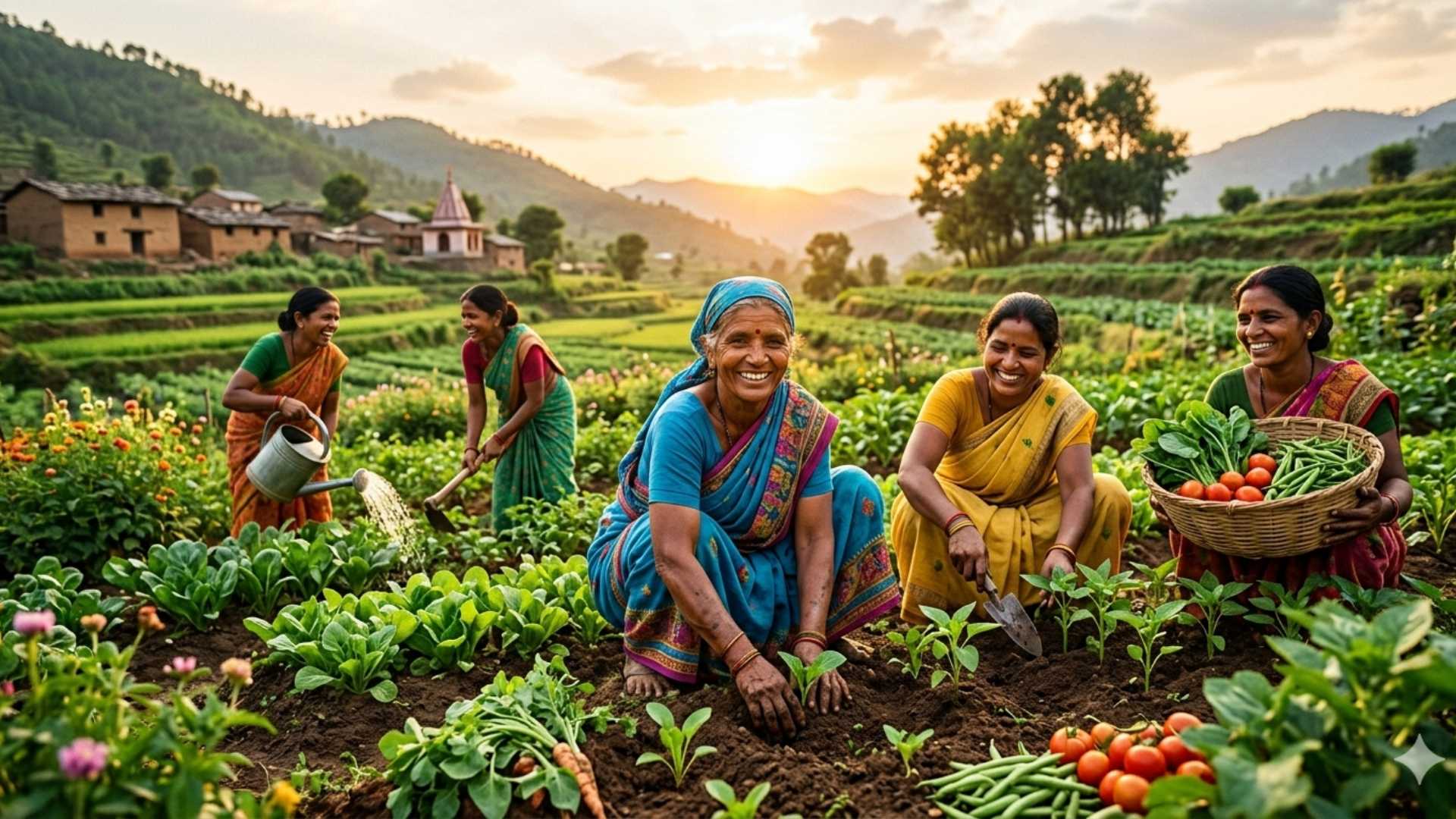
The Union Agriculture Secretary highlighted that women’s role in agriculture is transitioning from manual, invisible labour to more structured and systematic participation. This marks a qualitative shift in rural production relations, where women are increasingly seen not merely as helpers but as economic actors.
Historically, women have contributed significantly to sowing, transplanting, harvesting, post-harvest processing, and livestock management. However, their work was largely unpaid and unrecognised, limiting access to institutional credit, insurance, and formal support systems.
The declaration of the “Year of Women Farmer” by the United Nations and its commemoration at a major national platform signals growing policy recognition of women’s centrality to agricultural transformation. Such recognition is critical for inclusive rural growth and food security.
"Women — Pillar of Rural Economy." — Theme of the Summit
The governance logic is clear: when nearly half the agricultural workforce is female, policy blind spots create inefficiencies in productivity and welfare. Ignoring women’s structured participation would perpetuate low productivity, informalisation, and intergenerational poverty in rural India.
Key Statistic:
- Women constitute almost 50% of the rural agricultural workforce
2. Land Ownership Reforms and Formal Recognition of Women Farmers
A major structural constraint historically faced by women farmers was lack of land ownership. Without land titles, women could not access formal credit, crop insurance, subsidies, or membership in farmer-producer organisations (FPOs).
Recent changes in land laws across most States have enabled more women to obtain ownership of rural land. This has led to an increase in women’s membership in FPOs, thereby integrating them into formal agri-value chains.
However, industry representatives pointed out that 50–70% of women farmers still do not have land titles in their names, indicating that legal reform has not fully translated into ground-level ownership security.
The formal recognition of women as farmers was identified by NABARD as one of the key structural shifts required for agricultural transformation.
Formal land ownership acts as the gateway to institutional inclusion. Without secure titles, women remain outside the formal agricultural ecosystem, weakening credit penetration, productivity growth, and rural entrepreneurship.
Challenges:
- High proportion (50–70%) of women without land titles
- Limited access to institutional credit and insurance
- Informal status reducing bargaining power
3. Women in Value Chains: Beyond Primary Production
The summit emphasised the need for women to move up the agricultural value chain rather than remain confined to primary production. SBI called for motivating women farmers to participate in product development, marketing, and higher-value activities.
Dairying was highlighted as a sector where women play a pivotal role. The value of dairying has exceeded that of grains, pulses, and other crops, underlining livestock’s importance in rural incomes and nutritional security.
"Women are the guardians of nutrition and nourishment." — Brahmani Nara, Heritage Foods
This shift toward value addition, processing, and marketing aligns with the broader goal of doubling farmers’ incomes and strengthening rural entrepreneurship.
Moving women up the value chain enhances income elasticity, improves household nutrition, and diversifies rural risk. If women remain confined to low-value tasks, structural rural poverty and income volatility will persist.
Areas of Opportunity:
- Dairying and livestock
- Agri-processing
- Marketing and branding
- FPO-led aggregation
4. Self-Help Groups (SHGs), Lakhpati Didis and Market Access
Women Self-Help Groups (SHGs) and initiatives such as “Lakhpati Didis” illustrate the growing institutional support for women-led rural enterprises. However, women entrepreneurs identified the need for better market linkages and structured support systems.
While financial inclusion has expanded through SHGs and microfinance, integration with formal markets remains uneven. Without reliable procurement channels, logistics, and digital integration, income gains remain unstable.
This links directly to rural development strategy, as women-led collectives can drive decentralised production, reduce distress migration, and strengthen local economies.
Institutional finance without market integration leads to limited scalability. Sustainable rural transformation requires combining credit, capacity-building, and assured market access.
Key Needs Identified:
- Structured support for SHGs
- Better market linkages
- Value chain integration
5. Women, Assets and Financial Behaviour: Precious Metals as Rural Security
The panel discussion on precious metals highlighted women’s role in viewing gold and silver as household assets. In rural India, gold functions as a store of value, hedge against shocks, and informal credit collateral.
Women’s asset preferences shape rural savings patterns and liquidity behaviour. Understanding these patterns is important for designing financial products such as gold monetisation schemes, micro-insurance, and rural banking instruments.
This dimension links gender economics with macroeconomic stability, as household-level asset allocation influences capital formation and credit flows.
If policy overlooks women’s financial behaviour, savings mobilisation and formal financial inclusion efforts may underperform. Aligning banking products with women’s asset preferences enhances economic formalisation.
6. Structural Shifts Required for 2047 Vision of Indian Agriculture
NABARD’s chairman identified five structural shifts necessary for agricultural transformation, including formal recognition of women as farmers. With India aiming for developed country status by 2047, agriculture must transition toward productivity, diversification, and inclusion.
Women’s empowerment in agriculture intersects multiple governance domains:
- GS1: Role of women and social empowerment
- GS2: Government schemes, land reforms, financial inclusion
- GS3: Agriculture, value chains, rural development
Ensuring availability of basic amenities across sectors—education, health, infrastructure—was emphasised as essential for empowering women beneficiaries of major schemes.
Agricultural transformation without gender inclusion risks uneven growth. Conversely, integrating women into ownership, credit, and markets can accelerate rural economic restructuring.
Conclusion
The summit underscores that women are no longer peripheral actors but central drivers of rural transformation. Legal reforms, financial inclusion, value-chain participation, and market access must converge to ensure formal recognition and economic mobility.
A gender-responsive agricultural framework is not merely a welfare measure; it is a structural necessity for achieving inclusive rural growth and India’s 2047 development vision.