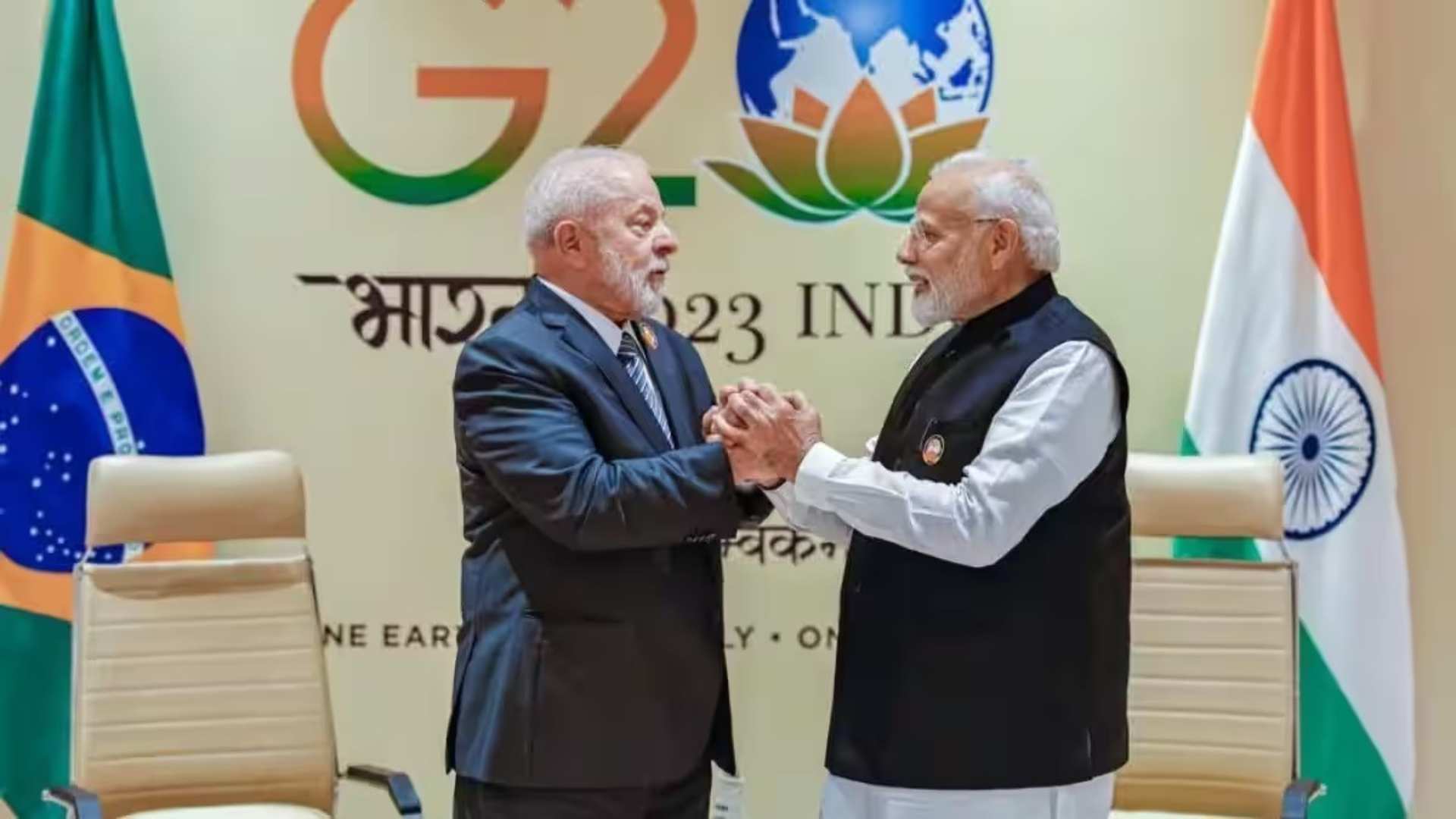
1. Context and Significance of Lula’s Visit
Brazilian President Luiz Inácio Lula da Silva visited India on a four-day state visit with the largest-ever Brazilian delegation, signalling heightened momentum in bilateral ties. The visit underscores the convergence of the two countries’ democratic values, economic interests, and global governance priorities.
Bilateral trade reached $15 billion in 2025, which is considered below potential given the combined populations of 1.4 billion in India and 215 million in Brazil. The visit aims to deepen trade relations, attract investment, and expand private sector partnerships, including participation in the Brazil-India Business Forum with 600 representatives from both countries.
High-level diplomatic visits with accompanying business delegations serve as instruments to translate political goodwill into economic and strategic outcomes. Ignoring such engagements may slow market diversification and limit the leverage of emerging economies in global trade.
2. Trade and Economic Cooperation
Trade diversification is a central focus of Brazil’s long-term economic strategy. Agreements expected during the visit include:
- Critical minerals: First-ever Brazilian agreement with India
- Small and medium-sized enterprises (SMEs): Job creation and entrepreneurship focus
The Brazil-India trade agenda aligns with Brazil’s broader strategy of diversifying partners in the face of global trade tensions and protectionism. Both countries also share interests in biofuels, defence, space technology, science & technology, and health.
Impacts:
- Enhanced bilateral trade flows and market access
- SME-led employment generation
- Strengthened industrial and technological collaboration
“Two of the world’s largest democracies… have an obligation to build a much closer relationship.” — Luiz Inácio Lula da Silva
Bilateral trade expansion strengthens economic resilience, reduces over-dependence on traditional partners, and promotes inclusive development through SME participation.
3. Mercosur-India Trade Agreement
Brazil highlighted the importance of advancing the Mercosur-India trade agreement (in force since 2009) to unlock potential in goods and services trade. This builds on Brazil’s multilateral agreements with the EU, EFTA, and Singapore, reflecting a strategic response to protectionism.
“Expanding the Mercosur-India Agreement… is one of the priorities of my visit.” — Luiz Inácio Lula da Silva
Negotiations focus on leveraging complementary sectors, including biofuels, AI, and technology, to facilitate fair, rules-based trade anchored in WTO principles.
Modernising trade agreements with strategic partners like India ensures both nations can participate effectively in the global economy while mitigating the risks of unilateral trade disruptions.
4. Technological Cooperation and Artificial Intelligence
Brazil and India advocate for equitable AI development to prevent “digital colonialism” and ensure that emerging economies have access to technology. Both countries stress the importance of:
- Joint development of AI technology
- Social inclusion embedded in AI algorithms
- Intergovernmental governance under UN frameworks
The AI Impact Summit in Delhi highlighted the potential for the Global South to shape AI rules, preserving cultural diversity and using AI as a tool for peace.
“Brazil and India are interested in an emancipatory artificial intelligence… that strengthens cultural diversity and serves as a tool for peace, not war.” — Luiz Inácio Lula da Silva
Technological cooperation in AI ensures that emerging economies are not sidelined in the Fourth Industrial Revolution, thereby safeguarding developmental and strategic interests.
5. BRICS Cooperation and Global Governance
Brazil supports India’s BRICS presidency in 2026 to advance agendas on health, climate change, AI, and multilateral governance reforms. Both countries advocate:
- Strengthening the voice of the Global South
- Reform of the UN Security Council to include India, Brazil, and African countries as permanent members
- Promotion of multipolar global governance anchored in peace and rules-based order
“BRICS has a very important role… the voice of the Global South carries weight.” — Luiz Inácio Lula da Silva
Coordinated action in multilateral forums enhances the geopolitical influence of emerging economies and enables them to shape global norms in trade, technology, and security.
6. Strategic Implications
The visit reflects Brazil’s and India’s shared approach to:
-
Economic diversification to reduce vulnerability from trade wars
-
Strategic sector cooperation in biofuels, defence, space, and health
-
Technological sovereignty in AI
-
Global governance reform to reflect multipolar realities
Implications:
- Increased South-South cooperation
- Strengthened political and economic ties
- Creation of joint frameworks for technology and trade
- Enhanced negotiation leverage in multilateral institutions
Integrating economic, technological, and diplomatic strategies enhances resilience, promotes equitable development, and strengthens leadership of emerging economies in global governance.
Conclusion
President Lula’s visit represents a decisive moment to transform Brazil-India relations into a multidimensional partnership encompassing trade, technology, and global governance. Strengthening the Mercosur-India trade framework, promoting equitable AI development, and coordinating within BRICS will enable both countries to assert leadership in the Global South, support sustainable development, and navigate an increasingly multipolar world.