India–Brazil Relations in a Shifting Global Trade Order
1. Lula’s India Visit & Strategic Significance
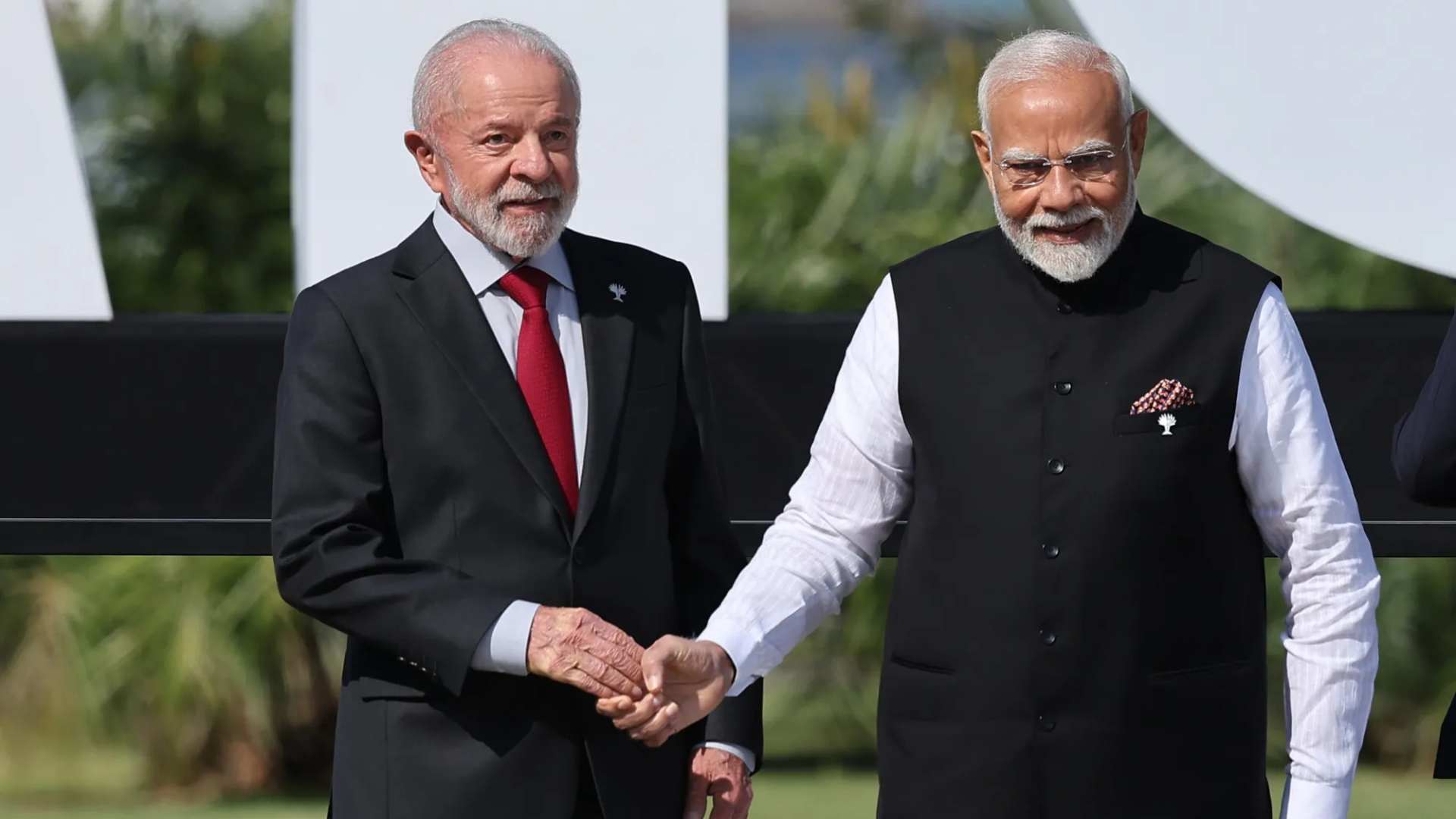
Brazilian President Luiz Inácio Lula da Silva’s recent visit to India underscored the growing importance of India–Brazil ties within the Global South. The visit occurred amid global trade disruptions and debates over multilateralism.
Both countries agreed to work toward doubling bilateral trade to $30 billion by 2030. Agreements were signed on critical minerals, steel mining, and digital cooperation, signalling efforts to diversify supply chains beyond China-centric networks.
The visit also coincided with geopolitical uncertainty following U.S.-imposed tariffs and a U.S. Supreme Court ruling that questioned the rationale for reciprocal tariffs. India and Brazil had each faced 50% tariffs from the United States.
The visit reflects how middle powers are recalibrating partnerships to reduce vulnerability to unilateral trade measures and global power rivalries.
2. Trade, Tariffs & Economic Diplomacy
India and Brazil were among the most heavily taxed countries under recent U.S. tariff measures, each facing 50% tariffs, along with potential additional measures linked to BRICS ties, Iran trade, and Russian oil imports.
The U.S. Supreme Court ruling created an opportunity to reassess the basis of these tariffs. India postponed trade negotiations with Washington to evaluate the implications of the ruling, indicating cautious diplomacy.
For both Delhi and Brasilia, negotiating individually with the U.S. poses risks, particularly when tariff leverage is used in strategic negotiations.
Trade policy has become intertwined with geopolitics. Overdependence on bilateral bargaining may weaken developing economies unless collective strategies are adopted.
3. India–Brazil Convergence in Multilateral Platforms
India and Brazil are key actors in several multilateral and plurilateral groupings:
- BRICS (emerging economies platform)
- IBSA (India-Brazil-South Africa Dialogue Forum)
- G-4 (India, Brazil, Germany, Japan for UNSC reform)
- Co-founders of the biofuel alliance
These platforms promote Global South representation, UN Security Council reform, energy transition cooperation, and multipolarity.
However, U.S. policies on trade, fossil fuels, multilateral institutions, and territorial sovereignty have challenged these frameworks. The reaffirmation of commitment to multilateralism during the visit highlights shared concerns.
Strengthening multilateral coalitions enables emerging economies to shape global norms rather than merely react to major power decisions.
4. Global South Solidarity & Collective Bargaining
President Lula emphasised that countries should “unionise” to tackle geopolitical uncertainty rather than negotiate individually with major powers.
“It is easy to break a single stick, but far more difficult to do so if the sticks are bundled tightly together.” — Luiz Inácio Lula da Silva
This reflects a broader call for coordinated Global South engagement with Washington, particularly in trade and tariff negotiations.
The statement carries weight as Lula prepares to visit Washington and faces domestic elections, which may limit his participation in future BRICS engagements.
Collective bargaining enhances negotiating power and reduces asymmetry in global economic relations. Fragmented responses weaken the Global South’s strategic leverage.
5. Strategic Implications for India
For India, deeper engagement with Brazil supports multiple strategic objectives:
- Diversification of supply chains (critical minerals, steel, digital sectors)
- Strengthening South–South cooperation
- Reinforcing multipolar diplomacy
- Coordinated response to trade uncertainties
India’s postponement of trade talks with the U.S. suggests a calibrated approach—remaining engaged while reassessing leverage in light of legal and political developments in the U.S.
Balancing strategic autonomy with economic pragmatism is central to India’s foreign policy, particularly amid volatile global trade regimes.
6. Way Forward: Coordinated Multilateral Engagement
India and Brazil, along with other developing countries, may pursue a dual-track strategy:
- Continue engagement with the U.S. to stabilise trade ties
- Strengthen coordination within BRICS, IBSA, and G-4
- Promote reform of global governance institutions
- Expand South–South trade and energy partnerships
Such coordination can mitigate the impact of unilateral trade measures while reinforcing commitment to a rules-based international order.
In an era of shifting power balances, institutional solidarity among emerging economies can provide stability and bargaining strength.
Conclusion
President Lula’s India visit highlighted the strategic convergence between two major Global South democracies amid global trade turbulence. The shared experience of high U.S. tariffs and uncertainty has reinforced the need for coordinated multilateral engagement.
Going forward, India and Brazil’s ability to combine bilateral cooperation with collective Global South diplomacy will shape their role in reforming global governance and ensuring a more balanced international economic order.