
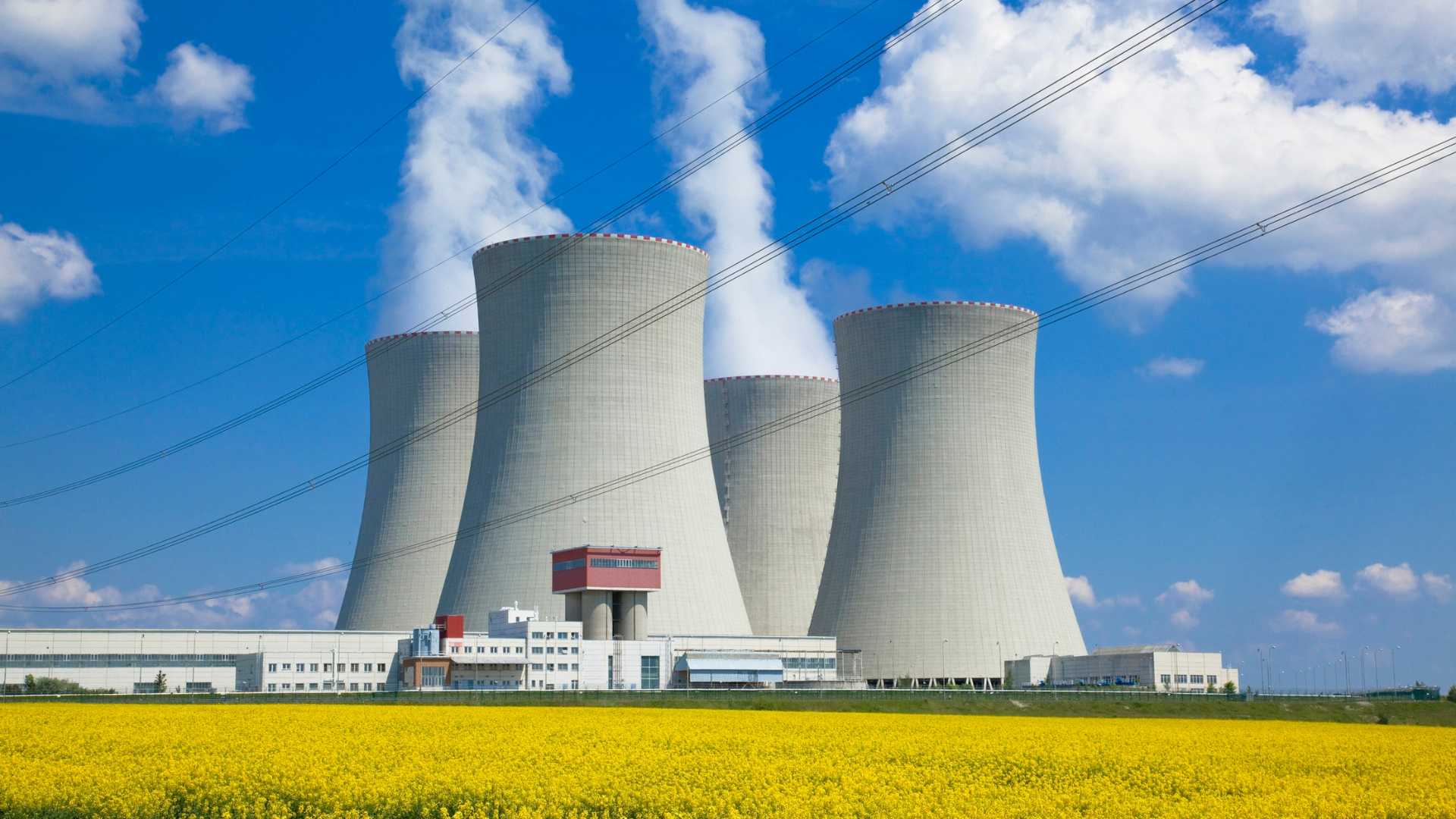
1. India–EU Nuclear Cooperation under the Euratom Framework
The India–European Union relationship has acquired strategic depth through cooperation on the peaceful uses of nuclear energy, formalised under the India–Euratom Agreement signed in July 2020. This framework anchors collaboration in nuclear science and technology while remaining aligned with global non-proliferation norms.
The Joint India–EU Comprehensive Strategic Agenda (January 27, 2026) reiterates cooperation in research and development, covering advanced detector materials, radiation safety, nuclear security, and non-power applications of atomic energy. These areas are crucial for enhancing safety standards, medical applications, and scientific capacity beyond electricity generation.
A notable dimension is cooperation on radio-pharmaceuticals, which links nuclear science with public health outcomes. This strengthens India’s healthcare ecosystem while enabling technology transfer and regulatory harmonisation with European standards.
The agreement also reinforces joint commitment to the International Thermonuclear Experimental Reactor (ITER), reflecting shared interest in long-term fusion energy solutions critical for future low-carbon energy transitions.
This cooperation reflects governance logic where scientific collaboration reduces strategic mistrust and builds institutional capacity. If neglected, India risks lagging in advanced nuclear research and missing opportunities for safe, non-power nuclear applications with developmental spillovers.
2. Deepening Research and Innovation Cooperation through Horizon Europe
The India–EU Summit highlighted the intent to deepen cooperation under Horizon Europe, the European Union’s flagship research and innovation funding programme. This engagement moves beyond diplomacy into institutionalised knowledge partnerships.
Collaboration spans energy, water, agri-food systems, health, semiconductors, biotechnology, and advanced materials, sectors central to India’s development and technological self-reliance. Such cooperation aligns with India’s broader objectives of innovation-led growth and industrial upgrading.
Mechanisms such as co-funding arrangements and coordinated calls enable Indian and European institutions to jointly define research priorities, improving relevance and reducing duplication. This enhances absorptive capacity within Indian research institutions.
By integrating Indian researchers into European innovation networks, the partnership also strengthens global competitiveness and standard-setting influence in emerging technologies.
The governance rationale lies in leveraging pooled resources for complex, cross-border challenges. Ignoring such platforms would isolate domestic research ecosystems and weaken India’s position in global knowledge value chains.
3. Carbon Border Adjustment Mechanism (CBAM) as a Trade–Climate Interface
A key area of friction in India–EU relations has been the Carbon Border Adjustment Mechanism (CBAM), which imposes additional costs on carbon-intensive imports such as iron and steel produced outside the EU. The measure links climate policy directly with trade competitiveness.
From India’s perspective, CBAM raised concerns over disguised protectionism and the impact on export-oriented industries with higher carbon intensity compared to European producers. This made CBAM a major negotiation point during the Summit.
According to India’s Press Information Bureau, commitments have been secured under CBAM provisions, including most-favoured nation (MFN) assurances, flexibility extended to third countries, and enhanced technical cooperation on recognition of carbon pricing and verifiers.
Importantly, the framework also envisages financial assistance and targeted support to help producers reduce greenhouse gas emissions and comply with emerging carbon requirements.
Implications:
- Potential mitigation of export competitiveness risks for Indian steel and metal producers
- Alignment incentives for domestic carbon accounting and verification systems
- Gradual integration of climate considerations into trade policy
The development logic is to balance climate ambition with equity in global trade. If unaddressed, CBAM could have constrained India’s industrial exports and deepened North–South asymmetries in climate governance.
4. Strategic and Governance Implications of the January 2026 India–EU Summit
Taken together, nuclear cooperation, research collaboration, and CBAM-related assurances indicate a shift in India–EU ties from transactional engagement to rules-based, long-term strategic coordination. This aligns economic, technological, and climate objectives within a single partnership framework.
The agenda strengthens India’s access to advanced technologies while embedding sustainability norms into industrial and research policies. It also reflects the EU’s recognition of India as a key partner in managing global public goods such as climate stability and scientific innovation.
Institutionally, these initiatives enhance policy predictability, reduce regulatory friction, and create platforms for continuous dialogue across sectors critical for governance and development.
Strategically, such structured engagement prevents fragmentation in global governance. Ignoring these linkages would weaken India’s ability to shape emerging norms in energy, technology, and climate-linked trade.
Conclusion
The January 27, 2026 India–EU Summit outcomes signal consolidation of a multidimensional strategic partnership. By integrating nuclear science, innovation policy, and climate-sensitive trade mechanisms, the relationship supports India’s long-term developmental goals while adapting to evolving global governance frameworks.