
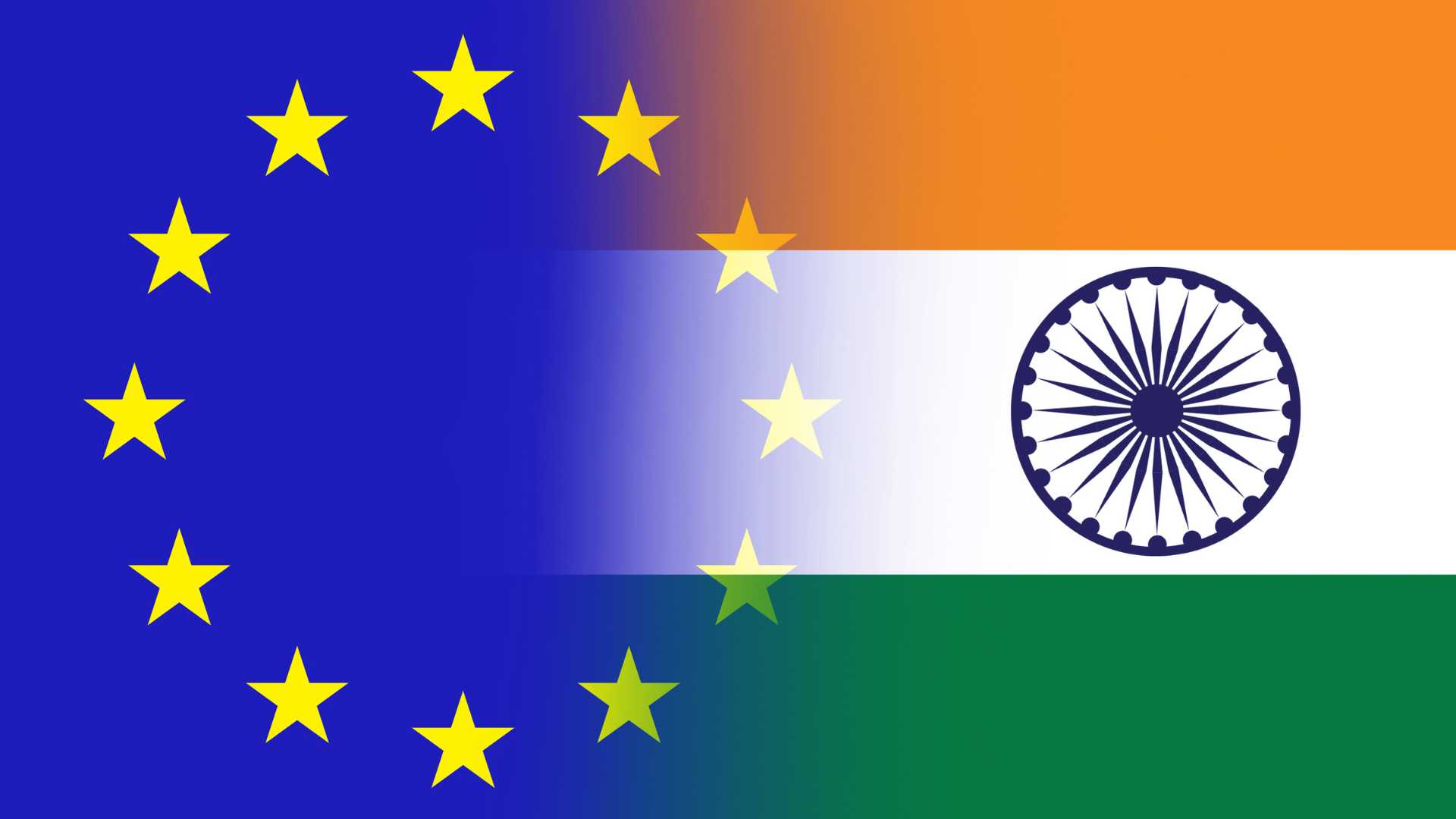
India and the EU: Pioneering a New Era in Global Relations

Exploring how the partnership between India and the EU can redefine multilateralism in a fragmented world.
GopiGopi
5 mins read
India–EU ties deepen amid shifting global alignments
Not Started

1. Context: India–EU Engagement at a Strategic Inflection Point

The upcoming visit of the President of the European Commission and the President of the European Council to New Delhi marks a significant elevation in India–EU relations. Their participation as chief guests at India’s 77th Republic Day (2026) and as co-chairs of the 16th India–EU Summit signals political intent beyond routine diplomacy. Symbolism here reinforces strategy, projecting alignment at a time of global uncertainty.

This engagement occurs amid increasing volatility in traditional alliances. India’s relations with the United States have faced strain due to punitive tariffs and political rhetoric over India’s energy purchases from Russia. New Delhi’s rejection of these charges as “inaccurate and misleading” reflects a broader assertion of policy autonomy.

Europe, facing similar strategic pressures, recognises the limits of dependence on external security and economic guarantees. Consequently, India–EU convergence is shaped by shared experiences of over-reliance and the need for diversified partnerships.

Ignoring this moment risks allowing inertia and bureaucratic delay to perpetuate under-realised potential in one of the world’s most consequential partnerships.

Strategically, high-level political signalling creates momentum for institutional outcomes; failure to act would reinforce episodic engagement and weaken both sides’ ability to respond to systemic geopolitical shifts.


2. Strategic Autonomy as the Underlying Convergence

Both India and the EU increasingly view strategic autonomy as a governance necessity rather than a rhetorical preference. For India, this involves maintaining sovereign decision-making amid pressures from major powers. For the EU, it reflects lessons from energy dependence, market concentration, and security reliance.

The partnership is thus framed not against any single power, but around flexibility and resilience. This shared outlook allows cooperation despite differences on Russia or China, shifting focus from alignment to autonomy.

Such convergence has implications for global governance. A partnership grounded in respect for domestic sensitivities and pragmatic cooperation can stabilise international relations in a multipolar order.

Failure to institutionalise this convergence could leave both actors exposed to coercive economic or security pressures.

Autonomy-driven partnerships enhance policy space; ignoring this logic risks repeating vulnerabilities created by over-dependence on singular strategic poles.


3. India–EU Free Trade Agreement (FTA): Economic and Geopolitical Dimensions

Negotiations for the India–EU FTA, ongoing since 2007, have gained urgency due to shifting global trade dynamics. The agreement is increasingly viewed as a geopolitical insurance mechanism rather than a purely commercial instrument.

For India, the FTA offers expanded market access in labour-intensive and knowledge-driven sectors, while for the EU it opens pathways into one of the fastest-growing large economies. Regulatory harmonisation could also stabilise supply chains amid global fragmentation.

A central challenge remains the EU’s Carbon Border Adjustment Mechanism (CBAM), imposing an effective 20%–35% carbon cost on Indian exports such as steel, aluminium, cement, and fertilisers. India perceives this as a non-tariff barrier that could dilute FTA gains, raising concerns of climate equity.

If unresolved, such asymmetries could undermine trust and reduce the developmental impact of the agreement.

Key Economic Sectors:

  • Textiles and apparel: tariff reduction for Indian exports
  • Pharmaceuticals and chemicals: leveraging India’s manufacturing capacity
  • Automobiles and machinery: EU market access in India
  • Digital services: regulatory alignment for IT and services trade

Trade agreements shape long-term economic governance; neglecting equity concerns like CBAM risks turning integration into exclusion.


4. Security and Defence Partnership: Beyond Trade-Centric Engagement

Alongside trade, defence cooperation has emerged as a critical pillar. The proposed India–EU Security and Defence Partnership, comparable to EU arrangements with Japan and South Korea, reflects recognition of shared security interests.

For the EU, this opens access to India’s expanding defence market and opportunities for co-production. For India, it complements the ‘Make in India’ initiative by enabling technology transfer and domestic manufacturing.

Enhanced cooperation could also strengthen maritime security and coordination in the Indian Ocean, an area of growing strategic importance. Absence of such frameworks would limit the partnership to economics, ignoring evolving security realities.

Defence Cooperation Dimensions:

  • Co-production of defence equipment
  • Access to advanced European technology
  • Joint exercises and maritime coordination

Security cooperation institutionalises trust; overlooking it would constrain strategic depth and leave economic ties vulnerable to geopolitical shocks.


5. India–EU Partnership as a Template for Multipolar Order

At a systemic level, India–EU relations offer a potential model for adaptive multilateralism. Both actors seek to amplify their voices without ceding autonomy to Washington, Beijing, or Moscow.

Their shared credibility, economic capacity, and institutional strength position them to co-create norms that balance sovereignty with cooperation. This has implications for reforming global governance structures and resisting economic coercion.

If bureaucratic inertia prevails, however, the partnership may fall short of influencing the broader international order.

Model partnerships demonstrate governance innovation; failure to scale them weakens prospects for a resilient and equitable multipolar system.


Conclusion

The evolving India–EU relationship reflects a convergence shaped by strategic autonomy, economic diversification, and security cooperation. By translating political intent into institutional outcomes, both sides can strengthen governance resilience and contribute to a stable multipolar order. Sustained engagement, rather than episodic symbolism, will determine its long-term developmental and strategic impact.


Quick Q&A

Everything you need to know

Strategic Significance: The India–EU partnership in 2026 is driven by the evolving multipolar global order. With the unpredictability of the United States and the assertiveness of China, both India and the EU seek strategic autonomy, ensuring their domestic and foreign policy choices are not constrained by external powers.

Economic and Technological Dimensions: The partnership encompasses trade, investment, technology transfer, and regulatory harmonisation. The ongoing negotiations for the Free Trade Agreement (FTA) aim to reduce tariffs in textiles, pharmaceuticals, automobiles, and digital services, enhancing mutual economic growth.

Security and Defence: The proposed Security and Defence Partnership mirrors agreements with Japan and South Korea. This framework allows cooperation in defence manufacturing, joint exercises, and technology sharing, strengthening regional security, particularly in the Indo-Pacific. In essence, the India–EU partnership is a comprehensive approach to economic, technological, and strategic collaboration that could serve as a model for other global actors.

Geopolitical Context: The India–EU FTA is more than an economic arrangement; it functions as a geopolitical insurance policy. India faces unpredictability in its bilateral relations with the United States, including punitive tariffs and criticism over purchases of Russian oil. By strengthening ties with the EU, India diversifies its international partnerships and reduces over-reliance on a single ally.

Economic Dimensions: The FTA would open EU markets to Indian exports, particularly in textiles, pharmaceuticals, and IT services. Regulatory harmonisation in digital and services trade further ensures competitiveness. For the EU, access to India's growing market provides new investment and commercial opportunities.

Strategic Autonomy: By entering a strong FTA with the EU, India reinforces its capacity to make sovereign choices, avoiding constraints from external pressures while simultaneously leveraging trade to enhance strategic influence. The agreement therefore blends economic incentives with long-term geopolitical security.

Industrial and Technological Synergies: The Security and Defence Partnership allows for co-production of defence equipment, access to European technology, and joint exercises. For India, this aligns with the Make in India initiative by fostering domestic manufacturing capabilities and improving technological competencies in defence production.

Strategic Implications: The partnership helps India reduce dependence on imports and enhances self-reliance in critical defence sectors. Additionally, it facilitates interoperability with European militaries, allowing India to contribute to regional and global security frameworks more effectively.

Global Visibility and Collaboration: Beyond manufacturing, the partnership positions India as a credible strategic partner in the Indo-Pacific and beyond. It enables collaborative R&D, knowledge exchange, and the development of cutting-edge military systems, reinforcing India’s role as a regional security provider while supporting industrial and economic growth.

Shifting Global Dynamics: The renewed urgency arises from changing global power alignments. India has experienced unpredictability from the US and pressures related to its energy imports, while the EU seeks to assert strategic autonomy amid global uncertainties. Both recognise that relying on a single partner compromises sovereignty.

Economic Opportunities: The Republic Day 2026 visit coincides with the final stages of FTA negotiations, providing a platform to finalise trade, investment, and regulatory frameworks. The optics of EU leaders co-chairing the India–EU Summit emphasises alignment of intent and strengthens political will.

Strategic Autonomy: Both sides see the need to develop frameworks that respect sovereign decision-making, reduce over-dependence, and amplify collective influence in multilateral forums. The visit signals a readiness to seize this moment to advance economic and security interests simultaneously.

Challenges: The FTA negotiations, ongoing since 2007, face challenges including non-tariff barriers such as the EU’s Carbon Border Adjustment Mechanism (CBAM), which imposes significant levies on steel, aluminium, cement, and fertilizers from India. Differences over regulatory standards, protection of domestic industries, and sensitive sectors can slow progress.

Opportunities: Successful FTA implementation can expand trade in textiles, pharmaceuticals, IT services, and automobiles, providing economic dividends for both sides. Regulatory harmonisation in services and digital trade can foster innovation and market access.

Strategic Implications: Beyond economics, the FTA strengthens geopolitical resilience by deepening partnerships, supporting strategic autonomy, and demonstrating India’s ability to diversify alliances. It provides a framework to balance relations with the US and China, while asserting India’s credibility as a global partner in trade and multilateral diplomacy.

Textiles and Apparel: India’s exports could benefit from tariff reductions, allowing greater access to European markets and enhancing competitiveness.

Pharmaceuticals and Chemicals: India’s strong production capacity and cost competitiveness can meet EU demand for quality generic drugs and chemical products.

Automobiles and Machinery: The EU seeks better access to India’s growing consumer market, which could foster investment, technology transfer, and joint production initiatives.

Digital and IT Services: Regulatory harmonisation could enable Indian IT firms to provide cloud services, software solutions, and digital infrastructure support across Europe. Overall, these sectors illustrate how trade agreements can translate into tangible economic and strategic gains for both partners.

Strategic Rationale: The India–EU partnership demonstrates a model where two sovereign actors align for mutual benefit without ceding decision-making power to dominant global players. By emphasising strategic autonomy, both sides navigate challenges posed by the unpredictability of the US and assertive China.

Operational Framework: Through trade agreements, defence collaboration, technology sharing, and regulatory alignment, India and the EU can co-create frameworks that balance domestic sensitivities with global imperatives.

Global Implications: This partnership can serve as a blueprint for other countries seeking multilateral cooperation while retaining sovereignty. It illustrates that strategic alignment can occur outside traditional alliances, promoting a resilient, multipolar international order that values equity, pragmatism, and shared prosperity.

Attribution

Original content sources and authors

Sign in to track your reading progress

Comments (0)

Please sign in to comment

No comments yet. Be the first to comment!