1. West Asian Security Volatility and Strategic Context
West Asia is witnessing heightened instability, marked by a major U.S. military buildup in the Persian Gulf and rising tensions involving Iran. Although a ceasefire has held in Gaza since October 2025, prospects for durable peace remain uncertain.
Emerging geopolitical fault lines are drawing regional actors such as the UAE and Saudi Arabia into competing alignments. This evolving security architecture has implications for energy flows, maritime routes, and regional alliances.
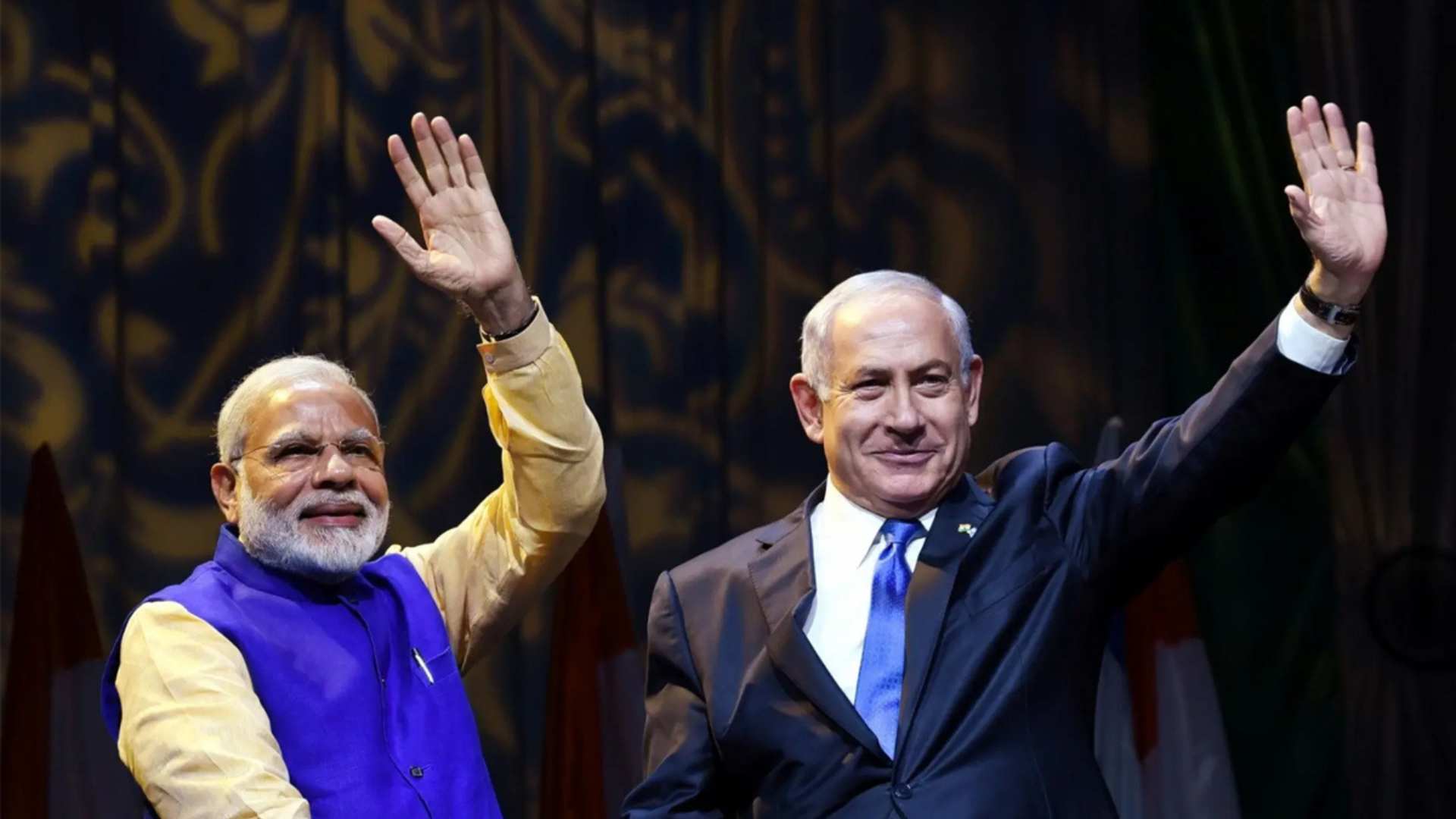
Prime Minister Narendra Modi’s February 25–26, 2026 visit to Israel—his second after the historic July 2017 visit—takes place in this fragile environment. Notably, the visit is standalone, without engagement with Palestinian leadership, reflecting India’s policy of “de-hyphenating” its Israel and Palestine engagements.
India’s West Asia engagement is shaped by energy security, diaspora interests, and strategic partnerships. In a volatile region, calibrated diplomacy is essential to prevent disruptions to trade, energy supplies, and geopolitical positioning.
2. Defence and Security Convergence
India and Israel share security concerns, including cross-border terrorism and hostile neighbourhood dynamics. Over time, defence cooperation has evolved from a buyer-seller relationship to joint development and technology collaboration.
According to SIPRI, India accounted for 34% of Israel’s total arms exports (2020–2024), making it Israel’s largest defence customer during this period. Cooperation spans unmanned aerial vehicles (UAVs), missile systems, radar platforms, and surveillance technologies.
The jointly developed Barak-8 air and missile defence system represents a flagship example of co-production. The India-Israel Vision on Defence Cooperation (June 2022) and the November 2025 agreement on advanced systems further institutionalised defence-industrial collaboration.
Key Defence Elements:
- India’s share in Israeli arms exports (2020–24): 34%
- Proposed focus: Co-production of Iron Beam (100kW laser system)
- Reported private-sector deal: Approx. $1.9 million for surveillance systems
India’s experience in Operation Sindoor (May 2025) reportedly underscored the need for strengthened air and anti-drone defence under Mission ‘Sudarshan Chakra’.
Strategic autonomy is strengthened through technology co-development rather than mere imports. However, overdependence on any single supplier must be balanced with diversified defence partnerships.
3. Science, Technology and Innovation Linkages
Beyond defence, Israel has been a key partner in agriculture, water management, and innovation ecosystems. Over 35 Centres of Excellence (CoEs) operate in India for high-density production of horticultural crops and beekeeping.
Water cooperation has expanded through MASHAV agreements with Haryana (June 2022) and Rajasthan (December 2024) for integrated water resource management and capacity building.
Artificial Intelligence (AI) is emerging as a prospective frontier for bilateral cooperation. Mr. Modi’s planned visit to a Jerusalem innovation centre signals focus on technology-driven growth.
Technology partnerships enhance productivity in agriculture and water-stressed regions. Ignoring innovation collaboration could limit India’s progress in climate resilience and agri-modernisation.
4. Trade, Investment and Economic Integration
India is Israel’s second-largest trading partner in Asia, with bilateral trade reaching $3.75 billion in FY2024–25. Trade remains dominated by diamonds, petroleum and chemicals but is diversifying into electronics, medical equipment, and high-tech sectors.
In September 2025, both sides signed a Bilateral Investment Agreement, followed by Terms of Reference for a Free Trade Agreement (FTA) in November 2025. Progress on the FTA may gain momentum during the visit.
Israel is reportedly interested in:
- Participation of Indian infrastructure firms in roads and ports
- “Human mobility” arrangements for skilled Indian professionals
Economic diversification strengthens strategic ties beyond security cooperation. A successful FTA could institutionalise long-term economic interdependence.
5. India-Middle East-Europe Economic Corridor (IMEC)
Announced at the G-20 Summit (September 2023), IMEC aims to establish an intercontinental connectivity corridor linking India to Europe via West Asia.
The Gaza conflict temporarily stalled progress, but renewed trade agreements with the EU, Oman, and the UAE have revived interest. Vulnerabilities in the Suez Canal route due to regional instability increase the appeal of alternative corridors.
However, sustained peace in Gaza remains crucial for the corridor’s viability.
Connectivity initiatives like IMEC integrate economic and strategic objectives. Without regional stability, infrastructure corridors risk becoming geopolitically fragile.
6. Gaza Peace Process and India’s Diplomatic Space
At the Board of Peace Summit (February 19, 2026), attended by over 50 countries, some pledged $7 billion and others committed troops for an International Stabilisation Force. India participated as an observer.
India has not defined its formal role in the Gaza stabilisation process. Given its balanced ties with Israel and Gulf states, it may explore humanitarian, reconstruction, or diplomatic avenues.
India’s hosting of the 2nd India-Arab Foreign Ministers’ Meeting (January 2026) and recent visits to Jordan, Oman, and the UAE illustrate its effort to maintain equilibrium in regional diplomacy.
India’s credibility in West Asia rests on strategic balancing. Over-alignment with any bloc could undermine ties with energy partners and diaspora-hosting nations.
7. Regional Alignments and the “Hexagon” Proposal
Israeli Prime Minister Benjamin Netanyahu proposed creating a “hexagon” of alliances including India, Arab nations, African nations, Mediterranean countries (Greece, Cyprus), and Asian partners against “radical axes.”
“We will create a ‘hexagon’ of alliances…” — Benjamin Netanyahu
India’s approach to West Asia has traditionally avoided bloc politics. Its foreign policy emphasises strategic autonomy and issue-based partnerships rather than formal alignments.
How India navigates such proposals will signal its broader geopolitical positioning.
Alignment politics may enhance deterrence but reduce diplomatic flexibility. India’s long-term interests lie in maintaining multi-vector engagement rather than entering rigid blocs.
8. Symbolism and Strategic Significance of the Visit
Mr. Modi’s address to the Knesset and engagement with Israel’s innovation ecosystem signal deep political trust. The visit is positioned as more than routine diplomacy, reflecting consolidation of a decade-long strategic partnership.
Simultaneously, the timing amid regional instability makes the visit geopolitically sensitive. It underscores India’s attempt to separate bilateral cooperation from broader regional fault lines.
Symbolism in diplomacy shapes perception as much as policy substance. Managing optics while safeguarding strategic interests is central to India’s West Asia engagement.
Conclusion
Prime Minister Modi’s 2026 visit to Israel occurs at a critical juncture marked by regional instability, evolving security architectures, and emerging connectivity initiatives. India–Israel ties now extend beyond defence to trade, technology, water management, and strategic infrastructure.
Going forward, India’s challenge lies in deepening its partnership with Israel while preserving its carefully balanced relationships across West Asia. Strategic autonomy, economic diversification, and regional stability will determine the long-term success of this engagement.