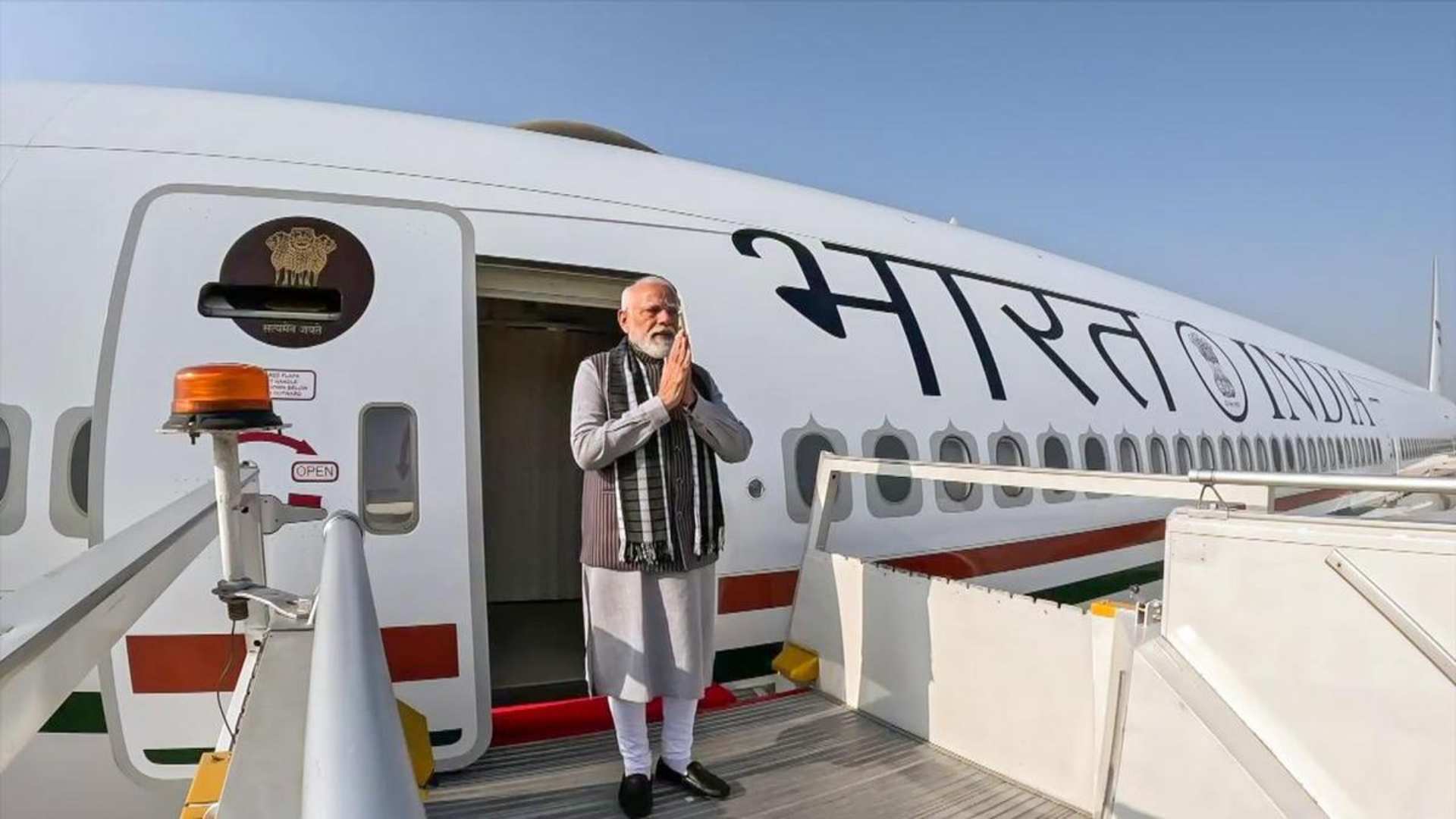
Modi's Historic Israel Visit Amid West Bank Tensions

Exploring India's strategic partnership with Israel amidst rising tensions over West Bank settlements and regional stability.
S
Surya
4 mins read
Modi Netanyahu review strategic partnership
Not Started

1. Diplomatic Evolution and Strategic Context

India and Israel established full diplomatic relations in 1992, marking a shift from limited engagement to structured bilateral cooperation. The relationship has expanded significantly over the past decade across defence, trade, technology and labour mobility.

Prime Ministerial-level engagement gained prominence with the first-ever visit by an Indian Prime Minister to Israel in 2017, symbolising the political elevation of ties. Recent high-level visits aim to review the India–Israel Strategic Partnership and explore cooperation in science and technology.

However, India’s foreign policy approach remains calibrated. India recently aligned with over 100 countries at the United Nations in criticising Israeli settlement expansion in the West Bank, reflecting its continued commitment to a balanced West Asia policy.

India’s engagement with Israel operates within a framework of strategic autonomy. Balancing bilateral ties with broader West Asian diplomacy prevents diplomatic overdependence and preserves India’s credibility in multilateral forums.


2. Trade Relations and Economic Interdependence

Bilateral trade between India and Israel has expanded significantly since 1992.

Trade Trends:

  • $200 million (1992)
  • Peak at $10.7 billion (2022–23)
  • Decline to $6.5 billion (2023–24)
  • Further decline to $3.6 billion (2024–25) due to war-related disruptions and trade route challenges

Since 2014–15, India has maintained a trade surplus with Israel. Trade Surplus:

  • $6.1 billion (2022–23)
  • $2.5 billion (2023–24)
  • $663 million (2024–25)

Export Composition (2019–2025):

  • Refined petroleum products: ~44%
  • Diamonds: ~22%

Import Composition:

  • Diamonds (raw stones): ~one-third
  • Mineral/chemical fertilisers
  • Electronic integrated circuits
  • Radar apparatus

The diamond trade reflects value addition in India, where raw stones are cut and polished before re-export.

Trade diversification and value addition enhance resilience. However, concentration in specific commodities such as petroleum products and diamonds makes trade vulnerable to geopolitical disruptions.


3. Defence Cooperation: Strategic Cornerstone

Defence cooperation remains the core pillar of India–Israel relations. Israel is a key supplier of advanced defence systems and technology to India.

According to the Stockholm International Peace Research Institute (SIPRI), India accounted for over 38% of Israel’s arms exports between 2014 and 2024, highlighting the depth of defence ties.

Collaboration increasingly aligns with India’s “Make in India” initiative, with Israeli firms partnering with Indian companies for local manufacturing of defence equipment.

Defence collaboration strengthens India’s military modernisation and technological capability. However, over-reliance on imports necessitates deeper indigenisation to enhance strategic autonomy.


4. Investment and Technology Partnerships

Israel’s cumulative Foreign Direct Investment (FDI) into India from 2000 to September 2025 has crossed $347 million. Israeli firms have made over 300 investments, primarily in technology sectors.

Indian firms have also invested in Israeli companies, with cumulative Overseas Direct Investment (ODI) of $443 million (April 2000–April 2025).

Key areas of collaboration include:

  • Cybersecurity
  • Agriculture technology
  • Water management
  • Electric mobility

Technology collaboration reflects complementarities—Israel’s innovation ecosystem and India’s market scale.

Technology partnerships support innovation-driven growth. If institutional mechanisms for collaboration weaken, opportunities in high-tech sectors may remain underutilised.


5. Migration, Labour Mobility and Education

Migration and labour mobility have emerged as significant dimensions of bilateral ties.

Mobility Trends:

  • Indians travelling to Israel: 32,715 (2024) vs 27,196 (2023)
  • Indian workers in Israel: ~32,000 (October 2024)
  • Indian students in Israel: ~900

A substantial number of Indian workers were recruited in the construction sector following the Gaza conflict to replace Palestinian labour.

Labour mobility enhances economic linkages while also raising issues related to worker protection and geopolitical risk exposure.

Managed migration expands employment opportunities but requires robust labour agreements and welfare safeguards to protect migrant workers in conflict-prone regions.


Conclusion

India–Israel relations have evolved into a multi-dimensional strategic partnership encompassing defence, trade, technology and labour mobility. While defence cooperation remains central, economic diversification, technology collaboration and balanced diplomacy define the contemporary trajectory.

Sustaining this partnership will require strategic balancing in West Asia, trade resilience amid geopolitical disruptions, and deeper technological and industrial collaboration aligned with India’s long-term development goals.

“In international affairs, there are no permanent friends or enemies, only permanent interests.” — Lord Palmerston

This underscores that India’s engagement with Israel is guided by long-term national interest within a broader strategic framework.

Quick Q&A

Everything you need to know

The India–Israel Strategic Partnership, formalised after the establishment of full diplomatic relations in 1992, has evolved into a multi-dimensional relationship encompassing defence, trade, technology, investment, and migration. Defence cooperation remains the core pillar, with India accounting for over 38% of Israel’s arms exports between 2014 and 2024. This includes advanced systems such as UAVs, radar apparatus, and missile defence technologies that strengthen India’s military capabilities.

Trade and economic engagement form another crucial dimension. Bilateral trade expanded from 200millionin1992toover200 million in 1992 to over 10.7 billion in 2022-23 before declining due to geopolitical disruptions. The trade basket includes refined petroleum products and diamonds on the export side, while imports feature diamonds, fertilisers, electronic integrated circuits, and defence equipment. Israeli FDI into India and Indian ODI into Israel—especially in cybersecurity, agriculture, and water management—reflect technological interdependence.

Additionally, mobility and people-to-people ties have grown, with around 32,000 Indian workers and nearly 900 students in Israel. Thus, the partnership today is comprehensive, spanning strategic security, economic cooperation, and societal linkages.

Defence cooperation with Israel is strategically significant because it provides India access to advanced military technology and rapid procurement capabilities. Israel’s expertise in missile defence, UAVs, surveillance systems, and electronic warfare complements India’s security requirements, especially given its complex regional security environment. The partnership has enhanced operational readiness and technological modernisation of India’s armed forces.

At the same time, India maintains a balanced West Asia policy, supporting the Palestinian cause and endorsing multilateral positions critical of settlement expansion. This demonstrates India’s commitment to strategic autonomy, separating bilateral defence cooperation from broader diplomatic principles. By engaging Israel while sustaining ties with Arab nations, India protects its energy security and diaspora interests.

Moreover, defence collaboration increasingly aligns with the ‘Make in India’ initiative, with Israeli firms partnering in domestic manufacturing. This reduces long-term import dependence and strengthens India’s indigenous defence industry.

Bilateral trade between India and Israel has grown significantly but remains concentrated in specific sectors. Refined petroleum products account for nearly 44% of India’s exports, while diamonds form about 22%. On the import side, raw diamonds constitute nearly one-third of imports, reflecting a value-chain model where India cuts and polishes stones before re-exporting them. Fertilisers, radar apparatus, and integrated circuits also feature prominently.

However, trade volatility has been evident. After peaking at 10.7billionin202223,tradedeclinedsharplyduetowarrelateddisruptionsandlogisticalchallenges.Thenarrowingtradesurplusfrom10.7 billion in 2022-23, trade declined sharply due to war-related disruptions and logistical challenges. The narrowing trade surplus—from 6.1 billion to $663 million—highlights vulnerability to geopolitical shocks and commodity concentration.

Economically, diversification into high-technology sectors such as cybersecurity, agri-tech, and water management is crucial. Expanding beyond petroleum and diamonds would enhance resilience and reduce exposure to global price fluctuations.

India’s decision to align with over 100 countries at the UN in criticising Israeli settlement expansion reflects its continued support for a rules-based international order and the two-state solution. Historically, India has supported Palestinian self-determination, and this stance remains embedded in its foreign policy principles.

Simultaneously, India has deepened strategic ties with Israel, particularly in defence and technology. This dual approach illustrates multi-alignment and pragmatic diplomacy. Rather than viewing relations as zero-sum, India separates normative positions from strategic cooperation. Such balancing allows India to safeguard defence interests while maintaining goodwill among Arab partners.

However, sustaining this equilibrium requires diplomatic finesse. Escalating conflicts or domestic political pressures could complicate policy choices. India’s approach thus represents a careful calibration of values and interests in a geopolitically sensitive region.

The recruitment of approximately 32,000 Indian workers in Israel, especially in construction, marks a significant expansion of labour mobility. After the Gaza conflict reduced Palestinian labour availability, Israel turned to India as a reliable workforce partner. This demonstrates how geopolitical disruptions can reshape labour markets and create new bilateral opportunities.

For India, overseas employment provides remittances, skill development, and livelihood opportunities. Structured labour agreements can institutionalise migration flows, ensuring worker protections and social security arrangements. The presence of Indian students further deepens people-to-people ties and educational cooperation.

Nevertheless, deploying workers in conflict-affected zones raises concerns about safety and welfare. Effective monitoring mechanisms, diplomatic engagement, and bilateral labour frameworks are essential to ensure that labour mobility remains a sustainable and mutually beneficial pillar of the partnership.

Attribution

Original content sources and authors

Sign in to track your reading progress

Comments (0)

Please sign in to comment

No comments yet. Be the first to comment!