
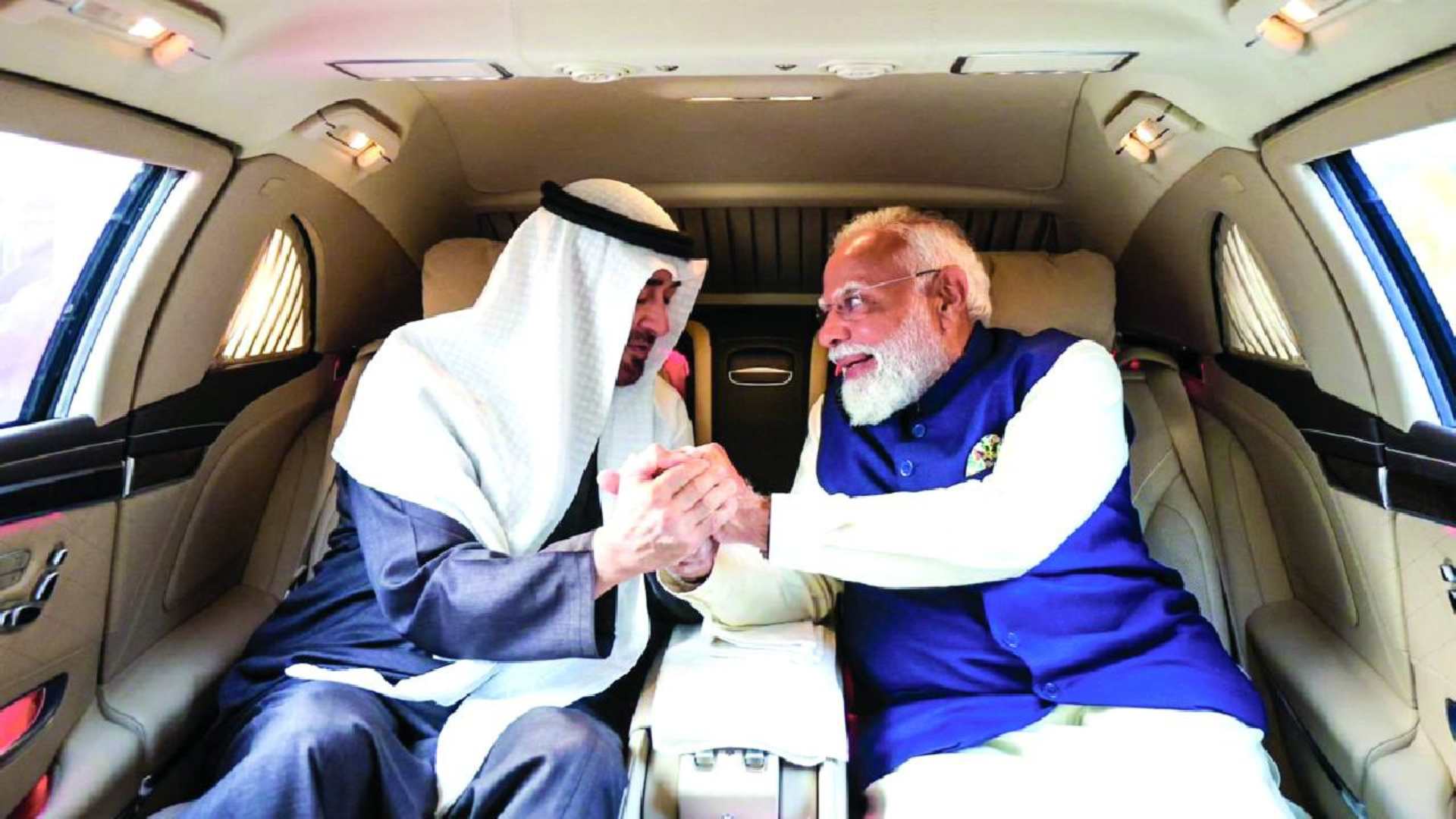
India and UAE Strengthen Defence Ties Against Terrorism

India and UAE leaders emphasize a strategic defence partnership focusing on mutual respect and counter-terrorism efforts during recent talks.
4 mins read
India and UAE ink strategic defence partnership, strengthening security cooperation.
Not Started

1. Context: India–UAE Strategic Partnership and Defence Cooperation

India and the United Arab Emirates (UAE) have steadily expanded their bilateral relationship from economic engagement to a broader Comprehensive Strategic Partnership. Defence and security cooperation has emerged as a critical pillar, reflecting shared concerns over regional instability, terrorism, and geopolitical uncertainty.

The signing of a Letter of Intent (LoI) towards a strategic defence partnership during UAE President Sheikh Mohamed bin Zayed Al Nahyan’s official visit to India marks an institutional deepening of this relationship. It signals intent to move from ad hoc cooperation to structured, long-term defence collaboration.

Such developments are significant for India’s foreign and security policy, particularly in West Asia, a region central to India’s energy security, diaspora interests, and maritime trade routes.

Strategic partnerships in defence enhance trust and signal long-term convergence of security interests.

2. Political Signalling and Normative Foundations

The joint statements by Prime Minister Narendra Modi and President Al Nahyan emphasised mutual respect for sovereignty and territorial integrity and the importance of strategic autonomy. These principles align closely with India’s long-standing foreign policy ethos.

By explicitly reaffirming these norms, both sides sought to reassure each other that cooperation will not undermine independent decision-making or entangle either country in adversarial blocs. This is particularly relevant amid heightened global polarisation.

“They acknowledged steady and strong bilateral defence and security cooperation as a core pillar of the comprehensive strategic partnership …”MEA Release

If such normative clarity were absent, defence cooperation could remain transactional and vulnerable to geopolitical shifts.

Shared principles provide durability to strategic relationships beyond immediate interests.

3. Counter-terrorism and Financial Security Cooperation

A major component of the engagement is the shared opposition to terrorism in all its forms, including cross-border terrorism. Both leaders reiterated that no state should provide safe havens to entities involved in financing, planning, or executing terrorist acts.

The commitment to cooperate within the Financial Action Task Force (FATF) framework highlights a convergence on global financial governance norms, particularly in combating terror financing and money laundering.

Policy measures:

  • Cooperation within FATF mechanisms
  • Strengthening anti-money laundering frameworks
  • Information-sharing on terror financing networks

Such cooperation enhances India’s GS2 (International Relations) and GS3 (Internal Security) objectives simultaneously.

Security today extends beyond borders to financial systems and regulatory frameworks.

4. Operational Defence Engagement and Military-to-Military Ties

India–UAE defence cooperation has gained momentum through frequent high-level visits by service chiefs and commanders of the Army, Navy, and Air Force. These engagements have improved interoperability, trust, and situational awareness.

The successful conduct of bilateral military exercises indicates a shift from symbolic cooperation to operational coordination. This is particularly relevant for maritime security in the Indian Ocean region and stability in West Asia.

Ignoring such operationalisation would risk reducing strategic intent to diplomatic rhetoric without tangible capability enhancement.

Regular military engagement converts strategic intent into operational credibility.

5. Regional and Global Security Convergence

The two leaders also exchanged views on regional and global issues, underscoring shared interests in peace, security, and stability. This reflects growing convergence on issues such as maritime security, regional conflicts, and the protection of trade routes.

President Al Nahyan’s visit — his fifth visit to India in a decade and third as UAE President — underscores the sustained political commitment at the highest level.

Statistics:

  • Number of visits by President Al Nahyan in last decade: 5
  • Official visits as UAE President: 3

Such high-level continuity strengthens institutional memory and long-term policy coordination.

Frequent leader-level engagement anchors partnerships against short-term disruptions.

Conclusion

The India–UAE move towards a strategic defence partnership reflects deepening trust, shared security concerns, and normative alignment. By institutionalising defence ties, strengthening counter-terror cooperation, and expanding military engagement, both countries are reinforcing a stable security architecture in West Asia and the Indian Ocean region. Over time, such partnerships enhance India’s strategic autonomy while contributing to regional peace and stability.

Quick Q&A

Everything you need to know

Strengthening Bilateral Defence Cooperation:
The strategic defence partnership between India and the UAE represents a significant enhancement of bilateral defence and security cooperation, forming a core pillar of the comprehensive strategic partnership between the two countries. It reflects mutual recognition of shared security interests and strategic autonomy.

Key Objectives:

  • Enhancing joint military preparedness through bilateral exercises and operational collaboration
  • Coordinating counter-terrorism measures and intelligence sharing
  • Facilitating defence technology collaboration and potential joint development programs

Strategic Importance:
The partnership ensures that both countries can respond effectively to regional threats, safeguard maritime and territorial interests, and contribute to stability in West Asia and the Indian Ocean region, strengthening India’s role as a security provider in the region.

Geopolitical Context:
India’s deepening defence ties with the UAE are part of a broader effort to secure its western maritime approaches and energy supply chains, given the UAE’s position as a key Gulf partner and energy supplier. Strengthening military collaboration enhances India’s ability to counter regional security challenges such as maritime piracy, terrorism, and geopolitical instability.

Strategic Autonomy and Regional Balance:
Closer defence cooperation with the UAE supports India’s vision of strategic autonomy by diversifying partnerships beyond traditional allies. It signals India’s commitment to a multipolar regional security architecture in West Asia, complementing existing ties with Israel, Saudi Arabia, and other Gulf nations.

Implications:

  • Enhanced intelligence sharing and counter-terrorism coordination
  • Greater interoperability of armed forces through joint exercises and training
  • Support for India’s broader Indo-Pacific strategy and energy security objectives

Military Exchanges and Exercises:
The operationalization of the partnership involves regular high-level visits by service chiefs, joint military exercises, and exchanges of commanders across the Army, Navy, and Air Force. These activities foster interoperability and understanding of each other’s operational doctrines.

Counter-Terrorism and Security Coordination:
Both countries have committed to working within frameworks like the Financial Action Task Force (FATF) to combat terror financing and strengthen anti-money laundering measures. This will include intelligence sharing, joint investigations, and coordinated responses to transnational threats.

Defence Technology Collaboration:

  • Potential joint development of defence equipment and technology transfers
  • Collaboration in training, simulation, and logistics support
  • Participation in strategic dialogues and planning to anticipate regional security challenges

Reducing Overdependence:
Strategic autonomy allows India to engage multiple partners without becoming dependent on a single country or bloc. By deepening ties with the UAE, India can balance relationships in West Asia while safeguarding its national interests independently.

Energy Security:
The UAE is one of India’s largest oil suppliers. Strengthening defence ties ensures that India’s energy supply lines are protected and that maritime security challenges in the Gulf and Indian Ocean can be jointly addressed.

Regional Stability and Global Engagement:
India aims to contribute to regional peace and security without compromising on national policy choices. Engaging the UAE in a strategic defence framework aligns with India’s broader objectives of promoting stability in West Asia, countering terrorism, and participating in multilateral security initiatives.

Joint Military Exercises:
India and the UAE have conducted several joint exercises involving the Army, Navy, and Air Force, enhancing interoperability and operational readiness. Such exercises simulate real-world scenarios, from counter-terrorism operations to maritime security drills.

High-Level Visits and Exchanges:
Recent exchanges of visits by service chiefs and commanders have facilitated strategic dialogues, training programs, and the identification of areas for collaboration, strengthening trust and coordination.

Counter-Terror Financing Cooperation:
Both countries are actively collaborating within FATF frameworks to curb terror financing and money laundering. This includes sharing intelligence, coordinating financial investigations, and enforcing sanctions, which are tangible measures contributing to regional security.

Geopolitical Sensitivities:
While strengthening ties with the UAE offers strategic advantages, it could complicate India’s relationships with other regional actors, such as Iran or Qatar. Balancing partnerships in West Asia requires careful diplomacy to avoid perceptions of favoritism or alignment against other states.

Operational and Logistical Challenges:
Joint exercises, equipment interoperability, and intelligence sharing require robust coordination. Differences in military doctrine, communication protocols, and operational culture can hinder seamless collaboration.

Dependence on Political Will:
Sustaining the partnership depends on consistent political commitment from both sides. Changes in leadership, domestic priorities, or regional crises could delay implementation of planned initiatives, affecting the continuity and effectiveness of joint programmes.

Case Study – ‘Zayed Talwar’ Naval Exercise:
India and the UAE have conducted joint naval exercises such as the ‘Zayed Talwar’ series, aimed at strengthening maritime security and operational coordination in the Arabian Sea and Gulf waters.

Objectives and Outcomes:

  • Enhancing interoperability between Indian and UAE naval units
  • Simulating anti-piracy, anti-smuggling, and search-and-rescue operations
  • Promoting tactical knowledge exchange and joint operational planning

Significance:
The exercise reflects the practical implementation of the broader strategic defence partnership, building confidence, trust, and readiness to jointly respond to regional security challenges. It serves as a template for future exercises involving air, land, and cyber dimensions, reinforcing India’s role as a security partner in the Gulf region.

Attribution

Original content sources and authors

Sign in to track your reading progress

Comments (0)

Please sign in to comment

No comments yet. Be the first to comment!