1. Context: India–U.S. Trade Deal Announcement and Its Significance
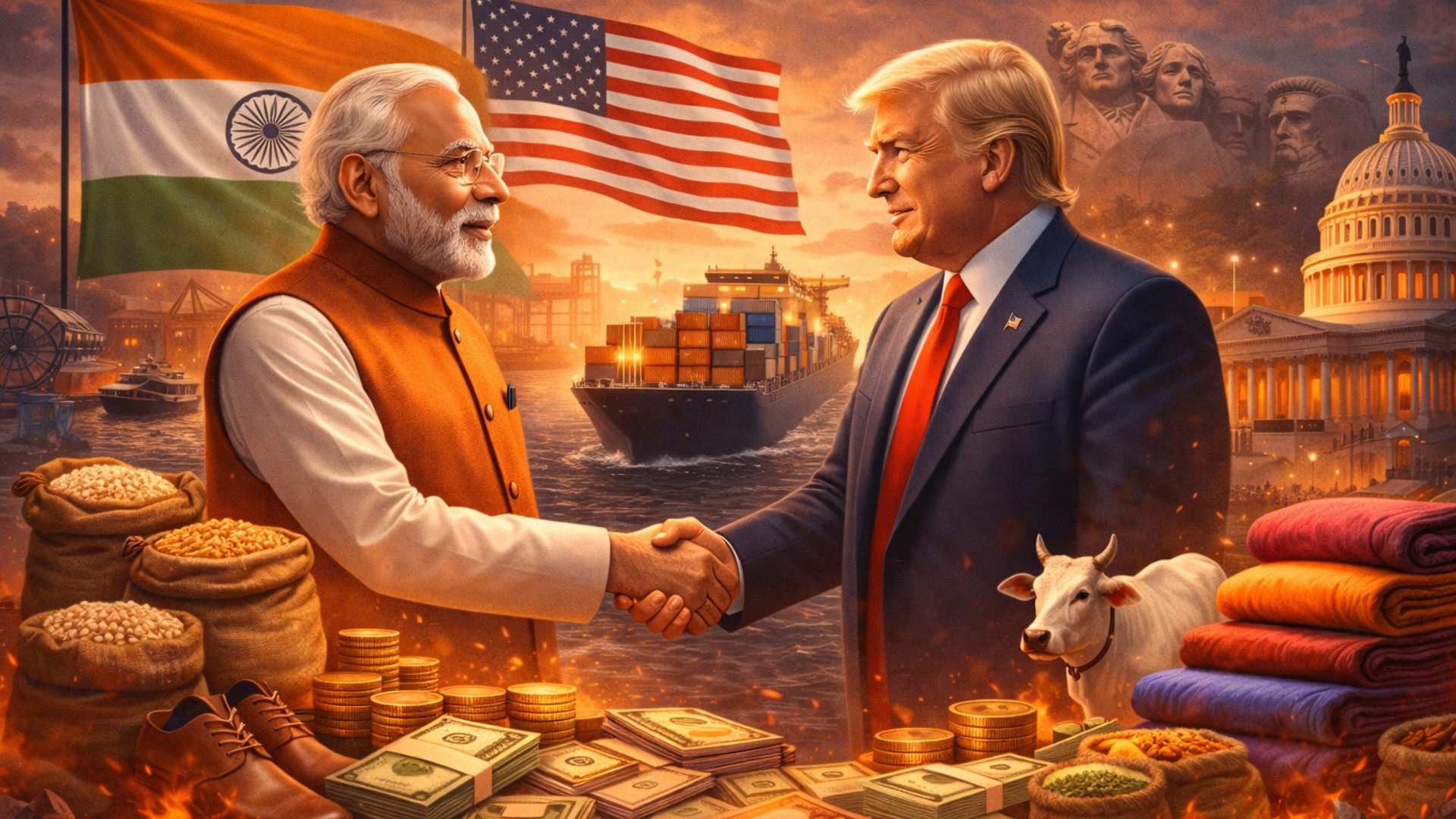
The recent announcement of an India–United States trade deal has generated optimism across Indian industry, particularly because it promises a sharp reduction in U.S. tariffs on Indian imports from 50% to 18%. This signals potential relief for export-oriented sectors that were facing cost pressures and market erosion in the U.S.
However, the manner of the announcement marks a departure from India’s established diplomatic practice. Unlike earlier trade agreements announced through formal joint statements or negotiated texts, this deal was first communicated via social media by the U.S. President, creating uncertainty about its precise scope and status.
For governance and economic diplomacy, clarity and predictability in trade policy are crucial. Ambiguous announcements can unsettle markets, complicate stakeholder planning, and weaken institutional credibility if expectations are not matched by implementation.
The underlying logic is that while trade liberalisation can boost growth, weak communication and unclear commitments risk undermining confidence and policy coherence.
2. Issue of Ambiguity: Scope, Timing, and Nature of the Deal
A central concern is the lack of clarity on when the tariff cuts will be implemented. While the U.S. President indicated immediate action, India’s Commerce Minister stated that details would be shared “soon,” leaving exporters uncertain about timelines.
There is also ambiguity over whether this is a limited tariff-focused arrangement, a first tranche or “mini-deal,” or part of a comprehensive Bilateral Trade Agreement. Each possibility has different implications for India’s trade strategy and negotiating leverage.
In trade governance, such uncertainty affects investment decisions, supply-chain planning, and India’s credibility as a negotiating partner if expectations are misaligned.
Trade agreements derive value from certainty. If ambiguity persists, potential gains may be delayed or diluted.
3. Strategic and Geopolitical Concerns: Energy and Foreign Policy
A major unresolved issue is the U.S. President’s assertion that India has agreed to stop buying Russian oil. This claim has not been addressed officially by the Indian government, raising concerns about energy security and strategic autonomy.
Russia currently supplies about one-third of India’s oil imports. Abruptly discontinuing these imports would force India to seek alternative suppliers, potentially at higher cost, and could strain India–Russia relations, particularly in defence cooperation.
Additionally, alternatives such as increased Venezuelan crude imports present technical and refining challenges, limiting flexibility. Such strategic shifts carry long-term geopolitical consequences and merit parliamentary scrutiny.
The governance logic is that energy policy intersects with foreign policy. Ignoring strategic consultation risks economic shocks and diplomatic fallout.
4. Commitments by India: Tariffs, Investments, and Market Access
Another unresolved dimension concerns what India has conceded in return. Apart from assurances that sensitive agricultural and dairy products will be excluded, there is little public information on tariff reductions, investment commitments, or purchase orders promised to the U.S.
This silence contrasts with several assertions made by U.S. officials, creating an information asymmetry that complicates public accountability and stakeholder assessment.
Transparent disclosure is essential in trade policy, as commitments can have distributional effects across sectors, regions, and consumers.
Effective trade governance requires transparency. Without it, domestic consensus and long-term policy support weaken.
5. Economic Impact: Sectoral Gains and Market Response
Despite uncertainties, the announcement has had immediate positive effects. Indian stock markets strengthened, the rupee appreciated, and export-oriented sectors expressed relief.
Impacts:
- Labour-intensive sectors such as textiles, apparel, footwear, leather, and engineering goods stand to gain most.
- These sectors were disproportionately hurt by the 50% tariff regime.
These industries are also expected to benefit from the forthcoming India–European Union trade deal, expected to come into effect this year, further improving export prospects.
Short-term market optimism reflects expectations of improved competitiveness. However, sustained gains depend on clear and enforceable agreements.
6. Comparative Competitiveness and Policy Support
Even with reduced tariffs, Indian exporters may still face slightly higher duties in the U.S. compared to South-East Asian competitors who enjoy Most-Favoured Nation (MFN) treatment. This narrows but does not eliminate the competitiveness gap.
Targeted measures announced in the Union Budget 2026 are expected to help bridge this gap through sector-specific support and export facilitation.
This highlights the importance of aligning trade agreements with domestic industrial policy to maximise benefits.
The development logic is that external trade gains must be reinforced by internal policy support. Ignoring this link limits export-led growth.
Conclusion
The India–U.S. trade deal offers significant opportunities but is marked by unresolved questions on scope, timing, and strategic commitments. Addressing these transparently and institutionally will be critical to converting short-term optimism into long-term economic and strategic gains, while preserving India’s policy autonomy and credibility in global trade governance.