GS2 Bilateral Relations

India and France forge a trusted partnership for global innovation.

India–France Innovation Partnership: From Technology Adoption to Technology Leadership

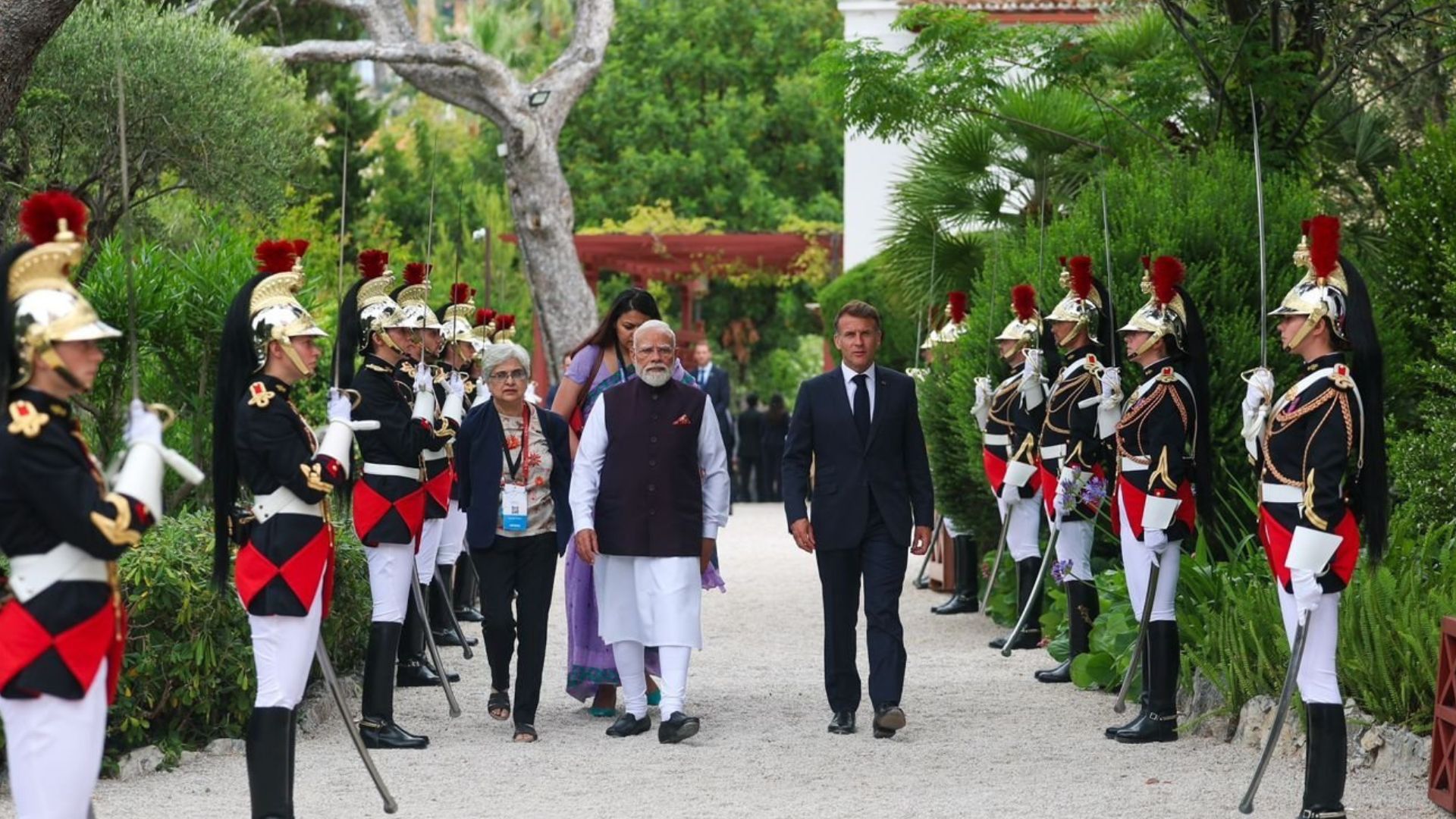
Prime Minister Modi and President Macron emphasize trust, cooperation, and India's role as an innovation leader during their conference in Nice.
Dhinesh Balasubramanian Dhinesh Balasubramanian
4 mins read

“Innovation is the ability to see change as an opportunity, not a threat.” — Steve Jobs

Prime Minister Narendra Modi's visit to France for the Bharat Innovates 2026 event marked a significant step in elevating the India-France relationship from traditional strategic cooperation to a technology-driven partnership. The discussions focused on innovation, trusted technology, artificial intelligence, nuclear energy, trade, and economic security.

Why the Visit Matters

India and France have recently upgraded their ties to a Special Global Strategic Partnership, reflecting deeper cooperation in emerging technologies and global governance.

Key Message from India

India seeks to position itself as:

  • A global innovation hub
  • A trusted technology partner
  • A destination for research and investment
  • A provider of technology, not merely a consumer

“Design in India. Develop in India. Create solutions for the world.” — PM Narendra Modi

India's Evolving Innovation Ecosystem

According to the Prime Minister, India has transitioned from being primarily a technology adopter to becoming a technology creator.

Areas Highlighted

SectorProgress
SpaceChandrayaan-3 mission
DefenceGrowing indigenous innovation
Artificial IntelligenceExpanding innovation ecosystem
Nuclear EnergyNew opportunities through SHANTI Act
Digital EconomyGlobal-scale digital public infrastructure
Chandrayaan-3 demonstrated India's capability
to convert scientific innovation into
practical industrial and technological applications.

Trust as the New Strategic Currency

A dominant theme throughout the summit was trust in technology.

Shared India-France Position

  • Open and cooperative innovation
  • Human-centric technology
  • Responsible AI development
  • Multilateral cooperation
  • Resistance to technological monopolisation

French President Emmanuel Macron indirectly criticised attempts to restrict access to advanced AI technologies and emphasised the need for international cooperation.

Shared PrinciplesSignificance
Trusted technologyReduces strategic dependence
Cooperative AIEncourages innovation sharing
MultilateralismSupports global governance
Inclusive innovationEnsures wider access
The debate over access to advanced AI models
has highlighted the growing importance of
trusted technology partnerships.

Innovation Roadmap 2030

One of the most important outcomes of the visit was the adoption of the India-France Innovation Roadmap 2030.

Major Components

  • Long-term framework for technology cooperation
  • Joint India-France AI Working Group
  • Expansion of research collaboration
  • Innovation ecosystem partnerships
  • Strengthening startup linkages

Notably, 19 agreements were signed between innovation entities from both countries.

Economic Security and Supply Chain Resilience

India and France established a Dialogue on Economic Security.

Areas of Cooperation

  • Critical minerals
  • Strategic technologies
  • Supply chain resilience
  • Industrial cooperation

The initiative reflects growing concerns regarding global geopolitical disruptions and supply chain vulnerabilities.

Trade and Economic Cooperation

The leaders stressed the importance of deeper economic integration.

Key Decisions

InitiativeObjective
India-EU FTA implementationExpand market access
High-Level MechanismDouble bilateral trade within five years
SME cooperationSupport industrial growth
Rail and Aviation collaborationEnhance infrastructure partnerships

The focus is on creating resilient and diversified economic relationships.

Expanding Cooperation in Nuclear Energy

The recently enacted SHANTI Act has opened India's nuclear sector to greater private-sector participation.

Emerging Opportunities

  • Clean energy generation
  • Advanced reactor technologies
  • Frontier nuclear research
  • Small Modular Reactors (SMRs)
  • Joint ventures with private firms

French companies are expected to explore direct participation in India's nuclear sector.

The SHANTI Act creates possibilities for
French nuclear firms to collaborate with
Indian private companies in advanced reactors
and clean energy technologies.

Jaitapur Nuclear Project

The long-pending Jaitapur Nuclear Power Project remains under discussion between:

  • EDF (France)
  • Nuclear Power Corporation of India Limited (NPCIL)

The project proposes six reactor units and has been under negotiation for more than 15 years.

Education, Mobility and Space Cooperation

Additional areas discussed included:

  • Visa-free airport transit facilities for Indians in France
  • Opening campuses of French universities in India under NEP
  • Private-sector collaboration in the space sector
  • Research and academic exchanges

These initiatives seek to strengthen people-to-people and knowledge partnerships.

Global Issues

The leaders exchanged views on:

  • West Asia
  • Gaza
  • Iran
  • Ukraine

However, both sides maintained a cautious diplomatic approach without issuing detailed joint positions.

Way Forward

  • Accelerate implementation of the Innovation Roadmap 2030.
  • Deepen collaboration in AI, semiconductors and advanced manufacturing.
  • Fast-track the India-EU FTA.
  • Strengthen critical mineral partnerships.
  • Expand joint research and university collaborations.
  • Advance cooperation in clean energy and nuclear technology.
  • Promote resilient and trusted technology ecosystems.

Conclusion

The India-France partnership is increasingly being shaped by innovation, technology and economic security rather than traditional diplomacy alone. Through initiatives such as the Innovation Roadmap 2030, AI cooperation, supply chain resilience and nuclear collaboration, both countries are positioning themselves as trusted partners in an increasingly fragmented technological and geopolitical landscape.

Attribution

Original content sources and authors

Sriram Lakshman Author Sriram Lakshman The Hindu Source The Hindu

Syllabus classification

How this article maps to GS papers

Main syllabus

GS2Bilateral Relations

Also covers

GS3Science & TechnologyGS3Infrastructure

Quick Q&A

What are the major dimensions and strategic significance of the India–France partnership in the contemporary global order?
The India–France partnership is a comprehensive strategic relationship based on shared democratic values, strategic autonomy, technological cooperation and support for a multipolar world order. Formal strategic ties were established in 1998, making France one of the first countries to enter into a strategic partnership with India after the latter's nuclear tests. Over the years, the relationship has expanded beyond defence to include civil nuclear energy, space cooperation, climate action, digital technologies and Indo-Pacific security. The partnership is characterized by what both countries describe as shared conviction, innovation and trust. At the Bharat Innovates 2026 event in Nice, Prime Minister Narendra Modi and President Emmanuel Macron emphasized trusted, inclusive and human-centric technologies. This reflects the growing importance of technological governance and strategic partnerships amid increasing geopolitical uncertainties. France has consistently supported India's aspirations for permanent membership in the UN Security Council and India's membership in multilateral export control regimes. Bilateral cooperation has also deepened in areas such as the International Solar Alliance, launched jointly in 2015, and maritime security in the Indo-Pacific. Defence cooperation remains a cornerstone, exemplified by Rafale fighter aircraft acquisitions and collaboration in submarine technologies. Economic ties are also expanding, with France viewing India as an emerging innovation hub rather than merely a technology consumer. For UPSC aspirants, the topic is relevant to GS-II under bilateral relations and international institutions, GS-III through science and technology, and Essay papers dealing with strategic autonomy, multipolarity and India's rise as a major power.
Why has trust in technology emerged as a central pillar of India–France cooperation in recent years?
Trust in technology has become a crucial theme in India–France relations because the contemporary international system is witnessing the intersection of geopolitical rivalry and technological competition. Issues relating to artificial intelligence, semiconductors, digital sovereignty and access to frontier technologies have transformed technology into a strategic asset rather than merely an economic tool. At Bharat Innovates 2026 in Nice, both Prime Minister Narendra Modi and President Emmanuel Macron highlighted the importance of trusted and human-centric technologies. Macron indirectly referred to restrictions imposed by certain countries on access to advanced AI models, emphasizing the need for cooperative and inclusive technological ecosystems. France and India advocate multilateralism and oppose excessive concentration of technological capabilities in a few countries. India's transformation from a technology adopter to a technology provider, particularly through achievements like Chandrayaan-3 in 2023, has enhanced its credibility. France views India as a reliable partner capable of contributing to global innovation. Similarly, India sees France as a trusted European partner with expertise in aerospace, nuclear energy and artificial intelligence. The issue has wider implications for digital governance, cyber security and ethical AI. It is also linked to debates surrounding data sovereignty, open-source innovation and technological monopolies. For UPSC aspirants, this theme connects GS-II topics on international relations with GS-III themes such as emerging technologies and cyber security. It also reflects broader debates concerning strategic autonomy, technological nationalism and the evolution of global governance structures in the twenty-first century.
How are innovation, defence cooperation and emerging technologies shaping the future trajectory of India–France bilateral relations?
Innovation and technological cooperation are increasingly defining the future of India–France relations. Historically, bilateral engagement was dominated by defence and strategic issues. However, contemporary cooperation encompasses artificial intelligence, space technologies, nuclear energy, digital infrastructure and advanced manufacturing. Prime Minister Narendra Modi's call to investors, universities and entrepreneurs to 'Design in India' and 'Develop in India' reflects India's ambition to become a global innovation hub. France has shown willingness to integrate its defence collaboration with India's Make in India initiative. French diplomatic sources have indicated support for local manufacturing arrangements linked to the proposed acquisition of 114 Rafale fighter aircraft. Space cooperation has been another significant area. India's Chandrayaan-3 mission in 2023 demonstrated indigenous technological capabilities and received appreciation from President Macron. Civil nuclear cooperation has also gained momentum with legislative reforms under the SHANTI Act, which facilitate greater private sector participation in nuclear energy and advanced reactor technologies. Artificial intelligence is emerging as a new domain of collaboration. France has positioned itself as a leading European AI destination and seeks cooperation with India in developing ethical and inclusive AI ecosystems. This multidimensional approach strengthens economic resilience and enhances strategic autonomy for both countries. It also contributes to Indo-Pacific stability and diversified supply chains. For UPSC preparation, the issue is relevant to GS-II and GS-III, highlighting the growing convergence between foreign policy, technological advancement and economic diplomacy. It also illustrates how innovation diplomacy is becoming an essential component of twenty-first-century international relations.
What are the key reasons behind the growing convergence between India and France on global governance and strategic autonomy?
Several factors explain the increasing convergence between India and France in international affairs. First, both countries strongly support a multipolar world order and advocate strategic autonomy. Unlike alliance-based approaches, both prefer maintaining independent decision-making while engaging with multiple partners. Second, both countries share common positions on multilateralism and reform of international institutions. France has consistently backed India's candidature for permanent membership in the United Nations Security Council and supports a greater role for emerging powers in global governance. Third, geopolitical instability and technological disruptions have created incentives for trusted partnerships. Commerce and Industry Minister Piyush Goyal's remarks at Bharat Innovates 2026 highlighted that geopolitical upheaval is coinciding with technological transformation, increasing the importance of reliable partners. Fourth, shared interests in the Indo-Pacific region have strengthened cooperation. Both countries seek freedom of navigation, maritime security and a rules-based international order. France's territories and military presence in the Indian Ocean make it a natural strategic partner for India. Fifth, collaboration in climate action through initiatives such as the International Solar Alliance reflects convergence on sustainable development. Nevertheless, differences occasionally emerge regarding trade policies, European regulations and market access. However, these differences have not undermined the broader strategic partnership. For UPSC aspirants, this topic is important for GS-II and Essay papers dealing with multipolarity, strategic autonomy and India's evolving foreign policy. It also demonstrates how common interests and shared values can sustain long-term partnerships despite changing geopolitical dynamics.
Critically examine the opportunities and challenges associated with expanding India–France cooperation in defence and technology sectors.
India–France cooperation in defence and technology offers significant opportunities but also presents certain challenges that require careful management. On the positive side, France has emerged as one of India's most dependable defence partners. Cooperation involving Rafale fighter aircraft, Scorpene submarines and advanced aerospace technologies has strengthened India's defence preparedness and supported modernization efforts. France's willingness to align defence collaboration with the Make in India programme enhances indigenous manufacturing capabilities and contributes to the objectives of Atmanirbhar Bharat. Similarly, cooperation in artificial intelligence, nuclear energy and space technologies can accelerate India's transition into a global innovation hub. However, several challenges remain. Advanced defence technologies involve issues relating to intellectual property rights, technology transfer and costs. Critics argue that excessive dependence on imported platforms may undermine long-term self-reliance if adequate indigenization is not ensured. In the technology sector, questions concerning AI ethics, digital sovereignty and regulatory standards present new complexities. Global restrictions on access to advanced AI systems highlight the growing trend of technological nationalism. Ensuring equitable access while maintaining security remains a major challenge. Another issue concerns balancing strategic partnerships with broader geopolitical considerations involving the United States, the European Union and emerging powers. Despite these concerns, the overall trajectory of India–France relations remains positive due to shared strategic interests and mutual trust. For UPSC candidates, this critical analysis is relevant to GS-II and GS-III and illustrates the interplay between foreign policy, defence preparedness, technological advancement and economic security. It also underscores the importance of balancing cooperation with strategic self-reliance.
How does the Bharat Innovates 2026 event serve as a case study of innovation diplomacy in India–France relations?
Bharat Innovates 2026, inaugurated jointly by Prime Minister Narendra Modi and President Emmanuel Macron in Nice, represents an important case study in the evolution of innovation diplomacy. Unlike traditional diplomatic engagements focused primarily on political agreements, the event brought together entrepreneurs, investors, universities and research institutions, demonstrating the growing role of technology and innovation in international relations. Prime Minister Modi projected India as a destination for designing, developing and creating solutions for global challenges. This signified India's transition from being perceived as a technology adopter to an emerging technology provider. President Macron emphasized cooperative artificial intelligence, multilateralism and trusted partnerships, reflecting shared concerns about technological concentration and restricted access to advanced systems. The event also highlighted new opportunities arising from reforms such as the SHANTI Act, which permits private sector participation in nuclear energy and advanced reactors. Discussions on defence cooperation, artificial intelligence and industrial innovation illustrated the broadening scope of bilateral ties. Furthermore, Macron's reference to Chandrayaan-3 showcased how scientific achievements can enhance a country's soft power and international credibility. The event demonstrated that diplomacy in the twenty-first century increasingly revolves around innovation ecosystems and technological capabilities. As a case study, Bharat Innovates 2026 illustrates the convergence of economic diplomacy, strategic partnerships and science diplomacy. It also highlights how countries are leveraging innovation to achieve geopolitical influence. For UPSC aspirants, this example is useful in GS-II answers on bilateral relations and GS-III topics concerning science and technology. It provides contemporary evidence of how diplomacy is adapting to the realities of the knowledge economy and emerging technological competition.

Practice questions

1 question for mains preparation

In an era of technological competition and economic fragmentation, trusted technology partnerships are emerging as a key pillar of diplomacy. Analyse the role of the India-France partnership in strengthening India's strategic autonomy and technological capabilities.

10 marks · 150 words · 8 mins
