Oslo Summit: A Turning Point for India’s Nordic Relations

A Relationship Quietly Transforming
When India first met the five Nordic nations — Norway, Sweden, Finland, Denmark, and Iceland — at the Stockholm Summit in 2018, the conversation was largely about climate, innovation, and the blue economy. The Copenhagen Summit in 2022 followed similar lines. PM Modi's visit to Oslo on May 18–19, 2025 for the third India-Nordic Summit arrives in a fundamentally different world.
The priorities have not disappeared — but the geopolitical ground beneath them has shifted. The war in Ukraine has reordered European security. Strains within the trans-Atlantic alliance have unsettled long-standing assumptions. And the Arctic — once a quiet zone of scientific cooperation — has become a theatre of great power competition.
Why the Arctic Now Defines This Partnership
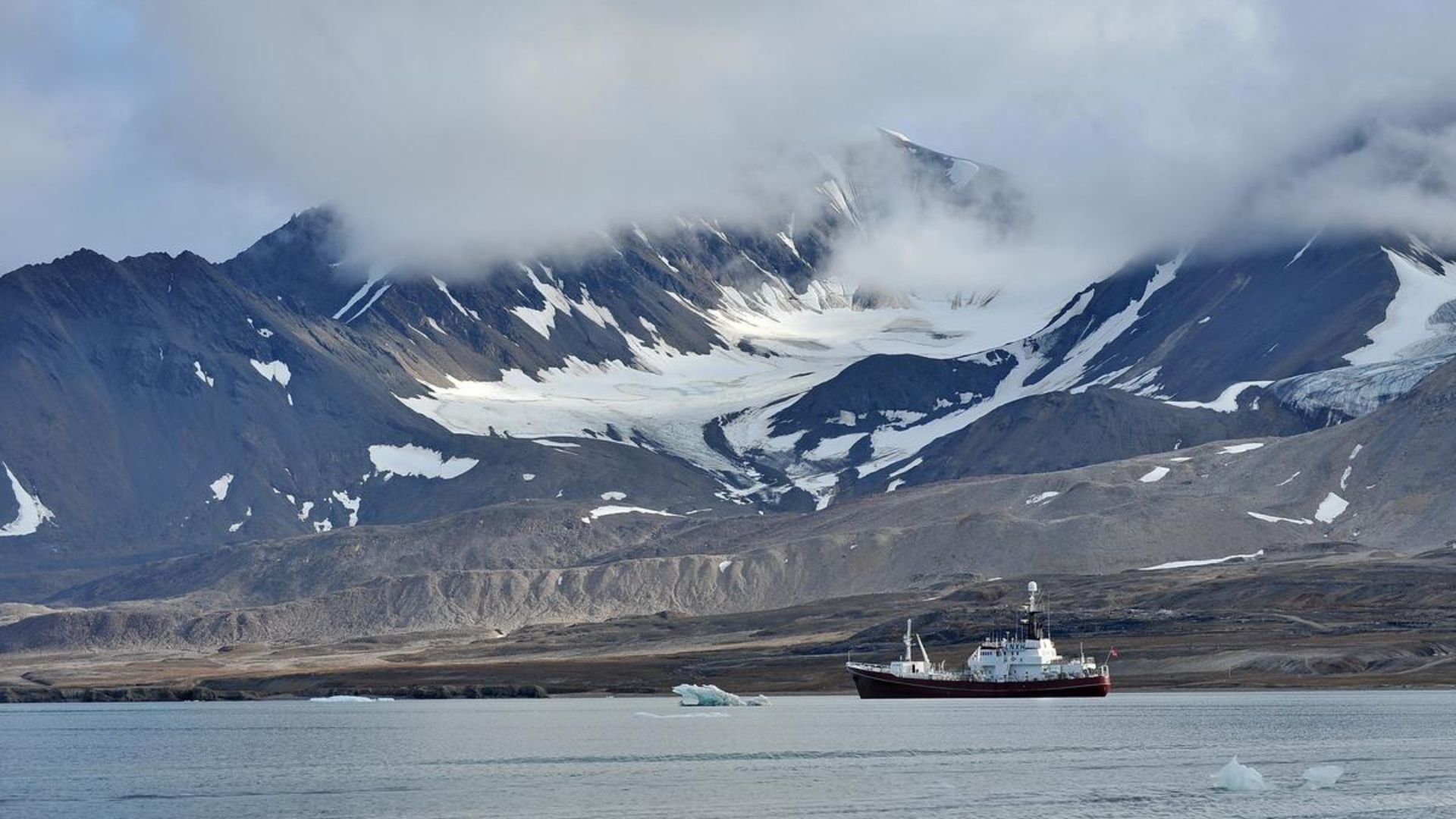
The Arctic is the new strategic frontier, and it connects India to the Nordics in ways that go far beyond climate science.
What has changed:
- Finland and Sweden joined NATO — leaving Russia as the Arctic Council's sole non-NATO member
- The Russia-China partnership has acquired a polar dimension through Arctic shipping and energy cooperation
- Denmark, as current Arctic Council chair, faces direct U.S. pressure over Greenland — a pivotal node in emerging Arctic sea routes and critical mineral networks
- New technologies — autonomous underwater vehicles, satellite-enabled seabed mapping — are reshaping Arctic security
Nordic Strengths — Arctic Dimension:

Norway   → High North strategy; India's Himadri station + IndARC observatory located here
Denmark  → Greenland; controls emerging Arctic sea routes; critical minerals
Sweden   → Rare earths, iron ore, advanced defence tech, Arctic capabilities
Finland  → NATO member; innovation ecosystem; Arctic expertise
Iceland  → Geothermal expertise (directly relevant to India's Himalayan regions)
India as an Arctic Stakeholder
India is not an Arctic nation — but it is undeniably an Arctic stakeholder, and the distinction matters.
Why India cannot afford to be a bystander:
- The Arctic is warming more than three times faster than the global average
- Ice loss in the Barents-Kara Sea has been directly linked to variability in India's summer monsoon
- Rising polar melt threatens India's coastline, ports, and island territories through sea-level rise
- Accelerating ice melt is opening Arctic waters to shipping, resource extraction, and military deployment
India's existing Arctic footprint:
- Observer status at the Arctic Council since 2013
- Himadri research station in Norway
- IndARC underwater observatory
- Gruvebadet atmospheric laboratory
But science alone cannot safeguard Indian interests in a region increasingly shaped by deterrence and energy rivalry.
The Commercial and Strategic Opportunity
The Northern Sea Route along Russia's Arctic coast is becoming increasingly navigable. Extending the Chennai-Vladivostok corridor to Murmansk and onward to the Nordics would create a maritime link connecting India, Japan, Russia, and Northern Europe — a strategic arc of enormous commercial value.
Beyond shipping, the partnership offers:
- Clean energy technology — Nordic nations lead in offshore wind, green hydrogen, electric mobility, and sustainable shipping; India needs co-development, not just buyer-seller arrangements
- Critical minerals — Norway's deep-sea mining, Sweden's rare earths and iron ore, Denmark's Greenland link offer supply-chain diversification away from China's processing dominance
- Maritime cooperation — Disruptions in the Strait of Hormuz have exposed India's maritime vulnerabilities; Nordic expertise in shipping technology and port infrastructure offers strategic diversification
- Semiconductors, AI, batteries — Nordic strengths complement India's scale, engineering talent, and manufacturing ambitions
Way Forward
- India must build a fleet of five Arctic-capable ice-class tankers under its Shipbuilding Financial Assistance Policy by 2030–31 — delay risks losing early-mover advantage in Arctic shipping
- An India-Arctic Economic Forum should be established to connect Indian industry with Arctic opportunities in energy, shipping, and infrastructure
- An "Arctic-Himalaya Climate Data Corridor" with Nordic partners for joint monitoring of climate linkages affecting monsoons and sea-level rise
- India must appoint a Special Envoy for Arctic Affairs — it is the only one among the five Asian Arctic Council observer states that lacks one
- Cooperation must move from episodic summits to sustained institutional engagement — joint working groups, co-production agreements, and technology transfer frameworks
Conclusion
For the Nordics, India offers scale, democratic credibility, and a trusted Indo-Pacific partner. For India, the Nordics provide technology, capital, and expertise — without hegemonic strings attached. The Arctic connects both: as it warms, melts, and opens, it is simultaneously a climate crisis for India and a strategic opportunity. The Oslo Summit should mark the point at which this relationship graduates from periodic conversation to sustained partnership — because in a world where geography is becoming geopolitics, the Arctic is too consequential for India to engage only when summits demand it.
Attribution
Original content sources and authors

Syllabus classification
How this article maps to GS papers
Main syllabus
GS2Bilateral RelationsQuick Q&A
What explains the growing strategic importance of the India-Nordic partnership in the present geopolitical context?
The Nordic countries—Norway, Sweden, Finland, Denmark, and Iceland—offer India advanced capabilities in green technologies, shipping, semiconductors, critical minerals, and Arctic research. At the same time, India provides market scale, engineering capacity, and geopolitical relevance in the Indo-Pacific. This convergence gives the relationship a broader strategic purpose beyond trade.
For UPSC understanding, the partnership reflects India’s diversification of external relations, where climate, strategic logistics, and supply chain resilience intersect. It also shows how middle powers can cooperate to respond to great-power competition without direct alliance commitments.
Why is the Arctic region becoming central to India’s foreign policy despite India not being an Arctic nation?
Beyond climate, the Arctic has strategic significance because it is opening new shipping routes such as the Northern Sea Route. This can reduce transportation time between Asia and Europe, creating new trade corridors. It also offers access to untapped energy reserves and critical minerals.
India’s observer status in the Arctic Council since 2013, combined with scientific infrastructure like Himadri and IndARC, reflects recognition of these interests. The challenge now is converting scientific presence into strategic policy engagement.
How can Arctic developments reshape India’s trade and maritime strategy?
India can benefit by linking the Chennai-Vladivostok maritime corridor to Murmansk and onward to Nordic ports. This would integrate India with Russia’s Far East, Japan, and Northern Europe. Such a route would also reduce dependence on vulnerable chokepoints like the Strait of Hormuz or the Suez Canal.
To capitalize on this, India must develop Arctic-capable shipping, port logistics, and energy transport infrastructure. Building ice-class vessels is critical for early mover advantage. This represents maritime diplomacy linked directly with economic strategy.
Critically analyse India’s current Arctic policy and the gaps that need to be addressed.
However, several gaps persist:
- Lack of dedicated Arctic diplomacy leadership
- No Arctic-capable commercial fleet
- Limited industrial participation in Arctic projects
- Weak integration with broader maritime strategy
Unlike other Asian observer states such as China, Japan, and South Korea, India has not appointed a Special Envoy for Arctic Affairs.
Thus, India risks being a passive observer unless it expands its role into strategic infrastructure, logistics, and multilateral diplomacy. The policy must move beyond climate research toward geopolitical readiness.
How can cooperation with Nordic countries support India’s energy transition and industrial growth?
For example, Norway’s offshore engineering expertise can support India’s offshore wind ambitions. Iceland’s geothermal technology can help in Himalayan and geothermal pilot zones. Sweden’s battery manufacturing and AI ecosystem complement India’s manufacturing and digital economy expansion.
The partnership should move from import dependence to co-development. Joint manufacturing in offshore wind turbines, hydrogen electrolyzers, and grid technologies can strengthen India’s industrial capacity while creating resilient global value chains.
Why are critical minerals and Arctic resources increasingly shaping India’s strategic partnerships with the Nordics?
Nordic countries provide alternatives. Sweden has major rare earth and iron ore reserves, while Greenland under Danish jurisdiction has substantial untapped mineral wealth. Norway’s deep-sea mining ambitions add further opportunities.
By engaging the Nordics, India can diversify supply chains and reduce overdependence on single-country sources. This fits India’s broader strategy of building resilient industrial ecosystems and securing strategic autonomy.
How does the India-Nordic engagement illustrate the broader transformation of contemporary diplomacy?
This transformation reflects a global trend where regions once seen as peripheral—such as the Arctic—become central due to climate change and geopolitical rivalry. Nordic countries are strategically important because they combine technological strength with geopolitical location.
As a case study, the Oslo summit shows how India is adapting to a multipolar world by forging issue-based partnerships. It also highlights how diplomacy today integrates scientific research, strategic trade, infrastructure, and security into a single framework.
Practice questions
2 questions for mains preparation