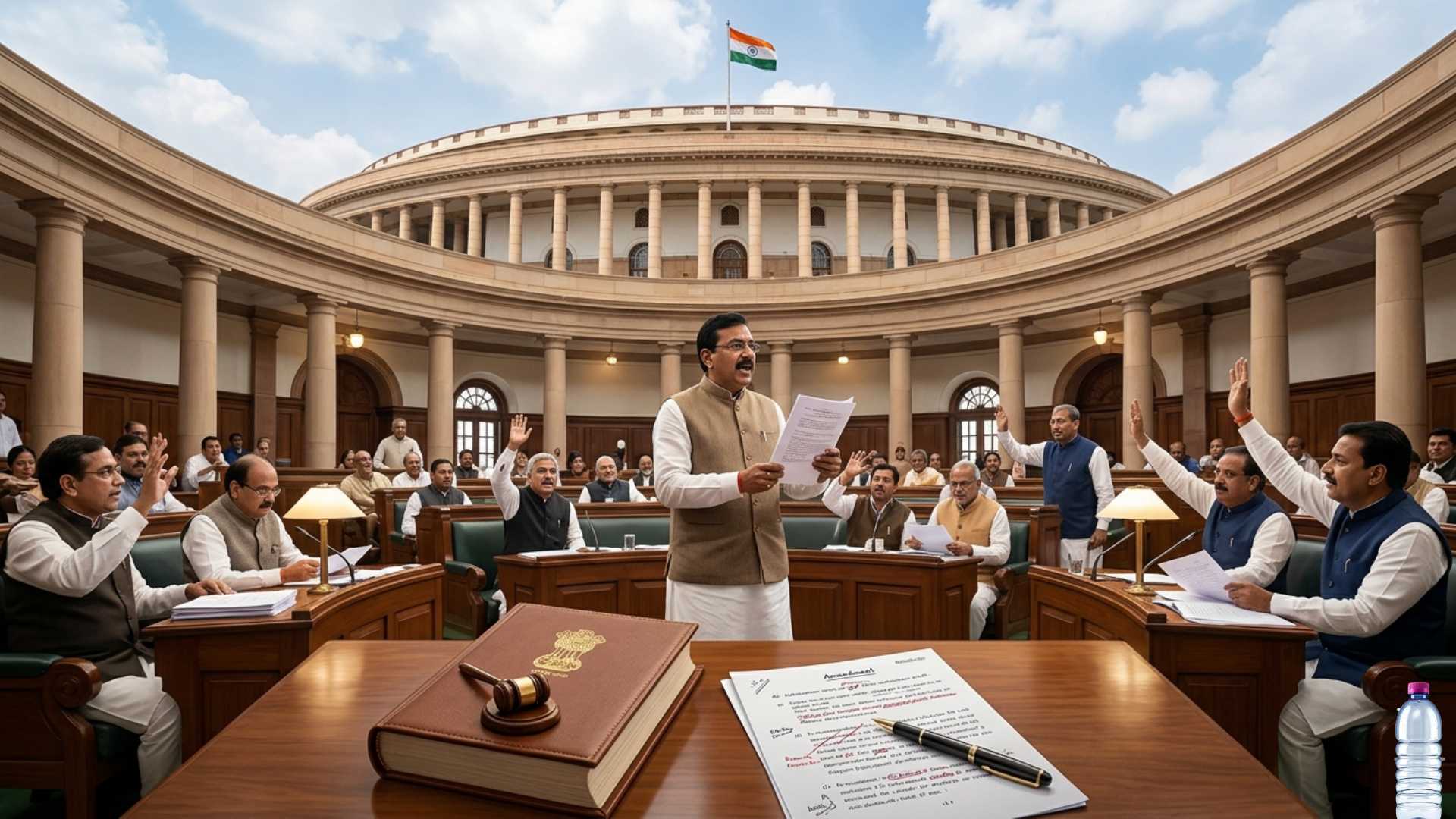
Centre Proposes Significant Amendments to FCRA

INTRODUCTION
- India hosts around 16,000 FCRA-registered NGOs, receiving nearly ₹22,000 crore annually in foreign contributions.
- Globally, regulation of foreign funding to civil society is seen as essential to safeguard sovereignty, transparency, and national security.
- The proposed FCRA Amendment Bill, 2026 aims to address operational gaps in the 2010 Act, particularly concerning asset management, accountability, and enforcement mechanisms.
- The reforms reflect the evolving balance between regulation of foreign influence and autonomy of civil society organisations (CSOs).
BACKGROUND AND CONTEXT
-
The FCRA, 2010 regulates acceptance and utilisation of foreign contributions and hospitality.
-
Enforced since May 1, 2011, with amendments in 2016, 2018, and 2020.
-
Primary objective: ensure foreign funds do not adversely impact national interest, public order, or security.
-
Key gaps identified:
- Absence of a clear framework for asset management after cancellation/suspension
- Multiplicity of investigations and inconsistent penalties
- Lack of timelines for utilisation of funds
- Ambiguity in asset handling during suspension
KEY PROVISIONS OF FCRA AMENDMENT BILL, 2026
1. Designated Authority for Asset Management
-
Appointment of a designated authority to:
- Take over
- Manage
- Dispose of assets created from foreign funds
-
Applicable when:
- Registration is suspended, cancelled, or not renewed
2. Expansion of “Key Functionary” Definition
-
Earlier limited to office bearers/directors
-
Now expanded to include:
- Directors, partners, trustees
- Karta of HUF
- Members of governing body/management committees
- Any person exercising control over organisation affairs
3. Liability of Key Functionaries
-
Key functionaries held personally liable for violations
-
Exception:
- If they prove lack of knowledge or due diligence
4. Prior Approval for Investigation
-
Law enforcement agencies or State governments must seek:
- Prior approval from Central Government
-
Before initiating FCRA-related investigations
5. Timelines and Compliance Measures
-
Fixed timelines for:
- Utilisation of funds under prior permission category
-
Automatic cessation:
- Registration expires or is not renewed
-
Clearer provisions for:
- Asset handling during suspension
- Rationalised penalties
6. Reduction in Penal Provisions
| Aspect | Earlier (FCRA 2010) | Proposed Amendment |
|---|---|---|
| Maximum imprisonment | Up to 5 years | Reduced to 1 year |
| Fund utilisation timeline | Open-ended | Fixed timelines |
| Asset framework | Limited (Section 15) | Comprehensive mechanism |
SIGNIFICANCE OF THE AMENDMENTS
-
Strengthens regulatory clarity in asset management
-
Enhances accountability of NGO leadership
-
Reduces scope for misuse of foreign-funded assets
-
Streamlines enforcement by reducing overlapping investigations
-
Reflects a shift towards:
- Compliance-based governance
- Centralised oversight mechanisms
ISSUES AND CHALLENGES
1. Federalism Concerns
-
Mandatory central approval may:
- Undermine State autonomy in policing and investigation
2. Impact on Civil Society
-
Increased compliance burden may:
- Discourage small NGOs
- Affect grassroots activism
3. Risk of Over-centralisation
-
Concentration of powers with Centre:
- Raises concerns of political misuse
- May affect freedom of association (Article 19)
4. Ambiguity in Asset Disposal
-
Questions remain:
- Criteria for disposal
- Safeguards against arbitrary decisions
COMPARATIVE GLOBAL PERSPECTIVE
| Country | Approach to Foreign Funding |
|---|---|
| USA | Disclosure-based regulation (Foreign Agents Registration Act) |
| Russia | Strict restrictions; NGOs labeled as “foreign agents” |
| India | Regulatory with increasing oversight and compliance norms |
KEY CONCEPT: FOREIGN CONTRIBUTION REGULATION
-
Defined as donation, delivery, or transfer made by a foreign source
-
Includes:
- Currency
- Securities
- Articles
-
Regulated to prevent:
- External interference in domestic affairs
- Money laundering and terror financing
EXPERT VIEW
- According to the Supreme Court (2020, FCRA case): “Foreign contribution cannot be an absolute right; it is subject to regulatory framework in national interest.”
CONCLUSION
- The FCRA Amendment Bill, 2026 represents a significant step toward closing regulatory loopholes and enhancing accountability in foreign funding.
- However, the challenge lies in maintaining a balance between national security concerns and vibrant civil society functioning.
- A transparent, fair, and proportionate implementation will determine whether the reforms strengthen governance or constrain democratic space.
UPSC MAINS QUESTION (250 WORDS)
“The proposed amendments to the Foreign Contribution (Regulation) Act reflect a shift towards tighter regulatory control over civil society organisations in India.” Critically examine the implications of these changes on governance, federalism, and democratic freedoms.
Attribution
Original content sources and authors


Syllabus classification
How this article maps to GS papers
Main syllabus
GS2Development StakeholdersQuick Q&A
What is the Foreign Contribution (Regulation) Act (FCRA) and what are the key proposed amendments in the 2026 Bill?
The FCRA Amendment Bill, 2026 seeks to address several operational and legal gaps identified over time. One of the key changes is the introduction of a “designated authority” to manage or dispose of assets created from foreign funds in cases where an NGO’s registration is suspended or cancelled. Additionally, the definition of “key functionary” is being expanded to include a wider range of individuals involved in the management of organisations, thereby increasing accountability.
Other important amendments include fixed timelines for fund utilization, automatic cessation of registration upon expiry, rationalized penalties, and a reduction in maximum imprisonment from five years to one year. The Bill also mandates prior approval from the Central government before any investigation into FCRA violations is initiated, aiming to streamline enforcement and reduce multiplicity of proceedings.
Why is there a need to strengthen the regulation of foreign contributions in India?
Another key reason is the increasing scale of foreign funding. With approximately ₹22,000 crore annually flowing into NGOs, there is a need for greater accountability and oversight. Weak regulatory mechanisms can lead to misuse of funds, lack of transparency, and diversion of resources away from intended developmental goals.
Furthermore, the evolving nature of NGOs and civil society organizations necessitates updated regulations. The expansion of digital platforms and global networks has made it easier for funds to flow across borders. Strengthening FCRA provisions helps in addressing these emerging challenges while ensuring that genuine organizations can continue their work effectively.
How does the introduction of a designated authority improve governance and accountability under the FCRA framework?
With a designated authority in place, the government can ensure that such assets are used appropriately or disposed of transparently. This enhances accountability and prevents the diversion of resources for unintended purposes. It also ensures continuity in the utilization of assets for public benefit, even if the original organization ceases to operate.
From a governance perspective, this reform strengthens institutional oversight and reduces ambiguities in implementation. It aligns with principles of good governance, transparency, and rule of law, thereby improving public trust in the regulatory framework.
What are the reasons behind expanding the definition of ‘key functionary’ and making them liable under the FCRA?
Another reason is to prevent the misuse of organizational structures to circumvent legal provisions. In many cases, decision-making authority may lie with individuals who are not formally designated as office bearers. Expanding the definition ensures that all those who exercise control or influence are held responsible for compliance with FCRA norms.
Additionally, making key functionaries liable unless they prove due diligence or lack of knowledge promotes a culture of responsibility and compliance. This aligns with global best practices in corporate governance, where accountability is shared among all individuals involved in management and oversight.
Critically analyse the implications of requiring prior Central government approval for FCRA investigations.
However, this provision raises concerns about federalism and autonomy of State agencies. It may limit the ability of State governments and law enforcement agencies to act swiftly in cases of suspected violations. Critics argue that such centralization could lead to delays in investigation and potential politicization of the process.
From a balanced perspective, while the provision aims to streamline enforcement and ensure uniformity, it must be accompanied by clear guidelines, transparency, and accountability mechanisms. This will help mitigate concerns and ensure that the objective of effective regulation is achieved without undermining institutional independence.
Can you illustrate with an example how lack of clarity in asset management under FCRA can create challenges?
In such cases, assets may remain underutilized or be misused due to lack of oversight. For instance, a school built with foreign funds could be abandoned or repurposed for non-public uses, defeating the original objective of the funding. This not only results in wastage of resources but also undermines public trust in NGOs and regulatory systems.
The introduction of a designated authority and clearer rules under the 2026 amendment addresses these challenges by ensuring that assets are properly managed, monitored, and utilized. This example highlights the importance of having a robust framework for asset management in maintaining transparency and accountability.
As a policymaker, how would you balance regulation and autonomy of NGOs while implementing FCRA reforms?
Secondly, there should be a focus on capacity building and awareness. Many NGOs, especially smaller ones, may lack the resources to fully understand complex regulatory requirements. Providing training, digital tools, and support systems can help them comply effectively without feeling overburdened.
Finally, a robust grievance redressal mechanism and periodic stakeholder consultations should be instituted. This ensures that NGOs have a platform to voice concerns and contribute to policy improvements. By adopting a collaborative approach, the government can create a regulatory environment that promotes transparency, trust, and effective service delivery while preserving the autonomy of civil society organizations.
Practice questions
1 question for mains preparation