GS2 Education

Pseudoscience Clouds Indian Knowledge System’s Academic Mission

Indian Knowledge Systems and Scientific Temper: Balancing Cultural Heritage with Academic Rigor

The debate over integrating traditional knowledge into higher education without compromising evidence-based inquiry
Surya Surya
4 mins read

"A civilisation's intellectual heritage is strengthened not by unquestioned belief, but by critical inquiry and verifiable knowledge."

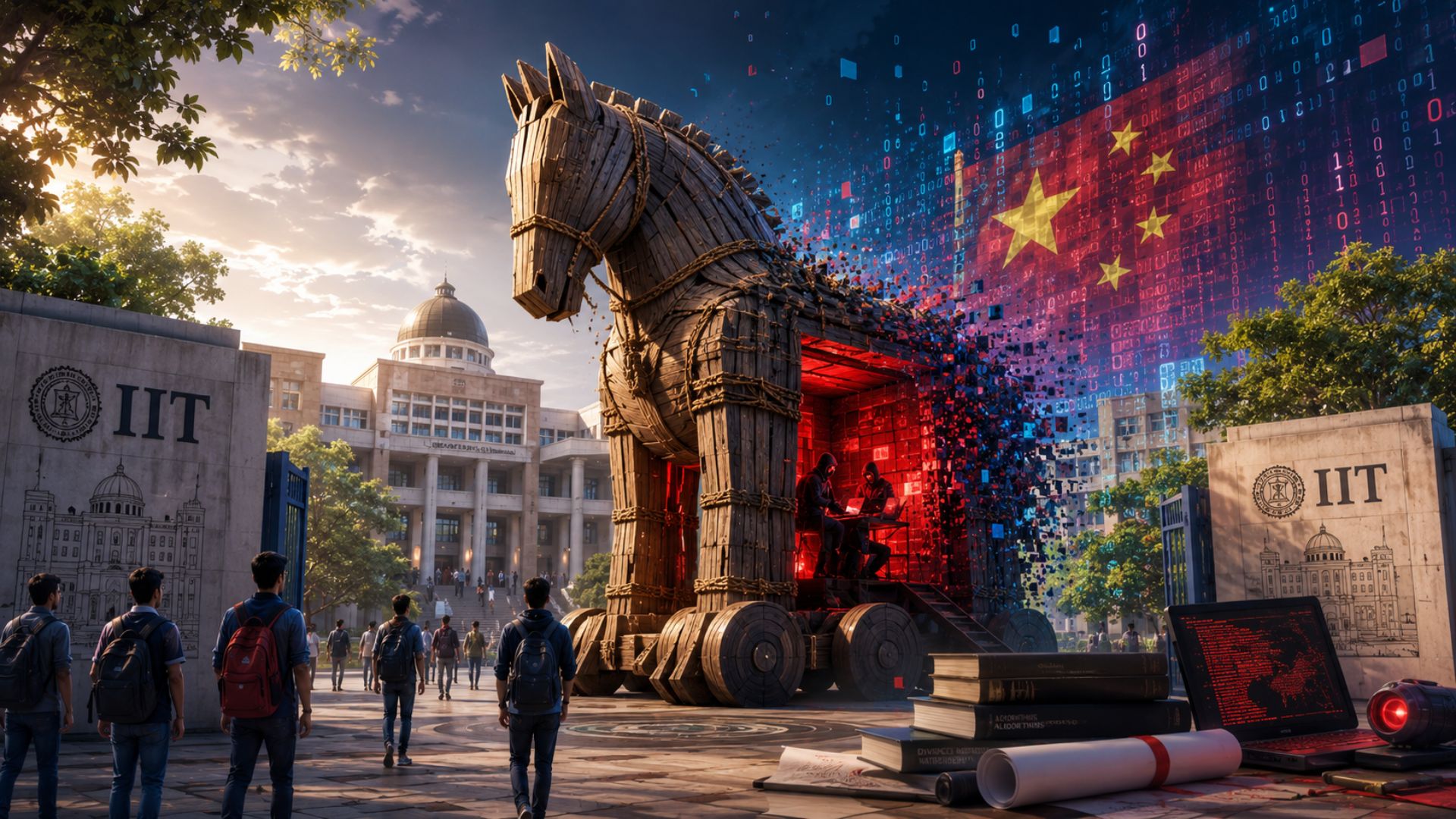
The Indian Knowledge System (IKS) initiative seeks to integrate India's intellectual traditions into modern education. While reclaiming indigenous knowledge is a legitimate academic objective, concerns have emerged regarding the growing inclusion of claims that critics describe as pseudoscientific within premier institutions of higher education.


What is the Indian Knowledge System (IKS)?

At its core, IKS aims to revive and study India's intellectual contributions across disciplines.

Examples of Genuine Knowledge Traditions

• Panini's linguistics
• Nyaya school of logic
• Kerala school of mathematics
• Wootz steel metallurgy
• Classical astronomy and mathematics

These contributions are widely recognised as significant achievements in India's intellectual history.


Why Has the Debate Intensified?

Critics argue that the current institutionalised version of IKS increasingly blurs the distinction between:

Evidence-Based KnowledgeContested Claims
Historical scholarshipMythology as history
Scientific inquiryRitual as technology
Verifiable evidencePuranic science
Empirical researchMetaphysical assertions

The debate gained prominence following the implementation of the National Education Policy (NEP), 2020, which encouraged greater engagement with indigenous knowledge traditions.


Expansion of IKS Centres

Several institutions have established dedicated IKS centres.

Major Centres

  • IIT-Kharagpur
  • IIT-Gandhinagar
  • IIT-Bombay
  • IIT-Kanpur
  • IIT-Mandi

Critics particularly point to activities at IIT-Kanpur and IIT-Mandi involving studies on:

• Consciousness
• Reincarnation
• Vedic biology
• Astrology-linked investigations

The Reincarnation Research Controversy

A recent special session hosted by IIT-Mandi and IIT-Kanpur focused on the "science" of reincarnation.

Proposed Methodology

Researchers suggested:

  • Studying children claiming past-life memories.
  • Using EEG (electroencephalogram) recordings.
  • Examining astrological birth charts.
  • Measuring responses to "past-life-related stimuli."

The programme involved participation from the University of Virginia's Department of Perceptual Studies (DOPS), a controversial research centre known for studying paranormal phenomena.


Why Are Critics Concerned?

Methodological Issues Raised

ConcernExplanation
Small sample sizeConclusions drawn from a single child
Confirmation biasResearchers may create expected outcomes
Lack of falsifiabilityClaims difficult to scientifically test
Mixing astrology with neuroscienceMethodological inconsistency
Anecdotal evidenceIndividual experiences treated as proof

Critics argue that exposing a child to photographs collected from a claimed previous-life family could itself shape responses, undermining the objectivity of the experiment.

"An anecdote cannot substitute for scientific evidence."


The Broader Academic Debate

Supporters argue that IKS helps:

  • Decolonise knowledge systems.
  • Recover neglected intellectual traditions.
  • Promote indigenous perspectives.

However, critics cite historical examples demonstrating that cultural pride and scientific rigor can coexist.

Bengal Renaissance Example

• Jagadish Chandra Bose
• Prafulla Chandra Ray

These scholars integrated Indian identity with modern scientific methodology rather than replacing evidence-based inquiry with belief-based claims.


Institutional Concerns

Critics contend that the prestige of IITs may lend scientific legitimacy to claims that have not undergone rigorous validation.

Key Concerns

  • Mandatory attendance of doctoral students at such sessions.
  • Use of institutional funds for unconventional research.
  • Use of research fellows in projects involving paranormal claims.
  • Potential erosion of academic credibility.

The debate intensified further after the University Grants Commission's 2023 guidelines encouraged IKS-related courses in higher education.


Implications for Higher Education

Potential consequences highlighted by critics include:

• Decline in research standards
• Damage to institutional reputation
• Reduced international academic credibility
• Brain drain of talented researchers
• Confusion between faith and scientific inquiry

The central concern is not the study of Indian traditions itself, but whether such studies adhere to accepted standards of evidence and verification.


Way Forward

  • Promote evidence-based study of India's intellectual traditions.
  • Distinguish clearly between philosophy, culture and science.
  • Encourage interdisciplinary research with rigorous methodologies.
  • Subject all claims to peer review and empirical scrutiny.
  • Strengthen scientific temper as envisaged under Article 51A(h).
  • Preserve academic autonomy and institutional credibility.
  • Integrate traditional knowledge without compromising scientific standards.

Conclusion

India possesses a rich intellectual heritage worthy of scholarly exploration and recognition. However, the long-term credibility of both Indian Knowledge Systems and higher education institutions depends on maintaining a clear distinction between cultural traditions and scientific evidence. A meaningful engagement with India's knowledge legacy must combine civilisational confidence with critical inquiry, ensuring that the pursuit of indigenous knowledge strengthens rather than weakens scientific temper and academic excellence.

Attribution

Original content sources and authors

Vasudevan Mukunth Author Vasudevan Mukunth The Hindu Source The Hindu

Syllabus classification

How this article maps to GS papers

Main syllabus

GS2Education

Quick Q&A

What is the Indian Knowledge System concept and why has its institutionalisation generated debates in higher education?
The Indian Knowledge System (IKS) refers to efforts aimed at integrating India's indigenous intellectual traditions, scientific heritage, and philosophical contributions into contemporary education. Historically, India made significant contributions through Panini's linguistic framework, the Nyaya school of logic, the Kerala school of mathematics, Ayurveda, metallurgy, and the production of Wootz steel. These achievements represent a rich civilisational legacy that many scholars argue deserves greater recognition in educational curricula. The National Education Policy (NEP), 2020, formally encouraged the incorporation of Indian knowledge traditions into higher education. Subsequently, dedicated IKS centres and hubs were established in institutions such as IIT-Kharagpur, IIT-Bombay, IIT-Gandhinagar, IIT-Kanpur, and IIT-Mandi. Their stated objective is to promote decolonisation of knowledge and revive indigenous intellectual traditions. However, the institutionalisation of IKS has generated controversy because critics argue that certain initiatives blur the distinction between evidence-based scholarship and theological or mythological claims. Debates surrounding research on reincarnation, consciousness studies, and the inclusion of astrology have raised questions regarding scientific methodology and academic rigor. Supporters contend that Western frameworks have historically marginalized non-Western traditions and that IKS promotes epistemic diversity. Critics argue that decolonisation should not compromise standards of verifiability and empirical evidence. For UPSC aspirants, the issue relates to GS Paper II (Education and Governance), GS Paper III (Science and Technology), and Essay topics concerning scientific temper and cultural heritage. The broader challenge lies in balancing civilisational pride with academic credibility and constitutional values under Article 51A(h), which emphasizes the development of scientific temper, humanism, and the spirit of inquiry.
Why is the distinction between decolonisation of knowledge and promotion of pseudoscience important in higher education institutions?
The distinction between decolonisation of knowledge and the promotion of pseudoscience is crucial because the former seeks to recover neglected intellectual traditions, whereas the latter risks undermining scientific standards and institutional credibility. Decolonisation aims to challenge Eurocentric biases and provide space for indigenous systems of knowledge without rejecting empirical reasoning or universal scientific methods. India's own intellectual history provides important examples of successful synthesis. During the Bengal Renaissance of the nineteenth century, scientists such as Jagadish Chandra Bose and Prafulla Chandra Ray combined Indian cultural identity with rigorous scientific inquiry. Their achievements demonstrated that national pride and modern scientific methodology are complementary rather than contradictory. The current debate arises because some scholars and commentators fear that mythological or metaphysical claims are being presented under the framework of scientific research without sufficient evidence. Critics argue that such practices weaken the distinction between faith-based beliefs and scientific knowledge. Conversely, supporters believe that indigenous epistemologies deserve equal recognition and that Western notions of science should not monopolize knowledge production. This distinction has broader implications for India's global academic standing, research quality, and innovation ecosystem. If academic standards are diluted, there could be concerns regarding employability, international collaborations, and institutional rankings. From a UPSC perspective, the issue intersects with GS Paper II (Education), GS Paper III (Science and Technology), Ethics, and Essay topics on modernization and tradition. It also relates to Article 51A(h), which encourages scientific temper and rational inquiry. Ultimately, decolonisation should strengthen intellectual diversity while preserving the principles of evidence, peer review, and academic freedom.
How should higher education institutions integrate traditional knowledge systems while maintaining scientific rigor and academic credibility?
Higher education institutions can integrate traditional knowledge systems effectively by adopting a framework that combines cultural appreciation with scientific rigor. The objective should be neither wholesale rejection of indigenous traditions nor uncritical acceptance of every historical claim. Instead, institutions should subject traditional ideas to the same standards of verification, peer review, and empirical scrutiny applied to other disciplines. Historically, many aspects of Indian knowledge systems have demonstrated remarkable sophistication. Ayurveda, ancient metallurgy, mathematical innovations of the Kerala school, and Panini's linguistic formulations have attracted scholarly attention worldwide. These areas provide valuable opportunities for interdisciplinary research involving history, philosophy, medicine, and technology. Institutions can encourage comparative studies, translation of classical texts, archaeological investigations, and evidence-based scientific experimentation. Collaboration with historians, scientists, linguists, and philosophers can enrich understanding without compromising methodological standards. Academic autonomy and peer review remain essential safeguards. Research proposals should rely on adequate sample sizes, reproducibility, and falsifiability. Claims that cannot be empirically tested should be examined within philosophical or cultural studies rather than presented as established science. Countries such as Japan and China have preserved cultural traditions while simultaneously becoming leaders in science and innovation. India can adopt a similar approach by integrating heritage with modern research practices. For UPSC aspirants, this issue is relevant to GS Paper II (Education), GS Paper III (Innovation and Science), and Ethics. It highlights the importance of balancing constitutional values, cultural identity, and global academic standards. Such an approach promotes both intellectual self-confidence and scientific excellence, ensuring that indigenous knowledge contributes meaningfully to contemporary challenges.
What are the major arguments for and against the contemporary institutionalisation of Indian Knowledge Systems in universities and IITs?
The institutionalisation of Indian Knowledge Systems (IKS) has produced a vigorous debate involving questions of identity, epistemology, and scientific standards. Supporters and critics offer contrasting perspectives regarding its implications for higher education. Proponents argue that colonial educational frameworks marginalized indigenous intellectual traditions and that IKS initiatives seek to correct this imbalance. They emphasize India's contributions to mathematics, medicine, philosophy, astronomy, and metallurgy. According to this view, integrating traditional knowledge promotes cultural confidence, intellectual pluralism, and a more inclusive understanding of global knowledge systems. The National Education Policy, 2020, reflects this aspiration. Critics, however, caution that some contemporary IKS initiatives blur the line between evidence-based inquiry and theological beliefs. They argue that introducing unverified claims regarding astrology, reincarnation, or supernatural phenomena under scientific labels risks damaging institutional credibility. Questions have also been raised regarding methodology, confirmation bias, and the use of public resources. Another criticism concerns academic freedom. Concerns emerge when compulsory courses or administrative directives are perceived to limit intellectual autonomy. Some observers fear that ideological objectives could overshadow scientific priorities. Nevertheless, critics acknowledge that rejecting all traditional knowledge would be equally problematic. Ancient Indian contributions deserve scholarly attention and critical study. The challenge lies in distinguishing historically grounded achievements from claims lacking empirical support. For UPSC preparation, this debate relates to GS Paper II (Education and Governance), GS Paper III (Science and Technology), Ethics, and Essay papers. It illustrates the tension between tradition and modernity, identity and universalism, and nationalism and academic autonomy. A balanced approach requires preserving cultural heritage while adhering to globally accepted standards of scholarship.
What lessons can be drawn from the Bengal Renaissance as a case study for balancing cultural identity and scientific inquiry?
The Bengal Renaissance of the nineteenth and early twentieth centuries provides an important case study in demonstrating that cultural self-awareness and scientific inquiry are not mutually exclusive. Emerging during the colonial period, the movement fostered intellectual reform, social change, and scientific advancement while preserving an Indian civilisational identity. Prominent figures such as Jagadish Chandra Bose and Prafulla Chandra Ray exemplified this synthesis. Jagadish Chandra Bose made pioneering contributions to plant physiology and radio science, earning international recognition through rigorous experimentation. Prafulla Chandra Ray established modern chemical research in India and founded Bengal Chemicals, emphasizing both scientific excellence and national development. Thinkers associated with the Renaissance also promoted rationalism, social reform, and critical inquiry. Their approach reflected confidence in India's traditions without rejecting empirical methods. Instead of viewing science and culture as opposites, they regarded them as complementary forces. The Bengal Renaissance demonstrates that decolonisation does not require abandoning universal standards of evidence. Rather, it encourages creative engagement between indigenous heritage and modern knowledge. This lesson remains highly relevant in contemporary debates surrounding educational reforms and Indian Knowledge Systems. From the perspective of public policy, the case highlights the importance of academic autonomy, scientific temper, and openness to global intellectual exchanges. It also illustrates how nations can build self-confidence without intellectual isolation. For UPSC aspirants, the topic connects with GS Paper I (Modern Indian History), GS Paper II (Education), GS Paper III (Science and Technology), and Essay themes involving nationalism, modernization, and reform movements. The Bengal Renaissance remains an example of how cultural identity and scientific rigor can coexist productively in nation-building.
What are the possible consequences of weakening scientific temper and academic standards within premier higher education institutions?
Weakening scientific temper and academic standards within premier institutions can have far-reaching consequences for research quality, innovation, international reputation, and national development. Scientific temper, recognized under Article 51A(h) of the Constitution, encourages rationality, inquiry, and evidence-based thinking. These values are essential for sustaining a knowledge economy. One major consequence is the erosion of institutional credibility. IITs and other leading universities have built their reputations through rigorous scholarship and global collaborations. If standards of peer review and methodological rigor are diluted, international confidence in degrees and research outputs may decline. Another concern relates to brain drain. Talented students and researchers may increasingly prefer foreign universities perceived as offering stronger academic environments. Such migration can reduce India's scientific capacity and innovation potential. Historically, India has faced challenges related to the outflow of skilled professionals, and maintaining world-class institutions remains critical to reversing this trend. A decline in scientific standards could also affect industrial competitiveness and technological advancement. Research ecosystems thrive when intellectual freedom and critical thinking are protected. Excessive politicization or ideological influence may discourage creativity and interdisciplinary inquiry. At the societal level, weakening scientific temper can contribute to misinformation, irrational beliefs, and reduced public trust in evidence-based policymaking. This has implications for healthcare, environmental management, and technological development. From a UPSC perspective, the issue relates to GS Paper II (Education), GS Paper III (Science and Technology), and Ethics. It also raises broader questions regarding constitutional values, human resource development, and India's ambition to become a global knowledge power. Sustaining academic excellence is therefore essential for both national prestige and long-term socio-economic progress.

Practice questions

3 questions for mains preparation

Analyze the notion of 'decolonising' the Indian mind through educational frameworks. To what extent can integrating indigenous wisdom enhance scientific inquiry without compromising academic rigor?

10 marks · 150 words · 8 mins

Scientific temper and critical inquiry are essential for the advancement of knowledge in a modern society. Discuss in the context of the integration of traditional knowledge systems into higher education.

10 marks · 150 words · 8 mins

Critically assess the role of the National Education Policy (NEP) 2020 in shaping the discourse around Indian Knowledge Systems. How does it influence the perception of traditional knowledge in modern education?

10 marks · 150 words · 8 mins
