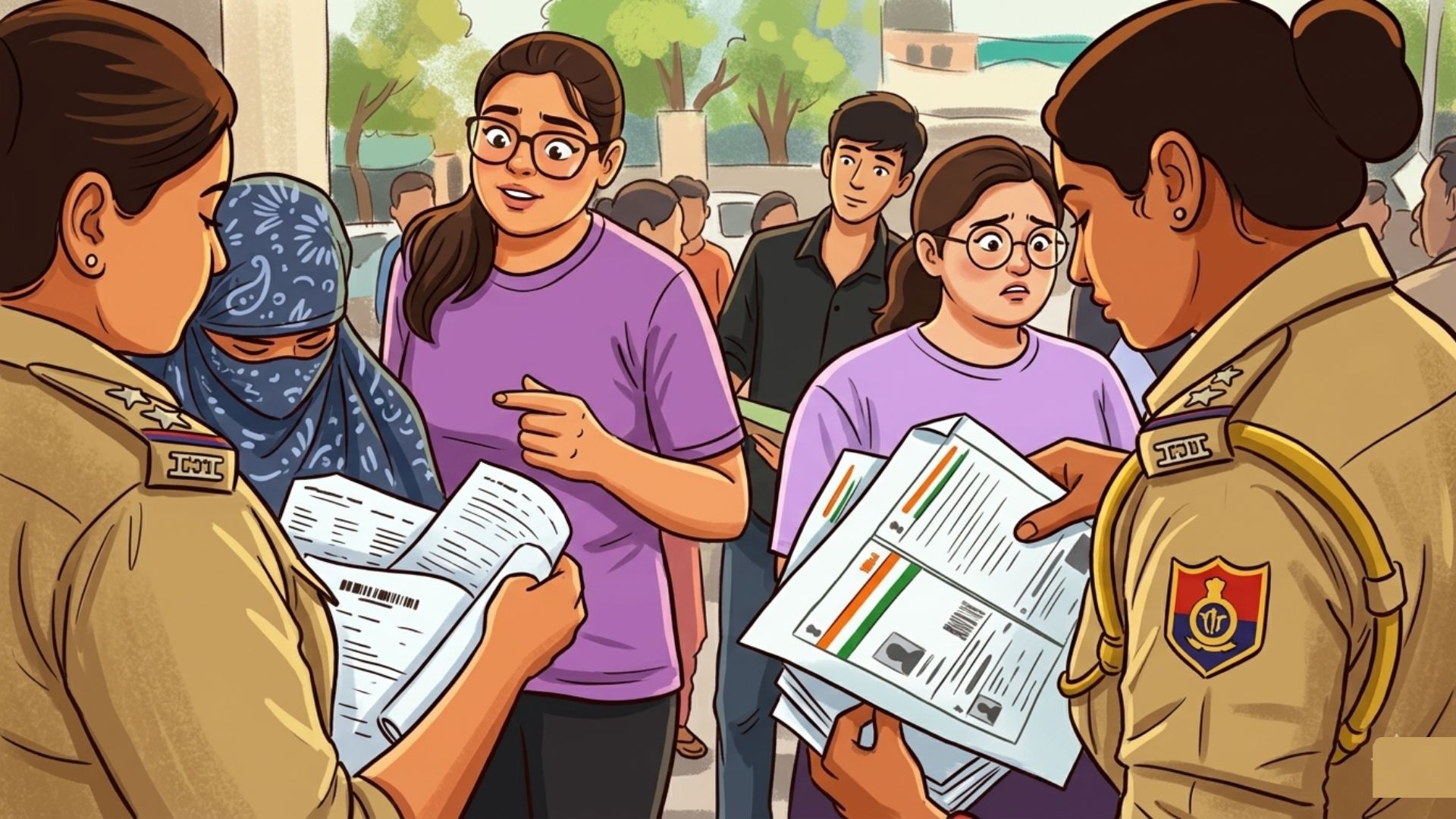

“The issue is not merely who leaked the paper, but why a single breach can disrupt the future of millions of candidates.”
On June 21, more than 22.8 lakh candidates reappeared for NEET-UG after the earlier examination was cancelled due to a paper leak. While the government responded through criminal investigation and re-examination, the episode exposed deeper structural weaknesses in India's high-stakes examination architecture.
The controversy raises important questions about institutional accountability, examination design and the costs imposed on students when public systems fail.
The Immediate Response
The government adopted a two-pronged approach:
Actions Taken
| Measure | Objective |
|---|---|
| CBI investigation | Identify and prosecute leak networks |
| Re-examination | Restore examination integrity |
| Fee refund | Compensate candidates for cancelled exam |
The investigation was initiated under the Public Examinations (Prevention of Unfair Means) Act, 2024, which prescribes stringent penalties for organised examination fraud.
However, these measures largely address the leak itself rather than its consequences for candidates.
The Accountability Gap
The National Testing Agency (NTA), established in 2017 as a registered society under the Societies Registration Act, operates without a dedicated parliamentary statute defining its obligations towards candidates.
Key Concern
When an examination fails:
- Registrations are carried forward.
- Examination fees are refunded.
- No compensation exists for broader losses.
A general category candidate receives
a refund of ₹1,700, but may have spent
several lakh rupees on coaching,
accommodation and preparation.
Thus, the institutional cost of failure remains largely externalised onto students and their families.
The Single-Point-of-Failure Problem
NEET is conducted:
- On a single day.
- Through a single examination.
- Using a single score for admissions nationwide.
Consequences
| Design Feature | Risk |
|---|---|
| Single exam | Entire admission cycle vulnerable |
| Single score | No fallback mechanism |
| Nationwide sitting | Local breach becomes national crisis |
When one examination is compromised, authorities have limited options beyond complete cancellation and re-conduct.
“A system built around one annual test creates maximum vulnerability when disruptions occur.”
High Stakes and Unequal Burdens
Competition for medical seats remains extremely intense.
Seat-Candidate Mismatch
| Indicator | Number |
|---|---|
| NEET Candidates | 22+ lakh |
| MBBS Seats | ~1.26 lakh |
This imbalance ensures that many aspirants appear multiple times, investing substantial financial and emotional resources.
Many students spend years in coaching
institutes and relocate to preparation hubs,
making examination delays far more costly
than the refunded application fee.
The burden is especially severe for economically weaker candidates.
The ASER 2024 report highlighted continuing learning disparities between government and private school students, suggesting that disadvantaged groups are less capable of absorbing disruptions.
Limitations of the Current Legal Framework
The Public Examinations (Prevention of Unfair Means) Act, 2024 focuses primarily on deterrence.
What the Act Provides
- Up to 10 years imprisonment.
- Fines up to ₹1 crore.
- Action against organised cheating networks.
What the Act Does Not Provide
- Candidate compensation.
- Automatic re-examination rights.
- Institutional liability standards.
- Accountability mechanisms for examination agencies.
The legislative response therefore remains predominantly prosecutorial rather than candidate-centric.
Is Computer-Based Testing the Solution?
The government plans to shift NEET towards Computer-Based Testing (CBT).
However, technological change alone may not eliminate systemic vulnerabilities.
UGC-NET, already conducted through CBT,
was cancelled in 2024 after its paper
allegedly appeared on the darknet.
This suggests that the challenge lies not merely in the mode of delivery but in the concentration of risk within a single examination event.
Constitutional Perspective
The issue also relates to broader constitutional principles.
Relevant Provisions
| Constitutional Provision | Principle |
|---|---|
| Article 14 | Protection against arbitrariness |
| Article 41 | Right to educational opportunities |
| Article 46 | Protection of weaker sections |
A system that formally treats all candidates equally but disproportionately burdens vulnerable groups raises concerns regarding substantive fairness.
Way Forward
- Provide statutory status to the NTA with clearly defined obligations.
- Establish institutional liability standards for examination failures.
- Create an automatic compensation mechanism funded through examination revenues.
- Introduce multiple examination windows annually.
- Develop distributed examination architectures to reduce systemic risk.
- Improve transparency, audit systems and cybersecurity safeguards.
- Regularly assess the socio-economic costs imposed on candidates.
Conclusion
The NEET paper leak controversy is not merely a law-and-order issue but a governance challenge. While punishing offenders remains essential, the larger question concerns institutional design. A resilient examination system should ensure that a single breach does not jeopardise the future of millions. Strengthening accountability, reducing systemic vulnerabilities and protecting candidates from the costs of institutional failure are essential for restoring trust in India's public examination framework.
Attribution
Original content sources and authors


Syllabus classification
How this article maps to GS papers
Main syllabus
GS2EducationQuick Q&A
What are the structural issues highlighted by the NEET-UG paper leak controversy and why are they significant for India's education governance framework?
Why is the NEET-UG examination crisis important for understanding governance, accountability, and constitutional principles in India?
How does the present design of NEET-UG create systemic vulnerabilities and what reforms can strengthen examination resilience?
Critically analyze whether the Public Examinations (Prevention of Unfair Means) Act, 2024 adequately addresses the concerns arising from examination leaks.
What are the socioeconomic reasons that make examination disruptions disproportionately harmful to weaker sections of society?
How can the NEET-UG paper leak episode be used as a case study in public administration and ethical governance?
Practice questions
1 question for mains preparation