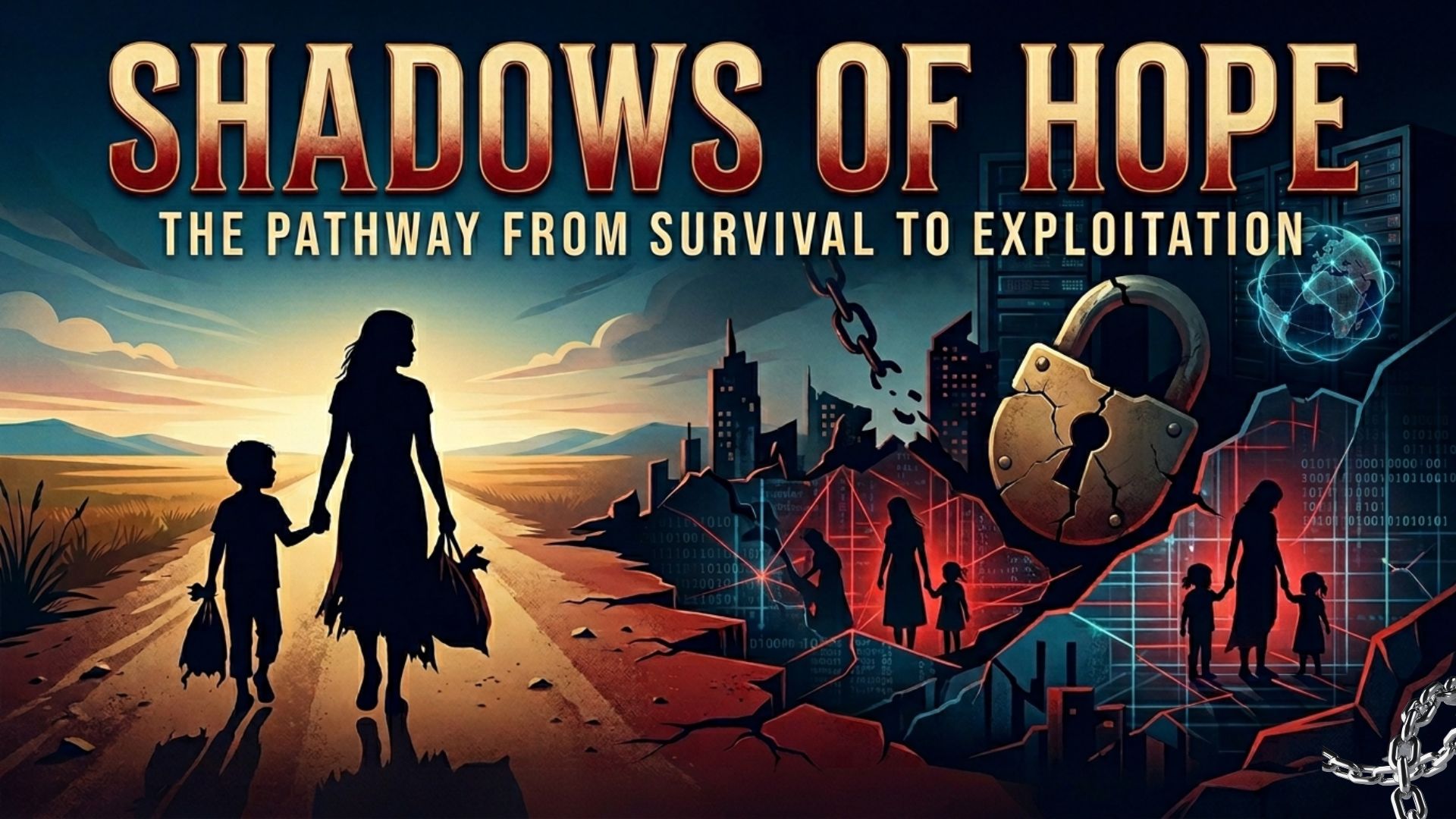
Human Trafficking, Migration and the Law: The Supreme Court's Call for Reform

Migration and Trafficking: An Uneasy Relationship
The Supreme Court has described human trafficking as one of the worst forms of human exploitation and drawn attention to its close connection with migration.
According to the Court, many people migrate in search of:
- Livelihood opportunities
- Economic security
- Dignified living conditions
However, these journeys often expose vulnerable individuals, particularly women and children, to exploitation.
Justice J.B. Pardiwala observed:
"Systemic inequalities transform a survival strategy into a pathway of exploitation."
The Court clarified that while not all migration results in trafficking, trafficking frequently emerges within broader migration flows.
Migration
     ↓
Economic Vulnerability
     ↓
Coercion / Deception
     ↓
Human Trafficking
This highlights how poverty, inequality, and lack of opportunities can create conditions that traffickers exploit.
Why Trafficking Persists
The judgment stresses that trafficking cannot be viewed merely as a criminal law issue.
It is closely linked to:
- Economic distress
- Social inequalities
- Lack of livelihood opportunities
- Weak protection mechanisms
- Gender-based vulnerabilities
For many migrants, the search for employment becomes a pathway through which criminal networks operate.
Re-examining Sex Work and Trafficking
A major focus of the judgment is the distinction between:
- Sex trafficking
- Voluntary adult sex work
The Court noted that the Immoral Traffic (Prevention) Act (ITPA) does not adequately recognise the rights of voluntary adult sex workers.
According to the Court, this legal silence has reinforced:
- Social stigma
- Marginalisation
- Exclusion from legal protections
Justice Pardiwala stated:
"The rights of sex workers can exist without there being a right to sex work."
The Court suggested that a meaningful first step would be official recognition of the rights and protections owed to voluntary adult sex workers.
The Legal Contradiction
The Court identified a conflict between the Bharatiya Nyaya Sanhita (BNS) and the ITPA.
Under Section 143 of the BNS
Trafficking requires three elements:
- Act
- Means
- Purpose
The "means" element includes:
- Force
- Coercion
- Deception
- Inducement
Trafficking Framework

Act
 +
Means
 +
Purpose
 =
Trafficking
Under the ITPA
The Act operates differently.
It often treats prostitution involving third parties as trafficking, irrespective of whether force, coercion, deception, or inducement is present.
The Court observed that this approach conflates trafficking with all forms of sex work.
Concerns About Victim Protection
The judgment also highlighted shortcomings within the ITPA.
Key concerns include:
- Harassment of victims during enforcement.
- Insufficient recognition of voluntary adult sex workers.
- Lack of clear exclusion of children from certain provisions.
According to the Court, a law intended to protect victims should not become a source of further victimisation.
Special Protection for Children
The Court emphasized that child trafficking must be treated differently from adult trafficking.
Children face:
- Greater physical harm
- Psychological trauma
- Long-term social consequences
Justice Pardiwala stressed:
Evidence of force, coercion, or deception should not be required when the victim is a child.
Adult Trafficking
→ Act + Means + Purpose

Child Trafficking
→ Presence of exploitation is sufficient;
proof of coercion should not be mandatory
The Court noted that international standards, including principles reflected in the Palermo Protocol, support stronger protections for children.
The Emerging Digital Threat
Another major concern is the growing use of cyberspace by trafficking networks.
The Court warned that trafficking remains largely hidden, with only a small proportion of cases reaching authorities.
At the same time, criminal networks are increasingly exploiting:
- Social media platforms
- Online recruitment channels
- Digital communication tools
- Anonymous online networks
Justice Pardiwala observed:
"Cyber-enabled commercial sexual exploitation has created a radical shift in the exploitation landscape."
Technology has expanded the reach, anonymity, and efficiency of trafficking operations while enforcement mechanisms struggle to keep pace.
Way Forward
- Address the structural inequalities that drive vulnerable migration.
- Strengthen anti-trafficking mechanisms at source and destination regions.
- Distinguish clearly between trafficking and voluntary adult sex work.
- Reform the ITPA to align with contemporary legal and human rights standards.
- Provide stronger protections and rehabilitation mechanisms for victims.
- Establish child-specific anti-trafficking safeguards.
- Enhance cyber-monitoring and digital investigation capabilities.
- Improve coordination between law enforcement, social welfare agencies, and civil society.
Conclusion
The Supreme Court's judgment broadens the understanding of human trafficking beyond criminal activity alone. It highlights how migration vulnerabilities, legal ambiguities, social stigma, and emerging digital threats intersect to create conditions for exploitation. Addressing trafficking therefore requires not only stronger enforcement but also legal reform, social protection, child safeguards, and inclusive policies that protect the dignity and rights of vulnerable individuals.
Attribution
Original content sources and authors

Syllabus classification
How this article maps to GS papers
Main syllabus
GS2Government PoliciesAlso covers
Quick Q&A
What is the relationship between migration, vulnerability and human trafficking, and why has the Supreme Court highlighted this connection?
Why is distinguishing between voluntary adult sex work and human trafficking important for social welfare policy and legal reform in India?
How does the Palermo Protocol influence India’s legal understanding of human trafficking and its distinction from related offences?
What are the major structural and socio-economic reasons that make women and children particularly vulnerable to trafficking in India?
Critically analyse the limitations of the Immoral Traffic (Prevention) Act in addressing trafficking while protecting the rights of vulnerable individuals.
How does the rise of cyber-enabled trafficking and online sexual exploitation represent a new challenge for governance and law enforcement agencies?
Practice questions
1 question for mains preparation