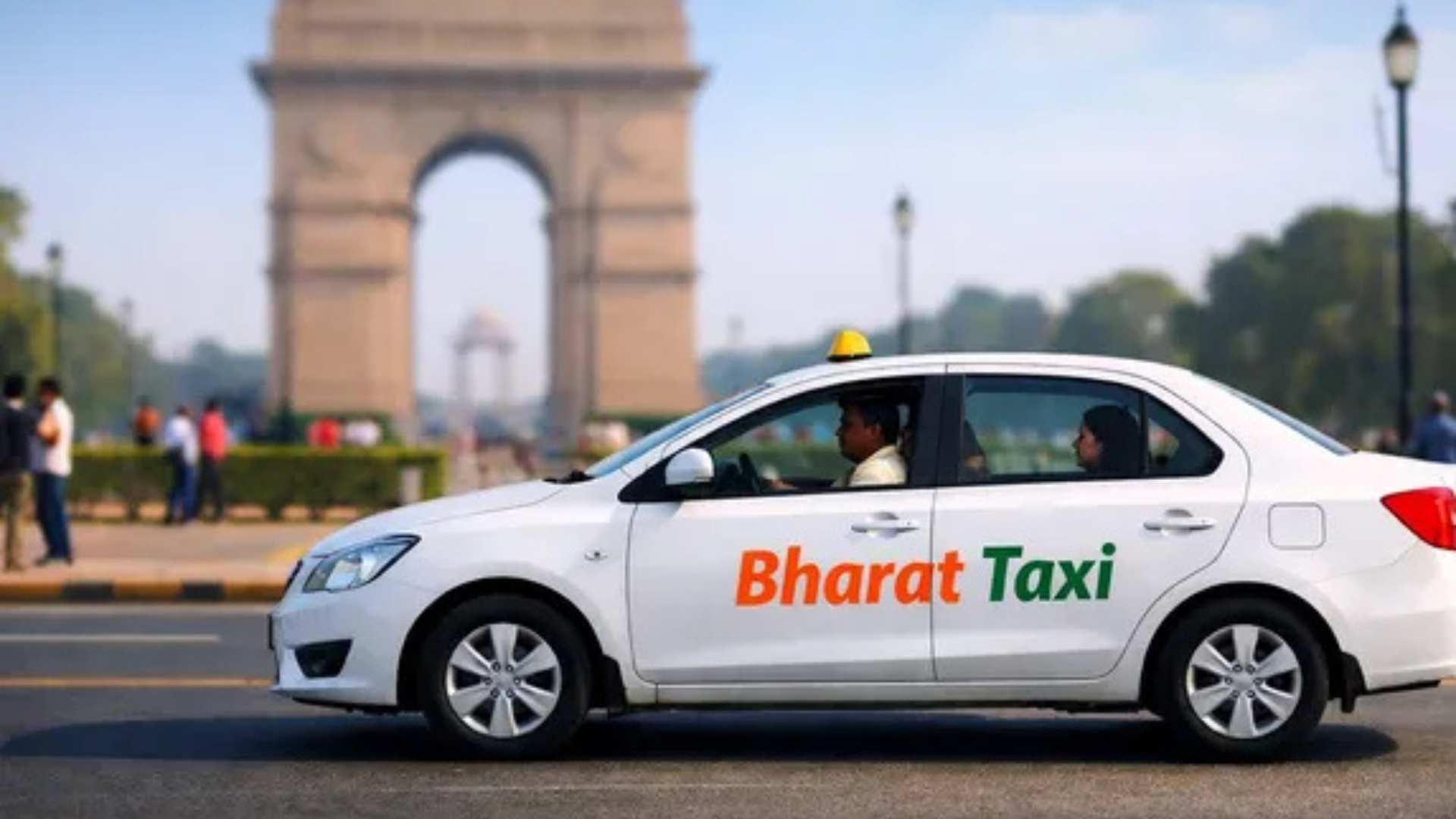
Bharat Taxi's Cooperative Challenge to India's Mobility Market

Exploring how Bharat Taxi's zero-commission model transforms ride-hailing with a cooperative approach and its long-term sustainability.
S
Surya
4 mins read
Driver Owned Disruption in Mobility Market
Not Started

1.Evolution of App-Based Mobility in India

App-based ride-hailing services, led by Ola and Uber in the early 2010s, have transformed urban mobility in India. The sector now constitutes an essential part of city transport, impacting commuter behavior, traffic patterns, and informal employment. Its growth was initially fuelled by aggressive discounting, which prioritized user acquisition over driver profitability.

The market has long been dominated by a few large platforms, creating a near-duopoly. This concentration has often resulted in tension between drivers’ livelihoods and consumers’ demand for affordability, contributing to frequent driver protests and industrial disputes. Understanding these dynamics is critical for governance, as the sector intersects urban transport policy, labor regulation, and digital economy growth.

The dominance of few platforms in a high-demand sector can exacerbate inequities in income distribution and limit innovation. Ignoring market concentration may hinder sustainable mobility solutions and driver welfare initiatives.


2. Emergence of Cooperative Models: Bharat Taxi

The launch of Bharat Taxi introduces a cooperative, driver-owned platform into the market, adding competition to existing private incumbents. Its defining features include a zero-commission structure, surge-free pricing, and driver co-ownership, with profits directed to members rather than shareholders.

Such a model aims to enhance driver welfare through higher take-home earnings, retirement savings, and accident and health insurance. Consumers may benefit from predictable fares and transparency in pricing, addressing concerns associated with commission-driven platforms. By experimenting with ownership structures, Bharat Taxi represents an attempt to realign incentives in favor of drivers and passengers alike.

Driver-centric cooperative models demonstrate that alternative governance and business structures can redistribute economic benefits and improve labor conditions, highlighting the need for policy support that encourages fair competition.

Impacts:

  • Higher driver earnings and welfare-linked benefits.
  • Transparent fare structures for passengers.
  • Potential for increased driver satisfaction and retention.

3. Shifts in Market Business Models

Even prior to Bharat Taxi, app-based mobility in India showed signs of evolving away from high-commission models. Rapido, for instance, in 2023 introduced a subscription-based system allowing drivers to retain full fares for a small fixed fee, reducing resentment from 30–35% per-ride commissions. Smaller platforms like Namma Yatri also experimented with similar structures.

These shifts have forced incumbents to respond, demonstrating that competitive pressure can drive business-model innovation. Platforms can no longer ignore driver dissatisfaction without risking attrition and reputational damage, highlighting the intersection of market forces and labor governance in digital economies.

Business-model innovation in urban mobility is essential to balance profitability, labor welfare, and consumer affordability. Failure to adapt may result in labor disputes and reduced market competitiveness.

Comparative examples:

  • Rapido: Subscription-based, full fare to driver.
  • Namma Yatri: Localized experiments with driver-focused incentives.

4. Sustainability and Policy Implications

While Bharat Taxi’s zero-commission cooperative model is promising, its long-term sustainability is uncertain. Flat-fee structures may decouple platform revenue from ride volumes and market demand, limiting scalability unless alternative monetization strategies are developed.

Government involvement in cooperatives presents additional concerns. State support must avoid creating regulatory asymmetry or preferential access that could distort competition. Vigorous technological investment and operational discipline are critical to sustaining platform viability in a competitive, tech-driven sector.

Unchecked government support or subsidies can weaken market incentives and innovation. Regulatory neutrality ensures that cooperative and private models compete on merit, fostering efficiency and resilience.

Policy considerations:

  • Role of Competition Commission of India in monitoring unfair practices.
  • Need for regulatory clarity to maintain level playing field.
  • Vigilance against dominance through implicit subsidies or aggressive undercutting.

5. Implications for Governance and Urban Mobility

The entry of cooperative platforms like Bharat Taxi signals potential improvements in urban labor governance, equitable distribution of profits, and transparent consumer pricing. It also demonstrates the role of market competition in driving structural reforms within digital platforms.

Urban mobility policy must therefore balance multiple objectives: fostering innovation, ensuring driver welfare, safeguarding consumer interests, and maintaining fair competition. Coordinated policy frameworks can support sustainable digital transport ecosystems without undermining private initiative.

Integrating alternative ownership models within urban mobility governance strengthens inclusivity and resilience. Ignoring cooperative innovations may perpetuate labor inequities and constrain competition-driven improvements.


6. Conclusion

Bharat Taxi exemplifies an emerging driver-centric cooperative model in India’s ride-hailing sector. Its success or failure will provide lessons on labor ownership, platform economics, and regulatory frameworks. Policymakers and regulators must ensure a level playing field that encourages innovation, protects drivers, and delivers predictable, affordable mobility to consumers, reinforcing sustainable urban transport governance.

"Cooperatives are the embodiment of democracy in the economy." — Mahatma Gandhi

Quick Q&A

Everything you need to know

Significance of the cooperative model: Bharat Taxi introduces a driver-owned cooperative model, which is a departure from the traditional commission-heavy platforms like Ola and Uber. Under this model, drivers are not merely service providers but co-owners of the platform, and profits are distributed directly to them. The model eliminates commissions and surge pricing, promising predictable fares for passengers and higher take-home earnings for drivers.

Benefits for drivers: Drivers gain ownership, a sense of autonomy, and welfare-linked support such as retirement savings, health insurance, and accident coverage. This contrasts with conventional platforms, where high commission rates of up to 30-35% often create resentment.

Implications for passengers: Users could benefit from transparent pricing, fewer hidden costs, and a platform incentivized by driver welfare rather than shareholder profits. Overall, the cooperative model could democratize the ride-hailing market, promote equitable profit-sharing, and provide an alternative to dominant private players, increasing competition and consumer choice.

Importance of driver-centric innovation: Driver satisfaction directly affects platform sustainability. Traditional models with high commissions often result in driver protests, attrition, and lower service quality. Platforms like Rapido, by shifting to a subscription-based model, allow drivers to retain full fares while paying a predictable fee, reducing dissatisfaction and promoting stability.

Impact on market competition: Innovations that benefit drivers force incumbents to rethink their business models. As driver welfare becomes a competitive factor, platforms are compelled to balance profitability with equitable treatment of drivers. This ensures long-term retention, higher service reliability, and improved public perception.

Example: Rapido’s subscription model and experiments by smaller players like Namma Yatri have shown that aligning platform incentives with driver interests encourages loyalty and reduces conflict, benefiting both drivers and users. In the long run, driver-centric innovations strengthen the resilience and competitiveness of the Indian mobility ecosystem.

Mechanism and potential challenges: The zero-commission model decouples platform revenue from ride volumes, meaning that the platform earns no direct share from each transaction. While this improves driver earnings and satisfaction, it may limit the platform’s incentives to boost demand or invest in growth.

Long-term scalability concerns: Without a revenue link to market demand, Bharat Taxi may face difficulties funding technological upgrades, marketing, and operational expansion. Platforms like Uber and Ola use commission-based revenue to reinvest in growth, improve algorithms, and expand services. A purely zero-commission structure may struggle to sustain such investments.

Potential solutions: Alternative monetization strategies, such as subscription fees, advertising partnerships, or value-added services, may be needed to ensure the platform remains competitive while retaining its cooperative ethos. Balancing driver benefits with operational sustainability is key for long-term viability.

Regulatory considerations: While cooperative models are welcomed as pro-competition initiatives, government involvement must be carefully managed. Any state support can create perceptions of preferential treatment or regulatory asymmetry, which may discourage private investment or distort competition.

Competition concerns: The Competition Commission of India (CCI) must monitor the sector to ensure that undercutting, implicit subsidies, or dominance by any single player does not harm the level playing field. Fair competition ensures that both cooperative and private platforms thrive based on efficiency and innovation rather than external advantages.

Implications: Policymakers should focus on enabling cooperatives without direct intervention in operations, ensuring that technology investment and market discipline remain intact. This will encourage experimentation, promote driver welfare, and strengthen the overall mobility ecosystem without compromising market integrity.

Impact on competition: Bharat Taxi challenges the near-duopoly of Ola and Uber by introducing a driver-centric cooperative model. Increased competition can lead to more innovation, better pricing, and improved service quality, benefiting consumers and drivers alike.

Potential advantages: The cooperative structure may encourage higher driver retention, lower fare unpredictability, and a platform ecosystem more responsive to stakeholder needs. This could incentivize incumbents to adopt driver-friendly reforms, such as subscription-based or reduced-commission models.

Potential risks: However, aggressive price competition could erode profitability, limiting reinvestment in technology and expansion. Without careful regulatory oversight, preferential policies or subsidies could distort the market. Hence, while Bharat Taxi can strengthen the ecosystem, its long-term effect on incumbents depends on sustainable business practices, operational discipline, and fair competition enforcement.

Examples of alternative models: Rapido’s subscription-based model allows drivers to keep full fares while paying a predictable fee, addressing grievances over high commission rates. Smaller platforms like Namma Yatri experiment with flexible pricing and driver ownership models.

Effects on driver welfare: These models enhance driver earnings predictability, reduce resentment, and offer a sense of ownership. They also create incentives for platforms to provide welfare-linked benefits, such as insurance and retirement savings.

Market dynamics: By prioritizing driver interests, these models force large incumbents to rethink their strategies, leading to innovations in fare structures and commission systems. For instance, Ola and Uber have started introducing incentives and partial commission adjustments in response to competitive pressure. Such models demonstrate that aligning driver welfare with business strategy can strengthen both market efficiency and service quality.

Scenario analysis: If Bharat Taxi receives government support, it could be perceived as having a competitive advantage over private platforms. While this may accelerate initial growth, it risks creating regulatory asymmetry, where private players feel disadvantaged in terms of enforcement, subsidies, or market access.

Market consequences: Aggressive pricing enabled by state support may trigger fare wars, potentially undermining long-term sustainability for all players. Private competitors might reduce investment in technology or service quality due to perceived unfairness, weakening the overall market ecosystem.

Policy implications: To avoid distortions, any government role should focus on enabling cooperative governance, welfare benefits, or infrastructure support without directly influencing operational decisions or market pricing. This ensures fair competition, encourages innovation, and maintains public trust in the sector.

Attribution

Original content sources and authors

Sign in to track your reading progress

Comments (0)

Please sign in to comment

No comments yet. Be the first to comment!