
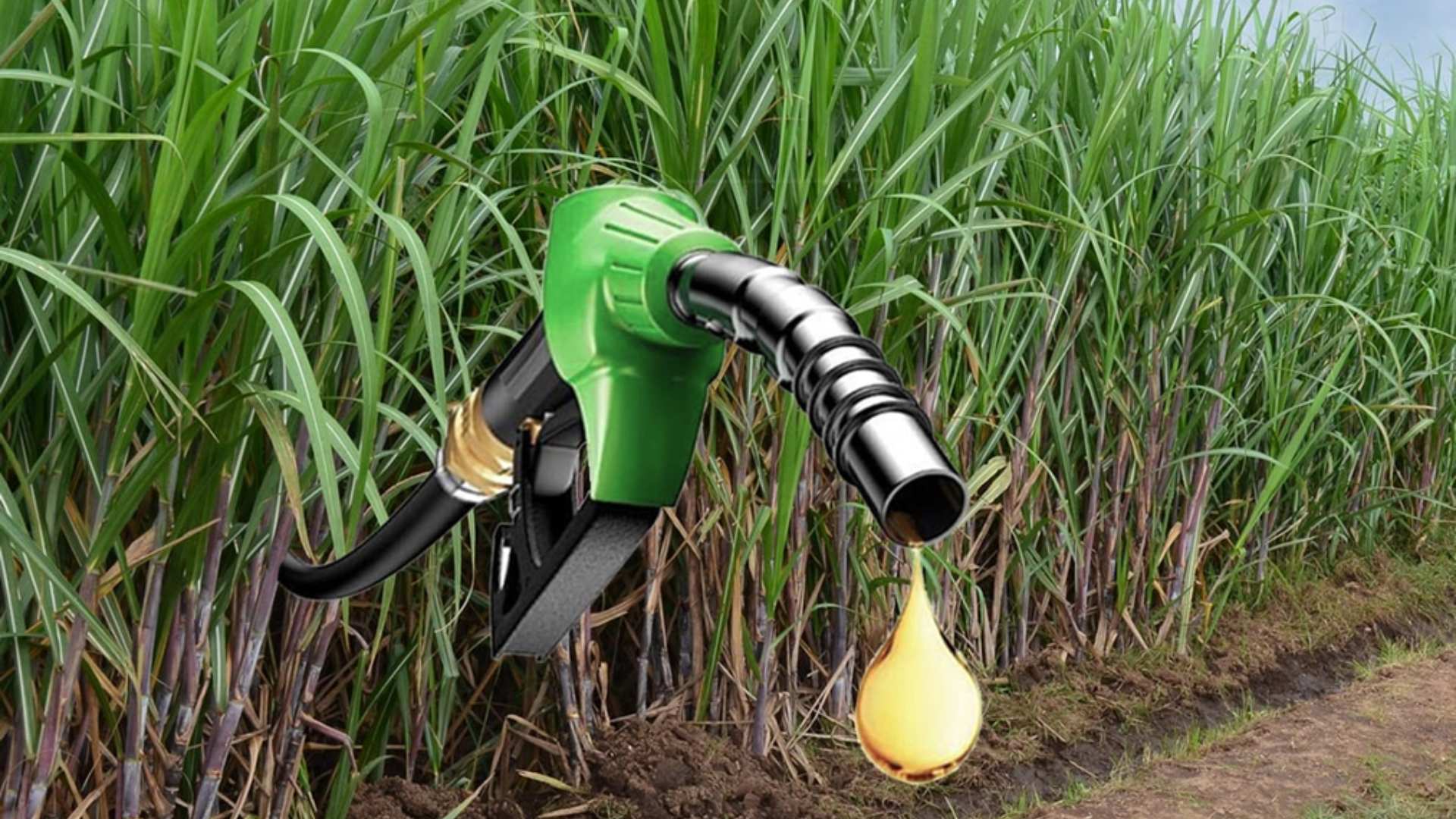
Ethanol Blending: Navigating Food and Energy Security Challenges

Economic Survey reveals tensions between food security and ethanol blending, impacting agriculture and imports in India.
SuryaSurya
5 mins read
Ethanol push reshapes cropping patterns, raising food security concerns nationally
Not Started

1. Context: Ethanol Blending Programme and Agricultural Incentives

India’s Ethanol Blending Programme (EBP) has emerged as a key pillar of the country’s energy transition strategy, aimed at reducing crude oil imports, lowering emissions, and enhancing farmer incomes. As blending targets move towards E20, the programme has expanded beyond sugarcane-based ethanol to include foodgrains, particularly maize, to enable rapid scaling.

This shift has altered agricultural incentives by making maize a remunerative and policy-backed crop. Administered ethanol pricing, combined with technological improvements in maize cultivation, has created a strong market signal favouring maize over other competing crops.

However, agriculture in India is not merely a market-driven activity; it underpins food security, nutritional outcomes, and rural livelihoods. Policy-induced changes in crop choice therefore have economy-wide implications beyond energy substitution.

If such incentives are not calibrated, gains in energy self-reliance may weaken food self-reliance, creating a structural policy contradiction.

“Policy coherence across sectors is essential to avoid unintended consequences.” — OECD Policy Framework

This highlights the governance challenge of aligning energy transition goals with food system stability; ignoring this risks solving one vulnerability while deepening another.


2. Emerging Crop Diversification Concerns

The Economic Survey notes visible shifts in cultivation patterns in States such as Maharashtra and Karnataka, where maize increasingly competes with pulses, oilseeds, soyabean, millets, and cotton for land, water, and labour.

Contrary to expectations, paddy acreage has not reduced significantly. Instead, adjustment pressures are concentrated on pulses and oilseeds—crops that are central to protein intake, edible oil availability, and nutritional security.

These crops already face yield stagnation and market uncertainty. Their declining prioritisation weakens dietary diversity and aggravates import dependence.

If unchecked, such skewed diversification can lock Indian agriculture into a nutritionally sub-optimal equilibrium.

“Food security is not only about calories, but also about nutrition.” — FAO

Farmers respond rationally to price and procurement signals; when these undervalue nutrition-sensitive crops, long-term food security is compromised.


3. Food Security and Price Stability Implications

From a food security perspective, the Survey describes the implications as “non-trivial.” Pulses and oilseeds form the backbone of affordable nutrition, particularly for lower-income households.

A sustained shift away from these crops increases reliance on imports, especially of edible oils. This exposes domestic food prices to international volatility and supply shocks.

International experience cited by the Survey cautions that diversion of foodgrains for biofuels can elevate food prices if safeguards are absent.

Failure to address these dynamics risks weakening India’s resilience during global commodity disruptions.

“High dependence on imports makes food systems vulnerable to global shocks.” — World Bank

Price stability is as critical as availability; policy-induced volatility directly affects welfare and macroeconomic stability.


4. Energy Gains versus Food Trade-offs

The Survey acknowledges that the ethanol blending programme has delivered tangible benefits. As of August 2025, ethanol blending has:

  • Saved over ₹1.44 lakh crore in foreign exchange
  • Substituted about 245 lakh metric tonnes of crude oil
  • Reduced emissions and increased payments to farmers

These outcomes reinforce the programme’s role in advancing energy Aatmanirbharta. However, scaling towards E20 has intensified reliance on maize, strengthening the food–fuel linkage.

The Survey explicitly flags an emerging tension between self-reliance in energy and self-reliance in food.

“This highlights an emerging tension between Aatmanirbharta in energy and Aatmanirbharta in food.” — Economic Survey

When sectoral objectives are pursued in silos, trade-offs manifest as governance risks rather than policy choices.


5. Productivity Trends and Structural Signals

Maize productivity has risen sharply, from about 2.56 tonnes/hectare (2015–16) to nearly 3.78 tonnes/hectare (2024–25), reinforcing its attractiveness under the ethanol pricing regime.

In contrast, yields of soyabean, sunflower, rapeseed, groundnut, and millets have stagnated or declined over the same period, weakening their competitiveness.

This divergence accelerates crop concentration and reduces agrobiodiversity, which is critical for climate resilience and sustainable farming systems.

If productivity asymmetries persist, market-led monocropping may become structurally entrenched.

“Agricultural diversity is insurance against both climate and market risks.” — FAO

Yield and price signals together shape long-term land-use patterns; early policy correction is easier than later reversal.


6. Way Forward: Balancing Food and Energy Objectives

A calibrated approach is required to reconcile energy transition goals with food security imperatives. Biofuel expansion must internalise nutritional and price stability considerations.

Policy measures:

  • Align ethanol pricing with safeguards for pulses and oilseeds
  • Strengthen productivity and procurement support for nutrition-sensitive crops
  • Monitor State-level land-use shifts for early corrective action

Such integration can sustain both energy and food self-reliance without mutual erosion.

“Sustainable development requires balancing competing objectives, not maximising one.” — UN Sustainable Development Framework

Integrated policy design converts trade-offs into managed transitions rather than systemic risks.


Conclusion

The Economic Survey makes clear that while ethanol blending has delivered significant energy and macroeconomic gains, its interaction with agricultural incentives has serious food security implications. Long-term resilience will depend on coordinated policymaking that aligns energy transition with nutritional security, price stability, and sustainable agricultural diversification.


Quick Q&A

Everything you need to know

The ethanol-blending programme in India is a strategic policy initiative aimed at blending ethanol with petrol to reduce crude oil dependence, enhance energy security, and support farmers.
Key objectives include:

  • Substitution of crude oil imports, thereby reducing foreign exchange outflows. As of August 2025, the programme has facilitated the substitution of approximately 245 lakh metric tonnes of crude oil, saving over ₹1.44 lakh crore.
  • Promotion of cleaner energy and reduction of vehicular emissions, contributing to environmental sustainability.
  • Providing additional income streams for farmers by creating demand for feedstocks such as sugarcane and maize.
Strategic significance: The programme also aims to achieve E20 blending targets (20% ethanol with 80% petrol), which requires diversification of feedstocks beyond sugarcane to include maize and other foodgrains. While this scaling has tangible benefits, the Economic Survey 2025 warns that it may have unintended implications for food security and agricultural incentives, especially in terms of crop diversity.

The expansion of maize cultivation for ethanol blending presents significant food security concerns because it alters cropping patterns and reduces the land available for pulses and oilseeds.
Key issues:

  • Maize increasingly competes with nutritionally and economically important crops like pulses, oilseeds, soybeans, millets, and cotton for land, water, and labor.
  • This competition can lead to stagnation or decline in yields of other essential crops. For example, while maize yield increased from 2.56 tonnes per hectare in 2015-16 to 3.78 tonnes per hectare in 2024-25, yields for soybeans, sunflower seeds, rapeseed, peanuts, and millets have stagnated or declined.
  • Over time, this may entrench India’s dependence on edible oil imports and expose domestic food prices to volatility during supply shocks.
Implications: The Survey highlights a tension between Aatmanirbharta in energy and in food, underscoring that energy security strategies should carefully account for agricultural and nutritional outcomes.

Administered ethanol pricing directly influences farmer behavior and cropping choices.
Mechanism:

  • Higher guaranteed prices for ethanol feedstocks such as maize create a financial incentive for farmers to allocate more land to these crops, sometimes at the expense of pulses, oilseeds, or millets.
  • The resulting shift can reduce crop diversity, as traditional and nutritionally critical crops become less financially attractive to cultivators.
  • Technological changes in maize cultivation, such as hybrid seeds and high-yield practices, further reinforce this trend by increasing profitability relative to other crops.
Outcome: While ethanol pricing supports energy policy objectives and farmer incomes, without careful calibration, it risks distorting agricultural priorities and creating unintended food security vulnerabilities.

The surge in maize cultivation in States like Maharashtra and Karnataka is driven by a combination of economic, policy, and technological factors.
Primary reasons:

  • Economic incentives: The administered ethanol pricing and higher profitability of maize relative to pulses and oilseeds encourage farmers to shift land use.
  • Policy support: Government targets for ethanol blending create predictable demand, giving farmers confidence in the market for maize.
  • Technological advancements: Improved maize varieties and cultivation techniques have increased yields and reduced risks, making maize a more attractive option.
Implications: While these factors promote rapid scaling of ethanol feedstocks, they also intensify competition for land and water, which can negatively affect crop diversity, food self-reliance, and nutritional outcomes.

The ethanol-blending programme embodies a fundamental trade-off between achieving energy self-reliance (Aatmanirbharta) and ensuring food security.
Benefits of energy self-reliance:

  • Reduction in crude oil imports, saving foreign exchange.
  • Lower greenhouse gas emissions through substitution of petrol with ethanol.
  • Enhanced farmer incomes through higher demand for feedstocks like sugarcane and maize.
Trade-offs and risks:
  • Expansion of maize for ethanol competes with pulses, oilseeds, and other nutritionally important crops, potentially reducing domestic production and increasing import dependence.
  • Food price volatility may rise as essential commodities become more susceptible to supply shocks.
  • Long-term implications include a possible erosion of crop diversity, with adverse effects on nutrition, soil health, and resilience of the agricultural system.
Conclusion: While ethanol blending advances energy objectives, policymakers must carefully manage incentives and promote non-food feedstocks or second-generation ethanol to avoid compromising food security.

The ethanol-blending programme has delivered measurable economic and social benefits.
Key examples:

  • Foreign exchange savings: By substituting around 245 lakh metric tonnes of crude oil, the programme has saved over ₹1.44 lakh crore in import costs as of August 2025.
  • Farmer payments: Ethanol procurement has provided additional revenue streams to farmers, incentivizing production and supporting rural incomes.
  • Environmental impact: Reduced fossil fuel consumption contributes to lower greenhouse gas emissions, promoting climate objectives.
Implications: These examples demonstrate that the programme not only supports energy policy but also strengthens rural livelihoods. However, the Economic Survey cautions that continued reliance on maize and other foodgrains requires careful balancing to prevent negative consequences for food security.

Maharashtra and Karnataka provide illustrative cases of how ethanol policy interacts with local agriculture.
Observations:

  • Maize increasingly competes with pulses, oilseeds, soybeans, millets, and cotton for land, water, and labor.
  • Yields of competing crops have stagnated or declined while maize yields increased from 2.56 tonnes per hectare in 2015-16 to 3.78 tonnes per hectare in 2024-25.
  • Local food systems, heavily reliant on pulses and oilseeds for nutrition, face increased vulnerability to price volatility and supply disruptions.
Lessons: The case underscores the importance of coordinated agricultural and energy policies. While ethanol blending strengthens energy security and farmer incomes, it can disrupt traditional cropping patterns, reduce dietary diversity, and heighten reliance on imports for essential commodities. Policymakers may need to incentivize non-food feedstocks or adopt crop rotation strategies to safeguard food security while meeting energy objectives.

Attribution

Original content sources and authors

Sign in to track your reading progress

Comments (0)

Please sign in to comment

No comments yet. Be the first to comment!