INTRODUCTION
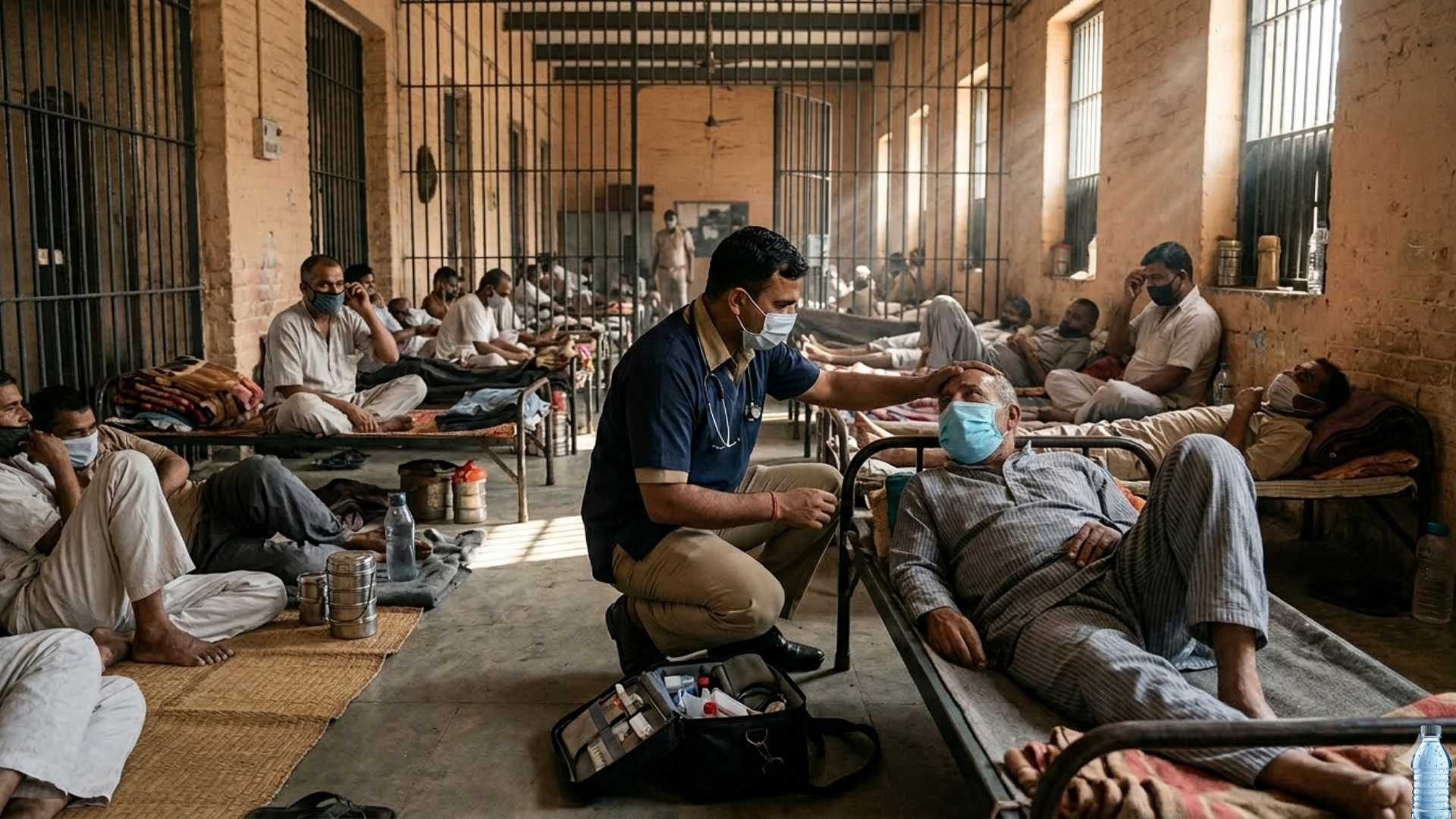
India’s prison system faces a severe public health crisis, marked by overcrowding and inadequate healthcare. The National Crime Records Bureau (2023) reports prison occupancy at over 131% nationally, with some states exceeding 160–400%. Studies indicate prisoners in India are 5 times more likely to contract tuberculosis (The Lancet Public Health, 2023), while diseases like HIV and skin infections are disproportionately high. The recent HSV outbreak in Jalpaiguri (2025–26) highlights systemic neglect despite judicial recognition of prisoners’ right to health.
BACKGROUND AND CONTEXT
Constitutional and Legal Framework
- Article 21 guarantees the right to life and health, applicable to prisoners
- Supreme Court in Parmanand Katara vs Union of India and Sunil Batra cases affirmed prisoners’ right to medical care
- Model Prison Manual, 2016 prescribes healthcare standards, staffing norms, and hygiene requirements
Structural Reality of Indian Prisons
- Chronic overcrowding due to high undertrial population
- Poor sanitation, ventilation, and healthcare infrastructure
- Fragmented governance between State prison departments and public health systems
KEY PUBLIC HEALTH ISSUES IN PRISONS
Communicable Diseases Burden
- High prevalence of Tuberculosis (TB) due to overcrowding and poor ventilation
- HIV/AIDS rates higher than general population due to unsafe practices and lack of screening
- Skin diseases linked to humidity and lack of personal space
- Herpes Simplex Virus (HSV) outbreak leading to encephalitis and deaths in extreme cases
Inadequate Healthcare Capacity
- 43% vacancy in medical officer positions (India Justice Report, 2025)
- Only 25 psychologists for ~5.7 lakh inmates
- Limited diagnostic and isolation facilities
Overcrowding as a Root Cause
- National occupancy: ~131%
- West Bengal prisons: >160%, some exceeding 400%
- Makes hygiene, distancing, and quarantine nearly impossible
KEY DATA ON PRISON HEALTH CRISIS
| Indicator | Status |
|---|---|
| National prison occupancy | ~131% |
| West Bengal occupancy | >160% (some >400%) |
| TB risk in prisoners | 5× higher than general population |
| Medical officer vacancies | 43% |
| Psychologists availability | 25 for 5.7 lakh inmates |
| Example outbreak | 92 HSV cases, 7 deaths (Jalpaiguri, 2025–26) |
CASE STUDIES AND EXAMPLES
Jalpaiguri HSV Outbreak (2025–26)
- 92 inmates infected; 7 deaths
- Overcrowding (171% occupancy) worsened spread
- Lack of early detection and isolation
COVID-19 in Prisons
- Major outbreaks in Nagpur and Indore central jails
- Highlighted vulnerability of closed, overcrowded settings
Kerala Skin Disease Study (2023)
- 30% inmates in select prisons affected
- Linked to humidity and overcrowding
West Bengal Decongestion Measures (2020)
- Temporary release of undertrials
- Demonstrated effectiveness of non-custodial approaches
IMPLICATIONS AND CHALLENGES
Public Health Risks Beyond Prisons
- संक्रमण spillover to general population through staff and released inmates
- Prisons act as disease reservoirs
Human Rights Concerns
- Violation of Right to Health under Article 21
- Disproportionate impact on vulnerable groups (undertrials, poor, foreigners)
Governance and Administrative Gaps
- Poor coordination between health and prison departments
- Lack of uniform implementation of Model Prison Manual
Judicial and Legal Bottlenecks
- High undertrial population (~75% of inmates)
- Delays in trials aggravate overcrowding
KEY REFORMS AND POLICY MEASURES
Healthcare System Strengthening
- Integrate prisons into National Health Mission (NHM)
- Mandatory comprehensive medical screening at entry
- Regular health camps and disease surveillance
Infrastructure and Capacity Enhancement
- Improve ventilation, sanitation, and isolation wards
- Fill vacancies of doctors and mental health professionals
- Use telemedicine for specialist consultations
Decongestion Strategies
- Fast-track cases of undertrials
- Expand bail, parole, and non-custodial sentences
- Promote community service and probation
Administrative and Legal Reforms
- Uniform enforcement of Model Prison Manual, 2016
- Strengthen prison monitoring mechanisms
- Expedite repatriation of foreign inmates
KEY CONCEPT
“Prison Health is Public Health” (WHO Principle)
- Health conditions in prisons directly affect community health
- Requires integration of correctional health into mainstream public health policy
CONCLUSION
India’s prison health crisis reflects deeper governance failures in justice delivery, public health integration, and human rights protection. Addressing overcrowding, strengthening healthcare infrastructure, and aligning prison administration with public health systems are essential. A rights-based and preventive approach can transform prisons from disease hotspots into rehabilitative institutions, reinforcing both constitutional values and public health security.
UPSC MAINS QUESTION (250 WORDS)
“Prison health is an integral part of public health.” Examine the challenges of healthcare delivery in Indian prisons and suggest comprehensive reforms to address the crisis.