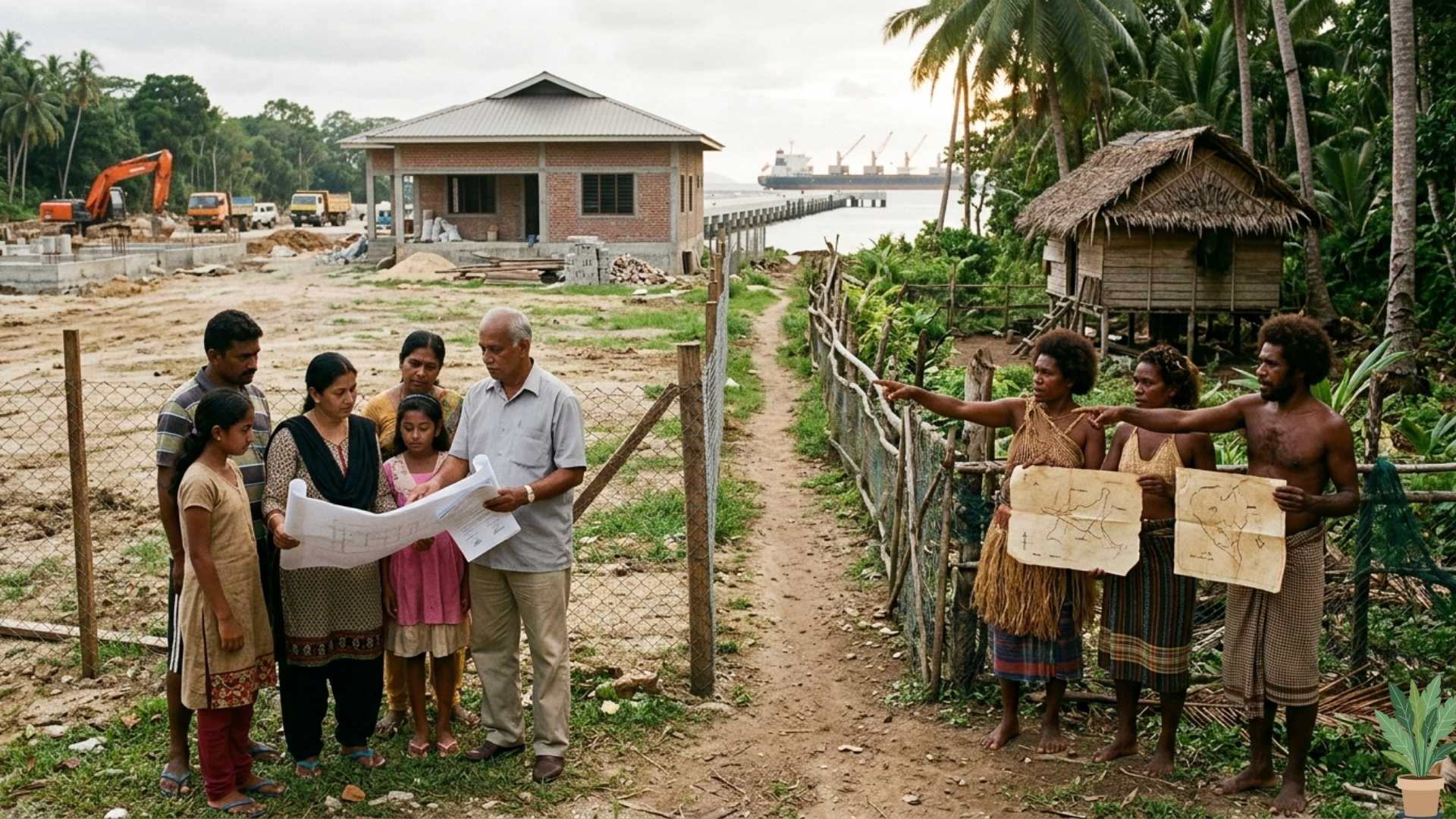
INTRODUCTION
- The ₹72,000+ crore Great Nicobar Mega Infrastructure Project is one of India’s largest strategic development initiatives, aimed at enhancing maritime security and economic growth in the Indo-Pacific.
- However, it has raised critical concerns regarding land acquisition, tribal rights, and environmental sustainability.
- Reports indicate compensation disparities (₹113–₹180/sq.m vs ₹11,000+/sq.m elsewhere) and denotification of ~84 sq. km of tribal reserve land.
- The issue highlights tensions between developmental imperatives and constitutional safeguards for vulnerable communities.
BACKGROUND AND CONTEXT
-
Great Nicobar Island is strategically located near the Malacca Strait, a key global shipping route (handles ~25% of global trade).
-
The project includes:
- Transshipment port
- International airport
- Township and power infrastructure
-
Settler population:
- ~300 ex-servicemen families settled (1969–75)
- Land de-notified earlier from tribal reserve for settlement
-
Indigenous communities:
- Shompen (PVTG) – nomadic hunter-gatherers
- Nicobarese – forest and coastal dependent
KEY ISSUE: LAND ACQUISITION AND COMPENSATION
Disparities in Compensation
| Aspect | Great Nicobar | Andaman (Tourism Projects) |
|---|---|---|
| Compensation Rate | ₹113–₹180 per sq.m | ₹11,370–₹20,500 per sq.m |
| Demand by settlers | ₹1 crore/acre | — |
| Govt offer (per hectare) | ~₹9 lakh | Demand: ₹32 lakh |
-
Violates the spirit of RFCTLARR Act, 2013:
- Fair compensation
- Transparency
- Rehabilitation & resettlement
Procedural Concerns
-
Alleged deficiencies in Social Impact Assessment (SIA)
-
Claims of procedural violations in acquisition
-
Repeated displacement of settler families:
- Initial resettlement
- Post-2004 tsunami
TRIBAL RIGHTS AND CONSTITUTIONAL SAFEGUARDS
Legal Framework
- Forest Rights Act (FRA), 2006
- Andaman & Nicobar Islands (Protection of Aboriginal Tribes) Regulation, 1956
- PVTG protections under national policy
Concerns
- Denotification of ~84 sq. km tribal reserve
- Marginalisation of Shompen in decision-making
- Pressure on Nicobarese for ‘voluntary’ land surrender
- Violation of Free, Prior and Informed Consent (FPIC) principles
“Development that excludes indigenous voices risks becoming dispossession rather than progress.”
CONTRADICTIONS IN LOCAL POLITICS
Settler community:
-
Demands fair compensation and due process
-
Supports project execution Simultaneously:
-
Implicated in alienation of tribal lands Reflects:
-
Competing claims over land and resources
-
Weak inclusive democratic representation
ENVIRONMENTAL AND ECOLOGICAL CONCERNS
-
Great Nicobar is part of a biodiversity hotspot
-
Potential impacts:
- Loss of pristine forests
- Threat to endemic species
- Coastal ecosystem degradation
-
Raises issues under:
- Environmental Impact Assessment (EIA) process
- Climate resilience and sustainability
GOVERNANCE AND POLICY CHALLENGES
Multi-Dimensional Issues
Equity vs Development
-
Unequal compensation across regions Strategic vs Social Justice
-
National security vs tribal rights Legal vs Procedural Compliance
-
Weak enforcement of FRA & RFCTLARR Centre-State/Local Coordination
-
Role of ministries and local bodies
Institutional Complicity
-
Multiple actors involved:
- Tribal Welfare Department
- Union Ministries
- Local representatives
-
Indicates systemic governance gaps
WAY FORWARD
Ensure Fair Compensation
-
Uniform and realistic market-linked rates Strengthen Tribal Safeguards
-
Strict adherence to FRA and FPIC principles Participatory Governance
-
Inclusion of Shompen and Nicobarese voices Transparent Impact Assessments
-
Independent SIA and EIA reviews Sustainable Development Model
-
Balance strategic goals with ecological preservation
CONCLUSION
- The Great Nicobar issue exemplifies the complex interplay between development, democracy, and rights.
- While strategic infrastructure is essential for India’s growth, ignoring indigenous rights and ecological limits undermines constitutional morality.
- A balanced approach rooted in justice, sustainability, and inclusivity is critical to ensure that development does not translate into displacement and dispossession.
UPSC MAINS QUESTION (15 MARKS, 250 WORDS)
- “The Great Nicobar Infrastructure Project highlights the conflict between strategic development and protection of indigenous rights.” Critically examine in the context of land acquisition laws and environmental governance in India.