1. Background and Policy Context
The Ministry of Home Affairs (MHA) has issued updated guidelines clarifying the protocol for singing and playing the national song Vande Mataram. These were uploaded on 6 February without a formal announcement, indicating a procedural rather than legislative change. The guidelines aim to standardise practice across States, government bodies, and official events.
The instructions state that whenever Vande Mataram and the national anthem Jana Gana Mana are both played at an event, the national song should precede the national anthem. This ensures uniform ceremonial sequencing and avoids confusion across different institutions. The guidelines also detail when audiences should stand, except during film screenings where doing so may disrupt order.
The MHA underlines that the instructions are meant for general information, guidance, and the maintenance of decorum, particularly in relation to respect for national symbols. They specify approved occasions for playing and singing the national song, especially in the presence of constitutional authorities such as the President and Governors.
Uniform procedures for national symbols build institutional consistency and prevent disorder at public events. Without such guidelines, variations in practice could lead to avoidable disputes, administrative lapses, and dilution of symbolic significance.
2. Official Status and Prescribed Occasions
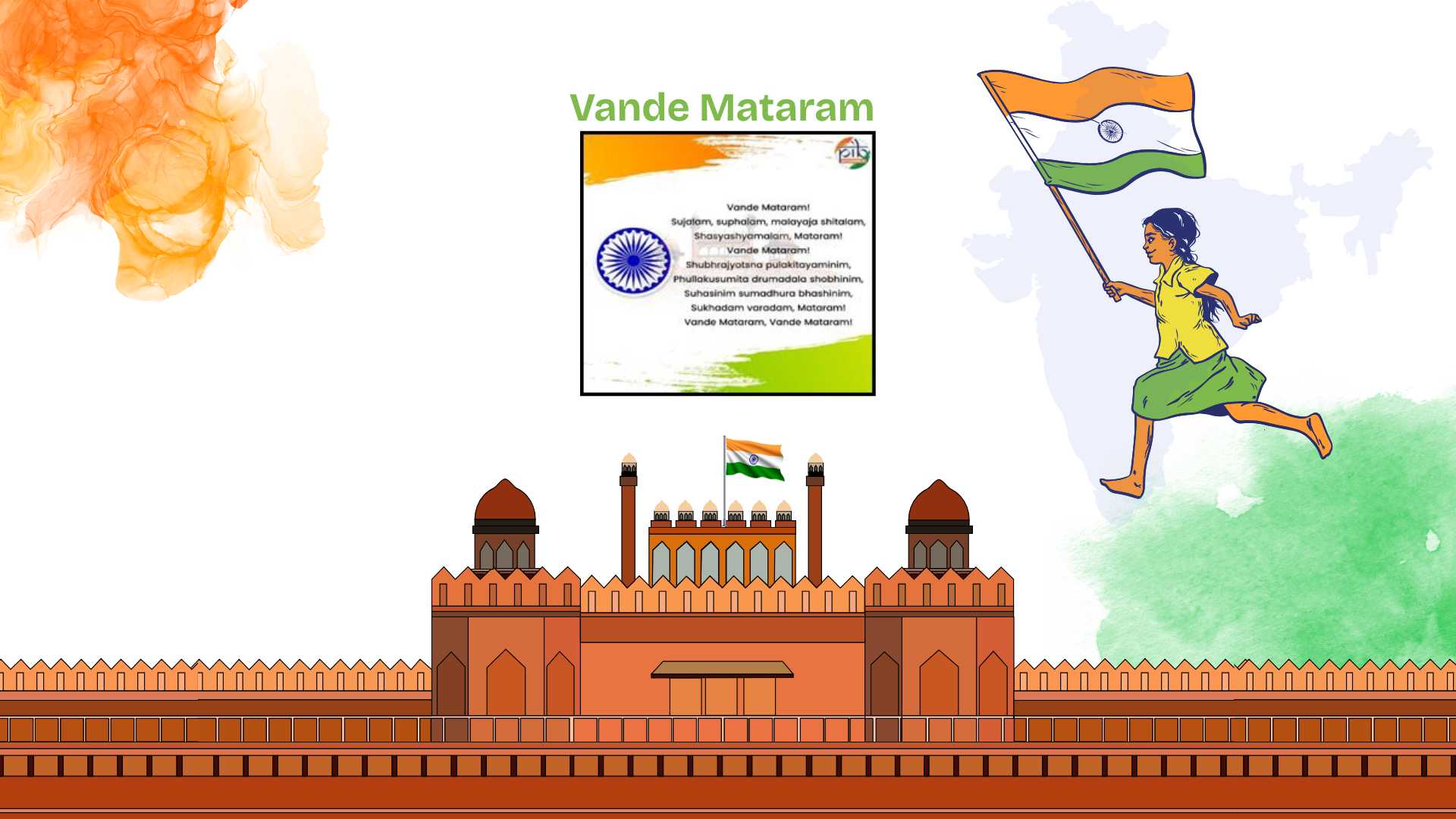
The guidelines reaffirm that Vande Mataram, written by Bankim Chandra Chatterjee, holds formal recognition as the national song. It is to be used during specific State ceremonies, including the arrival and departure of the President and Governors, and in the context of national addresses via television or All India Radio.
The Ministry specifies that when played by a band, the song is to be preceded by a drum roll to alert the audience. This protocol is designed to ensure collective readiness and prevent inadvertent disrespect. The official version of the song is approximately 3 minutes and 10 seconds long, and the audience must stand at attention when it is sung or played.
The guidelines also permit the song to be sung at other significant but non-ceremonial events, especially where Ministers or dignitaries are present. This offers institutions flexibility while preserving the requirement of decorum and respect.
Clear identification of official occasions helps administrations maintain uniformity and avoid misinterpretation. If ignored, inconsistent practices could weaken ceremonial dignity and undermine the symbolic integrity of national events.
3. Mass Singing, Cultural Events, and Public Participation
The MHA encourages mass singing of Vande Mataram during select occasions such as the unfurling of the national flag, cultural functions, and ceremonial programmes other than parades. To facilitate coordinated singing, institutions are advised to arrange choirs of appropriate size and ensure adequate sound systems for synchronisation.
The guidelines also suggest providing printed copies of the lyrics to enable public participation. This aligns with an inclusive approach to national events, where citizens engage directly in symbolic expressions of unity.
Schools are specifically advised to begin the day with community singing of the national song. The Ministry emphasises that school authorities should promote respect for the national flag, national anthem, and national song through structured programming.
Mass participation in national symbols fosters civic cohesion and strengthens cultural continuity. Without structured dissemination, disparities in familiarity and practice could reduce participation and weaken collective identity in civic spaces.
4. Protocol Deviations and Specific Exemptions
A notable clarification is that standing during the national song is not required when it plays within a newsreel or documentary. The MHA notes that standing in a cinema setting would interrupt the film’s exhibition and may create confusion rather than add dignity.
This reflects a pragmatic approach that balances respect with situational practicality. It also helps pre-empt unnecessary public disputes or enforcement challenges in controlled environments like theatres.
At the same time, the Ministry reiterates that respect must always be maintained in all contexts where the song is played in full and in appropriate ceremonial formats.
Exemptions ensure that protocol remains realistic and implementable. Ignoring contextual flexibility may lead to social friction, legal ambiguity, and avoidable controversy.
5. Governance Significance and Administrative Implications
These guidelines contribute to the broader discipline concerning national symbols, which is central to the functioning of a diverse federal polity. By codifying practices, the MHA aids compliance by schools, cultural bodies, and State governments, particularly where differing traditions or local interpretations exist.
The directives also reduce ambiguities in public events, ensuring smooth coordination between security personnel, protocol officers, and event organisers. They further reinforce the symbolic link between institutions and constitutional values.
"Symbols have the power to unite people, to give people pride, to make them stand tall." — A.P.J. Abdul Kalam
Ensuring clarity on national symbols strengthens procedural governance and prevents contestation. Without such clarity, administrative inconsistencies could escalate into political or social disputes.
Conclusion
The updated MHA guidelines on Vande Mataram seek to harmonise ceremonial practice, maintain decorum, and promote civic participation, particularly in schools and public events. By providing clear procedural norms, the government aims to ensure consistency across institutions while enabling respectful and meaningful engagement with national symbols. Over the long term, such clarity supports cooperative federalism, cultural unity, and disciplined public administration.