
Introduction
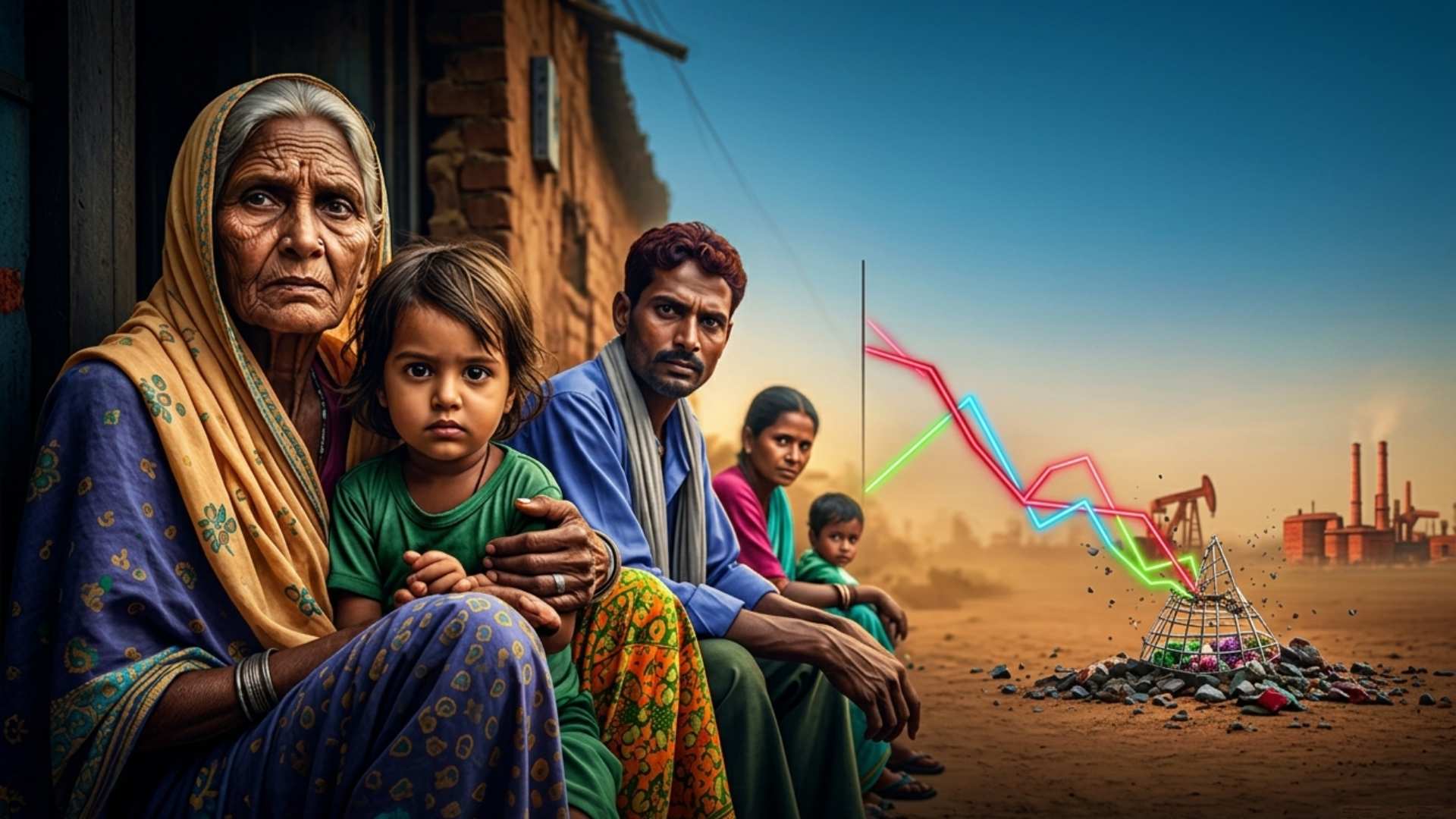
The ongoing military escalation in West Asia has emerged as a significant macroeconomic and human development shock for South Asia. According to the UNDP's 2025 report, the conflict could push up to 2.5 million Indians into poverty and cost the Asia-Pacific region up to $299 billion, exposing India's deep structural dependencies on Gulf energy, labour, and trade linkages.
"Through higher fuel, freight, and input costs, the shock is diminishing household purchasing power, raising food insecurity, straining public budgets, and weakening livelihoods." — UNDP, Military Escalation in the Middle East: Human Development Impacts Across Asia and the Pacific
| Indicator | Value |
|---|---|
| India's poverty rate (pre-crisis) | 23.9% |
| India's poverty rate (post-crisis) | 24.2% |
| People pushed into poverty in India | ~24.6 lakh |
| Total in poverty in India (pre-crisis) | 35.15 crore |
| Total in poverty in India (post-crisis) | 35.40 crore |
| HDI progress loss (India) | 0.03–0.12 years |
| Global population at poverty risk | 8.8 million |
| Asia-Pacific economic cost | Up to $299 billion |
Background & Context
West Asia (Middle East) is central to India's energy security, labour diaspora, and trade architecture. The region accounts for over 40% of India's crude oil imports, 90% of LPG imports, and 45% of fertiliser imports. With 9.37 million Indians residing in GCC countries (MEA, October 2024), remittances from this corridor constitute 38–40% of India's total inward remittances — making any Gulf disruption a direct threat to household incomes across multiple Indian states.
The UNDP report simulates conflict scenarios (including a 28-day escalation with 8-month economic adjustment) to assess downstream impacts on poverty, HDI, food security, employment, and trade.
Key Impact Areas
1. Energy & Inflation
India imports over 90% of its oil needs. Disruptions around the Strait of Hormuz drive up freight costs, war-risk insurance premiums, and crude prices — feeding directly into domestic fuel and input price inflation. Rising LNG prices have already pushed India toward increased coal-fired power generation, raising environmental and energy transition concerns.
2. Food & Agricultural Security
West Asia supplies over 45% of India's fertiliser imports, while 85% of domestic urea production depends on regasified LNG. The report flags the Kharif season (June onset) as particularly vulnerable — urea stocks of 6.114 million tonnes offer a short-term buffer, but prolonged disruption could compromise planting-season supply chains. This links directly to food inflation and agrarian distress.
3. Trade Disruptions
West Asian markets account for 14% of India's exports and ~21% of imports. Key export sectors at risk:
| Sector | Exposure |
|---|---|
| Basmati rice | High |
| Gems & Jewellery | High |
| Tea & Apparel | Moderate–High |
| Non-oil exports to West Asia | ~$48 billion |
Route diversions, freight surcharges, and delayed shipments compound the burden on export-oriented MSMEs.
4. Employment & Informal Labour
With ~90% of India's workforce in informal employment, MSME-intensive sectors — hospitality, food processing, construction materials, steel manufacturing, gems and diamonds — face a multi-sided squeeze: rising input costs, disrupted supply chains, and falling export demand. This translates into reduced working hours, job losses, and business closures, with migrant workers being the most vulnerable segment.
5. Remittances & Household Incomes
India's GCC diaspora is its largest remittance source. Reduced Gulf economic activity directly weakens household incomes in remittance-dependent states like Kerala, UP, Bihar, Rajasthan, and Tamil Nadu. This compounds food security pressures for low-income households dependent on transfer incomes.
6. Healthcare & Pharmaceuticals
Raw material costs for medical devices are projected to rise by approximately 50% due to Strait of Hormuz disruptions. Wholesale medicine prices have already increased by 10–15%, signalling emerging healthcare affordability risks for the population.
India's Structural Vulnerabilities: A Summary
| Dependency Area | India's Exposure |
|---|---|
| Crude oil imports from West Asia | >40% |
| LPG imports from West Asia | ~90% |
| Fertiliser imports from West Asia | >45% |
| Domestic urea dependent on imported LNG | ~85% |
| Indians in GCC countries | 9.37 million |
| Share of remittances from GCC | 38–40% |
| Exports to West Asia | ~14% of total |
| Imports from West Asia | ~21% of total |
Implications for India
Economic: Imported inflation, current account pressure, rupee depreciation risk, and fiscal strain from potential fuel subsidy obligations.
Social: Poverty spike concentrated among informal workers, MSME employees, and remittance-dependent households — reversing recent poverty reduction gains.
Strategic: The conflict exposes India's energy import concentration and the absence of adequate diversification in both supplier geography and energy mix.
Developmental: HDI regression of 0.03–0.12 years signals that external shocks can erode years of human development investment, particularly in health and income dimensions.
Policy Imperatives
- Energy diversification: Accelerate renewable energy transition and expand crude import sources (Russia, Americas, Africa).
- Strategic reserves: Strengthen the Strategic Petroleum Reserve (SPR) capacity.
- Fertiliser resilience: Invest in domestic urea production and green ammonia as a long-term substitute.
- Labour diplomacy: Institutional frameworks to protect migrant workers and stabilise remittance flows during geopolitical disruptions.
- MSME credit buffers: Emergency credit access for MSMEs in conflict-exposed sectors.
- Adaptive social protection: Expand PM-KISAN, PMGKAY-type buffers that can absorb external price shocks on food and fuel.
Conclusion
The West Asia conflict is not merely a distant geopolitical event — it is a live stress test of India's developmental resilience. India's deep integration with the Gulf economy through energy imports, diaspora labour, remittances, and trade means external military escalations translate swiftly into domestic poverty, food insecurity, and employment shocks. The UNDP's assessment reinforces the urgency of structural reforms in energy security, agricultural input supply chains, and social protection architecture. Building long-term resilience demands diversified partnerships, stronger regional value chains, and proactive diplomacy — turning a crisis moment into a strategic inflection point for sustainable development.
.png)