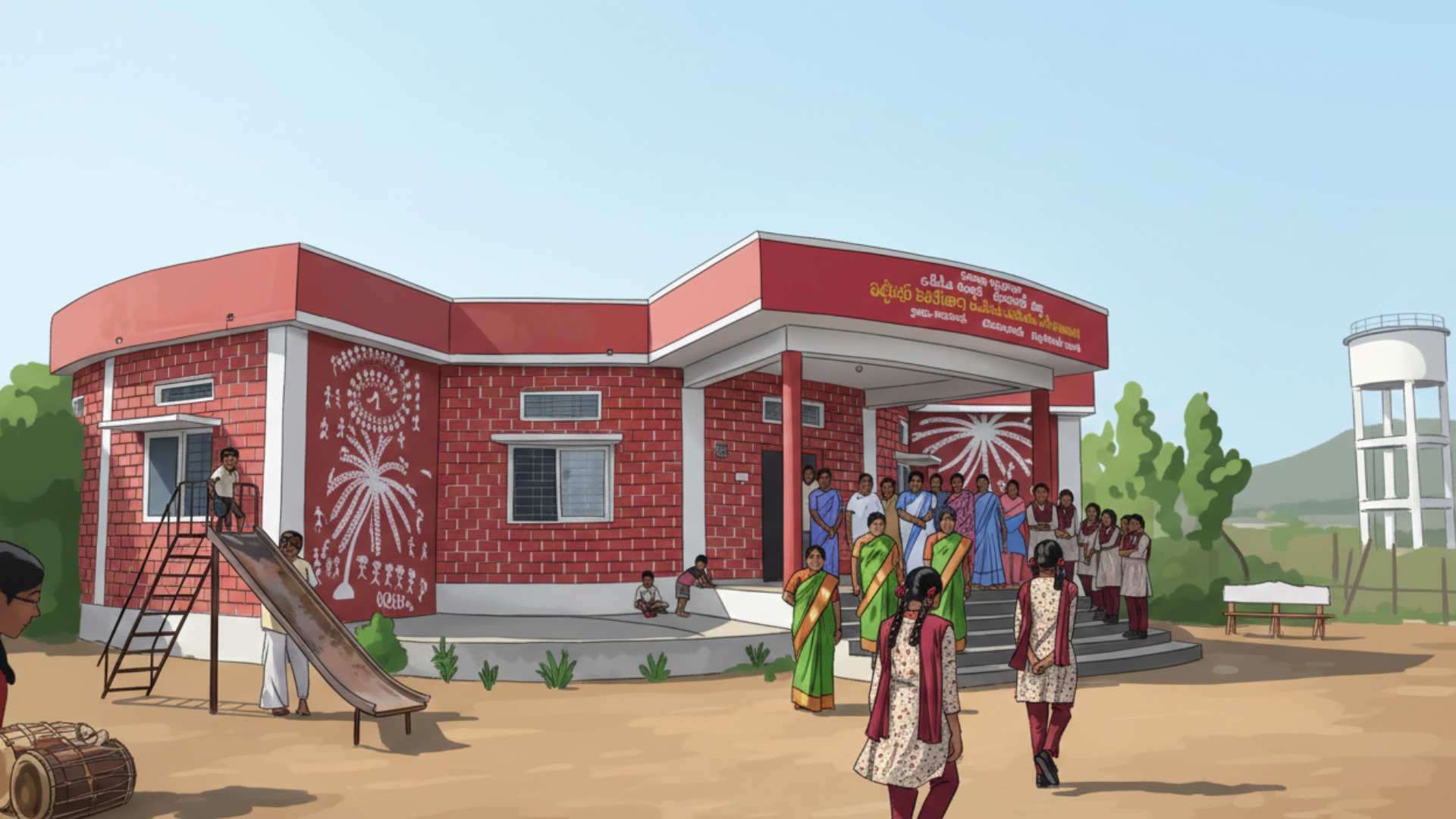
1. Context and Background
Limbuguda, a remote hamlet in Kumram Bheem Asifabad district of Telangana, home to the Kolam tribe, exemplifies the intersection of technology and tribal development. Classified as a Particularly Vulnerable Tribal Group (PVTG), Kolams face geographical isolation, low literacy, poor healthcare, and limited livelihood opportunities. The population of PVTGs in the district is estimated at 16,092, with high school dropout rates and negligible access to government jobs.
In July 2025, the Multipurpose Centre (MPC) was established under the Pradhan Mantri Janjati Adivasi Nyaya Maha Abhiyan (PM-JANMAN) scheme at a cost of ₹60 lakh. The MPC integrates AI-assisted learning tools to enhance educational outcomes, alongside healthcare, nutrition, and livelihood services. This initiative marks a shift from conventional welfare to technology-enabled, holistic tribal development, addressing structural barriers in remote regions.
Technology adoption in PVTG habitations provides a platform for digital inclusion and social empowerment. Neglecting such interventions perpetuates educational deprivation and socio-economic marginalisation.
2. AI-Enabled Education and Digital Inclusion
The MPC employs AI-driven tools such as Assisted Mathematics Learning (AML) and Assisted Language Learning (ALL) for primary education, while secondary education leverages Khan Academy resources for mathematics and physics. These tools aim to bridge the digital divide and improve learning outcomes among PVTG children who have historically lacked access to quality education.
Impacts:
- Students previously unexposed to computers now engage with digital learning tools.
- AI integration promotes self-paced learning, addressing gaps due to teacher shortages or limited educational resources.
- Early exposure enhances prospects for higher education and government employment.
AI-assisted learning, when complemented by teacher facilitation and localised content, can accelerate educational attainment and digital literacy, essential for reducing socio-economic disparities in tribal regions.
3. Holistic Service Delivery and Tribal Empowerment
Beyond education, the MPC integrates healthcare, nutrition, and livelihood support, including an ANM (maternity) centre, an Anganwadi, and community spaces. The MPC also preserves and promotes tribal culture, with murals depicting tribal heroes like Kumram Bheem and Kumram Suru, reinforcing cultural identity alongside skill development.
Key interventions:
- Addressing malnutrition and anemia among women and children.
- Providing a venue for community engagement and awareness programs.
- Facilitating skill development and vocational training opportunities.
An integrated approach ensures that socio-cultural, health, and educational needs are addressed collectively, fostering sustainable tribal empowerment rather than isolated interventions.
4. Infrastructure and Connectivity
The MPC catalyzed the development of Cement Concrete (CC) roads linking Limbuguda and surrounding hamlets, improving physical access to services. However, gaps remain in transportation and digital infrastructure, with irregular bus connectivity and limited high-speed internet, constraining full utilisation of MPC facilities.
Implications:
- Improved roads enhance mobility, access to markets, and emergency healthcare.
- Digital connectivity is crucial for uninterrupted AI-based learning and online skill development.
- Infrastructure limitations, if unaddressed, can reduce the effectiveness of tech-enabled welfare initiatives.
Infrastructure development must accompany digital initiatives to ensure equitable access and maximise the impact of educational and health interventions.
5. Community Participation and Ownership
The success of the MPC relies on community engagement. Local leaders and farmers, such as Athram Jaithu, contributed land for the centre, reflecting local ownership and investment in tribal welfare. Students like Athram Bheem Rao and Sidam Bheem Rao pursuing higher education exemplify the potential of localized interventions to improve human capital.
Observations:
- Community buy-in enhances sustainability and utilisation of facilities.
- Engagement with traditional knowledge and cultural heritage strengthens identity and motivation for education.
- Integration of vocational training with education ensures pathways to financial self-reliance.
Community participation is critical for institutionalising welfare initiatives, ensuring that they reflect local needs and promote long-term development outcomes.
6. Way Forward
For the MPC model to be scalable and effective, the following measures are essential:
- Ensure reliable digital infrastructure, including high-speed internet, to support AI-enabled learning and online resources.
- Expand transport connectivity, enabling easier access to centres from remote habitations.
- Introduce complementary vocational and skill development programs to promote economic self-reliance.
- Integrate off-grid renewable energy solutions, such as solar power, to ensure uninterrupted facility operation.
- Strengthen monitoring and transparent implementation to maintain educational quality and equitable access.
Scaling technology-driven, holistic tribal development initiatives requires coordinated investment in digital, social, and physical infrastructure, combined with skill-building and culturally sensitive programming.
Conclusion
The Limbuguda MPC under PM-JANMAN represents a transformative model for tribal development by combining AI-enabled education, healthcare, nutrition, and cultural preservation in a single integrated framework. While early outcomes show promise, sustained investment in infrastructure, skill development, and community engagement is necessary to ensure that PVTGs can achieve educational advancement, financial self-reliance, and holistic empowerment, serving as a potential template for tribal habitations nationwide.