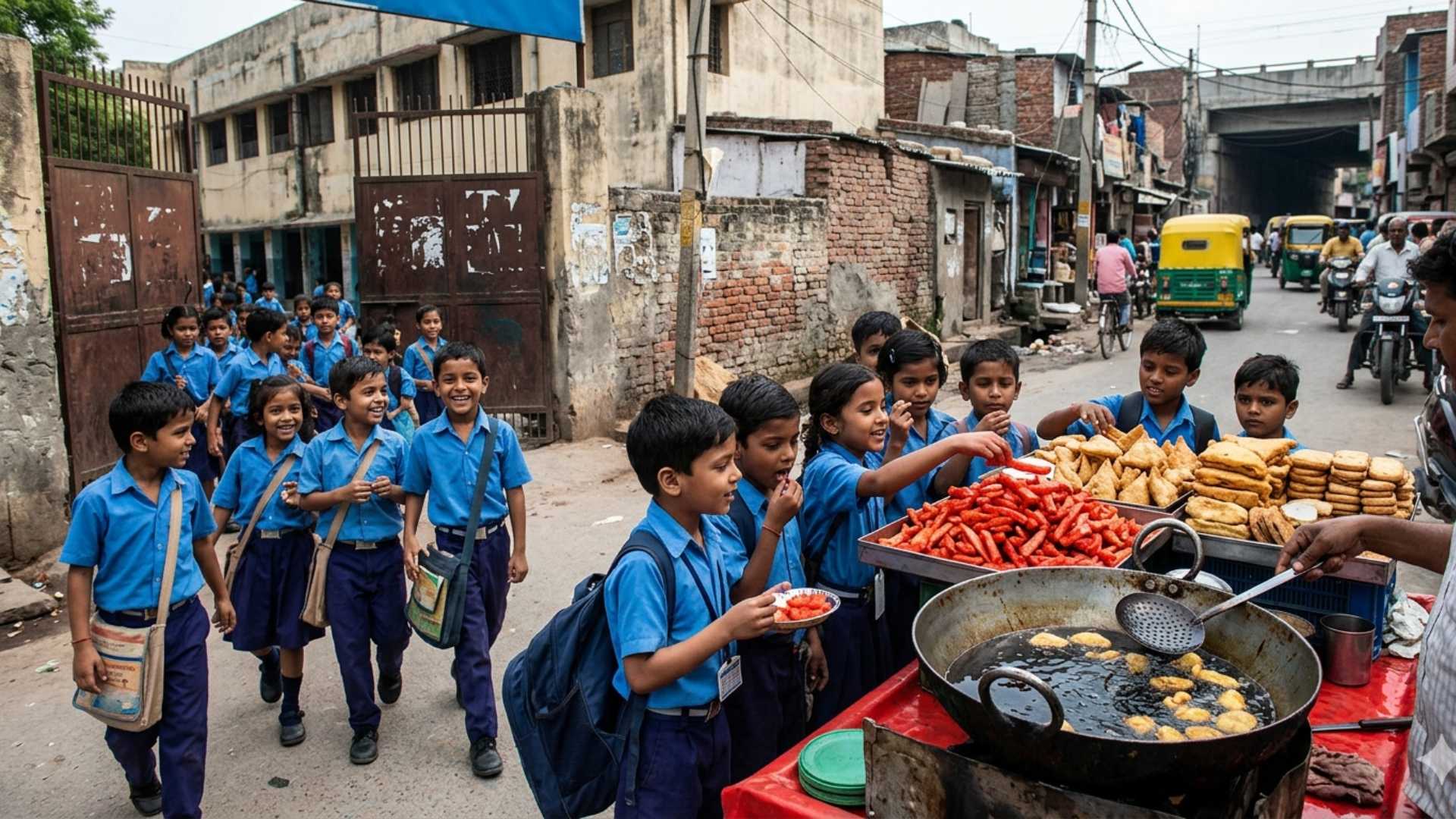
Childhood Obesity & Double Burden of Malnutrition (DBM) in India

Introduction
India is witnessing a nutritional paradox—while undernutrition persists, childhood obesity is rising rapidly, with UNICEF estimating 27 million obese children (5–19 yrs) by 2030. NFHS-5 shows a 127% rise in overweight children over 15 years.
“Children today have too much of the wrong food and too little of the right nutrition.” — Public Health Experts
Key Data Snapshot
| Indicator | Data |
|---|---|
| Childhood obesity growth | 127% increase (NFHS-5) |
| Ultra-processed food market | 37.9B (2019) |
| Projected obese children (India) | 27 million by 2030 |
| Delhi status | Among highest childhood obesity prevalence |
| Global trend | Obesity > underweight (UNICEF 2025) |
Background & Context
-
India faces Double Burden of Malnutrition (DBM):
- Coexistence of undernutrition + obesity + micronutrient deficiency
-
Rapid urbanisation and lifestyle changes have altered:
- Diet patterns (processed foods)
- Physical activity (sedentary lifestyle)
-
Case evidence (urban poor child diet):
- High calorie intake but low nutritional value
- Reliance on cheap, processed, adulterated food
Key Concepts
1. Double Burden of Malnutrition (DBM)
-
Simultaneous presence of:
- Undernutrition
- Overnutrition (obesity)
- Micronutrient deficiency
2. Hidden Hunger
- Adequate calories but lack of essential nutrients (iron, protein, calcium).
Causes of Rising Childhood Obesity
1. Dietary Transition
- Shift toward ultra-processed foods (high sugar, salt, fats).
- Increased affordability and aggressive marketing.
2. Urban Lifestyle Factors
-
Reduced physical activity due to:
- Lack of playgrounds
- Screen addiction
- Academic pressure
3. Socio-economic Factors
-
Urban poor:
- Cheap, calorie-dense food
- Limited access to fresh produce
-
Affluent groups:
- High consumption of fast food
4. Environmental Factors
- Pollution limiting outdoor activity.
- Possible metabolic effects of pollution.
5. Biological Factors
- Genetic predisposition.
- Maternal nutrition influencing child health.
Health Implications
| Condition | Impact |
|---|---|
| Obesity | Early onset of lifestyle diseases |
| Diabetes | Increasing among children |
| Cardiovascular diseases | Long-term risk |
| Metabolic syndrome | Multi-organ complications |
| Psychological issues | Low self-esteem, stigma |
Case Insight: Delhi as a Hotspot
-
Higher obesity rates due to:
- Urbanisation
- Pollution
- Processed food access
-
AIIMS study:
- Private school children obesity >5x government schools
-
DBM now affects all socio-economic groups.
Policy Measures & Initiatives
| Initiative | Objective |
|---|---|
| POSHAN Abhiyan 2.0 | Nutrition improvement |
| Fit India Movement | Promote physical activity |
| Eat Right India | Healthy dietary practices |
| School Health Programs | Awareness & screening |
| CBSE Playground Norms | Ensure physical activity |
Challenges
- Weak implementation and monitoring of schemes.
- Lack of awareness among parents and schools.
- Rising cost of nutritious food.
- Digital divide and lifestyle changes.
- Limited regulation of junk food marketing.
Emerging Interventions
-
Medical:
- Bariatric surgery (extreme cases)
- GLP-1 drugs (regulated use)
-
Preventive Focus:
- Early childhood nutrition
- Lifestyle modification
- Behavioural change
Analytical Insight
-
India is moving from:
- Food scarcity → Nutrition imbalance crisis
-
Indicates transition in public health priorities:
- From calorie sufficiency → nutritional quality & lifestyle
Conclusion
Childhood obesity reflects a deeper structural issue in India’s nutrition ecosystem—poor diet quality, lifestyle shifts, and policy gaps. Addressing DBM requires a multi-sectoral approach combining health, education, urban planning, and food regulation. The focus must shift from mere calorie provision to holistic nutritional security, ensuring India’s demographic dividend remains healthy and productive.
Attribution
Original content sources and authors


Syllabus classification
How this article maps to GS papers
Main syllabus
GS2HealthcareQuick Q&A
What is the Double Burden of Malnutrition (DBM), and how is it reflected in urban India?
The case of children like Laxman illustrates this phenomenon clearly. While he meets or even exceeds daily caloric requirements, his diet—dominated by fried snacks, sugary beverages, and ultra-processed foods—lacks nutritional balance. Key characteristics of DBM include:
- High intake of refined carbohydrates, sugar, and unhealthy fats
- Low consumption of fruits, vegetables, and proteins
- Early onset of central obesity without visible signs of undernutrition
This shift reflects broader structural changes such as urbanisation, lifestyle transitions, and food system transformations. Implications: DBM increases the risk of non-communicable diseases (NCDs) like diabetes and cardiovascular disorders at an early age. It also complicates public health responses, as policies must simultaneously address both ends of the malnutrition spectrum, making DBM a critical challenge for India's health governance.
Why is childhood obesity emerging as a significant public health concern in cities like Delhi?
Dietary transitions are equally critical. Easy access to ultra-processed foods, fast food chains, and inexpensive street food has significantly altered consumption patterns. These foods are typically high in sugar, salt, and unhealthy fats, making them both addictive and widely consumed across income groups. Key drivers include:
- Changing family structures and working parents leading to reliance on convenience foods
- Aggressive marketing and affordability of processed foods
- Lack of robust school-based nutrition and physical education programmes
The consequences are far-reaching. Childhood obesity is linked to early onset of non-communicable diseases such as hypertension, diabetes, and metabolic syndrome. Moreover, studies indicate that obesity is appearing at younger ages and cutting across socio-economic strata. Delhi, therefore, represents a microcosm of a broader epidemiological transition in India, where economic growth and lifestyle changes are inadvertently fueling a health crisis.
How do socio-economic conditions influence dietary patterns and nutritional outcomes among urban poor children?
Time poverty is another critical factor. With both parents working long hours, especially in low-income households, there is little time for preparing balanced home-cooked meals. Consequently, families depend on street food, leftovers, or ultra-processed items. Key impacts include:
- Irregular meal patterns and lack of dietary diversity
- Consumption of adulterated or low-quality food
- Inadequate intake of proteins, vitamins, and minerals
This leads to a paradoxical situation where children may appear healthy or even overweight but suffer from hidden hunger (micronutrient deficiencies). The long-term outcome is increased vulnerability to both infectious diseases and chronic conditions. Thus, socio-economic deprivation not only limits food quantity but also severely compromises food quality, reinforcing the cycle of malnutrition.
Critically analyse the role of urbanisation and lifestyle changes in driving the childhood obesity epidemic in India.
Simultaneously, dietary patterns have undergone a dramatic shift. Traditional diets rich in grains, pulses, and vegetables are being replaced by ultra-processed foods. The Economic Survey highlights a sharp rise in consumption of such foods, driven by affordability, convenience, and aggressive marketing. Positive aspects:
- Greater food availability and variety
- Improved income levels in some sections
- Increased intake of unhealthy fats, sugar, and salt
- Decline in physical activity due to urban design and pollution
However, it would be simplistic to blame urbanisation alone. Governance gaps—such as weak regulation of food quality, inadequate urban planning, and insufficient school health programmes—also contribute significantly. Thus, while urbanisation is a key driver, its adverse health impacts are mediated by policy failures and socio-economic inequalities. A balanced approach focusing on sustainable urban planning and public health interventions is essential.
Illustrate with examples how the triple burden of malnutrition is emerging in India.
A striking example is the contrast between government and private school children. A 2025 AIIMS study found that obesity rates in private school students are over five times higher than in government schools, indicating the role of affluence and lifestyle. At the same time, children from low-income families may also be overweight due to reliance on cheap, unhealthy foods. Key dimensions of the triple burden include:
- Undernutrition: Stunting and wasting in poorer regions
- Micronutrient deficiency: Iron, calcium, and vitamin deficiencies across populations
- Overnutrition: Rising obesity in both urban rich and poor
This coexistence poses a unique policy challenge. Traditional nutrition programmes focused on calorie supplementation are insufficient. Instead, there is a need for holistic interventions that address dietary diversity, food quality, and lifestyle factors. The triple burden underscores the complexity of India's public health landscape and the need for integrated, multi-sectoral responses.
Using the case of Laxman, discuss the long-term health and policy implications of childhood obesity.
From a health perspective, childhood obesity significantly raises the risk of non-communicable diseases (NCDs) such as diabetes, hypertension, cardiovascular diseases, and even certain cancers. Early onset of these conditions can reduce life expectancy and increase healthcare costs. Additionally, genetic predisposition and early-life factors, such as maternal nutrition, further compound these risks. Key concerns include:
- Intergenerational transmission of obesity
- Increased burden on healthcare systems
- Reduced productivity in the long term
From a policy standpoint, Laxman’s case underscores gaps in awareness, regulation, and service delivery. There is limited monitoring of children’s nutritional status, inadequate school-based interventions, and weak regulation of food quality. Programmes like POSHAN Abhiyan and Fit India Movement need better implementation and evaluation. Way forward: Policies must focus on preventive care, including nutrition education, improved access to healthy foods, and promotion of physical activity. Addressing childhood obesity requires coordinated action across health, education, and urban planning sectors.
Practice questions
1 question for mains preparation