Introduction
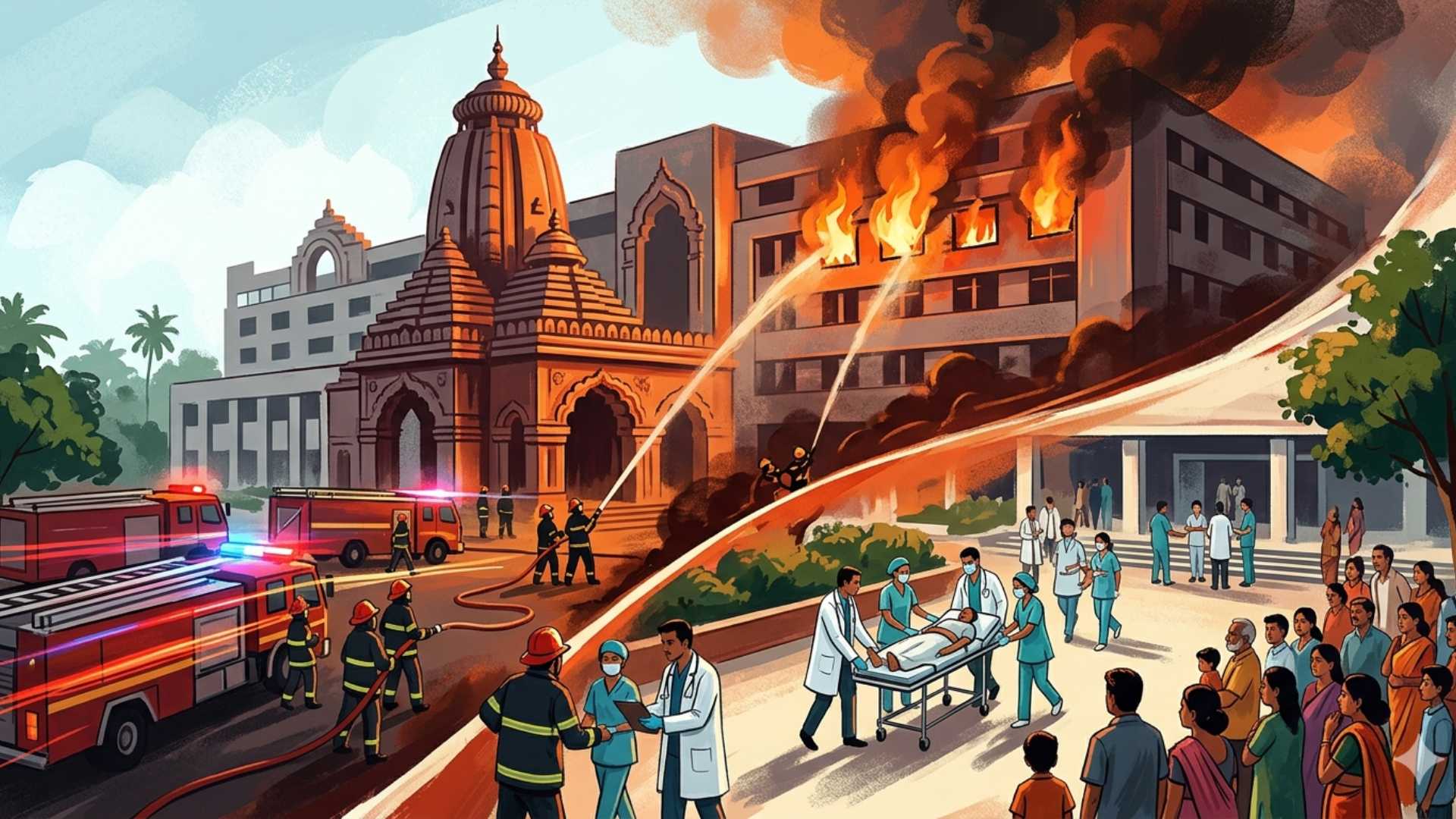
- Hospital fires remain a recurring public safety crisis in India, with multiple fatal incidents reported across States.
- NCRB data and media reports indicate dozens of major hospital fires in the past decade, many in ICUs where vulnerability is highest.
- Globally, WHO emphasises that safe health facilities are integral to universal health coverage (UHC).
- The recent Cuttack ICU fire (2026), causing 12 deaths, highlights persistent gaps despite policy measures and funding allocations.
BACKGROUND AND CONTEXT
- Repeated incidents: Bhubaneswar (2016), Maharashtra (2021), Jhansi (2024), Rajasthan (2025), Cuttack (2026).
- Post-2016 reforms mandated fire safety audits, yet compliance remains weak.
- Odisha allocated ₹320 crore for fire safety upgrades, indicating resource availability but poor outcomes.
INTRINSIC RISKS IN ICU ENVIRONMENTS
Oxygen-rich atmosphere
-
High oxygen concentration accelerates combustion, turning minor sparks into major fires. High electrical load
-
Multiple life-support devices (ventilators, monitors) increase circuit stress. Patient vulnerability
-
Sedated and immobile patients make evacuation difficult. Complex equipment
-
Advanced electronics introduce new types of electrical hazards.
KEY TECHNICAL CONCEPTS
Harmonic Currents
- Generated by modern medical equipment (e.g., ventilators with variable frequency drives).
- Cause overheating and insulation damage.
- Not detected by conventional safety devices like circuit breakers.
Electrical Load Mismatch
- Occurs when wiring systems are not upgraded to match increased equipment load.
- Identified as a leading cause of electrical fires in India.
CAUSES OF ICU FIRES: A SYNTHESIS
| Category | Specific Issues |
|---|---|
| Electrical faults | Short circuits, exposed wiring, poor earthing |
| Infrastructure gaps | Outdated wiring, lack of load assessment |
| Human factors | Poor training, delayed response |
| Safety equipment failure | Non-functional hydrants, lack of CO₂ extinguishers |
| Governance lapses | Weak enforcement of audits and norms |
GOVERNANCE AND IMPLEMENTATION FAILURES
Compliance vs. Accountability
-
Fire audits often reduced to paperwork rather than real safety checks. Delayed emergency response
-
In Cuttack, firefighting personnel were not alerted in time. Skill deficit
-
Staff unable to operate fire hydrants or use appropriate extinguishing methods. Regulatory gaps
-
Lack of periodic re-evaluation when new equipment is added.
CASE STUDY: SCB MEDICAL COLLEGE, CUTTACK (2026)
-
Fire likely caused by short circuit or ventilator malfunction.
-
12 out of 23 ICU patients died.
-
Key failures:
- Delay in alerting fire unit
- Inability to operate hydrants
- Inappropriate fire response methods for electrical fires
IMPLICATIONS
Public Health
-
Undermines trust in healthcare systems.
-
Disproportionate impact on critical patients. Governance
-
Reflects weak enforcement and regulatory oversight. Economic
-
Loss of expensive medical infrastructure and human capital. Ethical
-
Raises questions of negligence and duty of care.
BEST PRACTICES AND SAFETY MEASURES
| Area | Recommended Measures |
|---|---|
| Electrical safety | Periodic load audits, upgrade wiring systems |
| Fire response | Use of CO₂ extinguishers for electrical fires |
| Training | Regular staff drills for ICU evacuation |
| Infrastructure | Installation of automated fire detection systems |
| Regulation | Third-party safety audits with strict penalties |
EXPERT INSIGHT
- WHO: “Patient safety is a fundamental principle of healthcare and must include safe infrastructure.”
- National Building Code (NBC) of India mandates strict fire safety norms for hospitals, but enforcement remains inconsistent.
WAY FORWARD
Shift to criminal accountability
-
Fix responsibility for negligence leading to deaths. Real-time monitoring
-
Use IoT-based fire and electrical safety systems. Capacity building
-
Mandatory certification and training for hospital staff. Infrastructure modernisation
-
Upgrade legacy hospitals before adding advanced equipment. Independent audits
-
Third-party inspections with public disclosure.
CONCLUSION
- ICU fires in India are not isolated accidents but systemic failures of governance, infrastructure, and accountability.
- Ensuring hospital safety requires a shift from procedural compliance to outcome-based regulation, integrating technology, training, and strict enforcement.
- Protecting vulnerable patients is not merely a technical issue but a test of the State’s commitment to human dignity and right to life under Article 21.
UPSC MAINS QUESTION (15 MARKS, 250 WORDS)
- “Recurring hospital ICU fires in India reflect systemic governance and infrastructure failures rather than isolated accidents.” Critically examine. Suggest measures to enhance fire safety in healthcare institutions.