Introduction
Rapid urbanisation has increased the demand for accessible and affordable healthcare in cities. Primary healthcare systems such as Urban Primary Health Centres (UPHCs) are crucial for addressing the health needs of growing urban populations.
Key Statistics on Urbanisation and Healthcare Access
| Indicator | Global | India |
|---|---|---|
| Urban population share | ~56% of world population lives in urban areas (WHO) | ~35% of population lives in urban areas |
| Projected urban population (2050) | ~68% of global population will live in cities | Urban population expected to exceed 50% by 2050 |
| Urban poor population | Nearly 1 billion people live in urban slums globally (UN-Habitat) | ~65 million people live in urban slums |
| Role of primary healthcare | Foundation of Universal Health Coverage (UHC) | Delivered through Urban Primary Health Centres (UPHCs) under NUHM |
Background: Urban Healthcare in India
Urban healthcare systems must address:
- High population density
- Informal settlements and slums
- Health inequalities between rich and poor
- Rising burden of non-communicable diseases
To address these challenges, the Government of India launched the National Urban Health Mission (NUHM) in 2013 under the National Health Mission.
Key objective: Improve access to primary healthcare for the urban poor.
Urban Primary Health Centres (UPHCs)
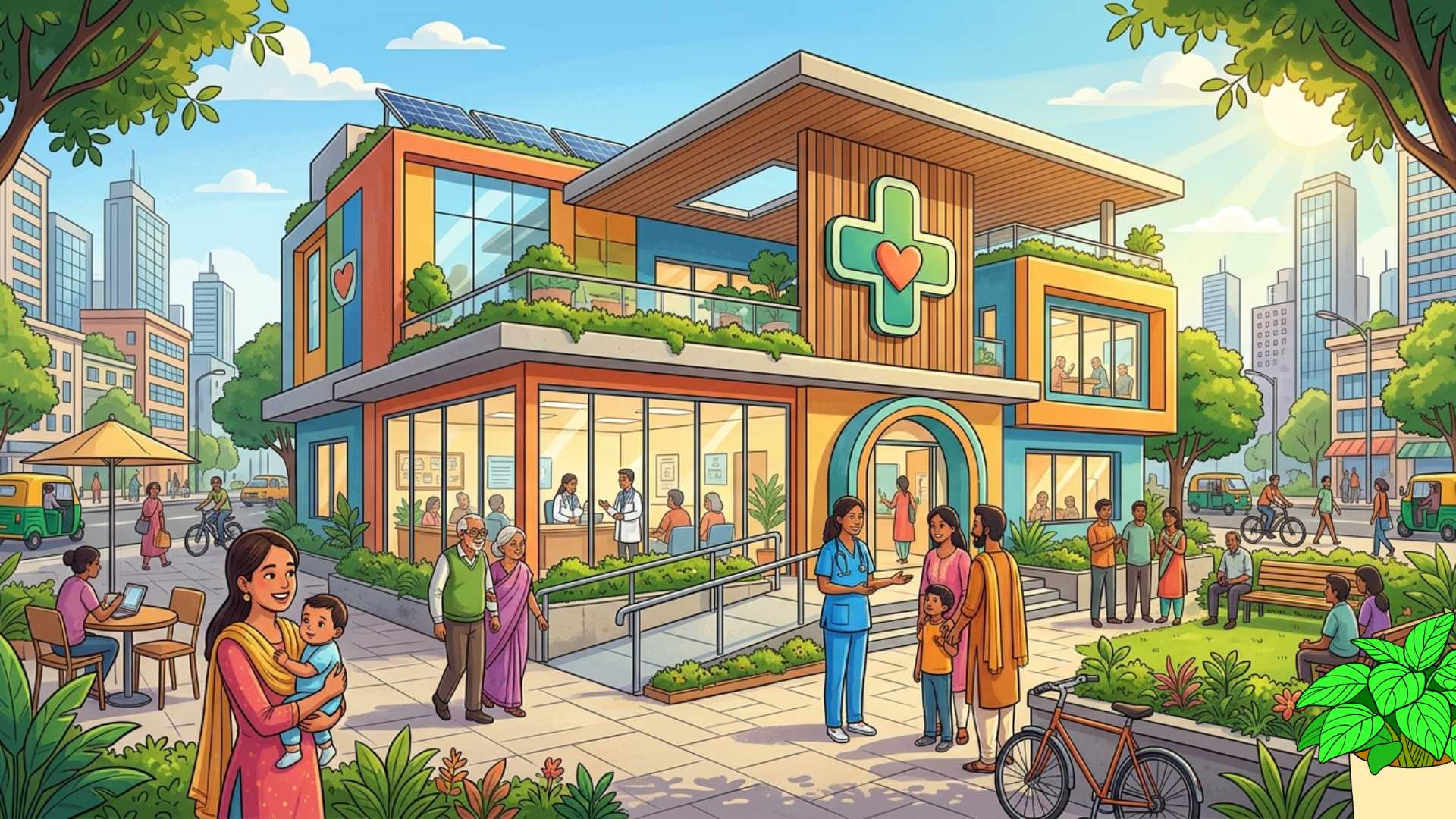
UPHCs are neighbourhood healthcare facilities designed to provide basic preventive and curative services in urban areas.
Key Features of UPHCs
| Feature | Description |
|---|---|
| Target population | Urban poor, slum dwellers |
| Service level | Primary healthcare |
| Coverage | Urban settlements and municipal areas |
| Services | OPD care, maternal health, immunisation, disease screening |
| Staffing | Medical officer, nurses, ANMs, lab technician, pharmacist |
UPHCs function as the first tier of urban public healthcare.
Example: UPHC Network in Telangana
In cities such as Hyderabad, UPHCs play a crucial role in providing affordable healthcare.
| Indicator | Data |
|---|---|
| Total UPHCs in Telangana | ~249 |
| UPHCs in Hyderabad district | ~85 |
| Target population | Urban poor and slum residents |
These centres provide free consultations, medicines, and vaccination services.
Role of Basti Dawakhanas
Telangana introduced Basti Dawakhanas, smaller neighbourhood clinics that complement UPHCs.
| Feature | UPHC | Basti Dawakhana |
|---|---|---|
| Size | Larger facility | Smaller clinic |
| Services | Comprehensive primary care | Basic outpatient services |
| Staffing | Medical officers and full team | Contract doctors |
| Function | Referral and supervision | First-level consultation |
Together they create a two-tier neighbourhood healthcare system.
Key Health Services Provided
UPHCs provide several essential healthcare services:
- Maternal and child healthcare (antenatal care, immunisation)
- Treatment for common illnesses
- Screening for non-communicable diseases (diabetes, hypertension)
- Family planning services
- Public health outreach programmes
These services are implemented with the support of community health workers such as:
- Accredited Social Health Activist (ASHA)
- Auxiliary Nurse Midwives (ANMs)
Importance of UPHCs in Urban Health Governance
1. Accessibility
UPHCs bring healthcare closer to neighbourhoods, reducing travel time and costs for urban poor populations.
2. Preventive Healthcare
Regular screenings and immunisation programmes help reduce disease burden.
3. Financial Protection
Free medicines and consultations reduce out-of-pocket healthcare expenditure, which accounts for a large share of health spending in India.
4. Community Outreach
ASHAs and health volunteers connect the healthcare system with local communities.
Challenges in the Urban Primary Healthcare System
| Challenge | Explanation |
|---|---|
| Ageing infrastructure | Many centres operate in old buildings |
| Limited staff | Shortage of doctors and health workers |
| Growing patient load | Urban population growth increases demand |
| Limited working hours | Some centres operate only part-time |
| Pressure on ASHAs | Community health workers face heavy workloads |
Delayed salary payments and insufficient support can also affect the motivation of frontline workers.
Case Study: Community Dependence on Public Clinics
For many urban residents, especially low-income families:
- Private hospitals are expensive
- UPHCs provide free vaccines, medicines, and maternal care
- These facilities serve as the first point of entry into the healthcare system
Thus, UPHCs act as the foundation of urban primary healthcare delivery.
Policy Measures to Strengthen Urban Healthcare
Infrastructure Upgradation
Modernise facilities and expand clinic networks in growing cities.
Expand UPHC Coverage
Increase the number of centres proportional to urban population growth.
Strengthen Human Resources
Provide adequate training, salaries, and support to ASHAs and healthcare staff.
Digital Health Integration
Use telemedicine and digital health records for improved service delivery.
Integrated Urban Health Planning
Better coordination between municipal authorities and health departments.
Expert Insight
Public health scholar Julio Frenk emphasised:
“Primary healthcare is the cornerstone of an equitable and efficient health system.”
Conclusion
Urban Primary Health Centres play a crucial role in strengthening accessible and equitable healthcare in rapidly growing cities. By serving as the first point of contact for millions of urban residents, they reduce healthcare inequalities and improve preventive health outcomes. However, expanding infrastructure, improving workforce support, and strengthening community outreach are essential to ensure that urban primary healthcare systems keep pace with India’s rapid urbanisation.