1. Rising Cancer Burden and the Need for India-Specific Data
India faces a significant and growing cancer burden. According to the Indian Council of Medical Research’s National Cancer Registry Programme, approximately 1 in 9 Indians may develop cancer, with 2.5 million patients currently living with the disease. The incidence has been rising at 12.8% annually since 2022, reflecting a rapidly escalating public health challenge.
Historically, Indian patients have been underrepresented in global cancer-genome studies. Most international research reflects Western populations, leaving Indian clinicians without critical insights into local genetic variants. This gap hampers early diagnosis, treatment personalization, and drug development tailored to Indian populations.
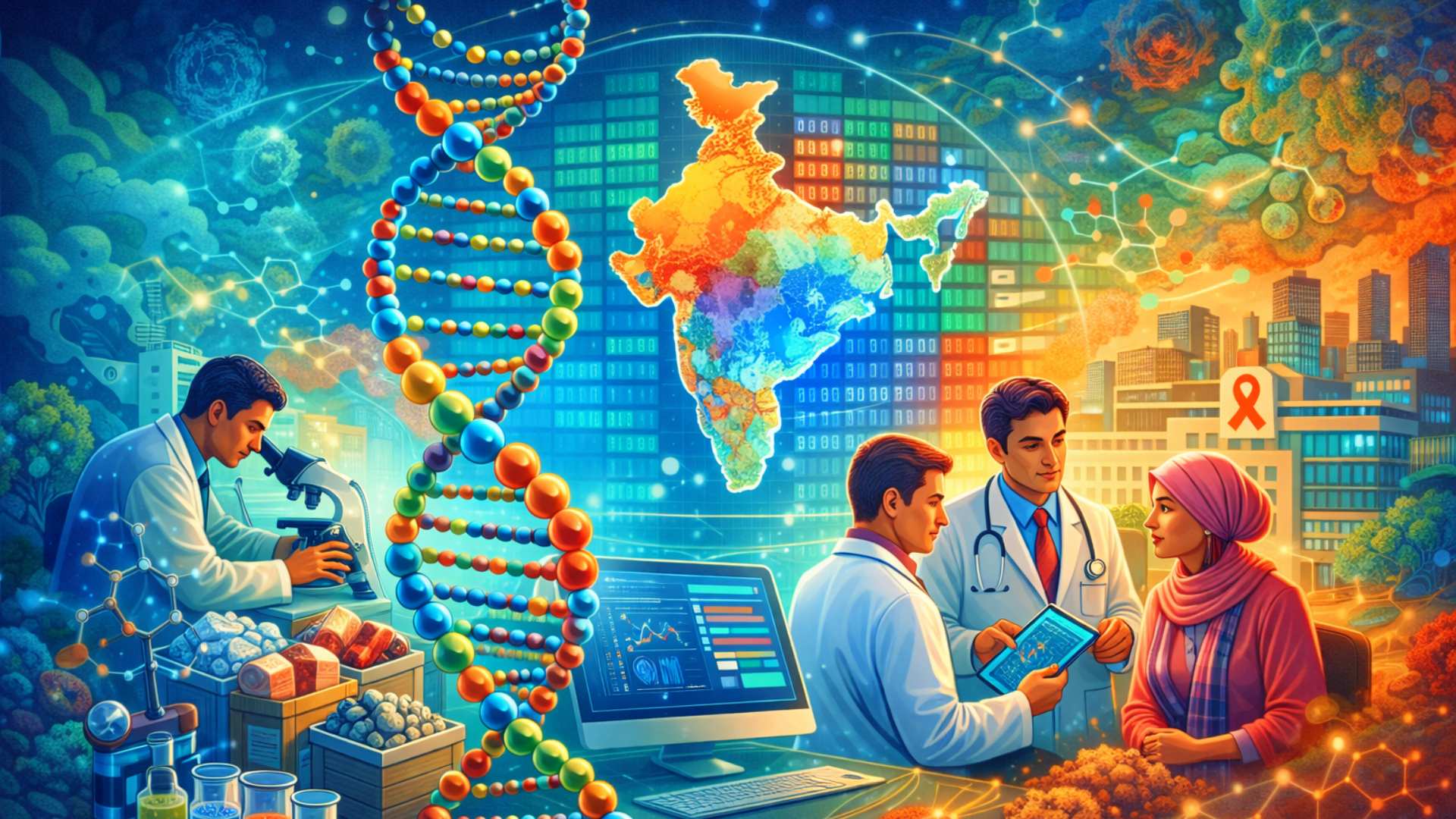
To address this, IIT Madras launched the Bharat Cancer Genome Atlas (BCGA) and the Bharat Cancer Genome Grid (BCG2). These initiatives aim to systematically map India-specific cancer genomes, enhancing understanding of disease patterns, informing precision medicine, and facilitating more effective drug development.
Comprehensive, India-specific genomic data is critical for evidence-based cancer care. Ignoring local genomic variations risks suboptimal treatment outcomes and perpetuates dependency on Western-centric research.
2. Structural Shift in Disease Burden and the Role of Genomics
India is experiencing a structural shift in disease epidemiology. Non-communicable diseases (NCDs) now account for more than 57% of all deaths, with cancer being a major contributor. Genomic medicine, previously considered niche and expensive, is increasingly viable due to technological advancements, higher testing volumes, and the emergence of domestic players.
- Price reductions: Routine genomic tests have fallen by 30–40%.
- Advanced procedures like whole exome sequencing are now more accessible.
Despite these advances, equitable access remains a concern due to concentration of diagnostic facilities in major cities and persistent rural–urban disparities.
Genomic research and technology expansion must be matched with accessibility strategies. Without inclusive distribution, the benefits of precision medicine will remain confined to urban, higher-income populations.
3. Human Resource and Infrastructure Constraints
Effective use of genomic testing relies on trained professionals, including:
- Genetic counsellors
- Molecular pathologists
- Bioinformaticians
Shortages in these critical roles limit the integration of genomic insights into clinical decision-making. Additionally, most advanced diagnostic and treatment facilities are concentrated in tertiary hospitals in large cities, imposing high out-of-pocket costs on patients from smaller towns and rural areas.
- Insurance coverage for genomic testing remains limited, particularly for lower-income groups.
- Patients often travel long distances for diagnosis and treatment.
Workforce and infrastructure constraints restrict the potential of genomic medicine. Without investment in human capital and decentralised facilities, rural and low-income populations will continue to face inequitable access.
4. Policy Initiatives and Financial Measures
The Union Budget 2026–27 aimed to alleviate some of these challenges through:
- ~10% increase in health sector allocation
- Incentives for domestic biopharmaceutical manufacturing
- Customs duty exemption on 17 cancer drugs
These measures can reduce the cost of advanced therapies, which currently range from ₹2 lakh to ₹10 lakh per month, enhancing affordability for urban and high-income patients.
- However, these financial measures alone cannot prevent disease progression or improve early detection.
- Wider insurance coverage, expanded diagnostic availability, and deployment of trained clinicians across non-metro areas are essential for comprehensive impact.
Policy interventions must balance treatment affordability with prevention and early detection. Financial incentives without structural reforms risk limited public health gains.
5. Emphasis on Early Detection and Prevention
Long-term affordability and effectiveness of precision cancer care depend on proactive strategies:
- Wider screening programmes, particularly in rural areas
- Capacity-building for clinicians trained in genomic interpretation
- Sustained investment in research and workforce training
Early diagnosis reduces dependence on costly advanced therapies and enables personalized treatment regimens. Prevention and early detection must be integrated into national cancer control strategies alongside treatment expansion.
"Precision oncology requires not just the right drugs but the right diagnosis at the right time." — National Cancer Grid, India
Focusing on prevention and early detection enhances system efficiency, reduces financial burden, and improves survival outcomes. Neglecting this dimension leaves patients reliant on expensive, late-stage interventions.
6. Strategic Implications and Way Forward
The launch of BCGA and BCG2 positions India to develop a robust, country-specific genomic evidence base, enabling:
- Personalized medicine for diverse Indian populations
- Accelerated, targeted drug development
- Improved clinical decision-making and patient outcomes
However, to realise the full potential of precision oncology, India must address structural and capacity-related barriers. Policy focus should include:
- Expansion of insurance coverage for diagnostics and treatment
- Decentralisation of diagnostic and treatment facilities
- Incentivising domestic research and genomic innovation
- Continuous training of a skilled oncology and genomic workforce
Precision cancer care is a multi-dimensional challenge. Integrating research, technology, policy, and healthcare delivery ensures that genomic advances translate into tangible benefits for all segments of society.
Conclusion
India stands at a critical juncture in its cancer-care trajectory. While the rising incidence underscores urgency, initiatives like BCGA and BCG2 offer an evidence-driven path toward India-specific, affordable, and equitable precision oncology. Long-term outcomes depend on synchronising genomic research, early detection, infrastructure expansion, and workforce development to create a sustainable, inclusive cancer care ecosystem.