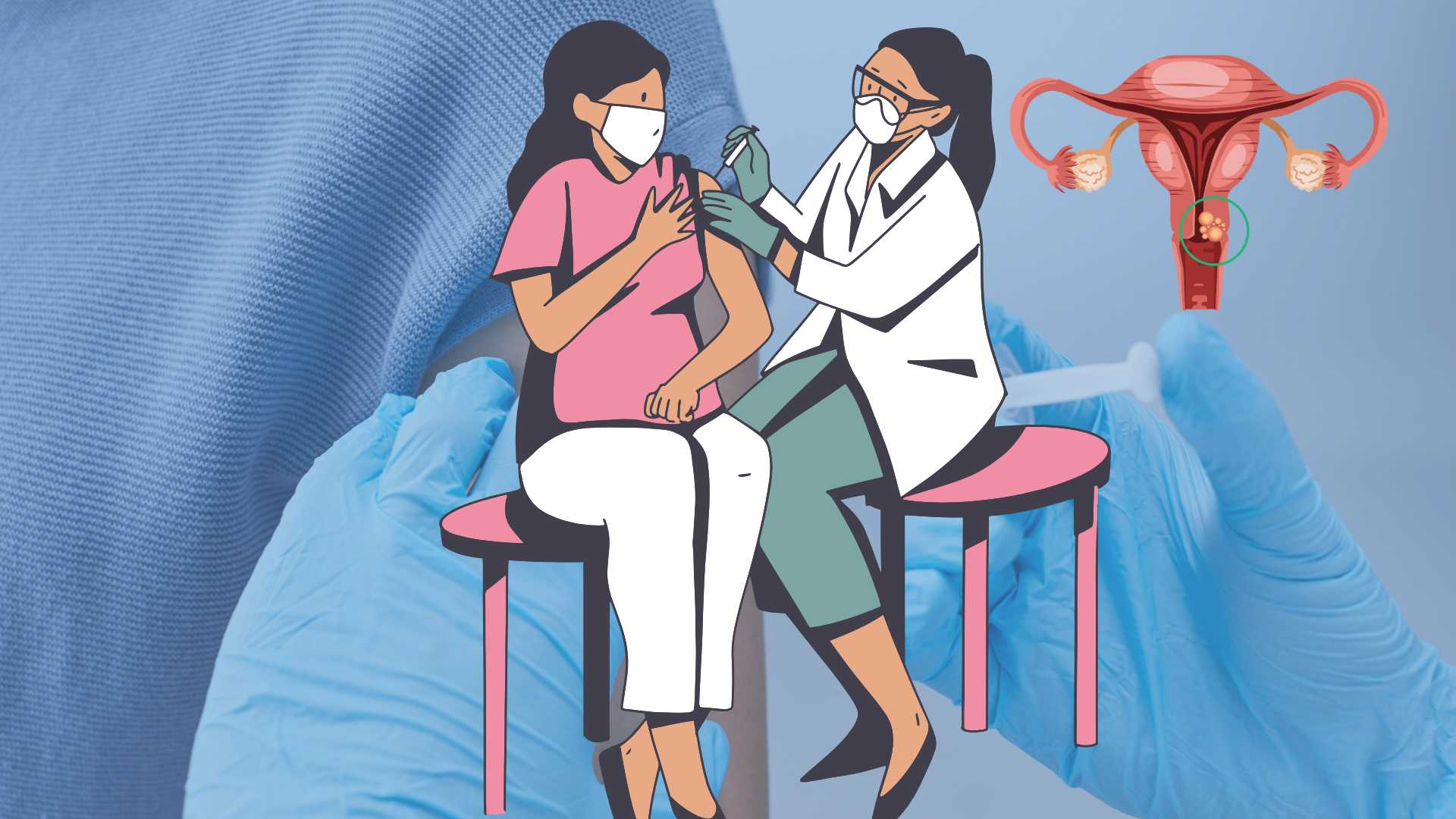
1. Policy Context: Launch of Nationwide HPV Vaccination Programme
The Union Health Ministry is set to launch a nationwide Human Papillomavirus (HPV) vaccination programme targeting girls aged 14 years. The vaccine will be voluntary and provided free of cost, ensuring equitable access across socio-economic groups.
The programme marks a significant expansion of preventive public health policy in India, focusing on adolescent health and long-term cancer prevention. By institutionalising HPV vaccination within the public health system, the government is shifting from treatment-based care to preventive healthcare.
The vaccination will be administered exclusively at designated government health facilities such as Ayushman Arogya Mandirs (PHCs), Community Health Centres, District Hospitals, and Government Medical Colleges. This strengthens the public health infrastructure and reinforces trust in state-led health interventions.
The programme aligns with expert recommendations of the National Technical Advisory Group on Immunisation (NTAGI) and global best practices, reflecting evidence-based policymaking.
Preventive vaccination at scale reduces future disease burden, healthcare expenditure, and mortality. If ignored, cervical cancer will continue imposing avoidable social and economic costs, particularly on women from vulnerable backgrounds.
2. Disease Burden: Cervical Cancer in India
Cervical cancer remains the second most common cancer among women in India. Despite being largely preventable, it continues to impose a substantial health burden.
- Nearly 80,000 new cases annually
- Over 42,000 deaths annually
- HPV types 16 and 18 account for over 80% of cervical cancer cases in India
Scientific evidence establishes that almost all cases of cervical cancer are caused by persistent infection with high-risk HPV types. Early vaccination prevents infection before it progresses to cancer.
The high mortality burden indicates gaps in early screening, awareness, and preventive care. Consequently, cervical cancer disproportionately affects women in lower socio-economic and rural settings.
Addressing HPV infection upstream through vaccination reduces downstream cancer incidence and mortality. Failure to intervene perpetuates preventable deaths and gendered health inequality.
3. Vaccine Profile: Gardasil and Single-Dose Strategy
India will use Gardasil, a quadrivalent HPV vaccine, protecting against:
- HPV types 16 and 18 (cancer-causing)
- HPV types 6 and 11
The Health Ministry states:
"Global and Indian scientific evidence confirms that a single dose provides robust and durable protection when administered to girls in the recommended age group." — Health Ministry Official
HPV vaccines are non-live vaccines and cannot cause infection. Globally, more than 500 million doses have been administered since 2006, with 93–100% effectiveness in preventing cervical cancer caused by vaccine-covered HPV types.
Over 90 countries have adopted single-dose HPV vaccination schedules, improving affordability and coverage.
The targeting of 14-year-old girls ensures vaccination before potential exposure to the virus, maximising preventive benefit.
Adopting a single-dose schedule improves coverage, reduces logistical costs, and enhances program feasibility. Ignoring such optimisation could restrict outreach and strain public health resources.
4. Institutional Mechanism and Implementation Framework
India has secured HPV vaccine supplies through a transparent, globally supported procurement mechanism under partnership with Gavi, the Vaccine Alliance.
The procurement follows stringent quality and cold chain standards, ensuring safety and uninterrupted availability. Vaccination sessions will be conducted in the presence of trained medical officers, with facilities linked to 24×7 government health centres for management of rare adverse events.
Key institutional features:
- Government-only vaccination sites
- Trained healthcare teams
- Post-vaccination observation protocols
- Cold-chain maintenance
- Regulatory approval by India’s drug regulator
This approach enhances parental confidence and reinforces public trust in immunisation systems.
Robust institutional design reduces vaccine hesitancy and ensures program credibility. Weak delivery mechanisms could undermine uptake and compromise public trust.
5. Public Health Significance: Prevention vs Screening
While HPV vaccination prevents infection, it does not eliminate the need for screening. Regular Pap smears and early detection remain critical because:
- Vaccines do not cover all HPV strains.
- Women already exposed to HPV may still develop lesions.
- Screening identifies pre-cancerous changes early.
Thus, vaccination must complement—not replace—screening strategies.
The programme contributes to broader health goals:
- Reducing non-communicable disease (NCD) burden
- Advancing women’s health and gender equity (GS1 & GS2 linkage)
- Lowering long-term public health expenditure (GS3 – Human Capital)
- Aligning with global cancer control strategies (IR dimension)
Integrated prevention and screening ensures comprehensive cancer control. Over-reliance on vaccination alone could create false security and delay diagnosis.
6. Governance and Developmental Implications
The programme reflects a shift toward anticipatory governance in public health. By targeting adolescents, it invests in long-term human capital development.
Key developmental implications:
- Reduces premature mortality among women
- Enhances productivity and economic participation
- Lowers catastrophic health expenditure
- Strengthens public health infrastructure
- Promotes equitable access across socio-economic groups
It also reinforces India’s engagement with global health alliances such as Gavi, reflecting cooperative international public health governance.
Preventive health investments yield long-term demographic and economic dividends. Ignoring such measures would perpetuate avoidable mortality and constrain human capital formation.
7. Key Data for Prelims & Mains Enrichment
- Target group: Girls aged 14 years
- Vaccine used: Gardasil (quadrivalent)
- Protection against: HPV 16, 18, 6, 11
- Effectiveness: 93–100%
- Global doses administered: 500+ million
- Countries adopting single-dose: 90+
- Annual cases in India: ~80,000
- Annual deaths: ~42,000
- HPV 16 & 18 share in cases: >80%
Conclusion
The nationwide HPV vaccination programme represents a strategic shift from curative to preventive public health policy. By combining evidence-based immunisation, institutional preparedness, and equitable access, India aims to significantly reduce the burden of cervical cancer. Sustained implementation, coupled with continued screening and awareness efforts, will determine its long-term success in improving women’s health outcomes and strengthening human capital development.