GS2 Healthcare

India expands QR-based drug tracking to strengthen medicine quality and curb counterfeits

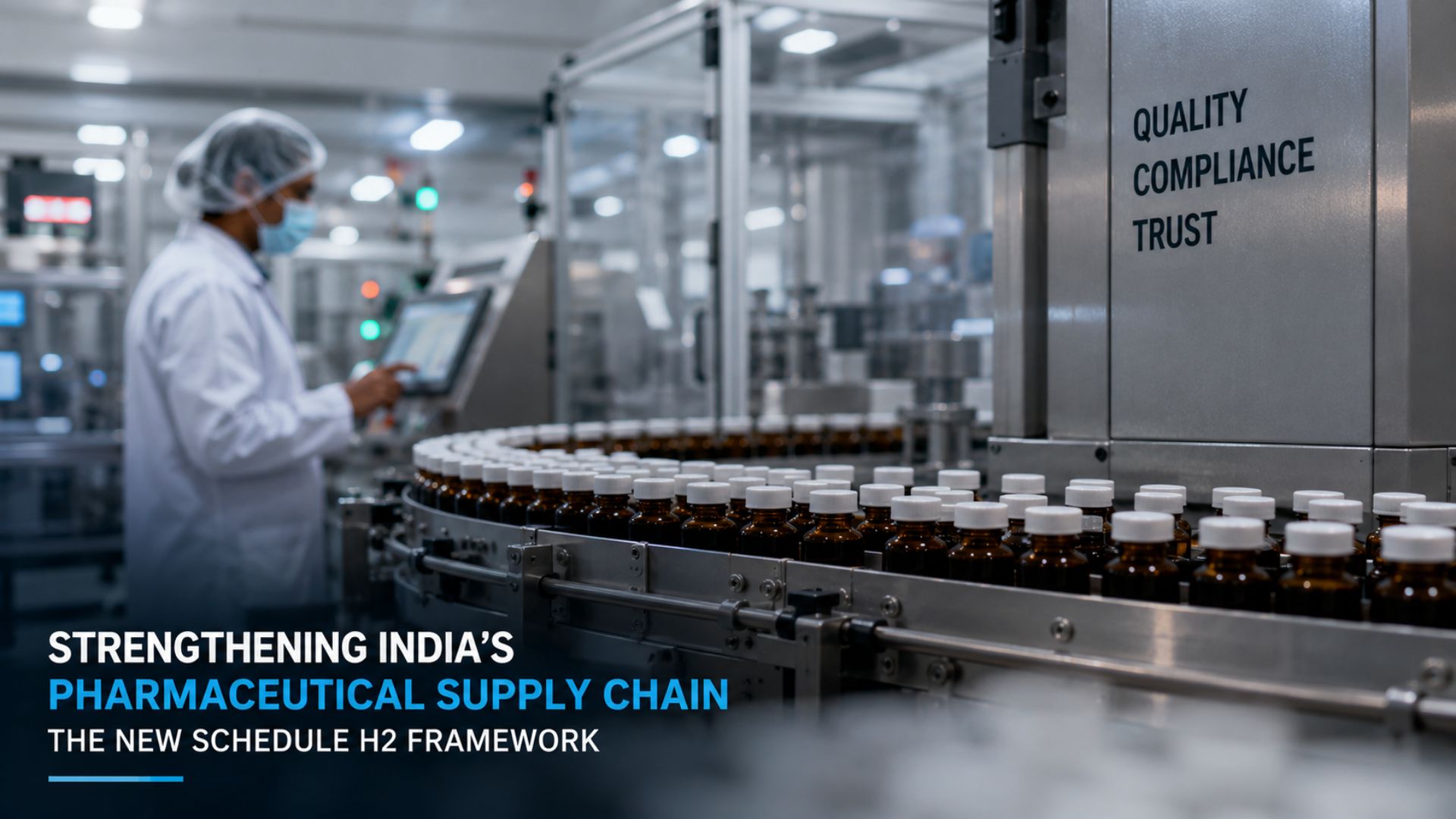
Strengthening India's Pharmaceutical Supply Chain: The New Schedule H2 Framework

A significant shift in drug regulation aims to combat counterfeits and enhance public health by tracking medicines more effectively.
Gopi Gopi
4 mins read

"A medicine is only as effective as the trust patients place in its quality and authenticity."

India's decision to expand Schedule H2 from a limited list of branded medicines to entire therapeutic classes marks an important shift in pharmaceutical regulation. The reform moves from a revenue-based approach to a risk-based regulatory framework, aiming to improve drug traceability, combat counterfeit medicines and strengthen India's standing as the "Pharmacy of the World."

What is Schedule H2?

Introduced during 2022-23, Schedule H2 mandates the use of barcodes or QR codes on medicine packs to enable authentication and traceability.

The expanded framework now requires each medicine pack to carry:

Digital InformationPurpose
Product IdentifierUnique identification of each medicine
Manufacturing Licence NumberVerification of authorised manufacturer
Batch NumberTrace defective or recalled batches
Additional Product DetailsEnd-to-end supply chain monitoring

The objective is to improve the detection of counterfeit, substandard and diverted medicines.

Medicine Pack
      โ†“
QR Code Scan
      โ†“
Manufacturer Details
      โ†“
Batch Verification
      โ†“
Authenticity Check
      โ†“
Safe Distribution & Recall

Why is the reform necessary?

Counterfeit medicines pose a serious challenge to public health and regulatory credibility.

Major concerns include:

  • Fake vaccines, cancer medicines and antimicrobials circulating in supply chains.
  • WHO has highlighted the prevalence of counterfeit antimicrobials in low- and middle-income countries.
  • India records one of the world's highest rates of Antimicrobial Resistance (AMR).
  • Substandard antimicrobials often provide sub-therapeutic doses, allowing resistant microorganisms to survive and multiply.

"Poor-quality medicines not only fail patients but also accelerate antimicrobial resistance."

Wider regulatory significance

The framework strengthens multiple aspects of pharmaceutical governance.

AreaExpected Benefit
Drug traceabilityEasier identification of counterfeit products
Batch recallFaster removal of defective medicines
API regulationBetter oversight of pharmaceutical manufacturing
Export complianceImproved confidence in Indian medicines globally
Controlled medicinesBetter monitoring of opioids and psychotropic substances

The Narcotics Control Bureau (NCB) has also expressed concerns regarding medicinal opioids and psychotropic drugs leaking into illegal markets, making improved tracking increasingly important.

Global concerns addressed

The reform also responds to recurring international quality concerns.

Major issues raised include:

  • Quality control observations by the U.S. FDA.
  • Regulatory concerns from the European Medicines Agency (EMA).
  • International criticism following contaminated cough syrup incidents.
  • The U.S. Trade Representative (USTR) repeatedly identifying India as a major source or transit point for counterfeit medicines seized at U.S. borders.

Improved traceability could enhance India's pharmaceutical credibility in global markets.

Counterfeit Medicines
          โ†“
Patient Safety Risks
          โ†“
Loss of Global Trust
          โ†“
Trade & Export Challenges
          โ†“
Need for Digital Traceability

The new framework complements reforms introduced through the Jan Vishwas Act, 2026.

A notable improvement is the distinction between:

Type of Non-ComplianceRegulatory Approach
Procedural non-complianceReduced penal burden
Substantial non-complianceStrong enforcement action

This allows regulators to focus enforcement on violations that genuinely threaten public health rather than minor procedural lapses.

Implementation challenges

Successful implementation requires more than QR codes alone.

Key challenges include:

  • Development of a state-managed real-time digital database accessible to regulators and pharmacists.
  • Interoperable software and scanning infrastructure across all States.
  • Building consumer and pharmacist habits of verifying medicines before sale.
  • Higher compliance costs for MSME pharmaceutical manufacturers, especially due to packaging and IT upgrades.
  • Protecting sensitive prescription data for controlled substances through a robust digital governance framework.
  • Reducing corruption associated with discretionary regulatory enforcement while simplifying compliance requirements.

Way Forward

  • Establish a unified national pharmaceutical traceability database.
  • Ensure interoperability of digital systems across States.
  • Support MSMEs through financial and technical assistance for digital compliance.
  • Conduct nationwide awareness campaigns promoting medicine verification.
  • Strengthen cybersecurity and data protection for prescription records.
  • Integrate traceability with recall systems, pharmacovigilance and export quality assurance.

Conclusion

The expansion of Schedule H2 represents a significant evolution in India's pharmaceutical regulation by shifting towards risk-based oversight and digital traceability. However, QR codes alone cannot guarantee drug safety. Their effectiveness depends upon robust digital infrastructure, institutional capacity, industry compliance and public participation. Successful implementation will not only safeguard public health but also reinforce India's reputation as a trusted global supplier of affordable and quality medicines.

Attribution

Original content sources and authors

Editorial Author Editorial The Hindu Source The Hindu

Syllabus classification

How this article maps to GS papers

Main syllabus

GS2Healthcare

Quick Q&A

What is the Schedule H2 drug traceability framework, and how can it strengthen India's pharmaceutical quality assurance and public health system?
Schedule H2 is a pharmaceutical traceability framework introduced by the Government of India to strengthen the authenticity, safety, and accountability of selected medicines through digital identification and tracking mechanisms. Initially introduced during 2022-23 for a curated list of drug brands, the framework has now been expanded to entire therapeutic classes, reflecting a shift from revenue-based regulation to risk-based regulation. Under the revised system, medicine packs are required to carry barcodes or QR codes containing information such as the product identifier, manufacturing licence number, batch number, and other relevant production details. This enables regulators, pharmacists, and eventually consumers to verify the authenticity of medicines and trace defective or counterfeit batches efficiently. The framework is particularly significant because India is one of the world's largest producers and exporters of generic medicines, supplying nearly 20% of global generic drug demand and vaccines to numerous countries. Counterfeit medicines, especially antimicrobials, cancer drugs, and vaccines, pose serious public health risks by causing treatment failure, antimicrobial resistance, and loss of public confidence. The system also supports export compliance by addressing concerns raised by regulators such as the U.S. FDA and the European Medicines Agency regarding quality assurance. However, the framework's effectiveness depends on real-time digital databases, interoperable software, nationwide scanning infrastructure, and widespread adoption by pharmacists and consumers. Data privacy and implementation costs for MSMEs remain important concerns. From a UPSC perspective, this topic connects GS2 (Health, Governance), GS3 (Science and Technology, Digital Infrastructure), public administration, and issues relating to regulatory reforms, digital governance, and healthcare quality.
Why is pharmaceutical traceability becoming increasingly important for India's healthcare system, public health security, and global pharmaceutical reputation?
Pharmaceutical traceability has become increasingly important because it strengthens the integrity of medicine supply chains while protecting patients from counterfeit, substandard, and illegally diverted drugs. India is often referred to as the 'Pharmacy of the World' because of its large generic pharmaceutical industry and vaccine manufacturing capacity. However, concerns regarding contaminated medicines, counterfeit pharmaceuticals, and quality control have occasionally affected India's international credibility. Reports by the World Health Organization have highlighted the prevalence of falsified medicines in many low- and middle-income countries, particularly antimicrobials. Substandard antibiotics contribute directly to antimicrobial resistance (AMR), which has emerged as one of the greatest global public health threats. India also carries a significant burden of AMR, making medicine quality assurance a strategic health priority. Traceability systems enable regulators to identify defective batches quickly, facilitate targeted recalls, reduce illegal diversion of controlled medicines, and improve post-market surveillance. The Narcotics Control Bureau has also raised concerns regarding medicinal opioids and psychotropic substances entering illicit markets, making digital tracking increasingly valuable. Internationally, stronger traceability helps India comply with regulatory expectations of export destinations such as the United States and the European Union, thereby protecting pharmaceutical exports and enhancing investor confidence. Nevertheless, implementation challenges include inadequate digital infrastructure, varying technological capabilities across states, higher compliance costs for MSMEs, and concerns regarding patient data privacy. Therefore, successful implementation requires technological integration, stakeholder awareness, capacity building, and transparent governance. This topic is highly relevant for UPSC GS2 (Healthcare and Governance), GS3 (Science and Technology, Internal Security), international trade, public policy, and discussions on balancing regulatory compliance with ease of doing business.
How can digital technologies such as QR codes and interoperable databases transform pharmaceutical regulation and improve healthcare governance in India?
Digital technologies have the potential to fundamentally transform pharmaceutical regulation by improving transparency, traceability, efficiency, and accountability across the medicine supply chain. QR codes and barcodes embedded on medicine packages can store unique product identifiers, manufacturing licence numbers, batch numbers, expiry dates, and production details. When integrated with a centralized or interoperable digital database, these identifiers enable regulators, pharmacists, distributors, hospitals, and eventually consumers to verify the authenticity of medicines in real time. Such systems facilitate rapid recalls of defective batches, detection of counterfeit products, prevention of illegal diversion, and improved pharmacovigilance. During disease outbreaks or drug safety incidents, digital traceability significantly reduces the time required to identify affected batches and minimize public health risks. Integration with digital health platforms, electronic prescriptions, and supply chain management systems can further improve inventory control and reduce wastage. However, digital transformation also presents important governance challenges. India requires interoperable software across states, reliable internet connectivity, affordable scanning infrastructure, standardized data protocols, cybersecurity safeguards, and strong institutional coordination. Prescription data, particularly relating to narcotics and psychotropic medicines, must be protected through robust privacy frameworks consistent with the Digital Personal Data Protection Act, 2023. Small pharmaceutical manufacturers may face financial and technological barriers in complying with new packaging and IT requirements. Therefore, government support through capacity building, financial incentives, phased implementation, and common digital infrastructure will be essential. For UPSC, this topic links GS2 (Governance, Health), GS3 (Science and Technology, Digital Infrastructure, Cyber Security), Public Administration, and Digital India initiatives focused on technology-enabled public service delivery.
Critically examine whether digital drug traceability alone is sufficient to eliminate counterfeit medicines and strengthen India's pharmaceutical regulatory ecosystem.
Digital drug traceability is an important regulatory reform but cannot by itself eliminate counterfeit medicines or guarantee pharmaceutical quality. QR codes and digital identification systems significantly improve transparency by enabling batch-level tracking, authentication, and efficient product recalls. They also strengthen supply chain visibility and discourage diversion of controlled medicines into illegal markets. However, counterfeit pharmaceutical networks operate through complex domestic and international supply chains that often exploit weak enforcement, inadequate inspections, and informal distribution channels. Therefore, technology must complement rather than replace strong regulatory institutions. India's pharmaceutical regulatory system also requires improvements in manufacturing inspections, laboratory testing capacity, pharmacovigilance, licensing oversight, and coordination between central and state drug regulators. Consumer awareness remains equally important because traceability systems are effective only when pharmacists, healthcare providers, and patients routinely verify medicine authenticity before dispensing or purchasing drugs. Financial burdens associated with new packaging technologies, software integration, and compliance requirements may disproportionately affect MSMEs unless adequate policy support is provided. Another challenge concerns digital governance. Large-scale medicine databases containing prescription information must ensure cybersecurity, privacy protection, and controlled access to sensitive health information. Critics also caution against excessive compliance burdens that may increase production costs and reduce competitiveness. The Jan Vishwas Act, 2026, attempts to address this by distinguishing procedural non-compliance from substantive violations, thereby reducing unnecessary regulatory burdens while focusing enforcement on genuine public health risks. Thus, successful pharmaceutical regulation requires an integrated ecosystem combining digital technology, institutional reforms, legal enforcement, industry compliance, and public participation. This issue is highly relevant for GS2 (Healthcare, Governance), GS3 (Technology, Cyber Security), Ethics, and discussions on evidence-based public policy and regulatory effectiveness.
How can India's expanded Schedule H2 framework serve as a case study for balancing public health protection, regulatory reform, and ease of doing business?
The expansion of the Schedule H2 framework provides a valuable case study in balancing multiple public policy objectives simultaneously. On one hand, the government seeks to strengthen public health by improving medicine traceability, reducing counterfeit drugs, enhancing pharmacovigilance, and enabling faster identification of defective batches. On the other hand, policymakers must avoid imposing excessive compliance burdens that discourage innovation or disproportionately affect small and medium pharmaceutical manufacturers. The framework's shift from regulating selected brands to regulating entire therapeutic classes demonstrates a move toward risk-based regulation rather than revenue-based enforcement. Simultaneously, reforms introduced through the Jan Vishwas Act, 2026 distinguish procedural non-compliance from substantive violations, reducing unnecessary criminalization and promoting ease of doing business. This illustrates the principle of proportionate regulation where enforcement focuses on activities that genuinely threaten public health. However, implementation challenges remain substantial. Effective functioning requires nationwide digital infrastructure, interoperable databases, affordable scanning technology, trained pharmacists, consumer awareness, and coordination among state and central regulatory authorities. Privacy safeguards are also essential because prescription records involving controlled medicines contain highly sensitive personal information. Internationally, successful implementation could strengthen India's reputation as a reliable pharmaceutical exporter by addressing quality concerns previously raised by agencies such as the U.S. FDA and European Medicines Agency. Conversely, poor implementation may undermine industry confidence despite well-designed regulations. Therefore, this case study demonstrates that regulatory success depends not merely on legislation but on institutional capacity, technology adoption, stakeholder participation, and effective governance. For UPSC, it integrates GS2 (Health Policy, Governance), GS3 (Technology, Industry), Public Administration, Ethics, and themes relating to regulatory quality, cooperative federalism, and digital transformation in public healthcare.

Practice questions

1 question for mains preparation

Quality healthcare depends not only on access to medicines but also on their safety, efficacy and regulation. Discuss the significance of strengthening India's pharmaceutical regulatory framework in ensuring public health. Examine the role of digital technologies in improving drug traceability and preventing counterfeit medicines.

15 marks ยท 250 words ยท 8 mins
