What is the constitutional distinction between Scheduled Castes and Scheduled Tribes regarding religion, identity, and entitlement to constitutional protections?
The Constitution of India draws a significant distinction between Scheduled Castes (SCs) and Scheduled Tribes (STs) in relation to religion and constitutional protections. The Presidential Order of 1950 initially restricted Scheduled Caste status to Hindus, later extending eligibility to Sikhs (1956) and Buddhists (1990). Consequently, religious affiliation has legal implications for SC status. In contrast, Scheduled Tribe status is not linked to any particular religion under the Constitution. ST identity is primarily based on historical, ethnic, cultural, geographical, and community characteristics rather than religious belief. This distinction has been repeatedly recognized in legal and constitutional discourse.
A landmark example is the 1963 Patna High Court judgment in the Kartik Oraon case, where the Court held that tribal identity is not religion-based and that an Oraon remains an Oraon irrespective of whether he follows Hinduism, Christianity, Buddhism, or any other faith. The judgment emphasized kinship ties, community identity, and shared socio-cultural experiences as the basis of tribal identity.
This distinction is highly relevant to UPSC aspirants because it intersects with Fundamental Rights under Articles 14, 15, 25, and 29, affirmative action policies, minority rights, and constitutional morality. The debate also raises questions about equality before law, freedom of conscience, and the protection of vulnerable communities.
From a governance perspective, extending religion-based restrictions applicable to SCs to STs would require major legal and constitutional changes. The issue remains controversial because it touches upon competing interpretations of identity, cultural preservation, religious freedom, and social justice. It is therefore an important topic for GS-II, constitutional law, tribal governance, and contemporary policy debates.
Why is the debate over delisting Christian Adivasis from Scheduled Tribe status important for constitutional rights and public policy in India?
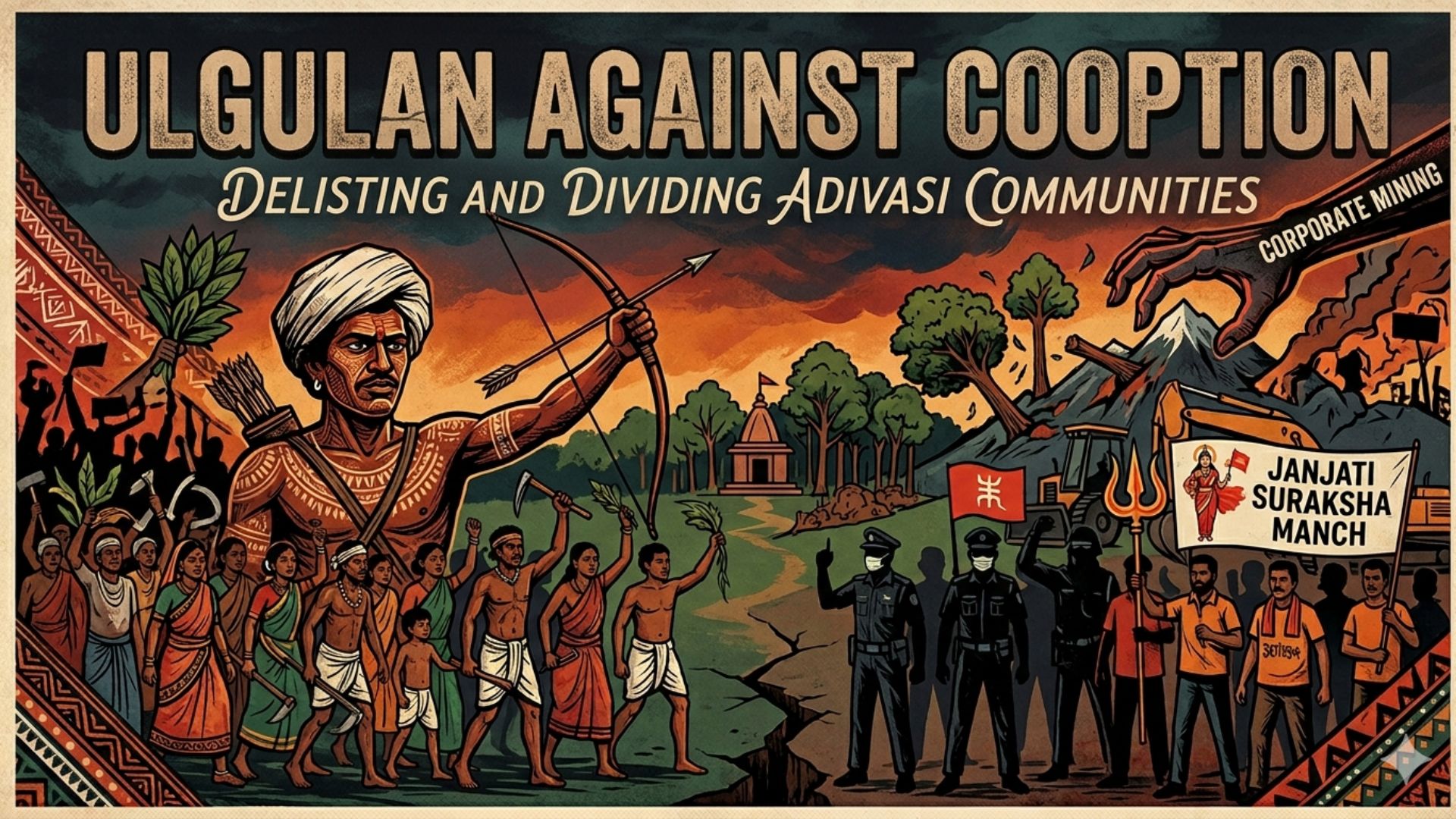
The debate over delisting Christian Adivasis from Scheduled Tribe status is important because it involves the intersection of constitutional identity, religious freedom, affirmative action, and tribal rights. Organizations advocating delisting argue that tribal communities that convert to Christianity should lose constitutional benefits because they no longer follow traditional tribal beliefs. Opponents contend that tribal identity is rooted in ethnicity, history, culture, and community membership rather than religion.
The issue directly relates to Article 25 of the Constitution, which guarantees freedom of conscience and the right to profess, practice, and propagate religion. If constitutional protections are withdrawn solely because of religious conversion, critics argue that such action could create a disincentive against exercising a fundamental right. The debate also engages Articles 14 and 15, which promote equality and prohibit discrimination.
For UPSC aspirants, the topic is important because it reflects broader policy challenges involving minority rights, tribal welfare, secularism, and constitutional governance. It also raises questions about whether affirmative action should be based on socio-economic disadvantage, historical discrimination, cultural identity, or religious affiliation.
The controversy has practical implications. ST reservations in education, employment, and political representation affect millions of people. Changes in eligibility criteria could alter access to welfare schemes, scholarships, reserved posts, and political participation.
The issue is also linked to current affairs because it involves court judgments, political mobilization, tribal movements, and competing interpretations of constitutional principles. Understanding the debate helps candidates analyze questions relating to social justice, identity politics, constitutional morality, and the balance between community rights and individual freedoms.
How does Article 25 of the Constitution protect the religious choices of Adivasi communities while preserving their cultural identity?
Article 25 of the Constitution guarantees freedom of conscience and the right to freely profess, practice, and propagate religion, subject to public order, morality, and health. This protection applies equally to Adivasi communities, allowing individuals and groups to follow traditional tribal faiths, Hinduism, Christianity, Buddhism, Islam, or any other religion of their choice.
A key constitutional principle is that religious choice and cultural identity are not necessarily identical. An Adivasi may adopt a different religion while continuing to belong to the same tribe, participate in community institutions, maintain kinship ties, and preserve traditional customs. Courts have often recognized that tribal identity is not automatically extinguished by religious conversion.
The issue has gained prominence because many tribal communities seek recognition of their distinct religious traditions, including nature worship, animism, ancestor worship, and sacred relationships with forests, mountains, and rivers. For example, the Jharkhand Legislative Assembly passed a resolution supporting a separate census category for tribal religions, reflecting demands for greater recognition of indigenous belief systems.
The constitutional challenge lies in balancing individual liberty with cultural preservation. While the state must protect religious freedom, it must also safeguard tribal culture under Articles 29 and 46 and through laws such as the Forest Rights Act and PESA.
For UPSC preparation, this topic is relevant to GS-II and GS-I because it connects constitutional rights with tribal identity, cultural diversity, and social inclusion. It also reflects larger debates about secularism, multiculturalism, indigenous rights, and the role of the state in protecting both individual freedoms and collective cultural heritage. These issues frequently arise in governance, public policy, and judicial interpretation.
Critically analyze the tensions between cultural assimilation, tribal autonomy, and constitutional protections in contemporary Adivasi politics.
Contemporary Adivasi politics is increasingly shaped by tensions between cultural assimilation, tribal autonomy, and constitutional protections. Cultural assimilation refers to efforts to integrate tribal communities into broader religious, cultural, or national frameworks. Advocates argue that such integration promotes social unity and national cohesion. However, critics contend that it can weaken distinct tribal identities, traditions, and institutions.
The constitutional framework seeks to protect tribal autonomy through special provisions such as the Fifth Schedule, the Panchayat (Extension to Scheduled Areas) Act, 1996 (PESA), reservations, and the Forest Rights Act, 2006. These measures recognize that tribal communities possess unique social, cultural, and historical characteristics that require protection.
The debate becomes contentious when competing narratives attempt to redefine tribal identity. One perspective emphasizes integration into larger religious traditions, while another stresses the independent and indigenous nature of tribal cultures. Critics argue that cultural homogenization may marginalize traditional beliefs, languages, and governance systems. Supporters counter that shared cultural identities can strengthen national integration.
The issue is not merely cultural but also political and economic. Conflicts over mining, forests, land acquisition, and natural resources often overlap with identity debates. In regions such as Hasdeo in Chhattisgarh and Sijimali in Odisha, tribal communities have mobilized against resource extraction projects, arguing that development should not come at the cost of their cultural and environmental heritage.
For UPSC aspirants, this topic demonstrates the importance of constitutional morality, pluralism, and democratic governance. A balanced analysis requires acknowledging both the need for national integration and the constitutional commitment to protecting diversity. The challenge for policymakers is to ensure that integration does not become assimilation and that development does not undermine the rights and identities of vulnerable communities.
What lessons do the Forest Rights Act, PESA implementation challenges, and tribal resistance movements provide for safeguarding Adivasi rights in India?
The experience of the Forest Rights Act (FRA), 2006, PESA, 1996, and various tribal resistance movements provides valuable lessons about democratic governance, participatory development, and constitutional justice. These laws were enacted to correct historical injustices suffered by tribal communities and to strengthen their role in decision-making regarding land, forests, and natural resources.
The Forest Rights Act recognizes individual and community rights over forest land and resources. PESA extends self-governance to Scheduled Areas by empowering gram sabhas to participate in decisions affecting local resources and development. Together, these laws aim to promote decentralization and tribal autonomy.
However, implementation has often been uneven. Numerous reports indicate delays in recognizing forest rights, inadequate consultation with gram sabhas, and conflicts arising from mining and infrastructure projects. Resistance movements in regions such as Hasdeo Arand in Chhattisgarh and parts of Odisha have highlighted concerns about environmental sustainability, displacement, and livelihood security.
These case studies demonstrate that legal rights alone are insufficient without effective implementation. They also show the importance of informed consent, community participation, and transparent governance. Development projects must balance economic growth with environmental protection and social justice.
For UPSC candidates, these examples illustrate themes from GS-II and GS-III, including tribal welfare, environmental governance, federalism, local self-government, and sustainable development. They also underline the significance of constitutional values such as participation, dignity, and equality.
The broader lesson is that tribal rights should not be viewed as obstacles to development. Instead, inclusive development requires respecting community institutions, strengthening gram sabhas, protecting cultural heritage, and ensuring that economic policies are aligned with constitutional commitments to social justice and democratic participation.
What are the major reasons behind recurring conflicts over tribal identity, religious conversion, and constitutional recognition in India?
Recurring conflicts over tribal identity, religious conversion, and constitutional recognition arise from a combination of historical, social, political, legal, and economic factors. First, tribal communities possess distinct cultural traditions, languages, belief systems, and social structures that often differ from mainstream religious and social frameworks. Competing attempts to define or reinterpret these identities frequently generate controversy.
Second, religious conversion has historically been a sensitive issue in India. Missionary activity, reform movements, and indigenous religious practices have interacted in complex ways, producing debates about freedom of religion, cultural preservation, and community cohesion. Anti-conversion laws enacted in several states further contribute to legal and political disputes.
Third, affirmative action policies create significant stakes because Scheduled Tribe status is linked to reservations, scholarships, political representation, and welfare benefits. Any proposal to alter eligibility criteria naturally attracts strong reactions from affected communities and political actors.
Fourth, resource conflicts play an important role. Tribal areas are often rich in minerals, forests, and biodiversity. Disputes over land acquisition, mining, and industrial projects frequently intersect with identity politics. Social divisions within tribal communities can weaken collective resistance to displacement and environmental degradation.
Fifth, there are unresolved demands for greater recognition of indigenous belief systems. Many Adivasi organizations seek official recognition of tribal religions in census classifications and public policy, arguing that existing categories inadequately reflect their cultural distinctiveness.
For UPSC aspirants, this topic highlights the interconnectedness of constitutional law, tribal administration, social justice, governance, and development. It demonstrates how identity-based debates often extend beyond religion and involve questions of representation, resource control, historical injustice, and democratic participation. A nuanced understanding requires balancing individual rights, community autonomy, and national constitutional values.
 Gopi
Gopi

