Introduction
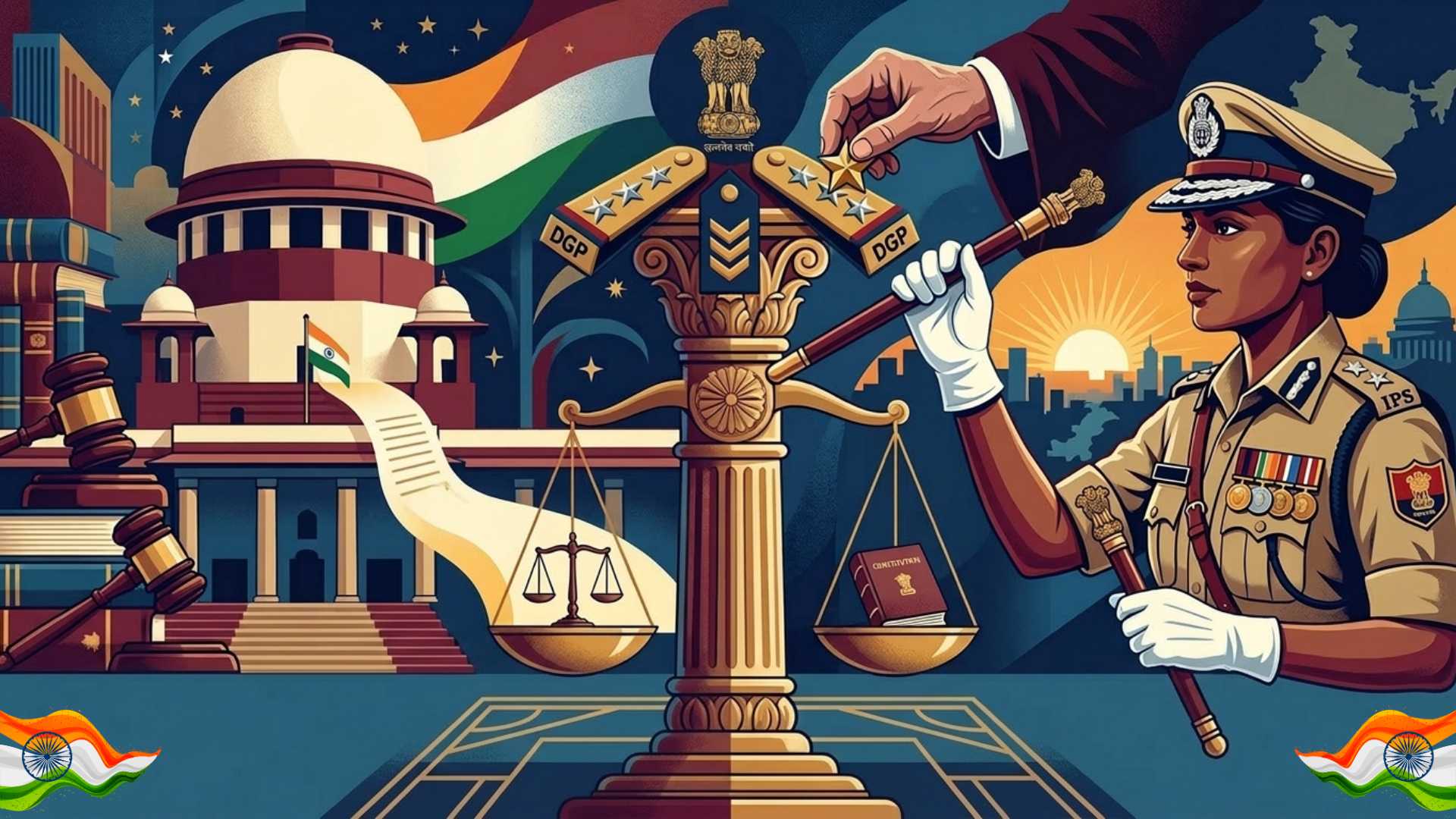
Police leadership plays a crucial role in ensuring law and order, internal security, and effective governance. India has over 2.1 million police personnel (Bureau of Police Research and Development, BPRD). The Supreme Court’s 2006 judgment in Prakash Singh vs Union of India laid down key reforms to ensure professional and politically neutral police leadership, including transparent appointment of the Director General of Police (DGP). Recently, the UPSC revised the empanelment rules for DGP appointments to ensure strict compliance with these guidelines.
Background: Prakash Singh Case (2006)
The Prakash Singh judgment was a landmark step toward police reforms in India.
Key directives related to DGP appointment:
- UPSC-based selection: States must appoint the DGP from a panel of three senior-most officers prepared by UPSC.
- Merit-based selection: Based on length of service, good record, and experience.
- Minimum tenure: The DGP should have a minimum tenure of two years, irrespective of retirement age.
- Timely proposal: States must send proposals at least three months before the incumbent DGP’s retirement.
The objective was to reduce political interference and ensure stability in police leadership.
Recent Changes in UPSC Rules
UPSC revised procedures following frequent violations by states.
| Provision | New Requirement |
|---|---|
| Delay in sending DGP proposals | States must obtain permission/clarification from the Supreme Court |
| Timing of proposal | Must be sent at least 3 months before DGP retirement |
| Acting DGP appointments | Not permitted under Supreme Court guidelines |
| Exceptional situations | Allowed only in cases of death, resignation, or premature relieving |
Reasons for the Revision
UPSC sought clarification due to frequent procedural violations by states.
Key issues observed
- Delayed proposals sent to UPSC for empanelment.
- Appointment of acting DGPs despite Supreme Court prohibition.
- Political or administrative delays in choosing candidates.
The Attorney General of India (AGI) noted that:
- Such delays are “excessive”.
- UPSC cannot condone irregularities or proceed as if rules were followed.
- States must approach the Supreme Court if they face difficulties.
Key Concepts: DGP Appointment Process
| Step | Description |
|---|---|
| Proposal submission | State sends list of eligible DGP-rank officers to UPSC |
| Empanelment | UPSC prepares a panel of three officers |
| Appointment | State government appoints one officer as DGP |
| Tenure | Minimum two years |
Implications of the New Rule
Positive Implications
- Strengthens rule of law: Ensures adherence to Supreme Court directives.
- Reduces political interference: Merit-based leadership selection.
- Administrative stability: Prevents temporary or ad hoc leadership.
- Improves police professionalism: Ensures experienced officers head the force.
Challenges
- Federal tensions: States may view stricter oversight as interference.
- Administrative delays: Court approvals may slow urgent appointments.
- Limited eligible officers: Smaller cadres may struggle to meet criteria.
Broader Significance for Police Reforms
Police reforms remain a critical governance issue in India.
According to the Second Administrative Reforms Commission (ARC):
“Police must be insulated from illegitimate political pressure to function as an impartial law enforcement agency.”
Key reform areas include:
- Fixed tenure for key police positions
- Separation of investigation and law & order functions
- Police Complaints Authorities
- Modernization of police forces
The DGP appointment mechanism is a core component of these reforms.
Conclusion
The UPSC’s revised rules reinforce the Supreme Court’s vision of professional, merit-based police leadership. Ensuring timely empanelment, eliminating acting DGP appointments, and enforcing judicial oversight strengthens police autonomy and accountability. However, meaningful police reform will require consistent compliance by states, institutional capacity building, and sustained political will.
UPSC Mains Question (250 words – 15 marks)
“The appointment process of the Director General of Police (DGP) has been a central issue in police reforms in India.” Examine the Supreme Court guidelines and discuss the significance and challenges of ensuring a transparent and merit-based DGP appointment process.