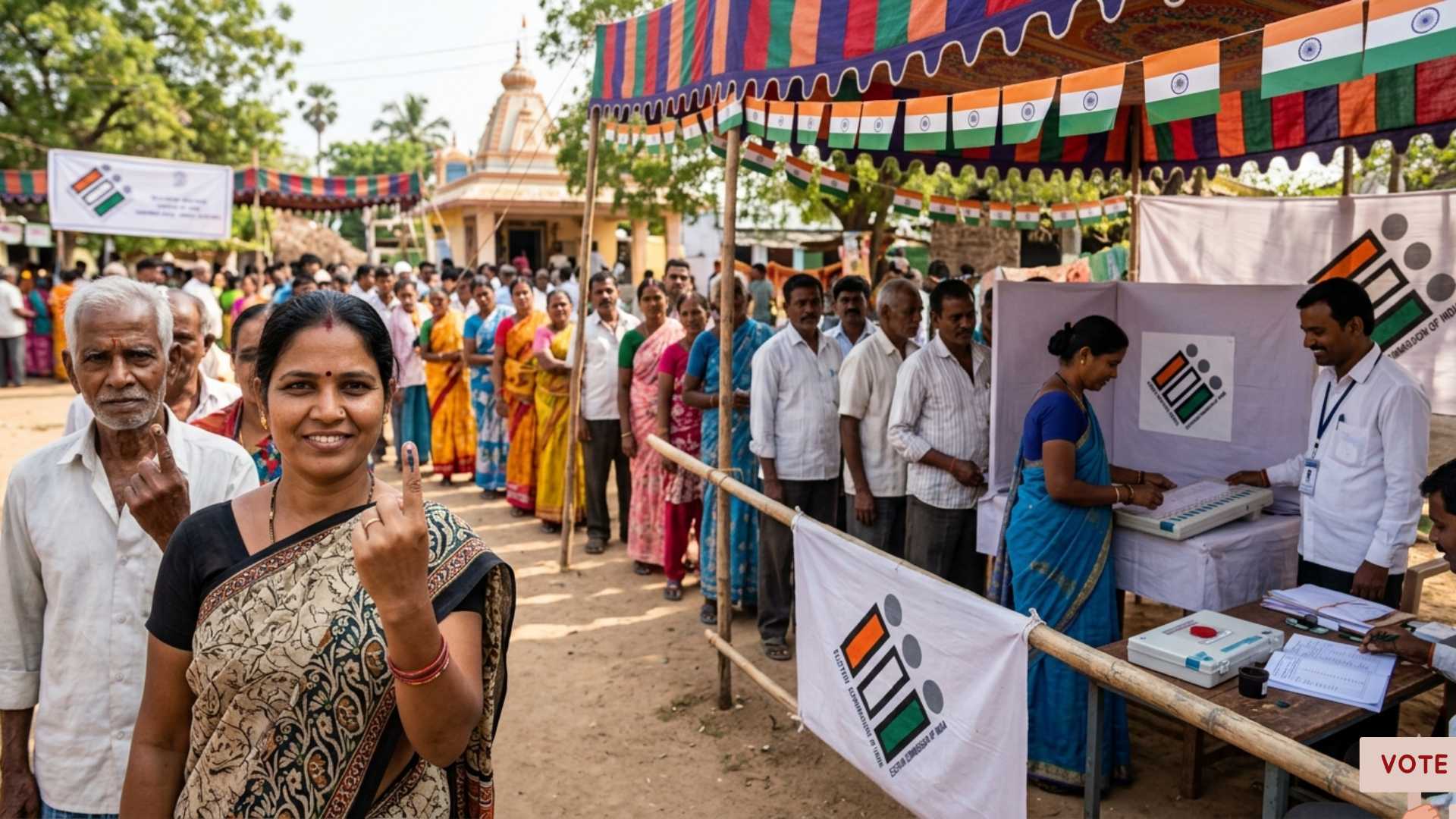
The Feasibility of Compulsory Voting in India

Examining the challenges and benefits of mandatory voting in enriching India's democratic participation.
G
Gopi
3 mins read
Compulsory Voting Debate in India: Rights vs Participation

INTRODUCTION

India, the world’s largest democracy, witnesses voter turnout averaging 65–67% in general elections, while global turnout averages around 60–70%. Despite universal adult suffrage, concerns over voter apathy persist. The debate on compulsory voting has resurfaced, especially with the Supreme Court questioning its feasibility. This raises fundamental issues about the nature of the right to vote, democratic participation, and constitutional freedoms.


CONSTITUTIONAL AND LEGAL BASIS OF RIGHT TO VOTE

Constitutional Provision (Article 326)

  • Provides for universal adult suffrage.
  • Every citizen aged 18 years and above is entitled to vote.
  • Subject to disqualifications such as non-residence, unsound mind, crime, or corrupt practices.

Statutory Backing

  • Representation of the People Act, 1950

    • Section 19: Eligibility for voter registration (18+ and ordinary residence).
  • Representation of the People Act, 1951

    • Section 62: Right to vote for those enrolled in electoral rolls.

Nature of Right

  • Supreme Court: Right to vote is a statutory right, not a fundamental right.
  • However, it is linked to freedom of expression under Article 19(1)(a) (e.g., NOTA judgment).

KEY CONCEPT: COMPULSORY VOTING

Definition

  • Legal obligation imposed on citizens to participate in elections.
  • Non-compliance may attract penalties (fines or restrictions).

GLOBAL PRACTICES ON COMPULSORY VOTING

CountryNature of EnforcementPenalty for Non-Voting
AustraliaStrictMonetary fine
BrazilModerateRestrictions on services
ArgentinaModerateFine
PeruStrictDenial of public services
  • Studies (Law Commission, 2015):

    • Compulsory voting increases turnout by ~7% on average.
    • Effectiveness depends on strict enforcement.

ARGUMENTS IN FAVOUR OF COMPULSORY VOTING

Enhancing Democratic Legitimacy

  • Higher turnout ensures broader representation.
  • Reduces chances of candidates winning with minority votes.

Civic Responsibility

  • Reinforces voting as a civic duty.
  • Strengthens participatory democracy.

Reducing Political Inequality

  • Encourages participation of marginalised and apathetic groups.

ARGUMENTS AGAINST COMPULSORY VOTING

Violation of Freedom of Expression

  • Right to vote includes the right not to vote.
  • May infringe Article 19(1)(a).

Practical Challenges in India

  • Large population and logistical constraints.
  • Difficulty in identifying and penalising non-voters.

Harsh and Inequitable Penalties

  • Fines or denial of services may disproportionately affect the poor and migrants.

Quality vs Quantity of Participation

  • Forced voting may lead to uninformed or random choices.

COMMITTEE AND EXPERT VIEWS

Dinesh Goswami Committee (1990)

  • Opposed compulsory voting.
  • Emphasised voter awareness and electoral reforms.

Law Commission (255th Report, 2015)

  • Found marginal benefits in turnout.
  • Concluded it is neither feasible nor desirable in India.

Quote

  • “Democracy is not merely about higher participation, but meaningful participation.” — Law Commission (paraphrased insight)

CHALLENGES IN VOTER PARTICIPATION IN INDIA

  • Urban apathy and political disengagement.
  • Migrant workers unable to vote due to mobility.
  • Lack of awareness in certain regions.
  • Logistical barriers (distance, accessibility).

WAY FORWARD: ALTERNATIVES TO COMPULSORY VOTING

Awareness and Behavioural Interventions

  • Use of social media campaigns and civic education.
  • Targeted mobilisation of youth and urban voters.

Facilitating Voter Access

  • Strict enforcement of paid holiday on polling day.
  • Special transport facilities (buses/trains).

Technological Innovations

  • Exploration of remote voting systems (e.g., blockchain-based or ECI proposals).
  • Ensuring security, transparency, and inclusivity.

Institutional Measures

  • Strengthening Election Commission outreach programs.
  • Improving electoral roll accuracy.

IMPLICATIONS FOR GOVERNANCE AND DEMOCRACY

  • Balancing rights vs duties is crucial in a democracy.
  • Coercive measures may undermine democratic freedoms.
  • Emphasis should shift to inclusive and participatory governance.

CONCLUSION

While increasing voter turnout is essential for democratic legitimacy, compulsory voting is neither constitutionally sound nor practically viable in India. The focus should be on empowering voters, removing barriers, and leveraging technology to ensure meaningful participation. A democracy thrives not on compulsion, but on informed and voluntary engagement.


UPSC MAINS QUESTION (250 WORDS)

“Compulsory voting is neither feasible nor desirable in India.” Critically examine in the context of constitutional principles and electoral participation.

Quick Q&A

Everything you need to know

Constitutional Basis: The right to vote in India is grounded in Article 326 of the Constitution, which provides for universal adult suffrage. It ensures that every citizen above the age of 18, who is not disqualified on specific legal grounds, is entitled to be registered as a voter. This reflects the democratic principle of inclusiveness and political equality.

Statutory Nature: Despite its constitutional mention, the Supreme Court has consistently held that the right to vote is a statutory right, not a fundamental right. It is governed by laws such as the Representation of the People Act, 1950 and 1951, which lay down conditions for voter registration and participation. For example, only individuals whose names are included in the electoral roll can exercise this right.

Implications: This distinction has significant implications. Since voting is not a fundamental right, it can be regulated or restricted by law. However, it remains a cornerstone of democracy, enabling citizens to participate in governance. Thus, while legally statutory, the right to vote holds immense political and moral significance in sustaining India’s democratic framework.

Rationale for Debate: The debate on compulsory voting arises from concerns over low voter turnout, which can undermine democratic legitimacy. When fewer people vote, elected representatives may win with only a minority of total votes, raising questions about representativeness. Countries like Australia have adopted compulsory voting to address this issue, achieving higher participation rates.

Potential Benefits: Proponents argue that compulsory voting can enhance political participation, inclusivity, and legitimacy. It may also encourage citizens to become more politically aware. Studies, including the Law Commission’s 255th Report, suggest that such measures can increase turnout by around 7%, depending on enforcement.

Concerns and Implications: However, critics highlight serious concerns. Compulsory voting may violate the freedom of expression under Article 19(1), which includes the right not to vote. Penal measures such as fines or denial of services may be seen as coercive and impractical in a diverse country like India. Thus, the debate reflects a tension between democratic participation and individual liberty.

Dinesh Goswami Committee (1990): This committee examined electoral reforms and rejected the idea of compulsory voting, citing practical difficulties such as enforcement challenges and administrative burden. Instead, it recommended increasing voter awareness and simplifying electoral processes.

Law Commission (255th Report, 2015): The Law Commission provided a more detailed analysis, acknowledging that compulsory voting can increase turnout. However, it emphasised that such gains are dependent on strict penalties and enforcement mechanisms, which may not be suitable for India’s socio-economic context.

Overall Assessment: Both bodies concluded that compulsory voting is neither feasible nor desirable in India. They highlighted the importance of voluntary participation and suggested alternative measures like voter education, improved accessibility, and electoral reforms. This reflects a broader consensus that strengthening democracy requires encouragement rather than coercion.

Advantages: Compulsory voting can lead to higher voter turnout, ensuring that election outcomes better reflect the will of the entire population. It may reduce the influence of money and muscle power, as a larger electorate dilutes the impact of targeted mobilization. Additionally, it can foster a sense of civic duty among citizens.

Disadvantages: However, the drawbacks are significant in the Indian context.

  • Violation of Freedom: Forcing individuals to vote may infringe upon their right to abstain, which is part of freedom of expression.
  • Administrative Challenges: Enforcing penalties in a country with over 900 million voters is impractical.
  • Superficial Participation: Compulsion may lead to uninformed or random voting, reducing the quality of democratic decision-making.

Balanced Perspective: While compulsory voting has worked in countries like Australia, India’s socio-economic diversity and administrative scale make it unsuitable. A more effective approach would be to enhance voluntary participation through awareness, accessibility, and trust in institutions, rather than coercion.

Scenario Analysis: Low voter turnout can result in a candidate winning with a minority of the total eligible votes, raising concerns about the legitimacy of the mandate. For instance, if only 50% of voters participate and the winning candidate secures 30% of those votes, they effectively represent just 15% of the electorate.

Challenges Identified:

  • Weak Representation: The elected representative may not truly reflect the will of the majority.
  • Policy Disconnect: Policies may fail to address the needs of non-voters, who often belong to marginalized groups.
  • Erosion of Trust: Persistent low turnout can reduce public confidence in democratic institutions.

Way Forward: Instead of enforcing compulsory voting, measures such as targeted voter awareness campaigns, improved polling accessibility, and digital innovations can address this issue. For example, increasing participation among urban youth and migrant workers can significantly enhance electoral legitimacy.

Global Practices: Countries like Australia, Brazil, and Argentina have implemented compulsory voting laws. In Australia, non-voters may face fines, while in Peru, access to certain public services can be restricted. These measures have resulted in consistently high voter turnout, often exceeding 90%.

Lessons for India: While these examples demonstrate the effectiveness of compulsion in increasing participation, they also highlight the importance of strong administrative capacity and enforcement mechanisms. India, with its vast population and diversity, may find it difficult to replicate such systems effectively.

Contextual Adaptation: Instead of adopting compulsory voting, India can learn from these countries by improving voter facilitation measures, such as early voting, postal ballots, and awareness campaigns. The focus should be on creating an enabling environment that encourages voluntary participation while respecting individual freedoms.

Causes of Low Turnout: Several factors contribute to low voter participation in India.

  • Migrant Population: Workers often cannot travel to their home constituencies to vote.
  • Urban Apathy: Urban voters tend to show less enthusiasm compared to rural counterparts.
  • Lack of Awareness: Limited understanding of the importance of voting reduces participation.

Structural Challenges: Inadequate transport facilities, long queues, and lack of accessibility for elderly and disabled voters also discourage turnout. Additionally, political disillusionment and lack of trust in candidates can lead to voter apathy.

Solutions: Addressing these issues requires a multi-pronged approach:
  • Improved Logistics: Special trains and buses during elections.
  • Technological Innovations: Secure remote voting systems.
  • Awareness Campaigns: Leveraging social media to engage youth.
These measures can enhance participation without compromising democratic freedoms.

Attribution

Original content sources and authors

Sign in to track your reading progress

Comments (0)

Please sign in to comment

No comments yet. Be the first to comment!